


The Vancouver International Film Festival (VIFF) is making some noise as this year’s edition gets ready for 11 days of screenings. The robust documentary slate includes a mix of premieres and festival favourites with many top picks from the circuit having their Canadian debuts on the West Coast. Many of the Canadian highlights from TIFF are at this year’s festival, too, including Ba’s Book; Ladies and Gentlemen, Brian Mulroney; Man in Motion: The Rick Hansen Story; Once Upon a Time in Harlem; Run Terry Run; and Still Night, Burning House. The fest also hosts recent hits like the surprisingly moving The History of Concrete, which finds poetry and humour in the most seemingly banal of subjects. You can also see more of VIFF selections in trailer posts for First Comes Love: Nakabingwit and The Sandbox.
To help readers navigate the beefy side of VIFF’s documentary programming, here are ten picks to see at this year’s festival:
The Story of Documentary Film – The 2000s, and the 2010s and 2020s
Screens Oct. 3, 4, and 11
Mark Cousins’ chronicle of the genesis of non-fiction cinema has been a staple on documentary slates across the festival circuit since Sunday, but it’s also been extraordinarily difficult to see and virtually impossible to watch chronologically unless one happened to tour the entire festival circuit with it. VIFF has the Canadian debut with the tail end of the series. The Story of Documentary Film charts the evolution of the art form across decades with the final instalments capturing the box office success from the era of Fahrenheit 9/11 and March of the Penguins, supposed “golden age” of documentary, and the present bleakness in which the field finds itself. It’s sure to be enlightening if one doesn’t mind starting at the end and working backwards. Read our review of part one and four/five here.
Into the Jaws of the Ogre
Screens Oct. 1 and 2
Every festival needs a music doc and audiences tired of the conventional greatest hits tales may find a refreshing alternative with Into the Jaws of the Ogre, which has its Canadian premiere at VIFF. Filmmaker Mahsa Karampour shares the story of her brother, who forms an underground punk band in Tehran before leaving to New York City with ambitions to break into the scene. The film uses the pursuit of a dream to explore how the siblings went down very different paths. “Quiet and confident, this portrait of siblings and their disparate life choices is engaging throughout, making for a fascinating dive into subjects not often seen on screen,” wrote Jason Gorber in our review from Cannes. “It’s a film unafraid to embrace the contradictions between the two subjects but also bold in its ability to capture the nature of change over the siblings’ multiple visits, illustrating how growth is at times tumultuous and at others, critical for survival.”
School for Defectors
Screens Oct. 4, 5, and 8
An eye-opening film that’s had surprisingly little play on the festival circuit, Jeremy Workman’s provocative documentary brings audiences inside an institution that provides cultural adjustment training for North Korean defectors as they become acclimatized to a new environment. The film’s extraordinary access and intimate observational style provides a firsthand account of the ways in which young minds unlearn years’ worth of indoctrination. The film’s Oct. 4 screening includes an extended Q&A with Workman and executive producer Daniel Dae Kim (Lost).
A Fire There
Screens Oct. 4 and 5
The picturesque countryside of Gandzani in South Georgia offers a striking backdrop for a human fable. Director Marlene Edoyan observes a community of Armenian shepherds as they brace themselves for the winds of change that ripple throughout the region. The threat of Russian invasion looms large given their proximity to the border while their neighbour wages war on Ukraine. Young shepherds become involved in the political resistance, while other community members spark resistance of their own by leaving to pursue higher education in the city. All the while, families continue a traditional practice that’s sustained them for generations. “It’s not quite docu-fiction or hybrid cinema per se, but rather an assertion of the poetic,” I wrote while reviewing the film at Hot Docs. “Observational film and intimate stories deserve to be told with such grandeur. The scope of the film affords it a great emotional window into these connected lives.”
The Wind’s Thirst
Screens Oct. 8 and 9
Wayuu warriors in Colombia’s La Guajira desert provide three sets of eyes through which one sees this visually arresting environmental tale. The Wind’s Thirst, which has its North American premiere at the festival, offers another perspective in the interconnected network of stories about growing water scarcity in the face of climate change and radical new forms of human industry. Director Alejandro Valbuena lets the camera witness the fight of three Wayuu elders when a local reservoir becomes diverted to assist a mine that’s polluting the region. Their efforts to protect their land and people by preserving clean water illustrates a larger force happening worldwide in which communities, often Indigenous ones, are expected to compromise the natural systems that sustain them for the benefit of outside forces with no interest in the region’s long-term health.
Nuisance Bear
Screens Oct. 9, 10, 11
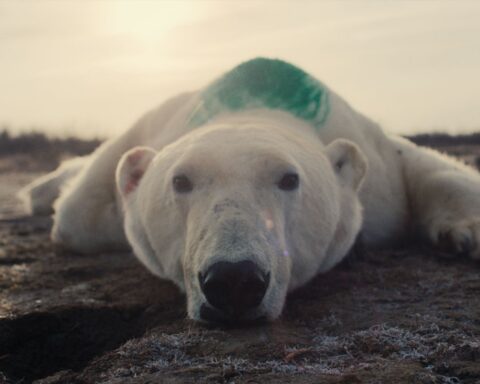
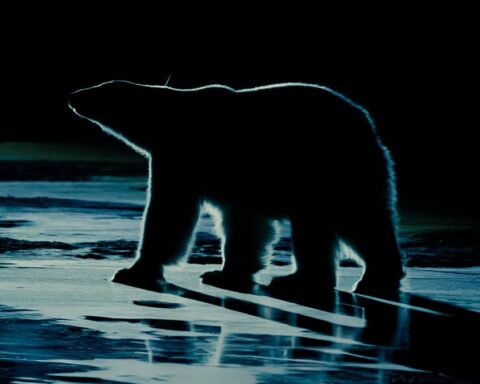
After nearly a year of touring the festival circuit, Nuisance Bear finally strolls up north for a Canadian premiere. This absolute delight of a film—one of the year’s best—won the Grand Jury Prize for U.S. Documentary at Sundance and looks certain to add more accolades to its roster. Canadian filmmakers Gabriela Osio Vanden and Jack Weisman expand their equally terrific short and return to Churchill, Manitoba to take in the migration of polar bears from the arctic as climate changes forces a new path in their travel plans. Especially ambitious, and admirable, is the film’s effort to expand the story of displacement to the stories of Inuit and Indigenous populations, all the while balancing an offbeat tone that provides a light touch without making light of the situation. “The feature furthers many of the ideas explored in the short, but with a cinematic eye that elevates the material on every level,” I wrote in our review from Sundance. “This is a beautifully shot and artistically innovative environmental fable that masterfully connects the layers of colonial history within the contemporary climate crisis.” Read more about Nuisance Bear in our interview with the filmmakers.
Closure
Screens Oct. 9 and 10
This tough watch easily marks a standout film from Sundance. VIFF hosts the Canadian premiere of Michał Marczak’s portrait of Daniel, a Polish father, who devotes himself to finding his son, Krzysztof. This harrowing film observes as Daniel takes it upon himself to learn the truth following a tragic turn of events: Krzysztof is missing and was last seen alone on a bridge. His family has two options: they can assume he either ran away or jumped. A process of elimination leads Daniel to devote his days to trudging the river with hopes that any revelation, awful as it may be, can put uncertainty to bed. “Closure may ultimately be a film that saves lives through its shattering assessment of loss and mental health. It’s a reminder of the support networks that exist and of the necessity of seeking help no matter how hard it may be,” I wrote in our review at Sundance. “The losses these parents face in the aftermath of their child’s sudden exit from their lives are unbearable. But there’s admirable, overwhelming strength, too.”
Yo (Love Is a Rebellious Bird)
Screens Oct 9. and 10
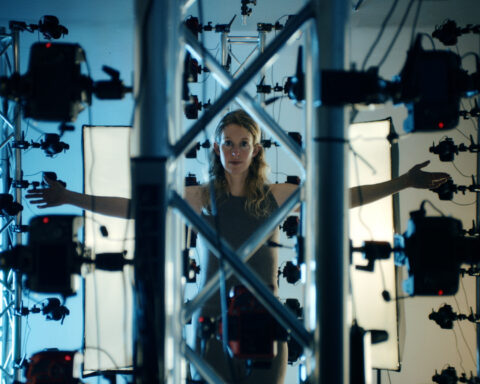
This award winner from the Berlin Film Festival takes an artistic approach to grief as filmmaker Anna Fitch, who directed the doc with Banker White, builds a replica of her friend Yolanda’s house after her death. A puppet version stands in for Yolanda, or “Yo” to her friends, as Fitch makes sense of her loss. “The film juxtaposes vérité footage from the final year of Yo’s life with miniatures, animation, and handcrafted interpretations of her stories. Here, artificiality gives material form to the memory of someone who cannot respond to the finished representation,” wrote Davide Abatescianni in an article for our current issue. “The distinction is ethically significant. Sandu speaks as both the child who experienced the past and the adult reshaping it. Fitch works as the survivor, using her grief to determine how Yo continues to exist onscreen. The miniature house is an act of devotion but also possession: preserving someone through cinema means selecting the version that will survive. The replica can be entered and inhabited, yet the woman whose world it reconstructs can no longer alter its arrangement.”
Reclaim My Skin
Screens Oct. 10
This three-part documentary series from Marie Clements screens in full at the festival among the slate of VIFF’s world premieres. Reclaim My Skin takes a cue from Clements’ breakthrough work The Road Forward by mixing musical performances within a larger story of colonization and a people’s refusal to be beaten by a system that tried to erase them. The series particularly casts its gaze towards the voices of women and Two-Spirit people, and the ways in which their experiences were particularly silenced by settler-patriarchal systems. The screening is among the hotter ticket items at the festival, but looks like one worth the standby line.
POV Presents:
Ceremony
Screens Oct. 4, 6 and 10
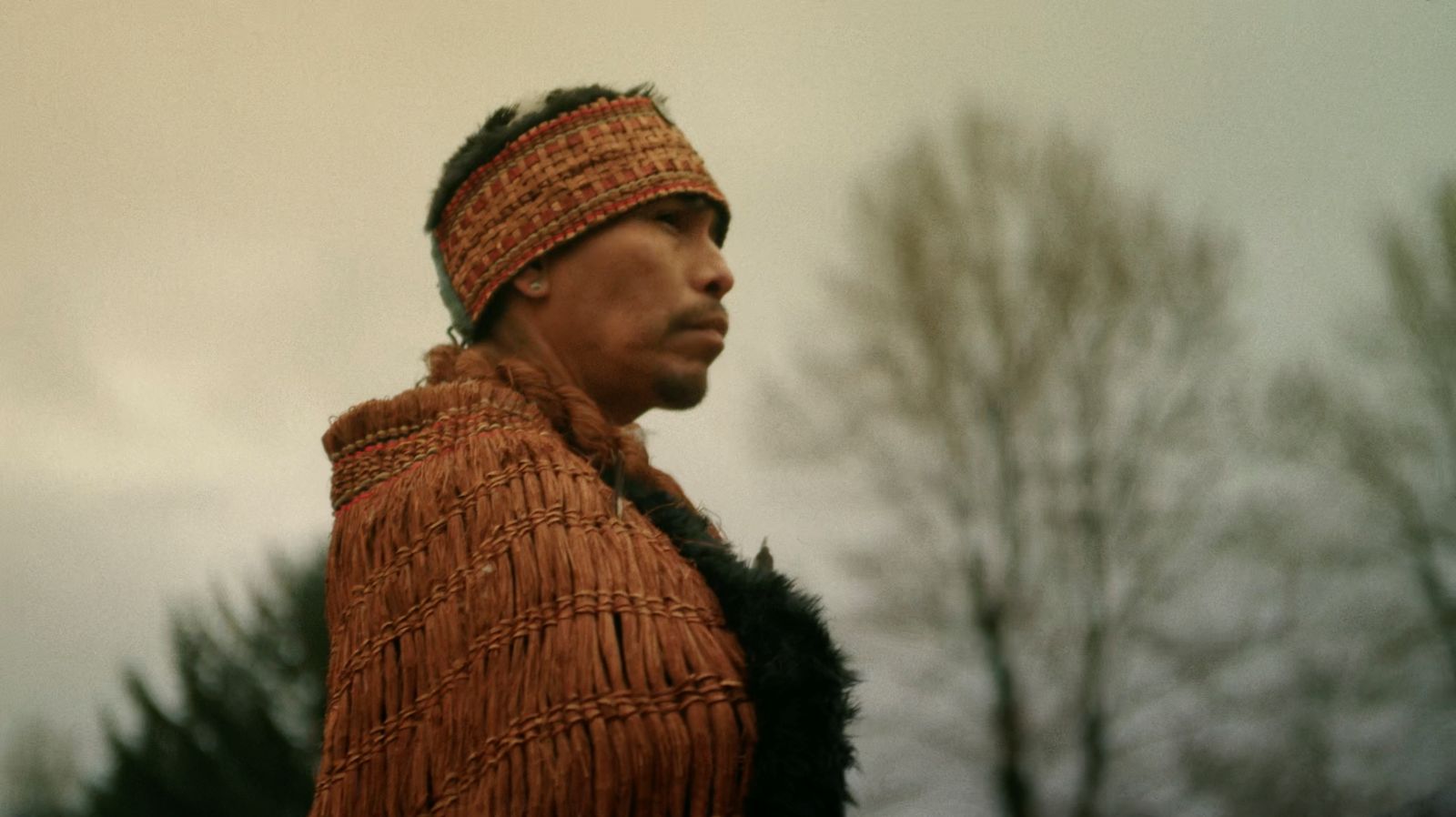
POV is pleased to be a community partner for the VIFF screenings of Banchi Hanuse’s poetic Ceremony. This award winning film chronicles efforts in the B.C. community of Bella Coola to restore the once prosperous ooligan population. Members of the Nuxalk Nation share why the fish holds such significance to the community and tour through parts of the landscape marked by its absence. The film also draws striking parallels between the fish’s disappearance and the impact of colonialism and residential schools on the Nuxalk, with their own resilience offering hope for the ooligan’s return. “Ceremony swims ahead of the pack with its elevated eye and emotional force that comes through succinctly conveying the interconnectedness between environmental concerns and Indigenous legacy,” I wrote in our review at Hot Docs. “It’s a thoughtful character study rooted in concerns of the land and its history, driven by the voices of participants with real stakes in the rich cinematic geography it traverses.”
Do you want to attend a screening of Ceremony at VIFF? Email us at info@povmagazine.com with the subject Ceremony for your chance to win a pair to tickets!