



“I remember being one of those girls,” says The Gymnasts of Fisherman Colony director Habiba Nosheen. “When I hit that age of 18 or 19, questions started to come up for me in my community: ‘Are you going to get married?’ This is a real conversation that girls around that age are having and they’re dealing with and the pressures of that.”
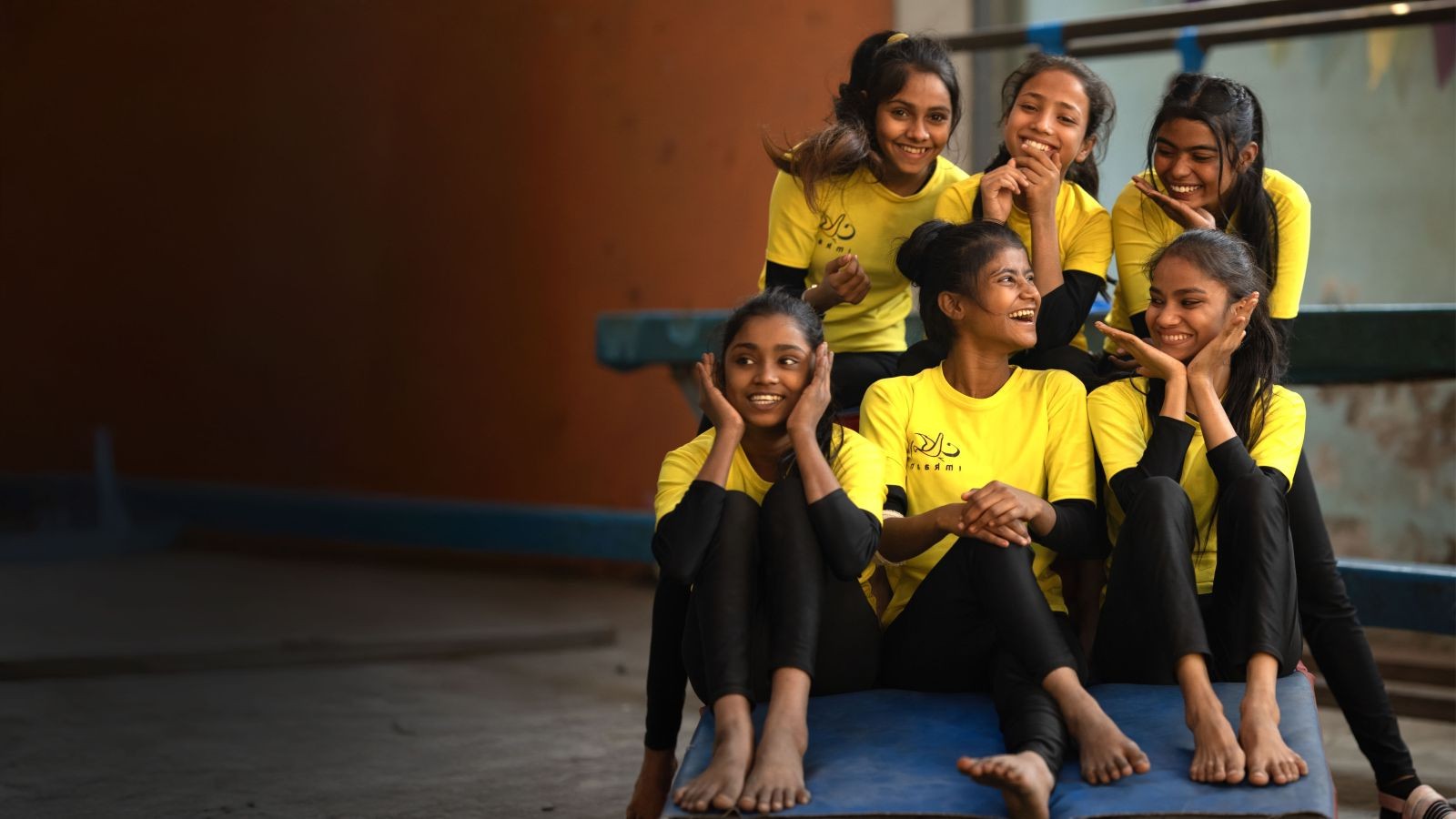
The Gymnasts of Fisherman Colony, which is now streaming on CBC Gem, sees Nosheen return to her native Pakistan to observe a group of young women defying the odds. The film introduces audiences to Sonia, her older sister Anwara, and their friend Kiran. The three teens thrive as part of the gymnastics team in Machar Colony, a densely populated port-side community on the outskirts of Karachi known for its busy fishing markets.
The girls’ love for sport challenges the expectations that society has for them: family members and neighbours expect them to be readying for marriage. Yet the girls’ minds are on honing their core strength, landing the perfect vault, and finding balance. They share enthusiasm for representing their community through their performances. The inspiring film has drawn its share of accolades on the circuit, along with the support of advocates like Malala Yousafzai, who has championed the project from beginning, and recent Emmy winner Mariska Hargitay (My Mom Jayne).
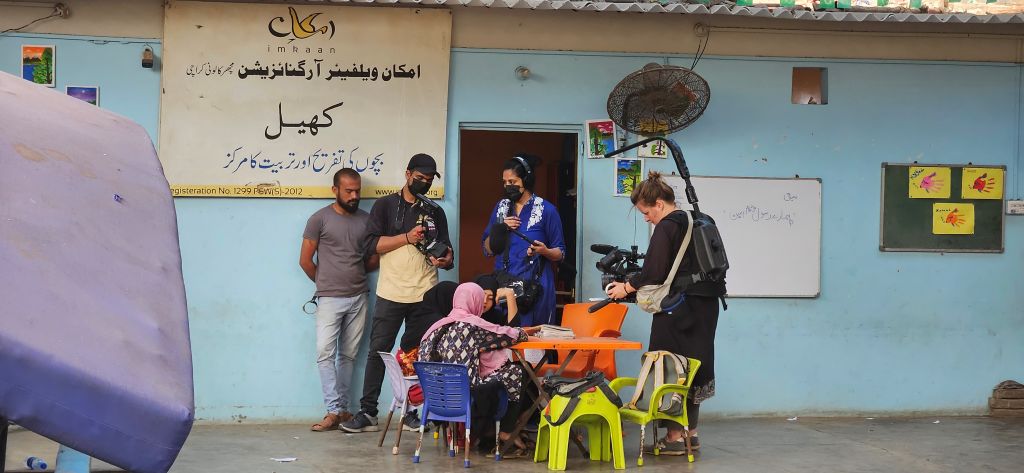
Nosheen, speaking with POV via Zoom, explains that she learned of the gymnasts of Fisherman Colony through human rights lawyer Tahera Hasan, with whom she previously worked while adopting a daughter from Pakistan. Nosheen, who grew up in Lahore, says she took interest when she saw Hasan posting about the young gymnasts online. Nosheen says that Hasan had fair questions to ensure the girls’ safety, like how they might be represented or how she might film their bodies, while also keeping an eye out for the community that she serves.
“There was a heightened sense of awareness from her part about who’s coming in and out, but it was because she was navigating a really tough situation and being protective of this community,” says Nosheen.
That relationship ultimately affords the intimate access that makes The Gymnasts of Fisherman Colony such a winner. With Hasan’s vetting and trust, the film immerses audiences in the lives of these girls at the gym, at home, and at work. Nosheen says that finding the right girls with which to tell the story came through meeting the gymnasts as well as their families. “They were just so vocal about their feistiness that they really stood out to us and captivated us,” says Nosheen. “We were lucky that we had a lot of amazing girls on that team to work with, and we ultimately ended up focusing on these three.”

Gymnasts observes as the girls train in the colony’s modest gym, while alternating days at work. Sonia and Anwara quickly peel shrimp by the barrel, barely earning a few dollars per day to support their family. Their dad doesn’t work, as their mother notes that it doesn’t really suit him, while the matriarch cleans two houses to support the family on a monthly income that barely converts to a hundred dollars over here.
The girls’ social situation is front and centre as they persevere when life seems stacked against them. They carve their own paths, however, by focusing on training and studies, aspiring to lives beyond the roles that seem predetermined by their parents and society. Their rebellious spirit offers an instant hook for a classic underdog story.
“Especially with teenagers, they’re unpredictable beings, so you can’t just follow one because you don’t know what’s going to happen,” observes Nosheen. “And in that way, that was a saving grace because lots happened that the film evolved from what we set out to tell. But it was important for us to cast the girls, but we also wanted to make sure we were casting the family. We know documentary filmmaking is a very invasive process, and when we’re dealing with minors, we wanted to make sure the families understood what this would entail. They were on board with it. This was not going to make life difficult for their daughters.”
The stakes increase when the gymnasts and their coach, Furqan, learn that the national competition will resume. Little time remains for the team to select key gymnasts to represent the community on a national scale. Sonia becomes particularly valuable in the training as her balance and technique display the skills to compete at higher levels.
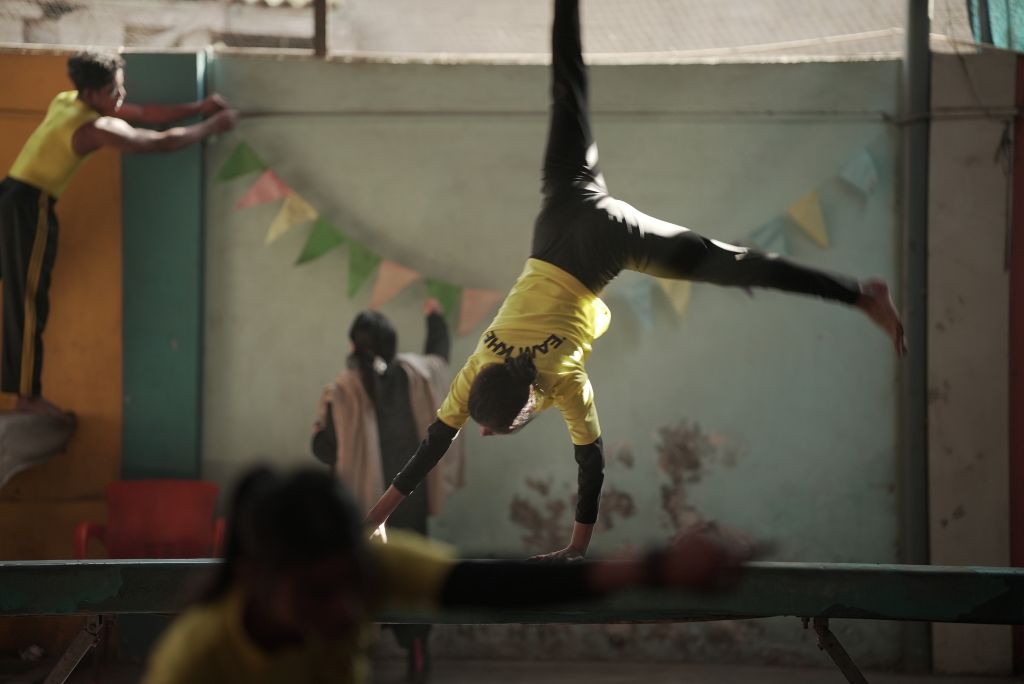
For the film team, too, the news of the nationals comes as a surprise. Nosheen says that no date or plans for the nationals were on the horizon when she began shooting with the girls, but the news forced her to quickly adapt the production and get a Canadian crew over to Pakistan in the short window, much like the team itself scrambles. “The world runs differently outside our little bubble is what I learned, and you roll with it,” says Nosheen.
But the rapid turnaround of the competition underscores the economic disparity of the different teams in contention. Equipment at the nationals differs from regulation size, and there are many tears about the ricketiness of the thin balance beam, while some judges clearly look the other way when coaches get a bit too hands-on with their gymnasts to help execute some moves. Other plays have an edge because they receive a salary and can therefore train more frequently because they don’t peel shrimp to feed the family.
The competition brings the gymnasts’ story to another arena. The possibility of competing beyond the nationals has significant implications, especially for Sonia and Anwara, who are undocumented. As Nosheen immersed herself in the gymnasts’ story, she learned that her stars, like many other Bengali residents of the Fisherman Colony, are technically stateless as a result of the complicated intersections of race, class, and history in Pakistan, couple with convoluted bureaucracy.
“I learned that most of them come from the stateless community where [Hasan] started the school,” explains Nosheen. “These girls have the right to be Pakistani citizens, as the film tells you, because they’re born in Pakistan. But in actuality, the way the discrimination plays out, when they go to get their passports or get their documents, they’re asked, “Well, why don’t you go bring your dad’s and your grandfather’s and your great-grandfather’s? And most of these people don’t have them. That hurdle is hard to navigate, and they never end up actually being formally recognized as citizens of this country.”
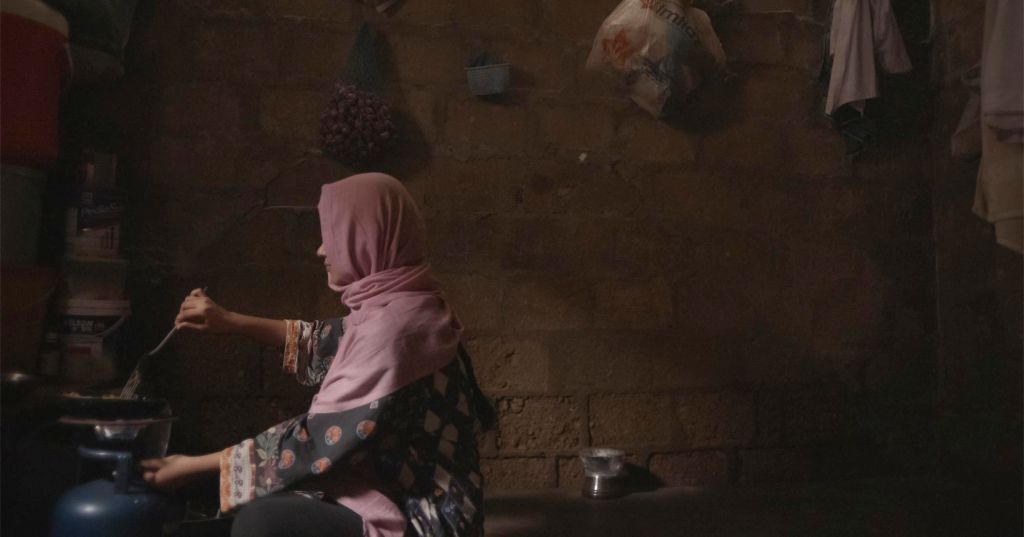
The stakes of the competition heighten as Sonia needs to get her parents’ documentation (or whatever pieces of identification exist) through the complicated system so that she may be recognized and get a passport. Moreover, one watches as Sonia summons her agency and makes the case for not only her right to compete, but to live on the record. It’s a clear result of the impact that gymnastics have on her strength of spirit. Nosheen says it was important to observe moments in which the girls celebrate being Pakistani, not just in the arena, but in daily life.
“I was at the Pakistan Day celebration with these girls, and they were all dressed in green, celebrating this, and it gave me this really sad feeling,” says Nosheen. “Their reality is that they love a country that doesn’t love them back. There are a lot of kids who go through in the world with a similar upbringing, and it’s a hard thing to watch.”
Audiences watching the Gem cut might not encounter that bittersweet moment with the girls, but it’s one of the most effective sequences in the fuller theatrical version of the documentary playing to great acclaim on the festival circuit. The economics of Canadian film means that there are two vastly different versions of Gymnasts of Fisherman Colony in circulation. The shorter 45-min doc on CBC Gem plays like a classic competition doc. The action moves quickly as the girls make their way to the nationals. Meanwhile, the fuller feature version carries the thrills and the sports doc hooks, but finds more room to breathe and soak up the girls’ social surroundings. (The Gem cut, to its credit, hits all those necessary beats.)
Nosheen says that she and her team had to consider which ways to best tell the gymnasts’ story for the respective mediums. “Having worked in TV, first you make the feature cut and then you think of the film [in terms of] what’s the best story I can tell in this format for a TV audience, knowing the habits of TV audience and knowing their attention span is different,” explains Nosheen. “If a person has bought a ticket and is sitting in a movie theater, I’m not competing with phones—sometimes you still are—so you can give them a different experience. The theatrical is a much more immersive experience. There’s a six-minute beach dancing scene with very little dialogue. You can take those artistic liberties in a theatrical cut.”
Both versions of the doc credit different editors to help tell the story in the means that best serve different audiences. “I think we needed to change the team dynamic to be able to make sure that it wasn’t like a cut down,” says Nosheen, who notes that even the shorter edit comes from a process of addition as well as taking things away.
The Gem cut actually features a scene that’s not in the festival feature, as one moment sees Sonia’s mother visit lawyers to appeal on her behalf. In the feature, Sonia’s dad makes the trip. It’s a revealing window into the dad’s care for his daughter, but also the dynamics at play within their relationship, like when he bids her to run back home to fetch the papers he forgot. She naturally rebels.
But while men seem largely absent aside in the Gem cut, aside from Furqan, they play a significant role in the feature. Nosheen respectfully observes how the girls navigate daily life with dads, uncles, and—eventually—husbands. Nosheen says it was important to give men space in the film to help challenge preconceptions that people might bring to the story.
“Are there men who are patriarchal? Absolutely, but there are also amazing men,” she observes. “These girls are able to do what they do because they have the support of their fathers or the men in their family. They’re not educated men. These are regular Pakistani men who absolutely adore their daughters and are supportive of them, so that was a very intentional choice for you to meet those men who are part of their lives, who are uplifting the girls to be able to do the work that they’re doing.”
As some of the girls encounter twists of fate that come as part of being part of that patriarchal society, though, The Gymnasts of Fisherman Colony finds a key heroine in Sonia. She becomes the key figure of the story. She’s the true underdog and her scrappy determination to win carries even more weight as she shoulders the dreams of girls who can’t continue on the journey with her.
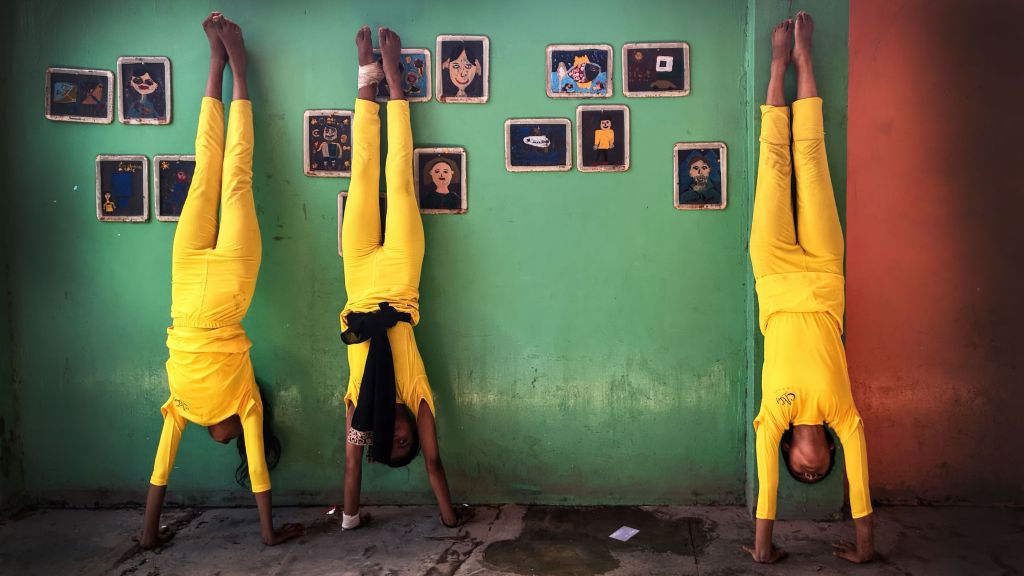
“If you want to understand girlhood in Pakistan, you need to understand this thing that they all have to deal with. And that, for me, makes the last girl standing even more powerful because it took a lot to get there,” says Nosheen. “Nothing has been handed to her by the time she gets to that competition. She’s had to really fight not only her socioeconomic status, but with the expectation of girls, and early marriage, and society, and her statelessness, for her to make it to that stage becomes even more of a moment because you know how many girls dropped along the way for her to be there.”
Nosheen says that giving love back to those girls, and situating their love within a story about a community’s pride in representing itself and the country, motivated her to go along the gymnasts’ journey. “A few years ago, I looked at my own body of work and I’ll be honest, I was a bit critical of it because I saw a gap: I had never had the opportunity to tell stories about Muslim women and girls that were centered around joy,” admits Nosheen. The filmmakers work prior to Fisherman Colony includes a mix of reportage and documentary that’s won three News and Documentary Emmys, plus the films The Devil’s Advocate (2021) about lawyers who defend clients accused of terrorism, and Outlawed in Pakistan (2013) about a young woman fighting her rape case within a patriarchal system. It’s heavy material, but Gymnasts adds another element to the conversation.
“If you look at my body of work, you might come across thinking women who look like me never have any fun, and that bugged me,” says Nosheen. “It really did because that’s also reflective of what we see in the media. We don’t have films and cinema and television that show women who look like me having any fun, being humans in a whole sense. We are always victims in the stories and we’re always experiencing something awful. But if we are concerned, and we should be concerned about the representation of Muslims in the media, I think we need to think about how do we make them as full-fledged human beings in cinema? And for me as an artist and storyteller, that’s what I tried to do with this film: If you’ve never met a Pakistani teenage girl, I want you to understand her humanity.”
Nosheen says it’s been inspiring to see the opportunities this girls encounter as their paths evolve. It’s much different from the opportunities she observed while growing up in Pakistan. “They are incredibly brilliant women who are navigating this every day, who are trying to make sure that girls have better rights than the generation before, and that change, as you see in the film, takes time to create,” she notes. “I’m definitely very hopeful for the woman of Pakistan, and making this film has just given me a chance to really see that firsthand.”
The Gymnasts of Fisherman Colony is streaming on CBC Gem.
Please check your local listings for additional festivals and event screenings for the feature.