


“When we really take time to look at something, it resonates in a way that it hadn’t before,” reflects Understory director Su Rynard. “With plants, humans developed a capacity to see motion more than static things because static things don’t threaten us in the same way motion might. There are all kinds of ideas behind it, but we don’t see plants as individuals.”
Understory invites audiences to see plants anew. The documentary, which premieres at DOC NYC, proposes a new way of looking at the world. Plants offer seeds of inspiration as Rynard speaks with writers, philosophers, and scientists who impart their perspectives about the intricate harmony that flora creates with the natural world.
Understory, which takes its name from the layer of smaller vegetation that covers the forest floor without peeking above the canopy, draws from the wells of three key thinkers. There’s Suzanne Simard, Professor of Forest Ecology at the University of British Columbia and the author of books including the hugely popular Finding the Mother Tree; in the States, there’s Robin Wall Kimmerer, the founder and director of the Center for Native Peoples and the Environment and a professor and best-selling author as well; and in Spain, Paco Calvo, a Professor of Philosophy of Science at the University of Murcia, studies plant sentience. The triptych of Understory offers to documentary what the recent arthouse film Silent Friend gives the dramatic world: a rich study of the interconnected rhythms of plant life and human life. It’s a reminder to stop and listen to what the plants have to tell us.
Rynard says that no one idea from the trio germinated the film. Rather, she says that encountering their complementary perspectives and unique ways of expressing their viewpoints together revealed an intellectual reset. “They have their own distinct practices and areas, but they actually share a worldview, this idea that we have to move away from human exceptionalism and reckon with our place in terms of where we are in the chain of being,” says Rynard. “Robin would say, ‘We need a new story,’ and Suzanne would say, ‘We need a fundamental rethink.’” And when Calvo says that plants can think, Understory adds an unexpected layer to the conversation.
While Understory draws from three intellectuals, it keeps the big ideas and science of it all accessible. Simard and Kimmerer, after all, have large followings thanks to their books that speak to readers outside the scientific community. Calvo, meanwhile, has an amiable way of imparting his scholarly work. All one needs going in is a willingness to embrace new ideas and to tap into parts of one’s brain that adapt to fresh approaches.
Rynard admits that coming to the science from a cinematic perspective rather than an academic one helps distill the info. The filmmaker, who’s previously tackled subjects of botany, ecology, and animal life in docs like The Everlasting Pea (2024), Reef Rescue (2020), Mosquito (2017), and the festival circuit hit The Messenger (2015), says she usually looks to books to help her along the journey of translating the info into something that works for audiences.
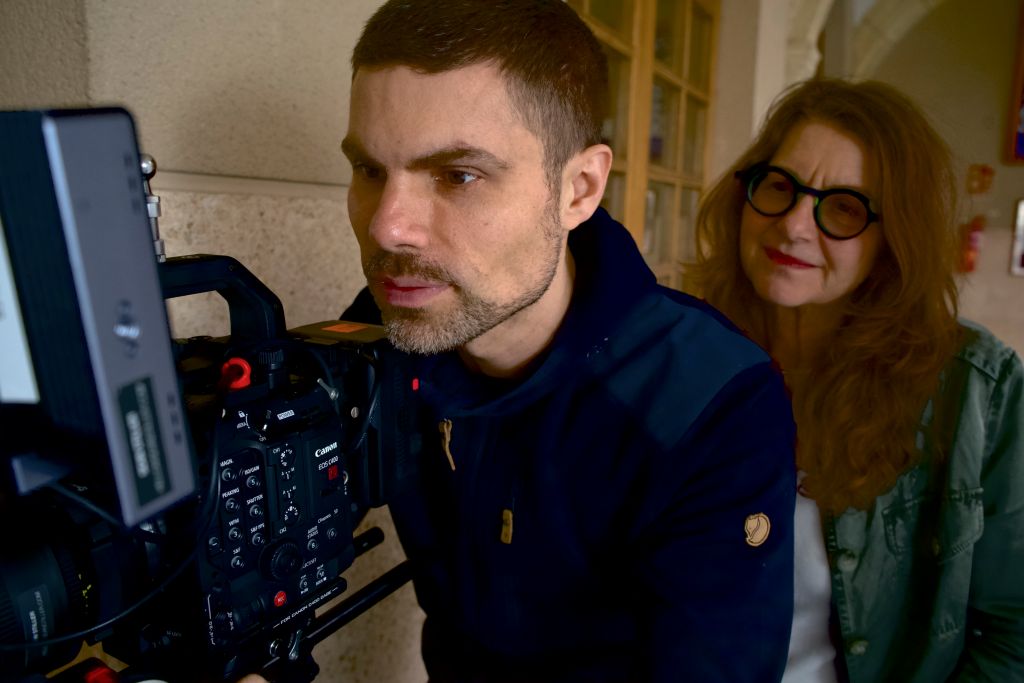
“You can’t be overly reductive or overly simplistic, so it’s very hard to synthesize and reduce even the amount of words that someone says to make the point and to make it accurately,” says Rynard. “I do feel that responsibility. I don’t want to distort or overly reduce anything.”
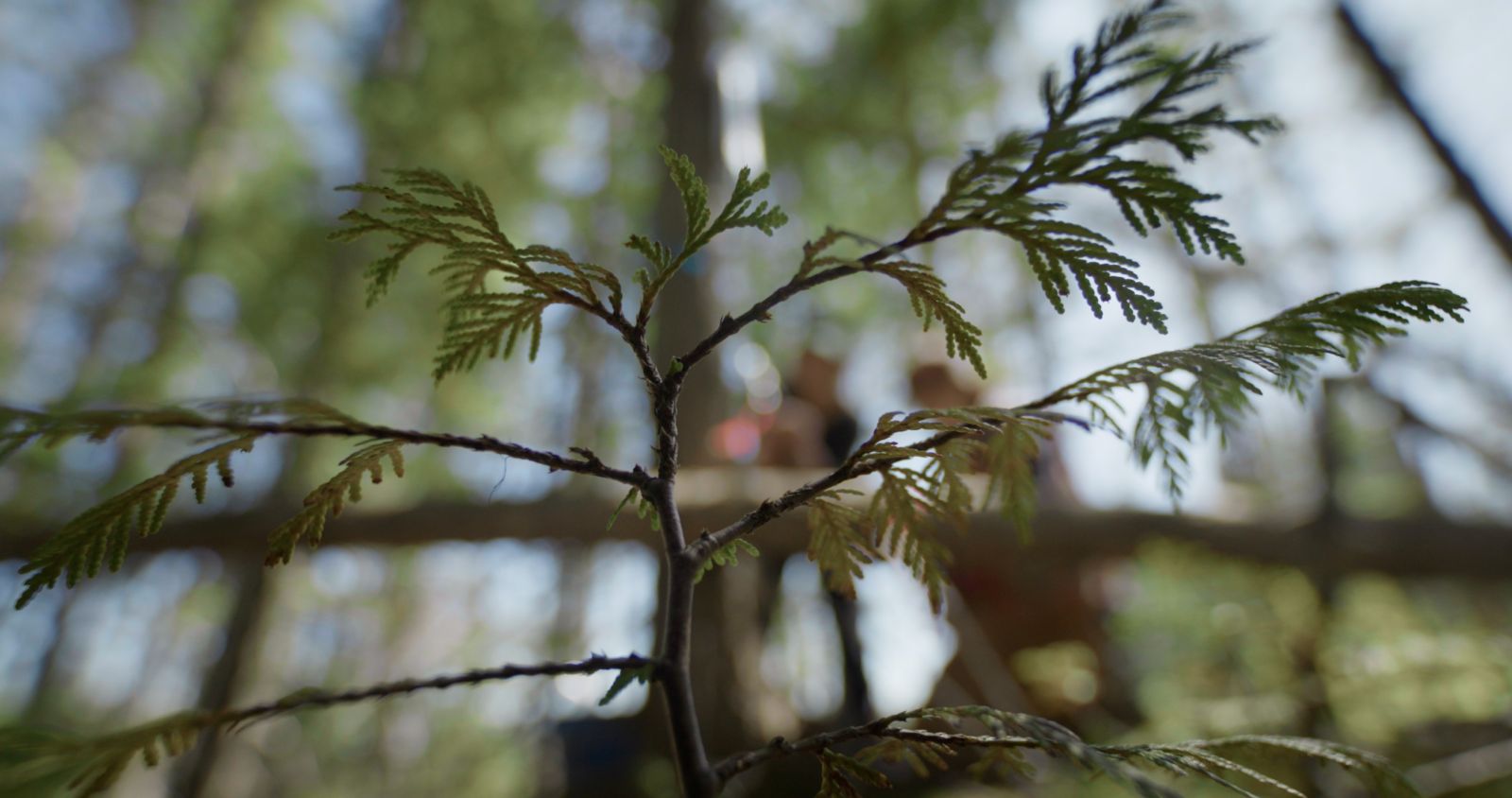
The film frequently pairs the reflections shared by Simard, Kimmerer, and Calvo with sumptuous shots of plants. Understory most closely resembles Rynard’s The Messenger, which boasted extraordinary macro shots of birds in flight in its study of avian-human relations, as it presents macro-cinematography of plants, along with time-lapse sequences that convey the evolution of a plant as seedlings sprout. It’s a perfect visual equivalent to the ways of seeing proposed by the participants.
“There was this idea of seeing plants in a new way, and The Messenger was about seeing birds in flight. People would say to me, ‘I’ve never seen that before,’ so I brought that to this film,” says Rynard. The closer look proves both literal and figurative.
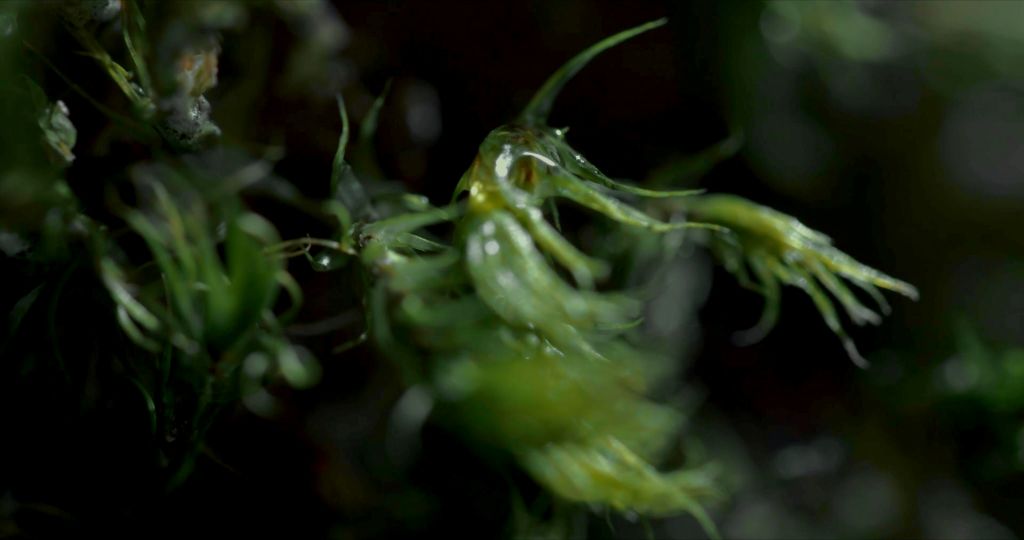
“There’s this concept called plant blindness where we see plants as a green background against the backdrop of our lives,” Rynard continues. “People don’t distinguish between them.” The director says it was a bit depressing, if enlightening, to encounter research saying that people are more likely to recognize a diversity of hockey team logos than to distinguish different kinds of plants.
“If we’re going to start to appreciate plants for the capable creatures that they are, we need to really take a close look,” says Rynard.
The time-lapse sequences take a cue from Calvo, who uses them in his research. He observes plants on their time scale, reflecting the philosophy of shifting our habits rather than expecting other living things to adapt to us, and then brings the research back to our time scale.
“He condenses time and observes them, and that’s how plants reveal their behaviours,” explains Rynard. “They’re actually making choices. They do things that aren’t just mechanistic; they respond to things.”
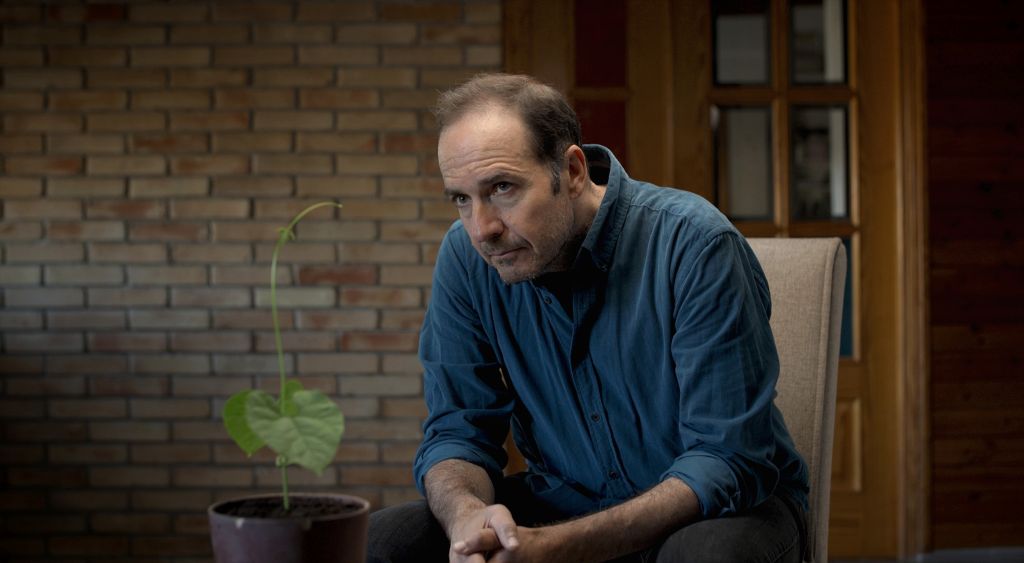
Rynard says her team tried echoed Calvo’s research by shooting pea pods, mapping their growth, and capturing their life cycles over time to create the time-lapse sequences. The images convey in mere seconds a growth period that lasts for six weeks.
“We got the same seeds that are in the lab, so we’re using the same specimen, but we’re not pretending it’s the experiment,” says Rynard on her process with time-lapse cinematographer Garath Whyte. “He would grow them and start the plants at different times so that you don’t have to be filming for six weeks. He’d grow 10 different plants weeks, and then he would just film them. It was all planned out and storyboarded, and then to see it was always fantastic.”
The visually striking film actually credits three different cinematographers as part of its exquisite design. While the UK-based Whyte does the time-lapse, Bulgarian-based Canadian cinematographer Don Komarechka lenses the UV and macro sequences, while Vancouver-based DP Sean Stiller, a member of the William’s Lake First Nation (T’exelc), part of the Secwépemc Nation, leads the vérité shoots. Rynard says that the three cinematographers never saw each other’s work throughout the process, so it was a matter conveying a trio of visions into a cohesive unit, much like the film does with its key speakers.
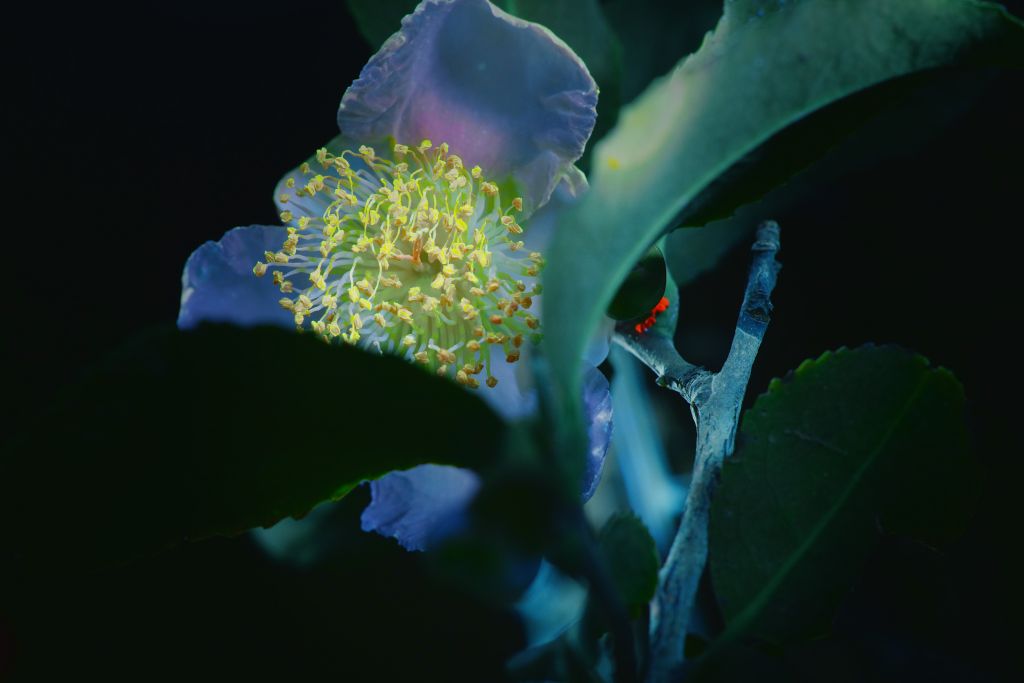
The extended visual sequences, which include animated pieces to convey the life force of plants, along with evocative, languid vérité shots in the lush forests of British Columbia, leave audiences lots of space to expand their horizons. Rynard says that giving the film room to breathe came from a desire to shift the conversation about what eco docs can be.
“Often, a few years ago, you’d end with a crisis or a question or a call to action. Nowadays, there’s exhaustion from the media. Every day is a disaster,” says Rynard. “Even for my own sensibility, I needed to make something that was beautiful, something that was immersive, something that had a deep message, but wasn’t screaming at you. Where do we have room to contemplate?”
Understory frequently circles back to perspectives whose roots have been in the forest as long as the old growth trees have. Simard’s Mother Tree Project works closely with members of the Kwiakah First Nation, while Kimmerer hails from Potawatomi Nation, so both their practices look to Indigenous philosophies to help recalibrate Western ways of thinking with the energy of the forest.
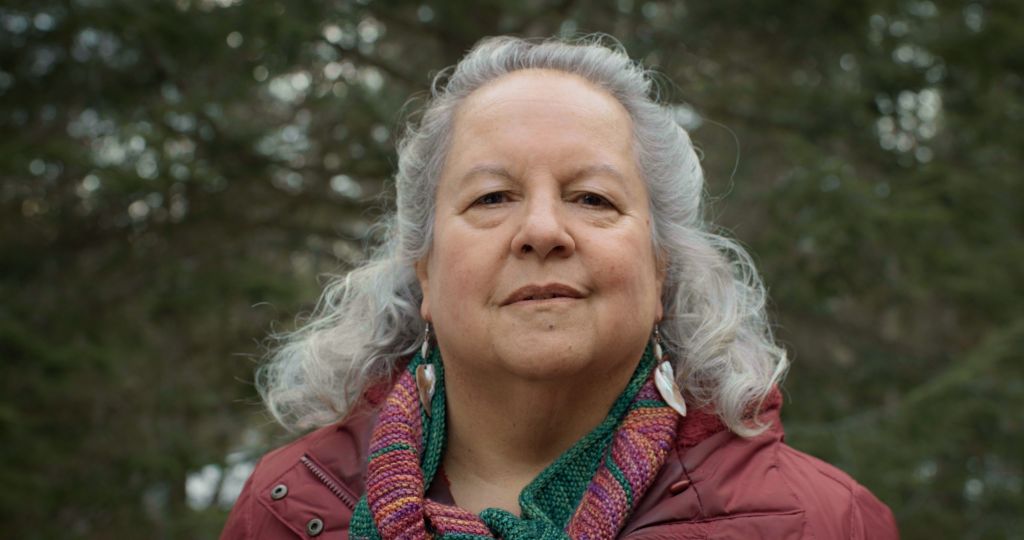
Rynard notes that producer Nadine Pequeneza (Last of the Right Whales) created an Indigenous circle to instil within Understory a collaborative process with Indigenous participants while sharing the story. Working with Kimmerer and participants on both sides of the border, along with Jennifer Wemigwans of OISE’s Indigenous Knowledge Education program, Understory undertook a feedback loop to integrate Indigenous perspectives into its design from the earliest stages. Members of the Indigenous Circle would discuss the project and offer their assessments to the filmmakers.
“It was fascinating to see what they talked about, what was working for them, what they had questions about, what resonated, and what were their own internal discussions because they didn’t know each other,” observes Rynard. The filmmaker adds that participants in the circle weren’t coming from film backgrounds. Rather, they were writers, activists, hereditary chiefs, and other knowledge keepers.
That process is totally in line with the film too, because it’s about taking the time to find new methodologies and practices. Rynard says it helped shape both the film and her perspective, even from early stages where a shot of trees being hauled away by logging trucks inspired remarks of grief for lost grandparents. The elders, of course, being the trees and therefore a reflection of the connection between humans and plant life.
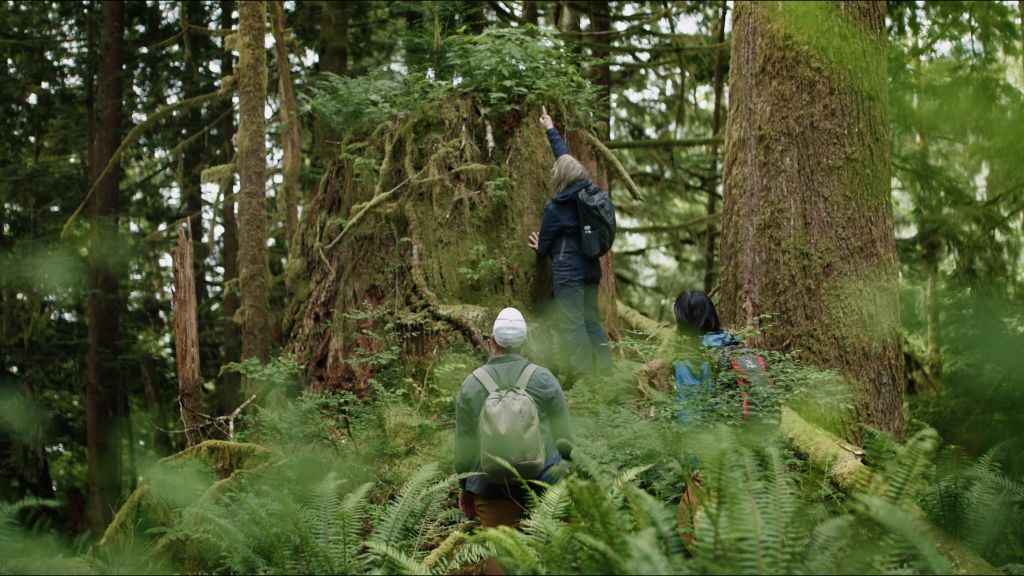
“I know from Robin that there’s a concept that plants are people, but when they actually started to use the language that’s in the film, you see they’re relatives,” says Rynard. “I knew that intellectually, but I didn’t know it viscerally.”
Understory’s philosophy for embracing innovation of thinking required a similar approach on the funding level. At a time when broadcasters emphasize house style and on-brand personalities, and rinse-and-repeat celebrity bios/true crime stories, Understory’s team found early champions in the Redford Center, a U.S. non-profit founded by Robert Redford and his son James to support environmental impact filmmaking, and Telus Independent, a pilot program from the Canadian communications giant recognizing that “the creation of meaningful solutions to social, economic and environmental challenges requires all voices, deep empathy, and new ways of thinking.” The Spanish connection with Calvo’s involvement helped the team to score support through the Caixa Foundation, a Barcelona-based culture, philanthropic and non-profit that stems from the national bank with an eye to support social change, scientific research, and educational development. All this helped make Understory a relatively rare Canadian-Spain co-production in a fickle market.
“To Nadine’s credit, she was able to pull all that together in a magic and make it work for the Canadian financing system,” says Rynard. “It’s not easy.”
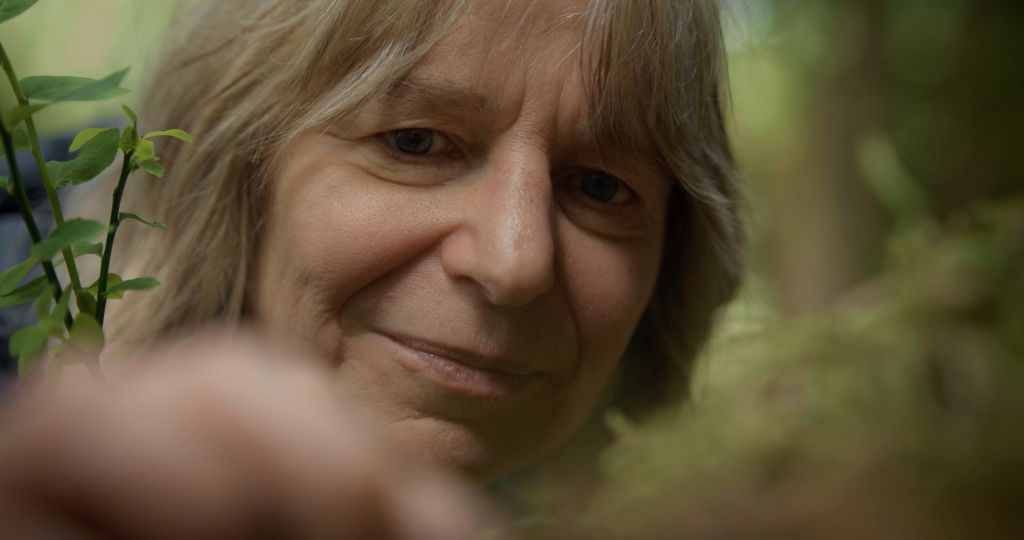
Finding a new avenue outside traditional gatekeepers is never easy, and Understory also shows what happens when innovative minds share fresh approaches. Simard, Kimmerer, and Calvo reveal the backlash they received to their work, including lost deals and excoriating rebuttals to peer-reviewed assessments and endorsements that helped audiences embrace their ideas. But the deep thinkers carry on knowing that inspiring change never comes easily when people settle into comfort zones.
Rynard says she hasn’t encountered similar counterattacks personally in her work, but that the participants’ level-headedness provided further inspiration that she hopes audiences embrace. “Science has always been at odds with power structures historically, so backlash is not new,” says Rynard. “It’s a paradigm shift. They’re looking at things so differently that it’s a new epistemological view. It’s quite radical, and that really shakes up some people’s worlds, and they’re not ready for the conversation. I am.”
Understory premieres at DOC NYC on Nov. 13.
Please check your local listings for additional festivals, event screenings, and broadcast dates.