



“I come at this, not as an activist, but as a lifelong journalist,” says Sentient director Tony Jones, “so we have an ethic of trying to understand both sides of any story, and to not just take a side. I think that it’s up to people to make up their own minds.”
Jones makes his feature directorial debut with Sentient after years as a veteran journalist at the Australian Broadcasting Company. He brings to the project a journalist’s eye for covering a story from all angles. The multitude of perspectives is key to this eye-opening documentary, particularly as it tasks audiences with confronting the moral, existential, and practical questions entailed within the controversial practice of animal testing. Sentiment considers how the animals on which scientists test everything from vaccines to household products have inner lives and feelings of their own. Researchers in the field, along with veterans who left the practice, weigh in about one of the most hot-button debates in scientific research.
Sentient has its world premiere in the World Cinema Documentary Competition at the Sundance Film Festival this year, and it’s bound to get audiences talking. Jones, speaking with POV via Zoom, says he first found inspiration for the film in a controversial talking point. Jones says he was chatting with Australian ethicist and philosopher Pete Singer, author of the animal rights book Animal Liberation, who made a provocative argument. “He said, ‘In years to come, we’re going to look back at what we do to animals in this era like we look back now at what we did with slavery in the 19th century,’” explains Jones.
The director says he was struck by the complexity of the statement since animals and humans are different beings, but that provocative statement immediately got him thinking of bigger picture questions. “I started to think it would be really interesting to make a film or a series about animal sentience and the new science about animal sentience: What it actually means these days when we understand how smart, how connected these animals are, how much they think and feel, and particularly how they feel,” says Jones. “We stumbled into the area of animal experimentation because, in a way, experimentation and testing on animals is perhaps the most extreme form of animal usage that you can imagine.”
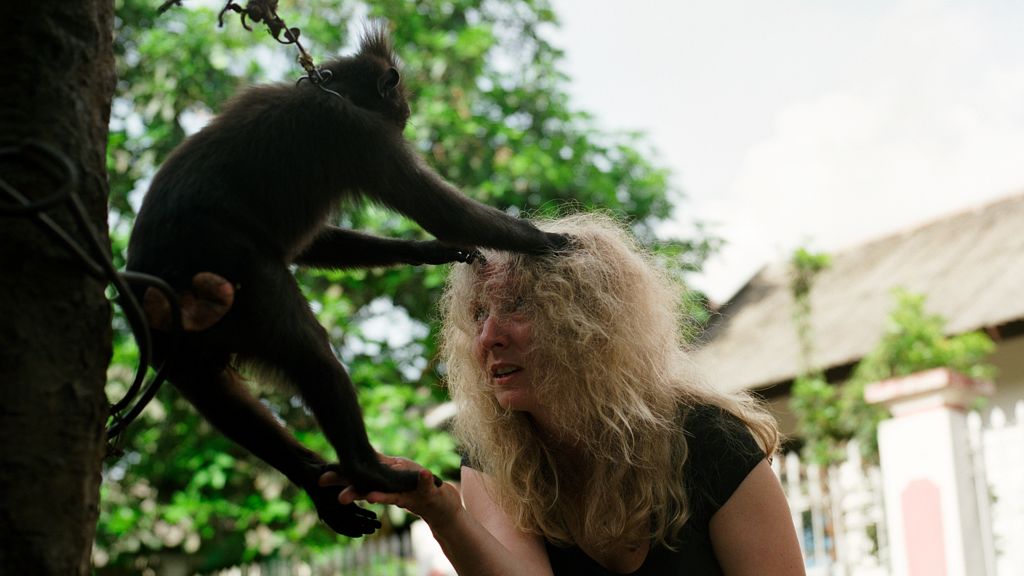
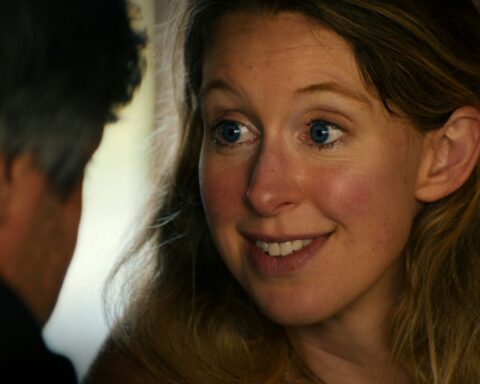
Chief among the figures through whom Sentient explores the question of whether it’s possible to continue to justify testing on animals in the name of science is Dr. Lisa Jones-Engel. The former primatologist from the University of Washington shares how she began her career caring for monkeys, serving as a surrogate mother when infant primates were taken from their parents and then nurturing the animals as they underwent testing. She tells how animals bonded with researchers and vice versa, making her job a painful cycle of building relationships with an animal that she would ultimately kill. Now an advocate for animal welfare who keeps photos of late test subjects alongside pictures of her own human daughters, Jones-Engel’s story as an unlikely activist provides Sentient with a personal journey through the cruelty of testing. She shows how there a consequences for animals both human and non.
Jones likens Jones-Engel to the Jane Goodall of macaques, those petite and highly personable primates scattered throughout Asia, northern Africa, and southern Europe. Their highly adaptable nature makes them a resilient animal, but also an ideal test subject for vaccines and products meant for human consumption.
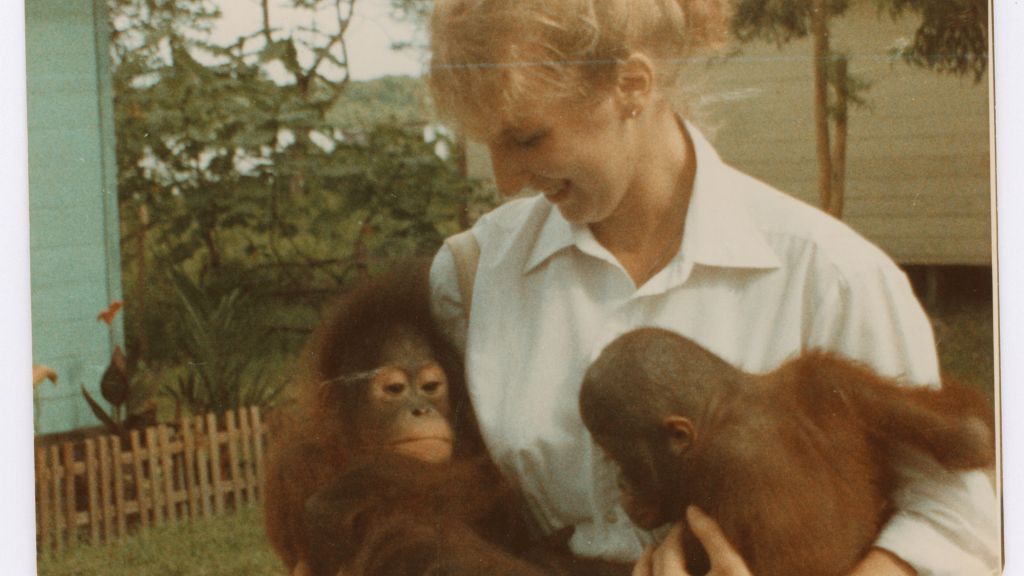
“You can see through her life story that she begins as a young 17-year-old in the jungles of Borneo with orangutans and macaques, and she grows to love these animals in a very deep and quite profound way and feels a connection with them,” explains Jones. “She was, in a way, the perfect character to hold the arc of a film because she’d not only worked for many, many years with monkeys, but she worked as a young woman in the LEMSIP laboratories with chimpanzees.”
LEMSIP, or the Laboratory for Experimental Medicine and Surgery in Primates, serves as a catalyst for Jones-Engel to become embedded within the field of animal testing. In the film, she cites the words of her mentor, James Mahoney, who advocated for the proper care of the facility’s chimps in service of their research. “The science has to be impeccable and the animal welfare had to be as good as it could possibly be,” Jones-Engel explains, quoting Mahoney.
However, as LEMSIP eventually came to close in 1998 and Mahoney in turn became an animal rights advocate, he and Jones-Engel came to see his adage as the very advice they needed to leave the field. Sentient explains how the science, as impeccable as it may seem, doesn’t have the best track record. Even though animal testing has enabled many life-saving vaccines, roughly 90% or more of the clinical trials fail when applied to humans. This reality means that millions of animals die annually in the name of science without much to show for it.
As Lisa shows Jones photos of her beloved macaque Digger and then moves along to photos of her daughters, she shares the a-ha moment that inspired her abandon a successful career that won numerous grants and scholarships. “So much of that is wound around mother-daughter relationships,” observes Jones. “That what I find really moving. In her own relations with her daughters, she sees the reflection of the mother monkeys and mother chimps and how they love their children as well. I think that’s something that people, especially mothers, but fathers too, really understand at a deep emotional level. The moment brilliantly edited by Rachel Grierson-Johns captures the deep well of emotion that Lisa taps into when she thinks about why she couldn’t do this anymore.”
Lisa’s personal archive of family videos intimately connects with the extensive video archive of her work in the field, including a heartbreaking moment where she and other researchers seek to cage a baby macaque. As the mother seeks to protect the baby, all the elders of the troop rally to save the youngster. The archive shows the researchers playing a futile game as they try to deter and deflect the elders, but ultimately lose the fight and release the baby.
The archival footage also shows the limits of progress in the research. The interplay between the older images and the contemporary ones illustrates how technology changes, but some of the practices don’t necessarily evolve with monkeys strapped up with devices implanted in their heads or are attached to masks that feed them inhalants while their bodies writhe in restraints. Jones points out that cameras have been entering the labs for decades with Frederick Wiseman’s 1974 documentary Primate observing researchers doing clinical trials with animals, and one can sees how little changes.
“There’s a little more concentration on better conditions, particularly in the research laboratories, but not in the testing laboratories. They have slightly bigger cages than they used to, but overall, the life of these animals confined in these cages remains very similar over many decades,” notes Jones.
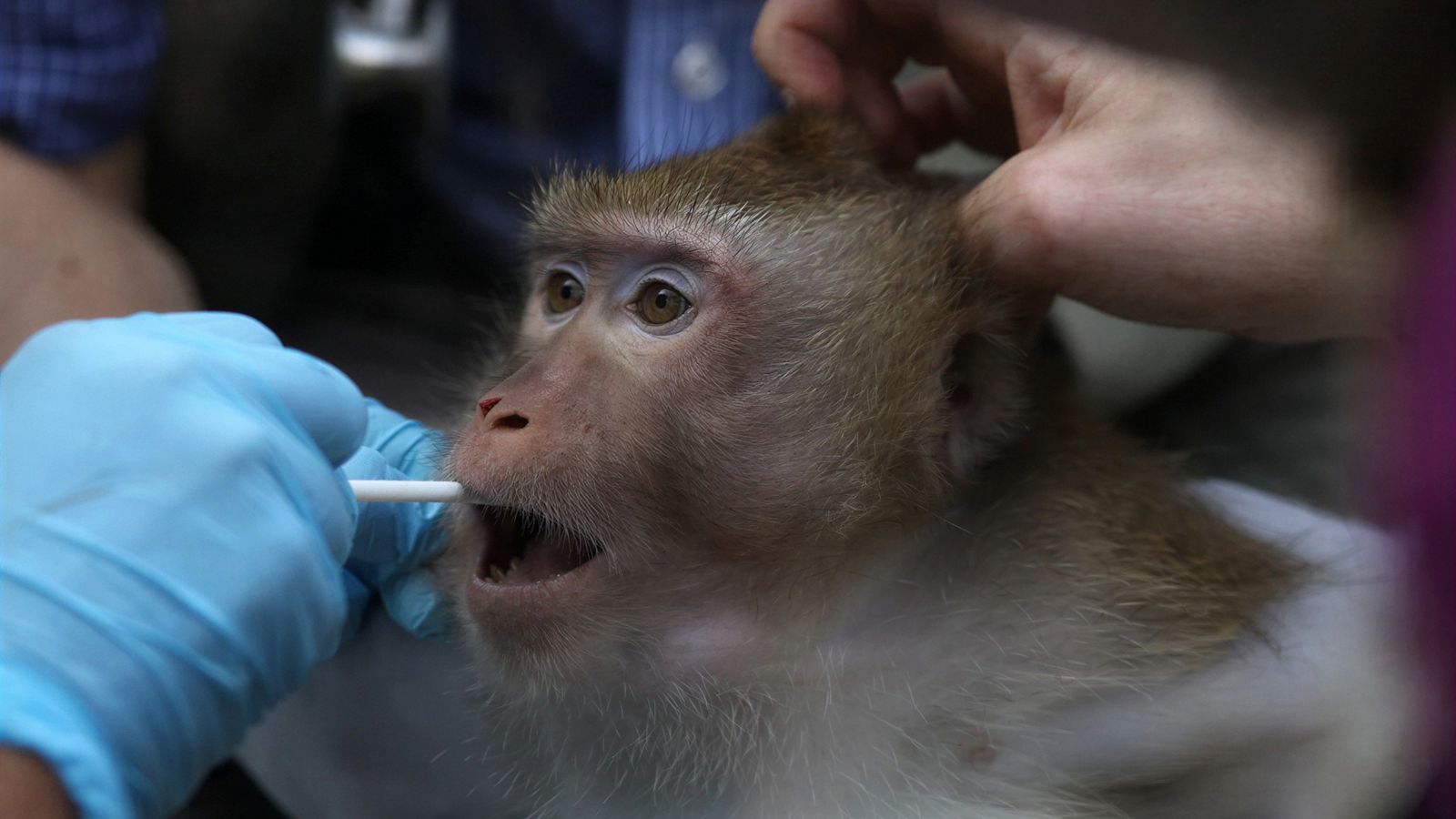
However, the film observes how some key individuals in the field do emphasize the well-being of these animals. Sentient follows Dr. Sally Thompson Iritani at the University of Washington’s Primate Center, for example, as she shows the extensive efforts to provide for test subjects. But the film also features a great scene that illustrates animal sentience when the camera follows Dr. Thompson Iritani into the lab. The monkeys respond quite aggressively to the camera as they identify an unfamiliar intruder.
“When I talk about this film being about empathy, it’s about empathy not only for the animals, but for the people that work with the animals,” explains Jones. “And one of the reasons Dr. Sally Thompson Iritani allowed us in, actually, was so that we could speak to her coworkers about the effect it has on them. And they wanted to be honest about this, and they’re trying to confront this really serious problem they have, which is, it’s affecting people quite deeply. And you can see that in the film. But that was literally our first entry into any part of the lab.”
Jones points out that the researchers and film crew are wearing full-body personal protective equipment (PPE), as one sees in the film, to protect themselves from viruses or diseases the monkeys may be carrying, particularly a serious Hepatitis B strain carried by macaques, but also to protect the monkeys from possible transmission from humans.
“My brilliant cameraman, Andy Taylor, was having to film with full PPE, so he’s trying to keep focus while wearing a plastic mask in front of his eyes. It was extremely difficult,” explains Jones. “But, of course, the animals are really jittery. Even though we’re dressed in PPE and probably look like a bunch of weird snowmen, they still are able to identify new people in their environment. They’re very sensitive to humans for obvious reasons. Their curiosity is intense and their reactions are pretty intense as well. You could see almost human-like responses.”

Jones adds that while the University of Washington provided some wonderful access, other aspects of the research were strictly off limits. For example, Jones says his team wasn’t permitted to film monkeys whose skulls had holes bored into them with devices wired into their brains, even though one sees similar tests in the archival elements. “They didn’t want us to film that because they thought it would be misconstrued. But I think really what they’re thinking is it’s too confronting for people to see how this really works,” suggests Jones.
Sentient introduces the element of compassion fatigue that exists within the facilities as researchers and carers begin to confront the reality of the practice. The film notes how labs adopt euphemisms for euthanasia, like “sending to necropsy.” Animals are killed when they complete their phase of the research process. Even if a vaccine seems successful, Sentient shows how the animals on which it’s tested are then killed so that researchers can analyse its effects on organs.
While some of the participating facilities limit access to the nitty gritty reality, Sentient also features some disturbing footage shot undercover by workers in British testing labs. The covert nature of the footage gives a firsthand view of the traumatic work that the carers provide, like tethering monkeys to breathing masks or carrying perky dogs to the killing room.
Jones remains a bit mum when asked about the undercover footage in order to protect his sources, but notes that it comes courtesy of two employees who acted separately and didn’t know each other while filming at different facilities. “They both were quite long-time employees in the facilities and made their judgements that they didn’t like what they were doing and they thought the public should know what happens in these facilities, so we got access to that,” explains Jones.
The director notes that he got access to the material via Lynn White, who runs Animals Australia and served as a consultant on the film. Jones says that the film received support via Animals Australia’s foundation, in addition to support from Screen Australia, which facilitated access while granting him editorial independence. “We were provided that footage by them, so we had access to many, many hours of this footage filmed by employees, and we made selections that represented the life of an animal inside those facilities from the very moment of their arrival through to the earliest testing process to their caging and then through to the end of their lives,” explains Jones.
One of the lab employees does reveal himself in the film and, like Jones-Engel, provides an emotionally compelling witness to cruel practice.
However, as Sentient introduces alternatives to animal testing that are available thanks to innovations in technology, like chips, organoids, and A.I. models that can replicate the effect of a test on a human organ, the documentary presents different sides of a complicated debate. This includes an effective tour with lobbyist Dr. Cindy Buckmaster, who makes compelling presentations about positive breakthroughs that happened thanks to animal testing and asks people in the room if they would have volunteered to be guinea pigs for vaccines. Even animal lovers in the film admit that it’s simply a reality that clinical trials remain necessary.
“Obviously I find myself sympathetic to those who want to create medicines. I take medicines myself. We all do. Who does not?” says Jones. “The COVID vaccine was critical to getting us back to normal life as quickly as possible. I think the film is very far from being anti-vax in its perspective, so we want people to understand that, but also to understand that if you want to change this, then taking advantage of the science that’s now available requires reinvestment on a large scale because there’s a lot of money that’s gone into building these worlds of animal testing.
“In order to change that, you need a radical approach,” Jones continues. “People should understand if they want that to happen, it needs to come from their tax dollars to some degree. But also they need to tell the industries, ‘We don’t think this is a good idea to do this anymore. We want you to move in this direction.’ I feel that our film may give people the tools to make those decisions.”