


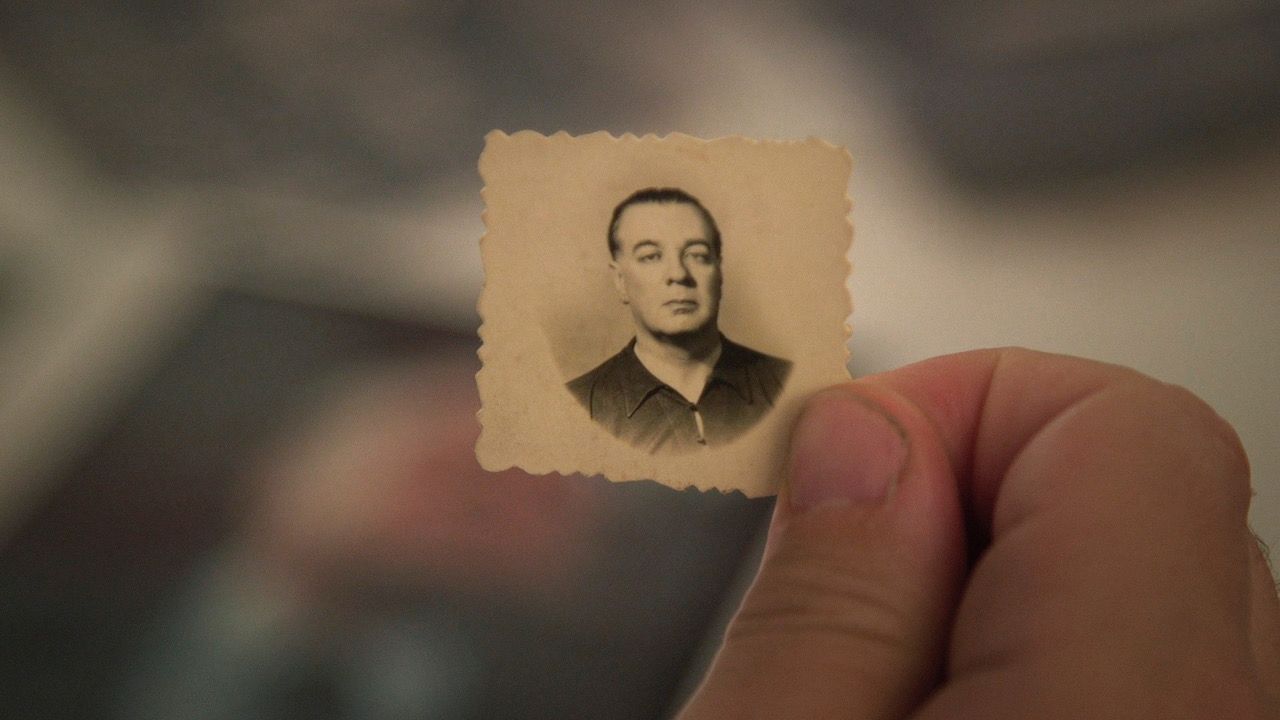

Life of Jorge Luis Borges
(Argentina, 324 min.)
Dir. Mariano Llinás
Prod. Laura Citarella
Programme: Wavelengths (North American Premiere)
As far as length goes, Life of Jorge Luis Borges, at 324 minutes, is on the shorter end for Mariano Llinás. The Argentine filmmaker’s previous film, La Flor, which is made up of six distinct episodes captured over a decade around the world in collaboration with 100 participants, settled for a mere 808 minutes: the time it takes to fly from Houston, Texas to Tokyo, Japan.
But as with the filmmakers part of the El Pampero Cine collective that Llinás co-founded in the early aughts, which includes director Laura Citarella, whose acclaimed 2022 film Trenque Lauquen is 262 minutes, length—though, perhaps, it would be more precise to say the expanse of its breadth—is part of the principle. This is a cinema cast in the mould of epic and serialized novels; a lucid constellation of deep-dives and detours powered by unyielding obsessions. This is Herman Melville territory, which, depending upon one’s tolerance for circuitous and contiguous investigations, is utterly timeless and audaciously uncompromising.
For Llinás, who is both garrulous narrator and one of the film’s subjects, his white whale and organizing principle is Borges, that celebrated Argentine author who went blind at 55 and is best known for Ficciones and The Aleph; though, as the prologue, in which a faceless, recurring figure referred to as “The Reader” stacks book after book, which go tumbling down, there is a larger body of work to contend with. Whether one arrives to the film knowing about Borges matters little, since what this intellectual film is interested in is the obscured fictions that the iconic and complicated writer left behind in his wake: in the corrections of his prose, commas in his poems, omissions in later editions, and the lovers who inspired his art.
Borges’ scope is restricted to close-readings of the objects located in the archive that produced the film, which include childhood drawings, letters, postcards, and an annotated manuscript. Along with fellow neurotic researcher and Borges enthusiast Ernesto Montequín, whose stately, detached air balances out Llinás’ roughshod intimacy, the film assembles itself before our eyes. (Llinás constantly adjusts and faces the camera, puncturing the formal posturing of conventional documentaries.) The screenplay, divided into three parts and often displayed as a Word document, is structured in 26 chapters—from A to Z—chronologically tracking the pivotal phases of Borges’ life and even, in one digression, the very “nuptial bed” where his parents possibly conceived him.
Composer Gabriel Chwojnik’s main musical theme and ghostly recurring refrains lend the film a playfully suspicious tone, as if something is always afoot, which mirrors the magnifying glass that constantly scans the texts. Cinematographer Agustín Mendilaharzu’s warm, digital palette and direct framing never relies on “beauty” to render its world, instead providing a sense that the film’s accessible vision is still coming to life, finding wonder in mundane instances such as a swan fighting the current of a lake in Geneva that Llinás flags in the first hour as the film’s end (there’s a callback to it in a Reykjavik chapter, but it’s not). Credit to the film’s breezy, undreadful manner is wholly owed to editor Ignacio Codino for making the journey so smooth, so active, so light, and for allowing Llinás the pure poetry of a minute of irrelevant yet necessary footage of the streets of Montevideo. If any mental irritation arises along the way, it is not in the tidiness of form, but, on occasion, the focus of its bulky content.
“Life enters writing through digressions,” Llinás says, quoting the writer W.G. Sebald, yet not all life resonates the same. In one extended sequence, Llinás becomes fixated by a jade green notebook that shows up as blue on camera, which he adjusts in the light until it accurately reflects; more comedic than humorous. In another, after he narrates a chapter titled “Sexual Borges,” the actress Milva Leonardi listens to it on headphones in its entirety to little effect. More engrossing are the sequences when Llinás is compelled to explore stupefying coincidences (a typo trades “Luis” for “Llinás”), to visit key locations (where he sees a familiar monolith he cannot later locate) or to brush up against failure and disappointment and wonder if these states of mind can be the film’s subject before—highly self-aware and reflexive—recognizing that very gesture’s unoriginality.
But in Part Three, when Llinás and actress Laura Paredes, a glowing fixture of of El Pampero Cine, perform an interview where Borges’ conservatism is openly displayed, a period of his life that the film rightly does not shy away from nor give him grace for, the film’s vivacity and gambit shines in full effect. Which is to say even in its imperfections, the psychological acuity of its narration, the irresistible off-kilter charm of its participants, and the act of witnessing a filmmaker thinking through and with cinema offsets any thorniness. Literature is made up of excess and errors, and the film intentionally, unabashedly follows suit. Your bladder be damned!
Only towards the end of the film, when Llinás shifts emphasis from Borges to Montequín, who, during the shooting of the film becomes executor of the writer, filmmaker and mentor Edgardo Cozarinsky, that his dogged efforts land on an insight that justifies the pursuit. “To imagine someone else’s life is also to imagine one’s own life,” he notes, observing Montequín reading a eulogy and branching out his empathy towards the film crew. “All these lives are inconceivable without Borges.” A reader’s film, Life of Jorge Luis Borges thus tells the story of many mad men of letters, who, in inviting Borges into their consciousness, seem to have inherited the extreme memory and heightened perception that inflict the title character in his 1946 short story “Funes, the Memorius,” who the narrator describes as “lacking in sense” but revealing “a certain stammering greatness.”