




The 49th Year
(Austria/Germany, Japan/88 min.)
Dir./Prod. Heidrun Holzfeind
Programme: International Spectrum (World premiere)
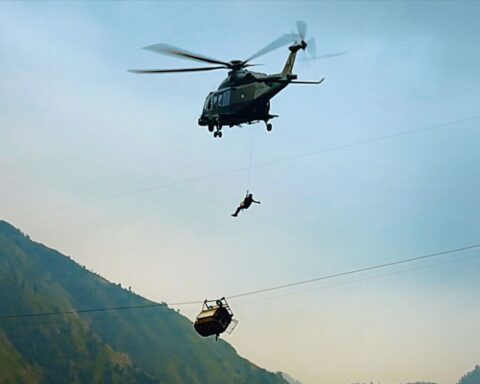
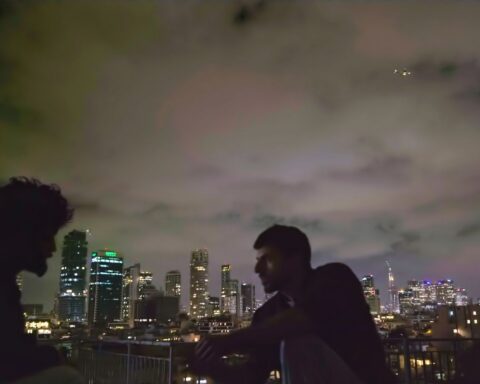
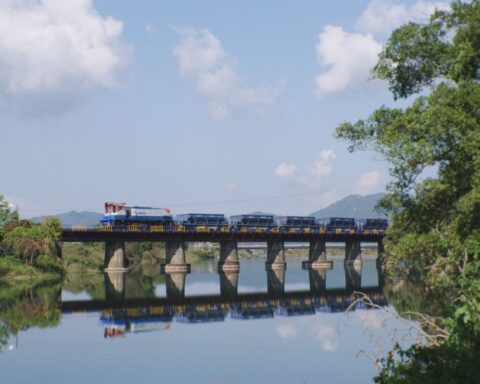
As a concept, The 49th Year, directed by Heidrun Holzfeind, is a promising film. In a voice-over, the activist Makiko Watanuki reads a selection of letters ranging from 1985 to 2025 by Toshiko Kamata, a political prisoner serving a life sentence for a bombing made in protest of the Japanese government’s violent attitude towards public demonstrations in the early 1970s. In response to the settings mentioned in his recollections, a montage of exterior shots, co-captured by cinematographer Yoshio Kitagawa, zeros-in on the sense of isolation that these locations harbor, evoking the alienation that Kamata lucidly articulates. For a long time, that juxtaposition between the interior mind and the exterior world forges an engrossing dialogue that, unchronological, decentralizes narrative and emphasizes philosophical rumination. Yet it soon devolves into a sleek meandering.
Opening with a prologue of flickering archival footage—which depicts demonstrations against the Vietnam War in 1969 and the US-Japan Security Treaty in 1970—and title cards providing vital historical context leading to his arrest, the film dives into Kamata’s mind and the elegant rhythms of his sobering, literary voice, which references the poet Lorca, writer Kenzaburō Ōe, and the light in Vermeer’s paintings. Kamata reflects on his intentions behind the bombing, the years he lived with his brother as a fugitive, and the reality of the prison industrial complex. “A prison is a mirror reflecting society,” he says: “The purpose of the system is pure labour.”
By the design of its order, Kamata is presented as a public figure familiar in our modern world: a lost man restlessly searching for purpose in reactionary yet revolutionary gestures. His is a cynical social criticism built upon resentment, stoked by ostracitization in society and in prison, his most revealing moments arising when he admits to having failed. Where the film errs is when it winnows down to draw a faulty line between Kamata’s experience and the rise of the far-right in America leading to Donald Trump’s presidencies. “This is not a time for change,” he urges, “but the beginning of the age of chaos.”
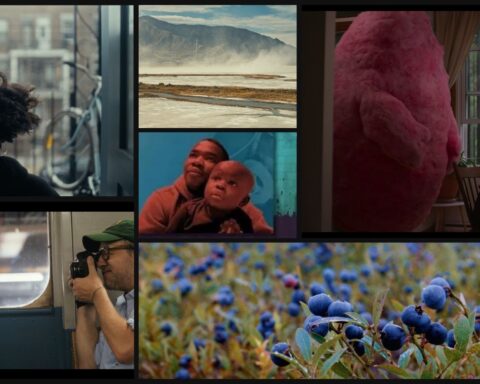
This sudden, stark angling towards the West blunts the film’s impact and supposed cultural interest in its site-specific images, revealing them to be the beautiful yet empty fascination of its filmmaker, rather than a tool to serve the radical visions of a contentious subject. The film attempts to render him relatable, merely glazing over current affairs, such as the farmer protests in Narita, and Japan’s continued acts of state oppression. Unexpected visual moments snagging one’s attention—a shattered tree pot, a spattering of pigeons, or a jazzy busker playing for Gaza in Shinjuku—are few and far between, more often failing to inspire the same intrigue as it does Holzfeind’s gaze.
Although The 49th Year hears from a zealous individual excluded from society, it doesn’t care to listen to what he’s saying or to try to see the world as he sees it. As the loosey-goosey credit sequence demonstrates, the film is ironically imprisoned by a restricted performance of its own conception.