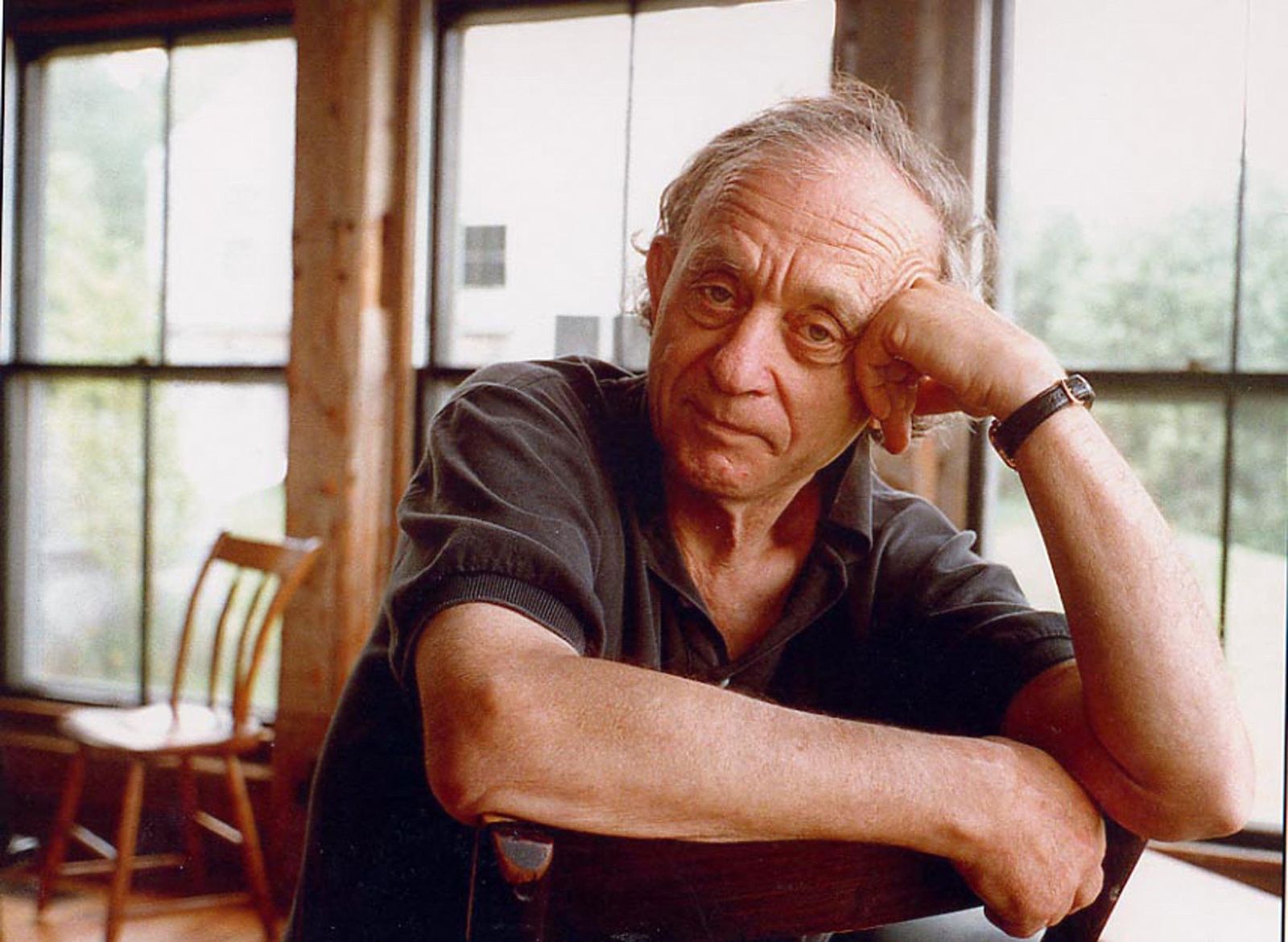



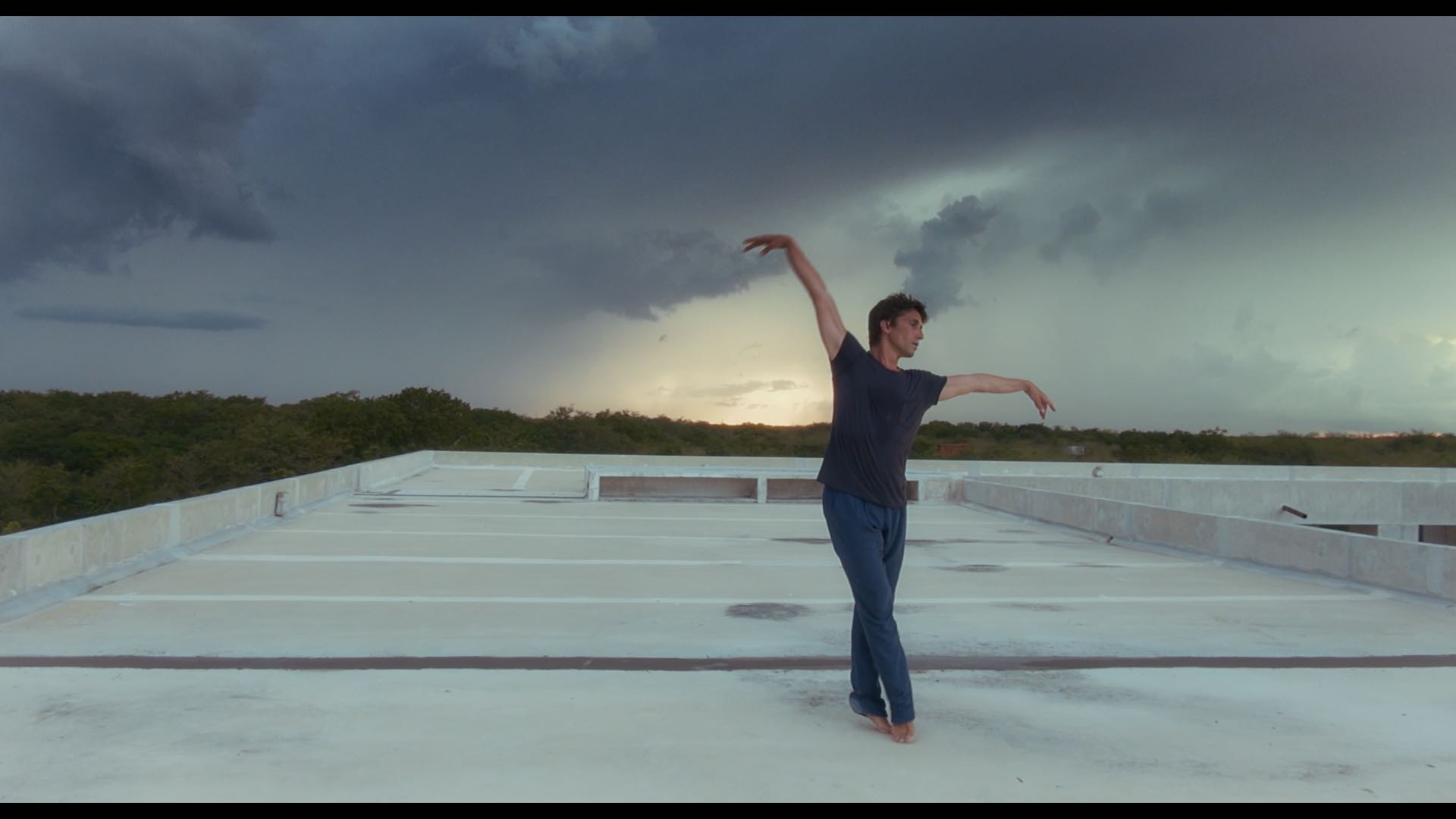

There is a hefty cost the human body pays for the sake of creating art; this is knowledge that ballet dancers, as artists and athletes, acquire from a young age and live with forever. In France, due to a custom dating back to Louis XIV’s reign, dancers are required to retire at the age of 42 owing to the demands on the body. In 2016, for Benjamin Pech, an étoile-level dancer with the Paris Opera Ballet, an injury to his left hip towards the end of his career suddenly limited his ability to jump and perform to the best of his dazzling abilities. In My Benjamin, the sophomore feature documentary directed by Victoria Clay-Mendoza, showing at Hot Docs, the spectre of a surgery looms over Pech’s life in the year of uncertainty leading up to his retirement.
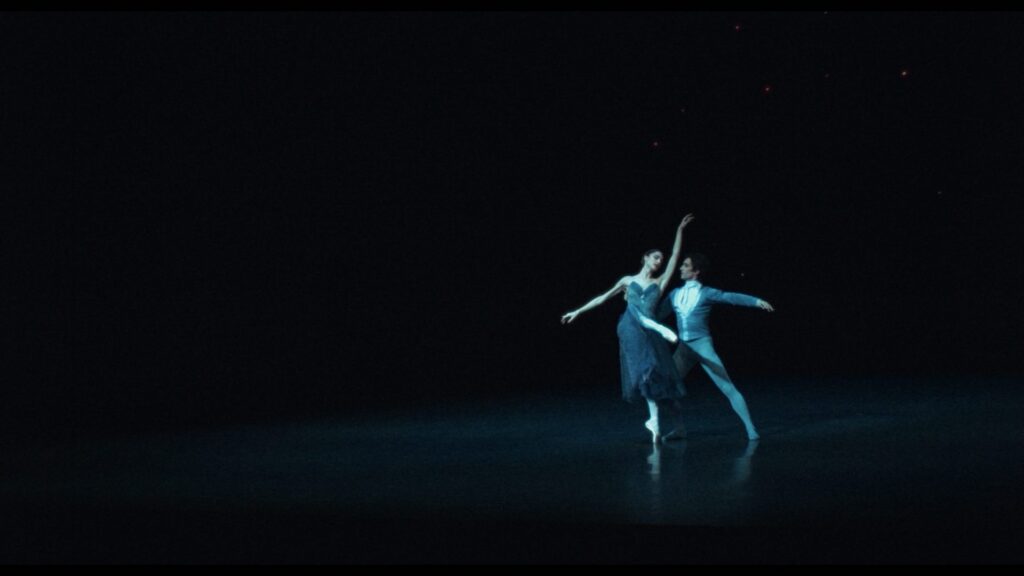
Weaving in stunning archival footage and featuring voice-over narration by Clay-Mendoza — providing a poetic personal frame for the intimate portrait of a public figure — My Benjamin is a record of the decline of an artist’s body, which, we gradually come to see, stores memories that seek emergence. “I dance with the memory of what I had in the past,” Pech says to the camera, which was also co-operated by Clay-Mendoza and takes a fly-on-the-wall, standing-in-the-wings approach. The filmmaker asserts herself, and own narrative, in the edit, which centres on her return to the Mexico of her childhood, where wild dogs roam, palm trees rot, and her mother — a former beauty queen — gradually loses her memory from dementia.
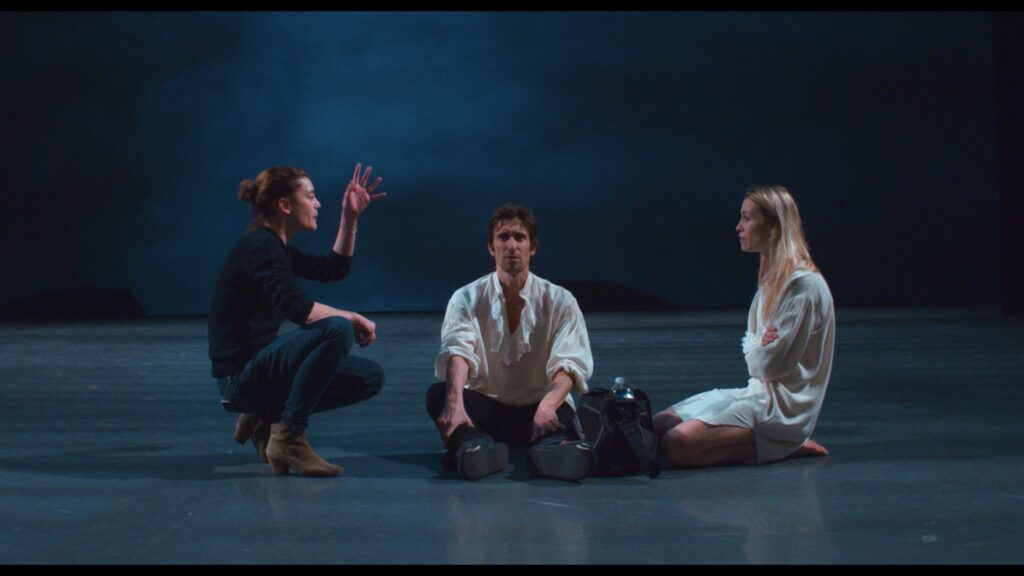
Briskly vacillating between behind-the-scenes looks into the ballet world — with its sweaty rehearsal rooms, elaborate preparations and nerve jangling — to the aphoristic reflections of her mind, Clay-Mendoza plumbs her obsession and observation with an artist whose escapist spirit has compelled her to document his swan song. “I keep it, I order it, I transmit it,” she fiercely intones. Over the course of its 75 minutes, with an unprecedented level of access and a cool distance, My Benjamin — which won the Audience Award at the 2025 Morelia International Film Festival — reflects on mutations of bodies and one’s shifting attachment to the world.
POV spoke with Victoria Clay-Mendoza via Zoom ahead of My Benjamin’s North American premiere in the World Showcase section of Hot Docs.

POV: Nirris Nagendrarajah
VCM: Victoria Clay-Mendoza
This interview has been edited for brevity and clarity.
POV: How and when did you first encounter Benjamin?
VCM: I first met him at the sixtieth birthday party of a mutual friend. I found him quite intriguing, the profile of his face, he’s one of those people you suddenly want to befriend. He was busy talking to someone else, but I started studying him. We danced all night and I remember thinking he was a good dancer, having no idea who he was. Because the dance was tango, and I’m Mexican, I thought, obviously I know what I’m doing, but how does he? We were just enjoying ourselves and the last ones out of the party, but not really talking to each other that much. We didn’t exchange phone numbers or get to know each other. But because we had this friend in common, I had encountered him like this: full of life, happy and gorgeous.
Then I saw him a few months later, in the subway in Paris. We were going to meet him to go to a concert, but he had become a different person: pale, sad and couldn’t really walk very well. By then I’d learned he was an étoile [the highest rank a dancer can receive at the Paris Opera Ballet], but when I met him this second time, which is when I started to really talk to him, I was so stunned because I could see something was going on. I asked him what happened and he told me his story: ‘I have one year left to dance, but I can’t dance like this. But if I get an operation, it will take away eight months of my last year.’ He didn’t know what to do. I remember thinking: what an idea. It’s like when a painter goes blind.
I’d known that there’s an athletic aspect to dance, but I could see that for him, and for most of the dancers that I am drawn to, it’s really the artistic side that matters. But if you don’t have the athletic ability, you can’t have access to the artistic realm. I became interested in the subject of “the end” of something. It is like a little death. These dancers know it from the day they enter the studio that they have to retire at 42, but it’s still intense.
I was living in Paris, not having a great time in my personal life, and he became my reason to be there: my outlet. I asked him: “Can I please follow you and just see what happens for this year?” All I wanted to do was be in the opera back then, and it was easy because at the time the other Benjamin—Benjamin Millepied—was the incoming director and the company was going through a modernization. He was changing the floors so that the dancers wouldn’t get hurt and wanted the younger dancers to be able to dance important roles. He was doing things considered sacrilegious to that institution and I was lucky because one of them was that he gave me an entry card and I could go whenever I wanted, as if I was one of the dancers. That was incredible.
At the time Benjamin—my Benjamin—was working with Millepied to gather his footing, as it were. He told him, “Somebody’s making a movie of me” and he said, “Sure.” Otherwise I would have had to go through different channels. It wasn’t very official or institutional or involving money. They would have never taken me seriously, so Millepied was essential in providing that.
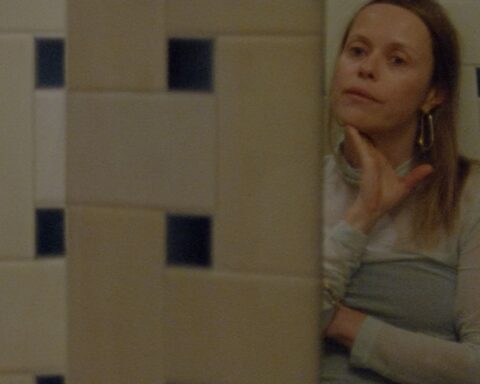
POV: There’s a scene in the elevator and we see you in the mirror and one of the female dancers says: “There’s too many people in here.” I believe it’s you who responds: “Is it me?” She doesn’t even look into your camera. It’s like, “Who is this foreign person that is allowed to be here with us right now?”
VCM: I was a complete intruder. Most of them did not like that. But there was Benjamin [Millepied] and a few other people who were more receptive. Benjamin was quite happy because I was witnessing what was happening to him. That’s why, in the end, it became My Benjamin, because we’d cultivated a friendship through the filming. This was back in 2016 and we were more friends than anything else, because I was going through quite a hard time and because I would soon have to go to Mexico. Quickly after that I couldn’t find the money to finish the editing of the film and then my mom got sick. Benjamin actually came to Mexico with me during COVID, and then he got sick, so all these things were happening. We spent three months together in my house with my mom alone, sick, but that made us even closer.
I remember my friends were telling me I should film this and I should do that, but it didn’t come naturally. I was trying to stay true to our friendship. We were just living together. I wanted to say just one truth, to be as truthful as possible. Sometimes, in the construction of things, I get a bit lost because manipulation must be used in some way. I’m not so good at that, that’s the part where I get embarrassed, when I don’t do something.
POV: Susan Sontag writes the camera is like a gun. You don’t want to shoot it, because there’s something you lose when you do. Your relationship with Benjamin is evident in his final performance: he waits for you, he looks for you. He often switches his tone into a more documentary mode. That was really compelling to see, the slippages between your Benjamin and the performance of the étoile. How do you decide what to keep in or take out?
VCM: This film went through many iterations. In the beginning, the film was called His Last Year. Then I called it His Last Dance. I wanted to craft the culmination of the last goodbye. But as time went by, I was further from the moment of that goodbye. I started to reflect that the film is not about leaving. Of course, as a performer, to leave your home is a shocking event. But I started to see it as having more to do with “having to step down.” Not the brilliant moment of flowers and confetti and the last dance. But more about getting older, that dawning realization that aging is starting to happen to you. I feel that the society at large tries to keep us so far from that. I wanted to honour someone who was stepping down with grace.

I remember this book I loved for its title, which used to drive me crazy because I only understood later on what it meant: Play It as It Lays by Joan Didion. It’s a poker term about not trying to bluff because you’re not gonna be able to and that’s what I thought of Benjamin. He’s actually braver than if he operated and continued jumping, because this is what happened to him after 32 years and he’s gonna use it to stage his exit. I can’t think of something more artistic than that.
There was something I wanted to include from when I was very young. It was in my script for a long time, but somehow I couldn’t make it fit. I once went to see Merce Cunningham dance at the Metropolitan Ballet in New York. I had this friend who was very old, like a grandfather, who took me in and took care of me. He would take me to things that were interesting to him and I would’ve never known about, and one of them was Merce Cunningham. He was actually a personal friend of his. I was familiar with ballet and some modern things like Martha Graham, Pina Bausch, but I didn’t really know about Merce Cunningham. He was really postmodern. I remember that I saw them dance as the troupe and then, at one moment, Merce himself comes out. All he did was traverse the stage because he was too old to dance. He walked across the stage with these very weird shoes that are almost orthopaedic, it was near the end of his life after all. So he walked across and I wasn’t sure that I understood what I was seeing, but later my friend told me that what he did had been an act of courage because he couldn’t dance anymore, but he performed with what he had.
This memory immediately came back to me when I was thinking about Benjamin. I thought: “This is what I had seen 30 years ago.” I understood it intellectually, back then, but I was too young to comprehend it humanly, emphatically. But now I had this guy in front of me who was living out that reality, not in three minutes but a whole year.
That little moment with Merce Cunningham had been such an important thing to me, and I really wanted to include it, but then it just didn’t make sense in the script. I feel like it only made sense for me, but I started to become quite enamoured with this idea that nothing happens. I didn’t want to follow the steps of a person that has been a star for the most of his life and now everything is going to be different. He was working a lot with Millepied, so I had a lot of footage of them having lessons, but it didn’t make sense either. I felt like putting in Millepied took away from my Benjamin. In the end, he’s just somebody else in the life of Benjamin, of his last year. I got rid of all the girls. There were a lot of girls and, and the girls are the major divas.

POV: It is a portrait of this man’s degrading body.
VCM: I really love it when a man is soft. I was also trying to make a film about that, the softness. Something that is not heteronormative, without having to claim its masculinity. I’m a little bit hetero-phobic actually. I grew up in Mexico, where you quickly run into the macho figure without even knowing that you’re in it and that you’re part of it. This is a time where I can see that young people are really talking and struggling about this subject. In my own way, I wanted to honor it.
The scene where all the boys are walking, which is called the défilé, is my favorite shot. I could have made the film just with that. I could have said, “This is the film, put it on a loop, put it in a museum, do whatever you want.” I can feel the boys becoming a little bit older and then they’re the men and then they’re having to say goodbye. It’s a summary of their lives, no? But it starts out with women and with the women I thought: “No, no, no, this film has to be about the male dancer, because as soon as you put in the woman, I mean her jumping and her this and her that, I will lose Benjamin.”
POV: When Benjamin is teaching another dancer Swan Lake, you insert quick flashes of the archival that mirror what is happening in the room. The editing comes alive. What was the thinking behind this choice?
VCM: Benjamin was talking about his outfit in the past. He says it has probably been given away. In my imagination, he was entering the room of the past and the past is him dancing as the prince. Then he’s in the present trying to teach this guy the artistry. The other guy has the body, but he still doesn’t have a soul, he’s still too young. That’s why I liked keeping the moments where he makes mistakes, because it’s not about mistakes, it’s because he’s trying so hard. But Benjamin is just being the prince. In my mind, once in a while, he was remembering what he used to be. It represents the way so much of the past operates in the present.
POV: We’ve been talking about everything you took out, but how about what you decided to put in: the story of your mother, which is also the story about the palm trees and the stray dogs. How did that come in?
VCM: I finished filming this and went to Thailand to do cinematography for Barbet Schroeder’s The Venerable W. (2016). When I came back to Paris my relationship was on the rocks and my mother was back in Mexico. She lived alone in that big house because that’s what she decided. But I could see that it was a moment in which my brother and I had to make a decision about what to do about her and the house. I decided that I was wasting my time in this relationship and I had to go back and take care of my mom. By the time I got to Mexico, I was already in a traumatic state from the break-up. I was returning to my childhood home, to my childhood room, to now being the one taking care of my mom. I suddenly went through a slight depression. I thought life would be the same over there.
Those were the years where I didn’t even look at the footage. I almost decided I couldn’t make it. It was a beautiful idea, but I couldn’t. Of course my friendship with Benjamin made it so that I had to do it. I couldn’t leave it hanging. I can’t have used him for a year and not have something to say. I decided I have to edit because it’s more embarrassing not to edit. I started to write the voiceover with my phone. I would try to go wide with the narrative then get closer. But always, in the wide, my mother would come up, and always Mexico would come up, because suddenly I was there.
I had to go through that experience truthfully. Like the dogs, I have a major obsession with dogs, especially stray dogs. I identify with them 100% even though I’ve had a home all my life. There’s something about their lack of programming. I love that they’re not dominated. I’ve never been to Istanbul, but on Instagram I keep on coming across the dogs and the cats of Istanbul. Supposedly the people of Istanbul have decided that, as a society, they all are owners of the dogs and cats. Everyone feeds them and builds homes for them. They’re like street dogs, only they supposedly live well. There’s something about that to me that is of 100% beauty.
Every time I would write the voiceover, things like this would surface and Barbet, who is my mentor, would eliminate them systematically, which would make me slightly angry. It made me fight for them a little bit more and then when he finally accepted it, he pushed me to write more.
My mom has no more memory now, that part of her is gone forever. That footage of her featured in the film is shot on my phone. At the time, I hadn’t understood that it didn’t matter if it’s Tuesday or whether she ate to communicate with her. You have to go into a different world, more childish, where it doesn’t matter if it’s day or night. At this point, I’ve completely come to terms with it, but at the time I was still suffering from it. Every friend that I showed it to told me to take my mother out, but I just couldn’t. I said: I have to. It’s my Benjamin, so it’s my story too. I felt that Benjamin’s story allowed me to tell the story of things that ended in my life.

POV: What were the dancers and Benjamin’s reaction to the film?
VCM: I had to show it to all of the dancers in the company because all the male dancers needed to give their consent. Usually you do it at the start, but my production company at the time was me and I didn’t do it. But that was my favourite part because the film is dedicated to all the dancers. They give their body up to this art form. They’re not earning millions. In France, they’re bureaucrats. They really earn the same thing as the lighting guy, which I don’t think is a minor role but the bodily stakes are much lower. The dancers act like divas, but because of the performance, it’s not money related. When they perform in Japan, they might get paid $15,000 a day, but what I’m saying is that they don’t have that attitude in real life. So I wanted to have their approval, to have the sense that what I was talking about was an important subject, not that only winning this and winning that is important, but that I had captured an important part of their lives. A lot wrote back and were very kind and cool about it. They had beautiful things to say, even the choreographers. I was very happy the dancers had liked it, that they felt represented.
For Benjamin, it’s a bit more difficult since we’ve become good friends. He’s basically my best friend now. If he doesn’t marry and I don’t—which seems like the way it’s going to be—we’re going to grow old together. Every time we can be together, we are, and we speak to each other almost every day. So he saw it with those eyes, which are not very critical ones. He mostly feared for the moments that had to do with him. He felt a little bit embarrassed at how he was dressed or the way he was being so open. The first time he saw it he was very happy I had mixed myself in, because, he said, it made complete sense to him. I knew then that he and I had to be right with the artistic choices I’d made, because, in a way, this is our film.
POV: You held onto the film for 10 years. What was something you learned?
VCM: I started to trust my intuition, because I’ve been so insecure in my life. I can believe that, even if I fail, it must be done. What I’m trying to document are feelings and emotions more than facts or dogmatic things, because that’s what interests me. Emotions are what I want to document. I want to keep it alive for people to see. I don’t want to be on the fringes anymore. I want to be in the middle, not necessarily performing, but in the middle of my life.
When I won the Audience Award at the Morelia Film Festival, I didn’t even understand what was happening because—not to say I’m a loser—but I’m just not a winner. I’m not used to that. I don’t even enter into that because I’m so insecure. Then I thought: “How cool that people liked it.” I suddenly started to feel it’s so nice that people enjoyed what I had created. It was a lesson in the last few months to go for it, and go for it even more than I was before.
That ex-boyfriend I spoke of, he did tell me things that were interesting. Not to suffer, but whatever my problem is, to go deeper into it. He said, you think you can’t create well? Create about not knowing how to create. He kept saying: just be more of what you are. Not to try to achieve what you are told you must, but that the process is accepting that I am an artist.
When we talk about Susan Sontag or Joan Didion, I’m in awe. The truth is, I would like to belong to that world. I would love to create more and maybe go further, be braver. I think that’s what I learned: not to continue in the fear, but to actually move forward like those kids on stage at the beginning of the film, like Benjamin, to just keep going on.
Early on in my life, I was not so naive. Because my father was a bullfighter, my life wasn’t very Disney. I knew the bull would die. When you’re in the back of the bull ring, it’s not like the opera, which is all beauty and slippers and people sliding through the hallways. This was more like in 10 minutes the bull that you saw running out is dead and he’s already cut into 500 pieces. Very quickly I lost my innocence. You get cut up. Things are not so good. I’ve been slightly in fear. I’ve been moving forward, but slowly and in fear. Now I don’t have to do that anymore. Perhaps that’s what I learned.
POV: The juxtaposition of those images are interesting to me, you see the bullfights from the back, just like how you’re seeing ballet from the wings. You feel like a loser, like an outsider. But you’re being an active witness.
VCM: I want to cherish that, because that’s what I’ve been forging all my life without knowing it. Acceptance is what it is called. I’m the one who remembers and observes and can tell you the joke about this because I was behind the scenes and I was really observing. It’s not easy for me in the front, so maybe I don’t have to be. Maybe the front can be my film.