



Stories, even true ones, change meaning over time. Consider this brief Canadian Press report from April 14, 1980, which reads like a Jeopardy! clue almost any Canadian could answer: “Leg amputated in illness case, man to run for cancer society.”
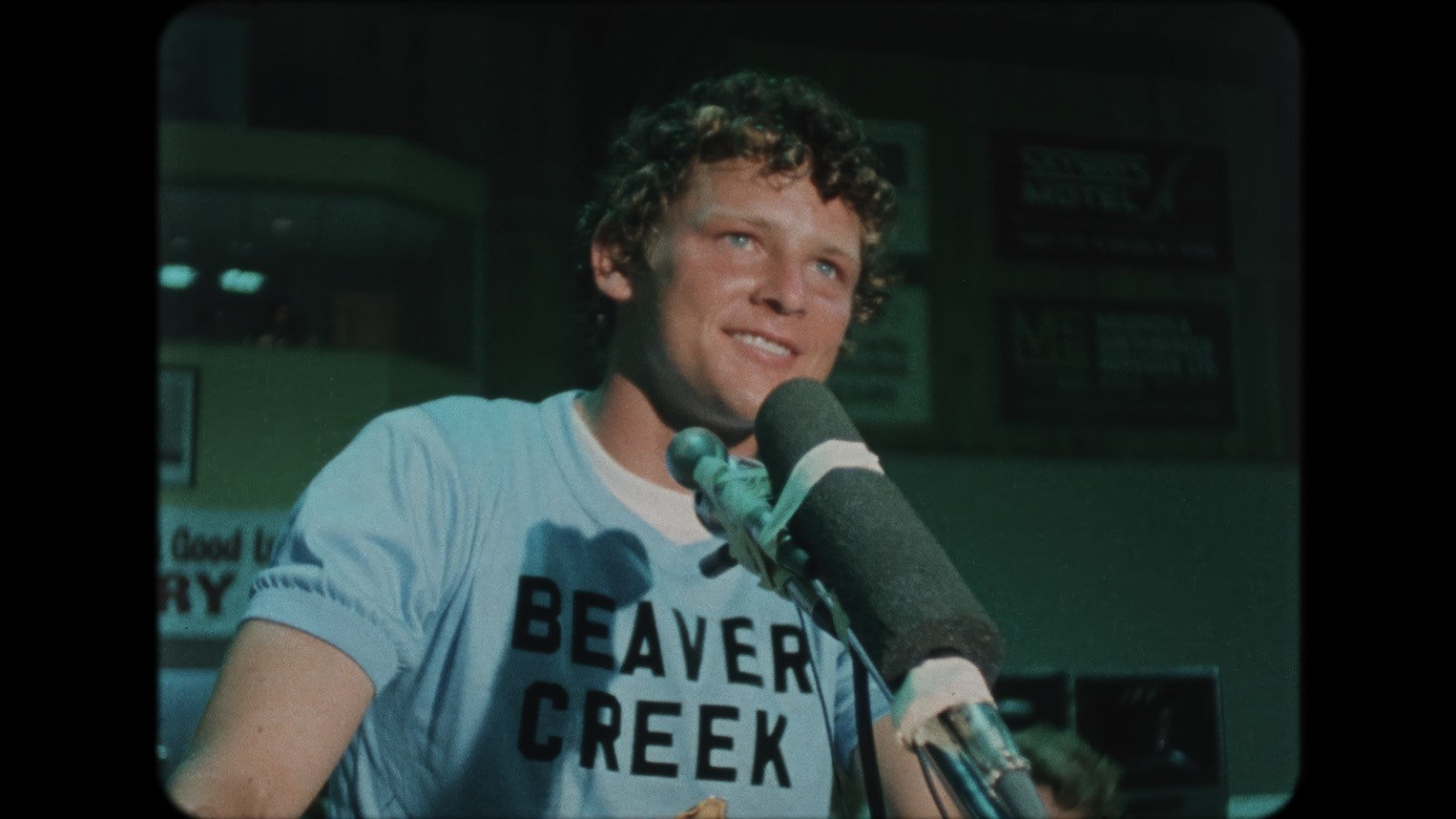
Two days earlier, a 21-year-old Simon Fraser University student had begun his Marathon of Hope, attempting to run across Canada to raise money for cancer research. In the decades since, his story has been inscribed on the public imagination through books, films, songs, place names, and annual commemorations. His run ended 143 days later, east of Thunder Bay, when it was discovered that cancer had spread to his lungs. Upon his death, one month before his 23rd birthday, Canadian flags across the country flew at half-mast. Terry Fox Runs take place in more than 30 countries; his name belongs to schools, buildings, roads, and statues across the country. To date, the Terry Fox Foundation has raised a billion dollars for cancer research.
This is the story everyone knows, isn’t it? Yet it’s remarkable how much information falls into the collective memory hole. Run Terry Run is a new documentary from Sean Menard, that takes us back to 1980, and the first draft of the Terry Fox saga. The director’s previous films include The Carter Effect (2017) about NBA star Vince Carter, and 299 Queen Street West (2023), a film about the pop music channel MuchMusic, which went on air in 1984, the year Menard was born. While travelling across Canada researching the latter film, Menard found himself talking about Terry Fox to his wife and producer, Molly Yeh, when he realized how little he actually knew. For example, Menard believed Fox completed his cross-Canada run—and some of the former MuchMusic veejays he interviewed were under the same misconception. He knew that Fox was a famous runner with one prosthetic leg, a kind of “mythical hero,” and he needed to know more.
He approached the Fox family with a proposal for a “definitive” archival film focused on Terry and the people who had shared his story: “Part of my pitch was that I was trying to make a film from 1980, and I only want to hear from the people that were in the van or actually in the story, that lived it.”
The Terry Fox Foundation records eventually led him to 96 reels of forgotten footage in an Etobicoke storage locker. Included, among other footage, were outtakes from John P. Simpson’s 1981 CBC documentary Terry Fox: I Had a Dream. Menard’s film is composed of archival footage along with voice-over reminiscences from people close to Fox, including friend and driver Doug Alward, brother Darrell Fox, publicist Bill Vigars (who died in 2024), Toronto Star journalist Leslie Scrivener and, briefly, hockey star Darryl Sittler.
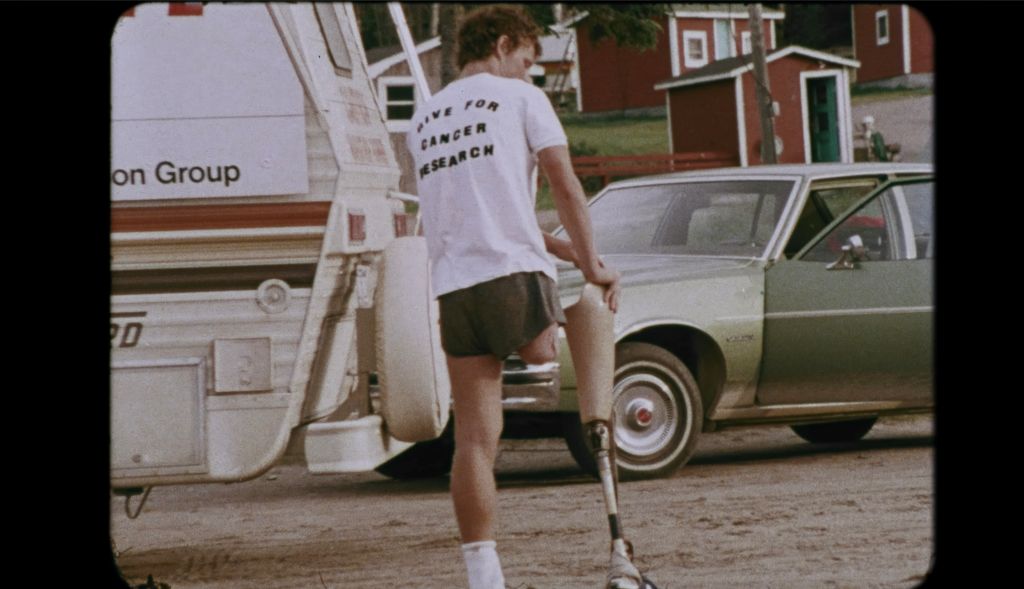
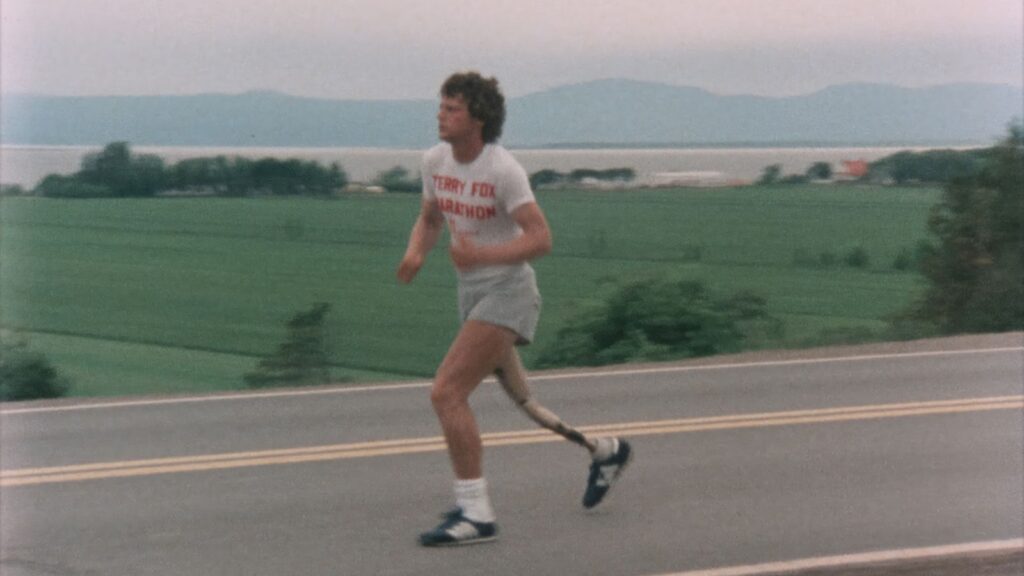
Though stages of Fox’s run—the triumphs, the crushing end of the marathon—are broadly familiar, the enhanced audio and footage, restored to 4K resolution, make his journey immediate in a new way. We see his sweat and his breathing, we hear the squeak of the prosthetic leg. Terry Fox is, at different moments, attractive, prickly, socially awkward, humorous, and introspective. A highlight is a conversational interview between Fox and filmmaker Simpson in which Fox reflects on the phenomenon growing around him, a scene that Menard said he wanted to “let breathe” to honour the filmmaker.
Simpson, at the age of 98, attended an advance screening at Roy Thomson Hall last November, in which the film was presented with it original score performed by the Toronto Symphony Orchestra. The official gala premiere took place at Roy Thomson again on September 19 at the Toronto International Film Festival, followed by the October theatrical release.
Fox, treated as a symbol, has been both elevated and reduced. More than 30 years after his historic run, the subject of Fox has become an increasingly popular subject of academic inquiry. Scholars viewing his story through the lenses of disability studies, masculinity, and nationalism analyze how media and political institutions came to define Fox as a national hero, embodying idealized Canadian values of humility, endurance, and compassion, while helping to “unite the country” during the year when Quebec threatened to separate.
The story of the handsome youth who died while trying to save others has religious parallels. Generation X author Douglas Coupland, who wrote a 2005 coffee table book about Fox, described an afternoon of reading letters to Fox, which left him feeling that: “…those names testify to something divine—our nation, our home and our soul.” The quasi-sanctification of Fox was wryly suggested in Margaret Atwood’s 2009 novel, The Year of the Flood, in which he is one of the saints honoured by the apocalyptic religious sect God’s Gardeners: “Saint Terry Fox, who ran so far with one mortal and one metallic leg, who set a shining example of courage in the face of overwhelming odds…”
Run Terry Run reminds us that the media did not always associate Fox with national heroism and sainthood. Cynicism, recalls Scrivener, was the strongest initial reaction among the news veterans. “I think that was one of the most surprising aspects of all of this,” says Menard. “I would have just assumed that the media was fully on board, and no one would write anything negative about the guy, but to see these moments where he’s reading the newspaper and seeing things that aren’t exactly the most positive about his run and what he was doing was fascinating to see.”
The story Terry Fox is seen reading was written by The Globe and Mail’s Arthur Johnson, who described Fox as “running on water, Gatorade, and resentment against a host of people, objects and situations which he sometimes feels exist only to bring him to a standstill.”
Run Terry Run shows us the moment when Fox, sitting in the open-doored van, reads the article in disgust. Vigars advises him that backlash was to be expected. That scene took place about two weeks before Fox’s run ended. Scrivener speaks of the cynicism of veteran journalists, including one who said it would only be a story when Fox stopped running.
Fox was tired, losing weight and with blood running down his leg, a spectacle that seemed to some more gruesome than inspiring. “Give It Up Terry” begged an editorial headline in the Peterborough Examiner: “It’s not a celebration of life to push heroic gesture to the point of self-damage.” Said the Sault Daily Star: “Terry Fox has done a magnificent job of rousing the concern of Canadians for others. Now concerned Canadians should implore him to call off his effort before he jeopardizes his entire future.”
There can never be a “definitive” Terry Fox story, because our guiding myths are adapted to different times and shifting values. In 1980, during a period when the nation was in internal dissension, Canadians embraced the symbol of the wounded young runner, determined to make his life meaningful. Nowadays, facing an external threat, we have a different sardonic model, courtesy of comedian Mike Myers and his “elbows up” message, invoking the memory of Gordie Howe, a player ready to play dirty to prevail.