



“There is no greater agony than bearing an untold story inside you,” wrote Maya Angelou in I Know Why the Caged Bird Sings. The sentence could be an epigraph for the films of Brooklyn-based Canadian director Jessica Earnshaw, whose documentaries Jacinta (2020) and Baby Doe (2025) share women’s untold stories with a radical compassion that puts most of the “true crime” genre to shame.
Jacinta, which follows a young woman who shares a prison with her mother, won the Albert Maysles New Documentary Director Award at Tribeca in 2021, along with honours at other documentary festivals and a 100 % favourable score on Rotten Tomatoes. The actor Sarah Paulson, moved by the “humanity and emotional clarity” of Jacinta, volunteered to be executive producer on Earnshaw’s next film, Baby Doe. The film, which had its premiere at SXSW in 2025, focuses on Gayle Eastwood-Ritchey, a religious Ohio grandmother arrested in 2019 when DNA evidence linked her to an infant’s corpse, found on a roadside thirty years before.
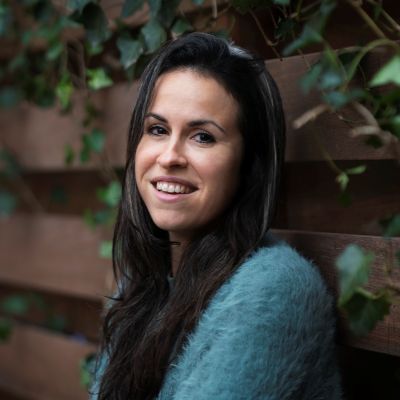
I met Earnshaw in a downtown cafe on a February day before Baby Doe’s Canadian premiere at the Victoria Film Festival, where I volunteer on the programming team. Now in her early forties, Earnshaw has long dark hair with a Sontagian white blaze, a broad smile and a quiet, thoughtful manner.
Jessica was “very close” to her late mother, Jennifer Clare Modigliani, who took a master’s degree in anthropology at the University of Victoria, married young, and worked as a commercial photographer, shooting weddings, portraits, and magazine photos in Victoria, while raising her family. She gave Jessica her first camera when she was in kindergarten:
“I have a little album of photos that she put together from my first camera. It’s like, the ground and the sky.” By high school, she had a video camera: “I used to film everything in high school, my friends, parties, everything. I was kind of doing verité without knowing it.”
She left school to work with her paternal uncle, Phil Earnshaw, a cinematographer and director, known for his work with the Degrassi franchise. In 2007, she moved to Vancouver, working for a reality television production company, shooting photographs of food for Western Living magazine and assisting director Vic Sarin.
In her mid-twenties, Earnshaw decided she needed to do something “personal and worthwhile” and decided on photojournalism. After being accepted by the International Centre of Photography (ICP) in New York, she was compelled to defer by a year to raise the $30,000 tuition fee, which led to a whirlwind six-month-long fundraising campaign including gallery shows, a variety night at a bar and a silent auction, though the final funding came from paternal grandmother, Mary Southam Earnshaw, of the Southam newspaper publishing dynasty.
After that, success came quickly. At the ICP, instructor Suzanne Opton connected her to the Montefiore Einstein Children’s Hospital in the Bronx, who invited her to photograph a children’s prom, an annual event created to give the young patients a semblance of a teenaged milestone many of them would miss. A glowing 2011 feature story about the project in the New York Times about the project reported that that Earnshaw “brims with an earnest belief in photography’s redemptive nature.”
In truth, she was not naïve about the uses or abuses of photography. She has read, and re-read, Janet Malcom’s book, The Journalist and the Murderer, with its focus on the transactional relationship between the journalist and her subject: “You go to someone’s home and follow their life, take their story and tell it from their perspective,” she says, “And you give them back—photographs?” What she sought was the kind of photography that added to her subjects’ lives.
In 2015, she won a fellowship for a project on aging in prisons for a series that ran in National Geographic, the Huffington Post, and PDN Magazine. She soon realized that the inmates, many serving life sentences for murder, were as nervous as she was, but also deeply thankful to be seen as human beings.
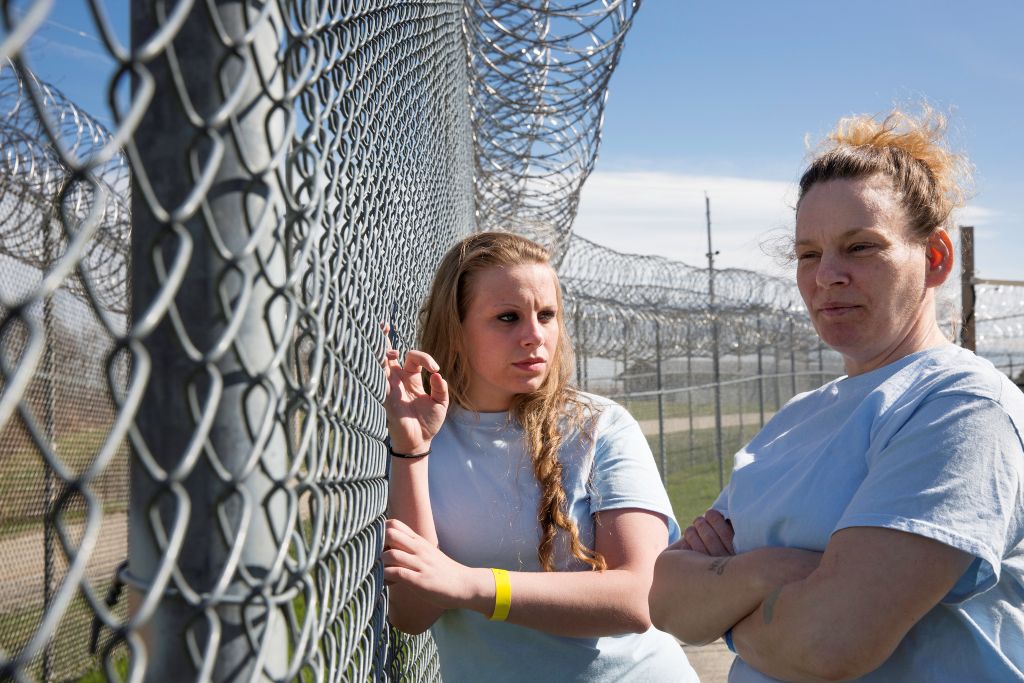
On another prison project in Maine, Jessica met a friend of one of her subjects, Rosemary, a woman in her forties, and her charismatic 26-year-old daughter Jacinta, who had learned to fight, steal and do drugs from her mother. The extended family including Jacinta’s father and two stepbrothers, agreed to be in a film focusing on intergenerational bonds and traumas. The film’s social impact campaign eventually secured support for Jacinta and her adolescent daughter, raised by her paternal grandparents. Jacinta, who approved the film’s most harrowing scenes and shared it with her sociology class, is now doing well, out of prison, sober, and employed.
But Earnshaw was deeply shaken by her experience, especially when Jacinta, newly released from prison, initially fell back into stealing and using, putting her life at risk. During the filming, says Earnshaw, the camera acted like a shield and the lines between friend and filmmaker were clear, but when Jacinta got out of prison, “I really feared for her. I really needed therapy to kind of figure out how to deal with this new relationship and my boundaries.”
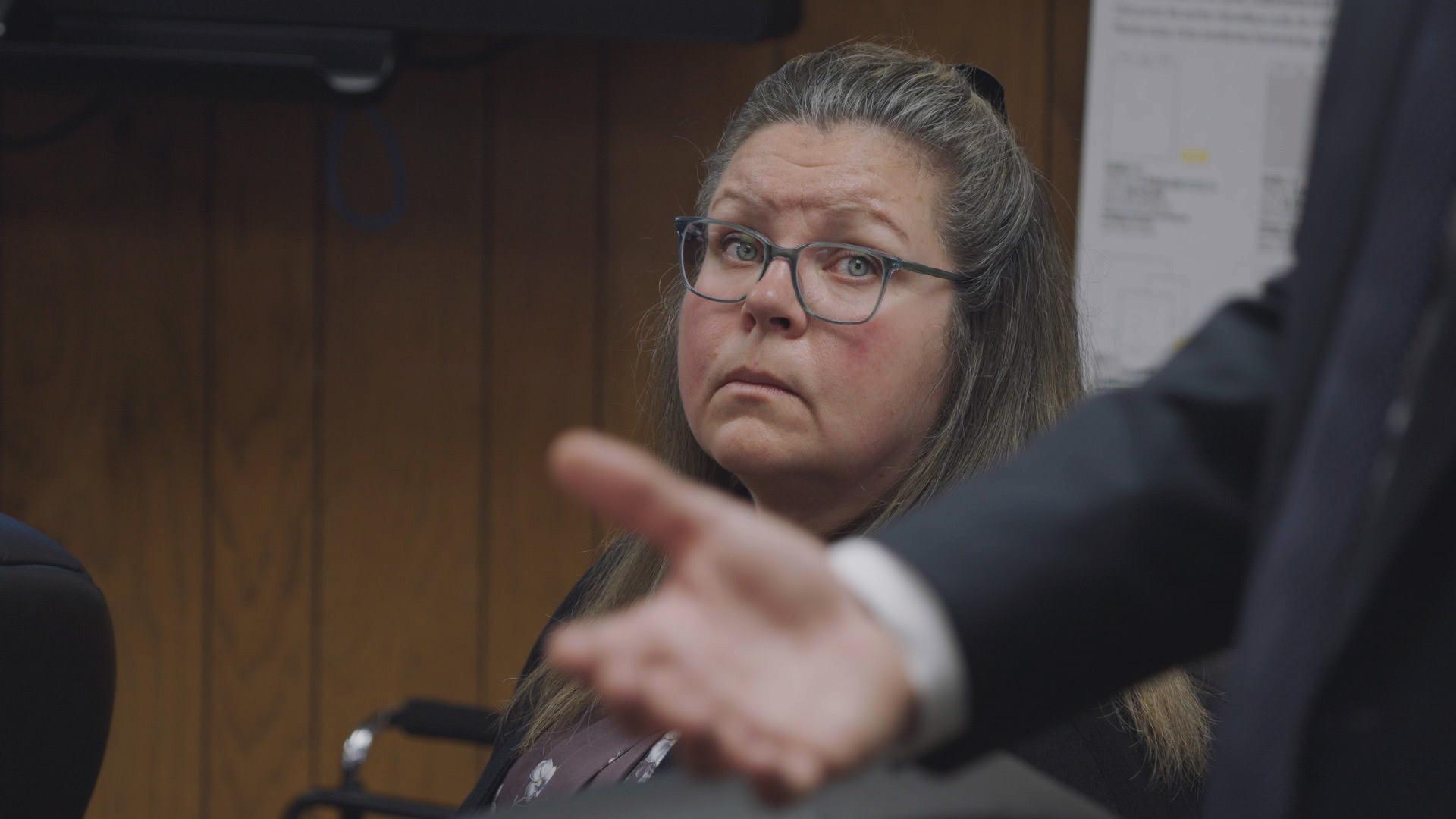
During the summer of Jacinta’s release, a friend showed Earnshaw an article in Elle, “What Did Emile Weaver Know?” about the 2016 conviction of a college sophomore, Emile Weaver, for killing her infant daughter. The story explored the phenomenon of pregnancy denial and neonaticide, a crime committed by young mothers in the first hours after birth, driven by a toxic combination of fear and shame. Earnshaw contacted Weaver’s lawyers and followed the story for about a year, but the appeal case stalled and Weaver remained in jail.
At the same time, investigators around the country were beginning to employ forensic genealogy to re-open cold cases. One of those cases led to the 2019 arrest of Gail Eastwood-Ritchey for the 1993 murder of her infant son. Earnshaw contacted Ritchey’s lawyer, Steven Bradley, saying she wanted to bring attention to the pregnancy denial, and follow the case through a trial.
“I think you need to meet in person,” said Bradley, “because she’s really been beaten up by the media.”
Earnshaw flew to Ohio and spent four hours with Gail and her husband, Mark, where she spoke about the tragedy of Emile Weaver, a young woman like her. The Ritcheys saw the film as a potentially redemptive act. Gail said she had to clear it with her three adult children first but wanted to do the film “to help girls like Emile.”
No mental health professionals were permitted to testify on Ritchey’s behalf, but Baby Doe includes testimony from a psychiatrist at Emile Weaver’s appeal explaining the phenomenon of pregnancy denial, which led to the judge to reduce Weaver’s sentence from life to the possibility of parole after 20 years. In contrast, the judge who imposed Ritchey’s sentence, declared that it was “no exaggeration” to call her a monster, though it is doubtful anyone watching the film could reach that conclusion.
“The interesting thing is,” says Earnshaw, “both Emile and Gail said the same thing to me: ‘Why didn’t anyone notice and speak to me?’”
Though Baby Doe is a deeply sombre film, the evening of the screening at Victoria’s historic Roxy Theatre was also a kind of family reunion for a filmmaker focused on families. Earnshaw’s brother and sister came, along with friends of her late mother, a colleague from her teenaged Galiano film course, her dad, John, and her Uncle Phil, who flew in from Toronto. Later, they retired across the street for an afterparty.
A few days later, I phoned Earnshaw at her home in Brooklyn for follow-up questions.
“Do you know what?” She asked. “With all the things that happened that night, everyone at the screening and the afterparty, I forgot to take any photographs. Now I’m busy trying to write everything down so I won’t forget.”