



NAZA
(UK, 80 min.)
Dir. Yuval Abraham, Rachel Szor
Prod. Harry Davies, Lindsay Poulton, James Wilson
“Having AI decide who lives and who dies is better than leaving the decision to someone whose friend was killed by Hamas last week,” an anonymous interview tells filmmaker/journalist Yuval Abraham in NAZA. The perspective comes from one of the two dozen intelligence officers of the Israel Defense Forces (IDF). These 24 figures outline in mundane detail the processes by which they administered the systematic killing of Palestinians.
This straight-from-the-horse’s-mouth reportage creates an essential historical record for our times. Abraham and director Rachel Szor, one half of the team behind the Oscar-winning No Other Land, perform a laudable feat of sleuthing. NAZA provides an unnerving account of the Netanyahu government’s policies and procedures to wage a genocide. But as the anonymous speaker weighs the benefits of AI within the killing machine, the film asks what hope, if any, exists for peace when the system erases the potential to see another as human.
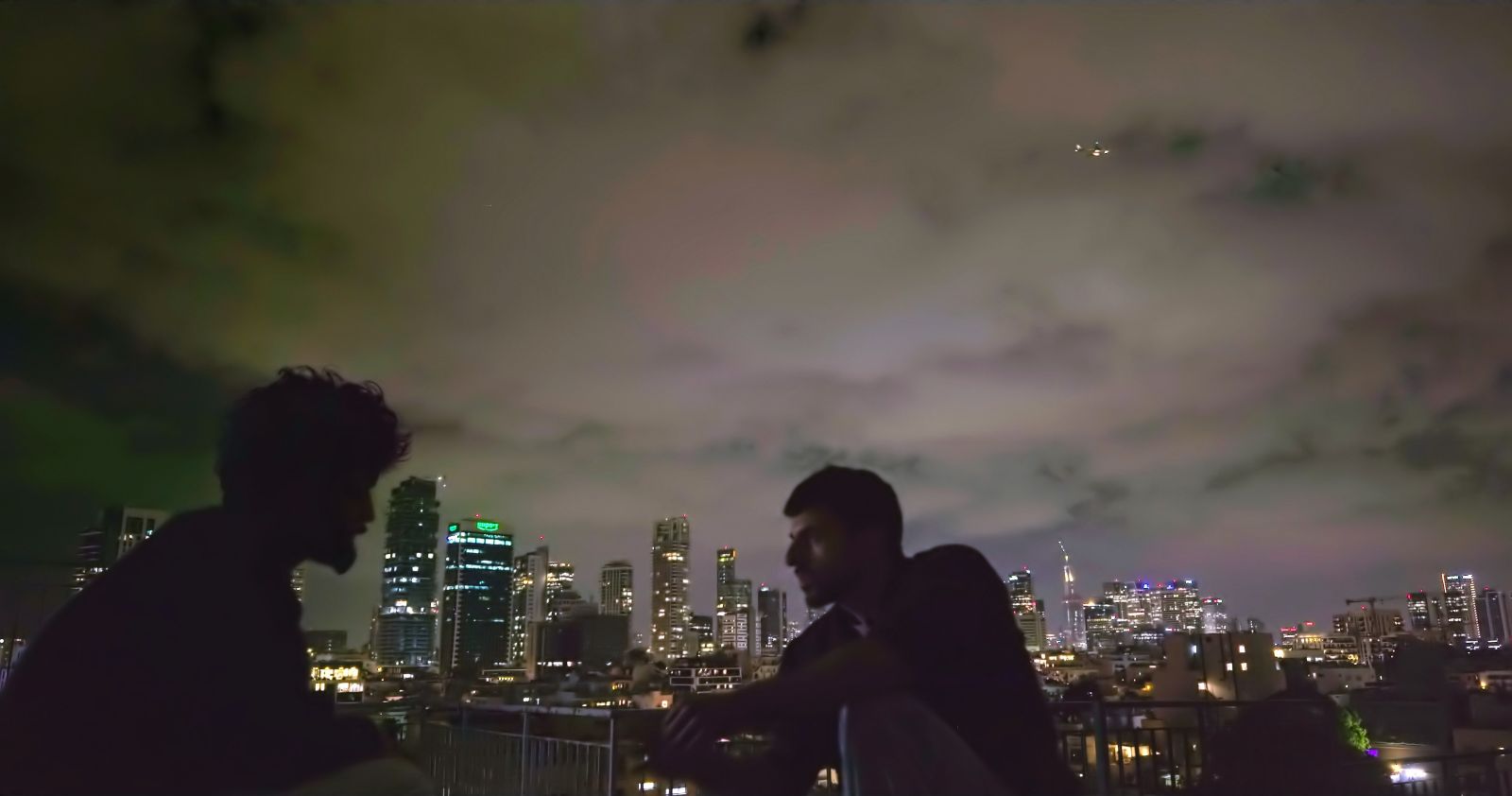
The film puts these voices on record relatively early amid the reprisals that came in response to Hamas’s brutal attacks of October 7, 2023. Abraham, who, like Szor, is Israeli, puts forward an interpersonal approach that makes No Other Land so effective. Much like the account of forced displacement in the West Bank community of Masafer Yatta unfolded through face-to-face conversations between Abraham and his Palestinian co-director/participant Basel Adra, the filmmaker/journalist takes a seat with his interviewees in NAZA. They sit facing each other on the rooftops of Tel Aviv. It’s often at night with both parties enveloped by darkness. But the speaker opposite Abraham always has his or her likeness obscured by shadow, while voices are altered to preserve anonymity. The darkness has a strong symbolic effect too: life largely resides in the shadows and much of the truth about the situation is a casualty of war.
If No Other Land offers a plea for peace with its account of atrocities that precede October 7, then NAZA combusts with its damning chronicle of the crimes against humanity in response to tragedy. The key word here is “humanity” as the person to person conversations seek to remind parties that there’s a human on the other side. Looking someone in the eye, as opposed to seeing them as video game characters on a screen from afar, presents a world of difference.
Abraham and the interviewees work through the mechanical nature of the genocide. The IDF operatives, mostly technical workers, explain their roles in assessing strikes. Each scenario has a certain “NAZA” factor. NAZA references the collateral damage and civilian death toll that’s likely to come with an assault against an alleged Hamas operative.
“10 NAZA,” an interviewee might say of a strike. “Or three NAZA, all children.” Most accounts usually cite a NAZA factor in the low double digits. However, one operative cites 20 as the typical benchmark for collateral damage in a strike. Some cases range up to 500 NAZA for an approved attack. And that’s to kill one target who might not even be on the site.
The conversations, which build upon Abraham’s reporting for +972 Magazine and The Guardian, the latter of produced the film, elaborate how these strikes come to be. Officers explain how they listen in on calls across the networks of Gaza. They identify likely Hamas operatives and their allies, then trace their calls, pinpoint their locations, and drop some bombs. Chillingly, though, the officers admit that their targets are rarely military sites.
Instead, they hit perceived targets in their homes. It’s easier to wipe out an enemy when he sleeps in bed, they say. It’s just unfortunate that his wife and children may be sleeping there, too. Their phones allow the officers to listen in, and assume their targets are home for the night once the phones’ locations come to rest.
“What do you hear from their homes?” asks Abraham.
“I just heard normal life,” an officer replies.
The phone calls are key to the longevity of the operation. NAZA sparingly opens the archives as interviewees explain how, after the 1948 forced displacement, Palestinians couldn’t build their own networks, which means that Israel long operates Gaza’s phones and, in turn, has unchecked surveillance powers. “We control them,” notes one interviewee.
These accounts of targeting and striking civilian homes, moreover, directly contradict Netanyahu’s statements. NAZA throws in a clip of Bibi saying the IDF doesn’t target civilian dwellings. His own operatives’ statements refuting him speak volumes. The film leaves it in the air whether the Bibi files treat NAZA figures as numbers for risk assessment or bonus points augmenting approved kills.
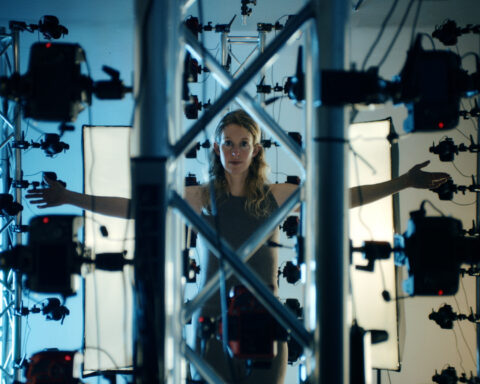
The film weaves between the interviewees as the cameras operated by Szor and an anonymous colleague gaze into the windows of Tel Aviv. As Israelis go about their evenings watching TV, praying, or enjoying the air on their balconies, the film witnesses ordinary civilians peacefully enjoying their afternoons. But the reality is that these mundane quotidian behaviours likely mirror the habits of neighbours in the Gaza strip. Missiles sometimes fly overhead as rockets from Gaza launch over Tel Aviv, too. Abraham and his interviewees usually rouse from their seats—startled, but not surprised. NAZA provides a firsthand account of the violence of occupation, even seen from the other side. Nobody expects a bomb to go sailing into their home as they prepare for bed.
NAZA cuts these interviewees together, often placing their words in voiceover as the camera pans throughout the city. On one hand, these techniques preserve the anonymity of speakers who came forward. On the other, the film deftly blends individual and collective experiences: the perspectives of one officer bleed into another. Together, they’re all parts of a killing machine.
The intelligence officers’ stories, moreover, arise with unsettling banality. These are cogs in a machine. “My role is entirely technical,” one interviewee says. “All I can say is that we completed the mission,” adds another.
There are glimmers of remorse, but they’re fleeting. It’s as if empathy tries to claw its way to the officers’ surface, yet they can’t process the losses at their hands. One interviewee comes closest when he admits that he couldn’t watch dogs eat the remains of Palestinians. But he adds that his colleagues took in the show from the eye in the sky.
Similarly, there are pauses when NAZA numbers boast high kills, especially when they failed to hit the designated target, but more often than not, there’s a matter-of-factness to the commentary that’s downright troubling. The film roots much of the conversations within the officers’ anger over the violence of October 7, but while Abraham and Szor ostensibly sympathize with the victims of Hamas’ bloodshed that day, and the pain that their friends, families, and neighbours experience, they also situate the evidence of war crimes within a larger history of forgetting.
One IDF officer positions his perspective within his experience as a Jew who visited Poland to witness the history of the Holocaust. Instead of putting him in a position of sympathy for those killed by systemic murder, he admits that it gave him an ability to understand what it could be like to be part of Hitler’s death machine and then go home to one’s studies. “I still see those Nazis as evil,” he reflects, “but what does it mean for me?” NAZA doesn’t force that moral reckoning, but clearly anticipates it.
The IDF has naturally come out against the film, even though nobody there has seen it. Meanwhile, The Times of Israel writing, “The film tries to present its allegations as factual claims, but omits verification and context, and raises questions about its sourcing.” It’s worth noting, however, that the film’s conversational approach actually provides much of this context and veracity. IDF sources themselves explain the playbook. Their ire over the violence of October 7 provides the framework for their willingness to see Gazans as mere targets in a video game. NAZA offers a rare feat as a work that’s so laudably provocative that the conversations surrounding the film, even from its detractors, become essential pieces in a textual and paratextual treatise. Parties criticizing the documentary sight unseen reflect a bottomless cultural rift.
Moreover, neither complainant fact checks the notion that Netanyahu is, at best, a terrorist. NAZA uses an archival clip of Bibi defining a terrorist as words from his own book describe the behaviour detailed by the brave 24. It’s perhaps the most apt straight-from-the-horse’s-mouth soundbite in the film, and one that ties everything so damningly together.