


“I always said there’s something for everyone to hate in this film,” laughs Larry Weinstein. The filmmaker can’t help but have high spirits while discussing his innovative musical documentary September Songs: The Music of Kurt Weill. The 1994 film is currently being re-released in a new 4K restoration and promises to delight audiences even if the odd song number isn’t to their taste. The film holds up extremely well at a time when music docs overall follow a rinse and repeat formula. Weinstein pays tribute to the music of late composer Kurt Weill through unconventional means: by having a chorus of different artists perform Weill’s songs in different and unexpected ways.
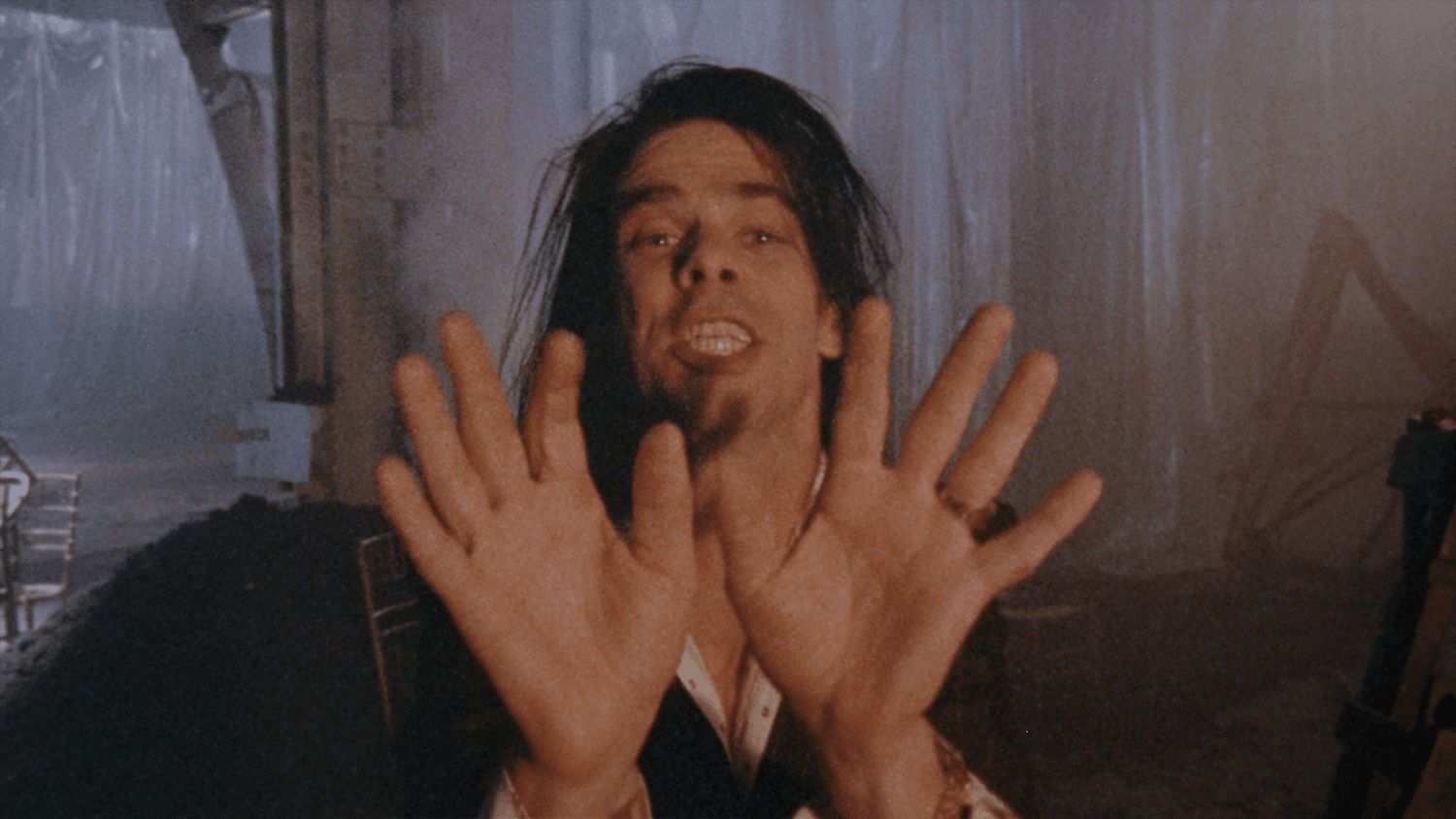
These numbers, which play in full, range from Nick Cave bellowing “Mack the Knife” to author William S. Burroughs offering a spoken word rendition of “What Keeps Mankind Alive?” from Threepenny Opera. There’s even a funky hip-hop number.
The film remains a key doc in Weinstein’s body of work that frequently explores music in innovative ways. His 2011 opera about Brian Mulroney, for one, seems destined for retrospective screenings in the wake of Ladies and Gentlemen, Brian Mulroney hitting the circuit. Meanwhile, Ravel’s Brain (2001) remains one of the most eccentric bios ever produced in this country, and his 2024 doc Beethoven’s Nine: Ode to Humanity offered one of the most effective takes yet on the tragedies to emerge from the October 7 massacre in Israel and ensuing violence in Gaza by personally situating the tragedy within the enduring power of Beethoven’s plea for peace.
Besides being a forerunner of Weinstein’s work, September Songs boasts a distinct concept that has inspired many imitators in the years since its debut. The film draws inspiration from the music and eccentricities of Hal Wilner’s 1985 album tribute to Weill. The album similarly features Weill covers by different artists. “He created amazing poetic tribute albums to various people,” observes Weinstein. Wilner’s previous albums saluted composer Nina Rota, Disney soundtracks, and jazz icon Thelonious Monk.
“The more eccentric, in a way, the better,” says Weinstein. “He encouraged people, and he always did things outside their comfort zones. He wouldn’t get Tom Waits to play with his regular band.”
Weinstein says that September Songs follows this push towards the eccentric and unexpected, especially with Wilner coming aboard as producer and music supervisor. The director notes that it’s an approach that continues to motivate his films. “Dreaming of a Jewish Christmas was, in a way, inspired by this,” notes Weinstein. “At least the performances were with the idea of going outside the expected. You don’t usually do ‘Rudolph the Red Nose Reindeer’ with Tom Waits playing in the back of a Chinese restaurant. But somehow it’s more moving because of it.”
While the film still plays with a sense that it was ahead of a time, Weinstein admits that it wasn’t as difficult as one might expect to get broadcasters on board. “CBC was a little bit hesitant, but they were impressed that some of the people were A-list stars, even though they would prefer the A-stars were Barbra Streisand and people who were maybe not quite as edgy, but there was a lot of faith shown,” says Weinstein. “The other thing is because Rhombus [Media] at the time was reaching out and doing so many co-productions, we had so many broadcasters come in with bits of money. None of them felt like they really had the right to have the major say, so it’s a way to get to do things that are kind of weird.”
However, Weinstein says the project originally wasn’t meant to be when he pursued it in the ’80s. With only a few credits under his belt at the time, Wilner shopped it around with the likes of Federico Fellini, Orson Welles, and Jim Jarmusch. Fortunately or unfortunately, some of those big names either passed on it or passed away. In the interim, Weinstein added enough credits to his name to land the project.
From there, September Songs reimagines the album cinematically. “I assumed that it would be a lot of the original Lost in the Stars,” admits Weinstein. In terms of casting the performances, however, those years bring some changes. Leonard Cohen’s availability for “Mack the Knife” flipped, but Cave was fortuitously available, while a Rolling Stones concert made Keith Richards unavailable. A break-up with Julia Roberts meant it was too painful for Lyle Lovett to sing about a cowboy being left by his girl. “We were kind of going for a Robert Altman cast, but we ended up with a Wim Wenders cast,” observes Weinstein.
The director says he initially pursued artists on the original recording, too, including Marianne Faithfull, who covered “Balled of the Soldier’s Wife.”
“Marianne Faithful wouldn’t do it for whatever reason,” admits Weinstein. “She didn’t like our concept. So we reached out to PJ Harvey and she was very interested.” Ironically, the recent documentary about Faithfull’s life and music, Broken English, borrows heavily from the style of September Songs. (Weinstein had yet seen Broken English when we talked.)
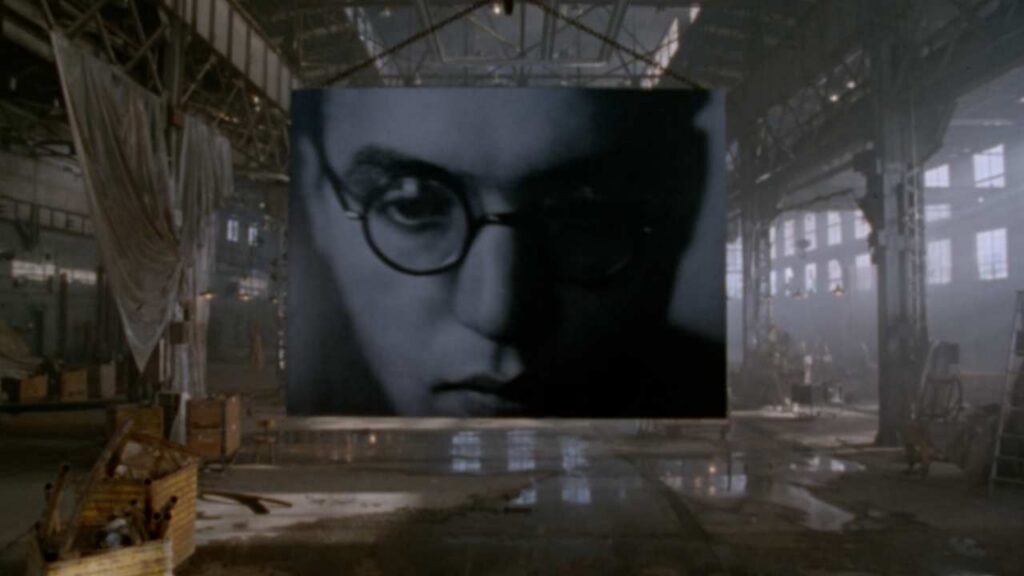
Fortunately, though, Harvey’s soulful rendition of “Ballad of the Soldier’s Wife” offers a captivating number early in the film to hook audiences. Harvey and company all appear in a cavernous Toronto warehouse during what Weinstein remembers as shoot during a particularly unforgiving winter. He recalls that participants begrudgingly lip-synced their numbers since all the fans in the warehouse made live recording impossible. But a few folks, like Burroughs, made their case to perform live in close-up with some movie magic.
“We see his wide shots in our space in Toronto, but Burroughs never left Lawrence, Kansas,” says Weinstein. “There was a 25-year-old assistant who played him in the warehouse wearing the same clothes with the same lighting.”
The passage of time between Lost in the Stars and September Songs also allows fresh takes from artists who participated in both projects. This includes Lou Reed, who originally wanted to repeat his rendition of “September Song.” He performs the same number in the film, but much differently.
“The fact is that eight years or nine years had passed, and I knew his new style. I knew how he had scaled in,” explains Weinstein. “I knew exactly what he had done musically. And I pictured that he would want to go on and do a different version that maybe was more contemplative where the words about growing older now have more meaning to him. He thought about it for a while and he ended up agreeing and he did a new version, which I love.”
In some cases, the film completely reimagines Weill’s music. For example, “Mandalay Song” from Weill’s comedy Happy End appears as an upbeat hip-hop number, “Mandalay-B-Boy-Parlay” by Ghettoriginal Dance Company.
“What Weill did has themes that would lend itself to that. ‘Mandalay Song’ is actually quite raunchy,” explains Weinstein. “The original from the late ’20s is about a lady of the night that sees these men who wait in line to see her. They’re getting impatient, and it lent itself to that and has some sampling within the song as well.”
While the film plays with the unexpected, it actually gives audiences a fuller sense of Weill’s life and music than the conventional cradle-to-grave biography does. Some archival snippets add context and historical notes, while recordings inject voices of Weill and his collaborators, like his wife, actor Lotte Lenya, and his colleague, Bertolt Brecht. The set-list itself more or less offers a biographical account of Weill’s musicology.
“Most of them, not all of them, certainly not ‘Mandalay,’ are chronological,” observes Weinstein. “I knew I wanted to do the German Kurt Weill. Kurt Weill left Germany because Hitler was coming in and went to France for a while. We have one song, ‘Youkali Tango,’ sung by Teresa Stratas, that reflects that. He went to America soon after that, so I knew the American Weill would dominate the last third of the film.”
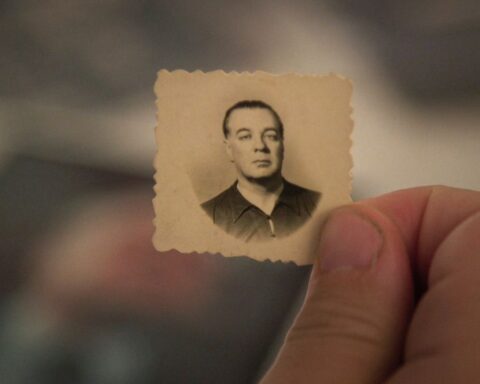
Weinstein says he drew upon portraits and sound recordings to sample elements of Weill’s biography, but felt the best way to honour and capture the subject was by focusing on the music. “The point is there’s a lot about his life and we don’t really need to know that because you need to know the music,” says Weinstein.
The key piece from the archives is the voice of Weill himself. The artist appears in September Songs’ finale as his moody voice breathes “Speak Low” on a record with double bass player Charlie Haden accompanying the vocals. Weinstein says that finding that recording was the “real coup” of his archival research.
But even without a contemporary vocalist on the track, the song plays fresh as ever thanks to the cinematic staging. Weill’s vocal and Haden’s deep chords reverberate throughout the large space of the warehouse, lending a timelessness to the music as it echoes.
“My number one thing is listening to the music and then closing my eyes and having visual fantasies of how we’re going to present that music,” explains Weinstein. “That’s happened in my films, but it really happened with the Kurt Weill film. It allowed me to see ‘here’s the piece, here’s the music, here’s how I think the artist is going to approach the music,’ and then you see what to do visually. But then I would get their first recordings of the songs because they would do them in whatever city they lived in. They would come up with a track. I’d listen to it, and you just dream. It’s all about dreaming these things.”