


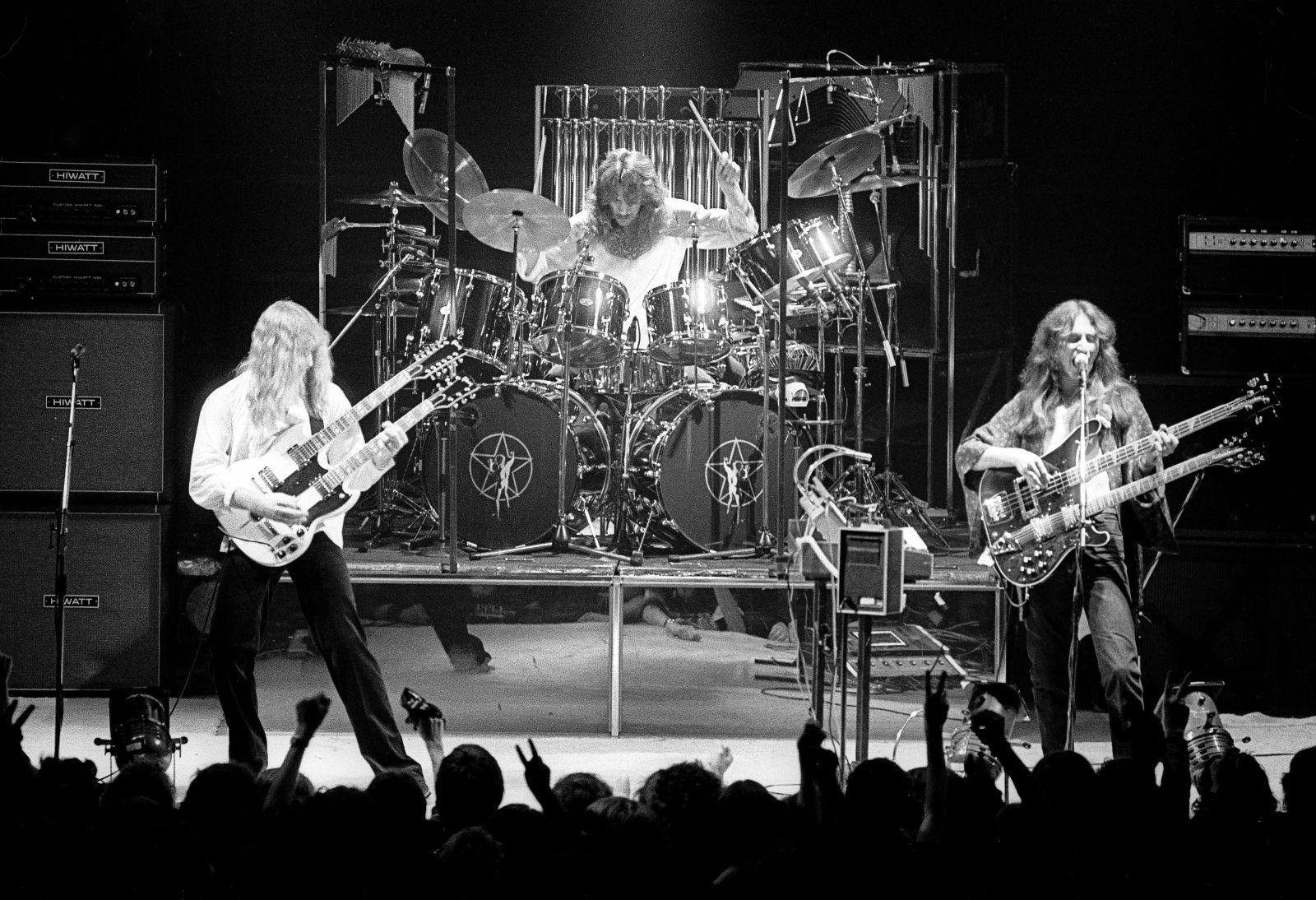

On January 7, 2020, the rock world lost one of its most talismanic talents. Neil Peart, the revered drummer for the iconic band Rush, passed away after a battle with brain cancer, leaving legions of air-drumming fanatics and fellow musicians alike bereft of this most cherished of stick beaters.
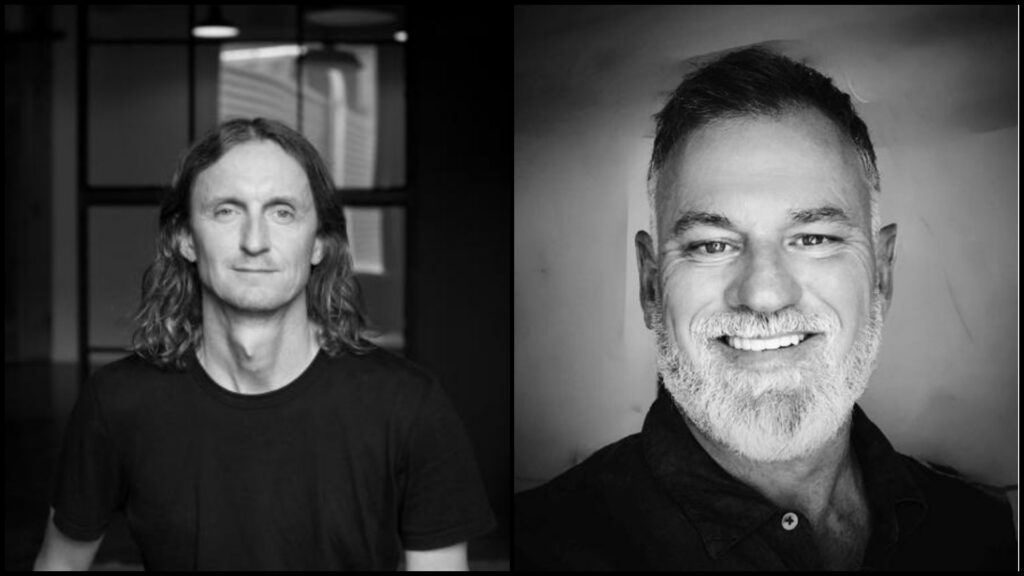
Documentarians Sam Dunn and Scot McFadyen, the principals of Banger Films, have for decades worked with Rush to tell their stories. With their latest, Neil Peart: No One’s Disciple, they are facing their most emotionally fraught task: finding a way to celebrate both Peart’s career and his humanity.
Along with Rush’s bassist Geddy Lee and guitarist Alex Lifeson, Dunn and McFadyen assembled a murderer’s row of drumming talent, all of whom knew Peart personally, to celebrate him in performances and interviews. We witness as songs that Peart previously performed come to life with new percussionists in ways that are sometimes faithful and sometimes innovative, providing a unique perspective on the music that helped make the man world famous.
Through additional anecdotes from those that knew him best, as well as a wealth of archival footage, much previously captured by Dunn and McFadyen, the film is remarkably effective at both painting a portrait of this sometimes mercurial figure, as well as providing a deeper understanding of his musicianship based on those to whom he looked himself for inspiration.
POV spoke to Dunn and McFadyen prior to the film’s premiere at this year’s Toronto International Film Festival.
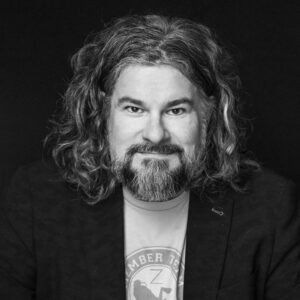
POV: Jason Gorber
SD: Sam Dunn
SMF: Scot McFadyen
POV: When did this project come to fruition?
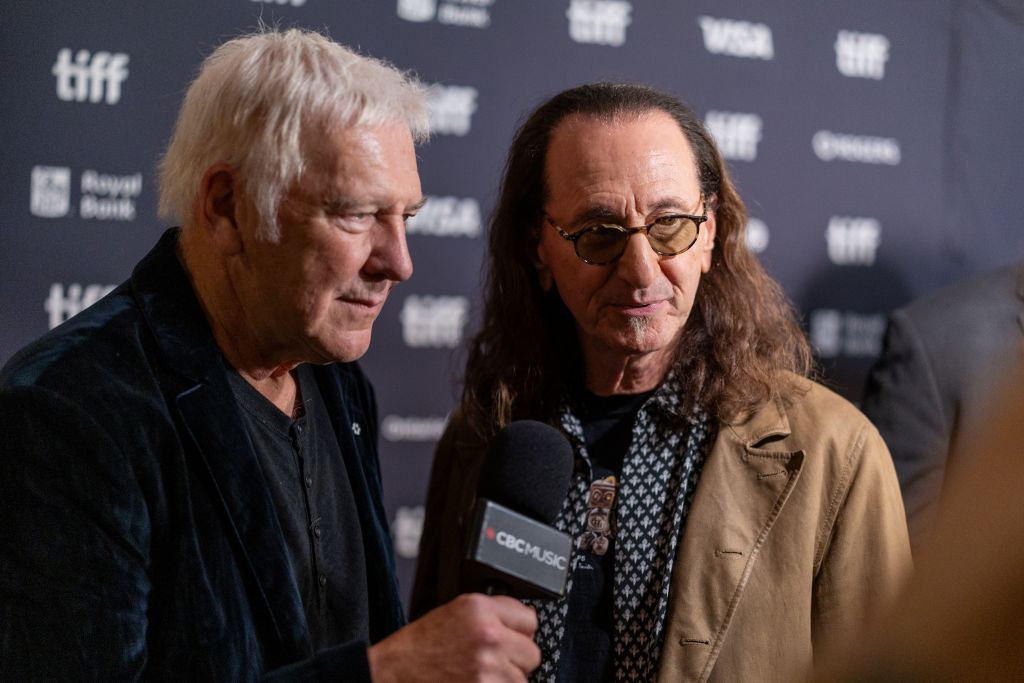
SD: It came after conversations with the Rush family that there was going to be an opportunity to tell a story about Neil. As Geddy and Alex say in the film, they felt like they hadn’t properly celebrated his contributions to the band, his legacy as a drummer, as a lyricist, as an author and as a human. Because of our relationship with them—Geddy was in our first film, Metal: A Headbanger’s Journey (2005), and Rush as a whole were in Rock Icons (2015) and Rush: Beyond the Lighted Stage (201o)—we at Banger Films realized that we were the ones to tell the story.
POV: Let’s talk about the fundamental challenge of making sure that the movie comes first rather than maintaining a very friendly relationship with Alex and Geddy.
SD: Thankfully, Geddy and Alex are two of the most humble, respectful, genuinely good people that we’ve worked with in 20-plus years of making music documentaries at Banger Films. We’ve earned their trust over the years, and they have a sense of self-confidence and self-comfort that means they allow us to do our thing. They are hands-off in the creative process which makes it easier to set aside the relationship and the personal dynamic.
POV: Scot, you’ve been in the producer’s chair for years. What brought you back as a formal co-director on this film?
SMF: Honestly, if I didn’t have to run a company, this is what I’d want to do all the time. When we went to the Berlin Film Festival with our last doc, as a producer, I found the audience and musicians and filmmakers didn’t really care about producers. It was like, “Do you mind taking a picture of us?” Can you get water for us? Being merely a producer, you don’t really feel that you’re part of the creative conversations.
POV: Did Rush have final cut on this film?
SMF: No. Out of all of the bands, all of the people we’ve worked with, Rush are the most respectful. There might be a couple of things that they might have some comments on. Like, on our first film, they just said, “Could you put less of us in it?”
POV: That seems very Canadian.
SD: We’re like no, that’s a terrible note, guys.
POV: Can you talk about the editorial or conversational choices that were used to make it not simply a celebration of Neil Peart but also a true portrait of him as an individual?
SD: We made the decision to only include subjects that knew Neil. We all know that we could have made a film about him where it was just a massive lineup of drummers singing his praises as an influence. By choosing people that knew him, it automatically gave the film a more personal tone instead of a Wayne’s World, “We’re not worthy!” kind of film.
POV: I was concerned, going in, that the film was going to gloss over some of his, as the film says, “flaws.”
SMF: We highlighted as a flaw the fact that he had that discomfort with his most rabid fans. That’s us trying to get into who he was as a character. We were trying not to include just the total adoration.
POV: The things we knew about Neil from the outside was that he was an incredible talent, but also a bit of a prick to his fans who would approach him.
SMF: That really wasn’t our experience with him. He was just a regular guy to us. We didn’t see the asshole side, but we did touch upon that aspect.
SD: When we interviewed Brad French, who is one of Neil’s childhood friends from St. Catharines, I told him about what Geddy had said about that flaw in Neil’s character. There’s the notion that you can’t have it both ways. If you’re going to be the biggest rock drummer on the planet, then you’re just going to have to suck it up, and you’re going to be adored by legions of fans who are going to want autographs and all of the stuff that comes with that.
Brad knew him so well and feels like he can just speak his mind. It comes back to the types of voices that are in the film. These are people who knew him and really could be pretty honest about who he was as a person and not just as the legendary drummer that everyone knows.
POV: Was there any emotional moment for you going back over footage that you haven’t seen in a long time?
SD: That Rock Icons interview at Le Studio was the last time that I interviewed him. The format for the show was really short, and we weren’t actually able to use that much, so revisiting that material was really great and an opportunity to use it more fulsomely.
The studio was condemned. There were raccoons, and giant holes in the floor. We’d been strongly advised by our lawyer, David Steinberg, not to go inside. Of course, the first thing that Neil said to me was “Sam, you know we’re going inside.”
SMF: When we have him on a picnic table and we are filming him out in the desert outside of L.A., he was very honest and open about the tragedies in his life. That always hits me, that moment of him talking about being freer than any man should be. Having just himself and a typewriter and starting over coming out of this tragedy.
SD: It took a while for us to gain that trust with Neil. That interview was the last one that we did with him for Beyond the Lighted Stage. For obvious reasons we waited to ask him about everything he’d been through with the loss of his wife and daughter.
The other characters that are in the film, they are people that Neil respected. He spent time absorbing everything he could from everyone around him that he felt could make him better at what he was doing, whether it was drumming or lyric writing or writing a book or motorcycling or whatever.
POV: When was the decision made to get the drummers together to celebrate Neil?
SMF: We had been talking to David Steinberg, and the band, about a project. They hadn’t played together in a while, and there was no talk about a tour. Alex was feeling good after some medical issues and wanted to play again, and we convinced them to do this with the drummers. The idea evolved as a sort of tribute to Neil, partially a documentary, partially a live performance. We didn’t know how that was going to work.
Just as we were going to film, Geddy and Alex decided, you know what, we’re feeling good, we’re going to go on tour. It was kind of a weird sequence of events that we didn’t know this tour was going to happen, nor did they.
POV: So, you guys were responsible for the tour that’s now taking place?
SMF: You know, I doubt it, but I’d love to take that.
POV: Who chose what drummers were going to come in?
SMF: Along with Geddy and Alex, we created lists of great drummers who could do it, and those that were close with Neil. We weren’t going to choose any random drummer out there.
SD: I don’t think Neil would have liked a film with a bunch of drummers there who couldn’t play the drum solo in “Tom Sawyer.”
POV: There’s Gavin Harrison (King Crimson, Porcupine Tree, The Pineapple Thief) who is an incredible drummer with deep musical knowledge. We see him writing all of the notes and finding hidden patterns. Then you’ve got Chad Smith (Red Hot Chili Peppers) who’s just beating the shit out of the drums with groove and technique that’s maybe less explicit but no less effective. And Danny Carey (Tool). You managed to show different facets of Neil’s style through many different performers.
SMF: We absolutely knew there were different drummers, different ways and they represented different aspects of Neil. I think Stewart Copeland was the most difficult because he’s a very different drummer than Neil. He represents the kind of openness that Neil had to different types of music.
POV: Copeland is famous in a way that transcends in some ways even Neil’s fame. He’s the most different from Neil, in many ways, which makes their own relationship both musically and personally even more fascinating.
SMF: He’s a character, right? But he was a good friend of Neil, they spent a lot of time together.
SD: With Stewart, it was a great opportunity to tell the part of the story about Neil being open and receptive to new styles of music.
POV: As a contemporary of his as well—that’s the big deal.
SD: It provided a good excuse to get “New World Man” into the film. Copeland’s track represented that time of transition in Rush’s music— shorter songs, poppier hooks, different feels.
POV: Not to be blasphemous, I think that this is the definitive version of “New World Man.” The band is playing differently because it’s Stewart, and I love that.
SD: There’s never been more space in a Rush song than Stewart Copeland playing “New World Man,” for sure!
POV: You are in the room listening to these drummers go off on songs that you know every note of. What was that like for you personally?
SMF: Honestly, it was great. I was thinking, “This is amazing, but I don’t know how it’s going to work in a documentary!”
SD: The thing about the drum jam that I love is not just the drumming but the setting that we created for the conversations for the drummers and Geddy and Alex. We’re back there with the monitors and the headphones on and once they stop a take and they walk over to the drum riser and just start chatting and you start listening to the things they’re talking about it’s like, OK, this is good, this what we wanted.
POV: You can see that these are musicians talking to one another musically.
SD: Once they finally figured out the beginning of 2112!
SMF: [Laughs] Well, we didn’t want to throw Danny Carey under the bus. He obviously knows they plan out everything, but he didn’t realize they plan it out so clearly.
POV: Other than what you guys have already crafted, were there other films that came to mind when putting this together?
SD: Your question reminded me of that great Stephen Colbert joke for Rush: “Have you ever played a song for so long that you’re influenced by yourself by the time you get to the end of it?” Maybe this is the documentary equivalent now, that we’ve been doing it for so long by the end we end up being influenced by ourselves.
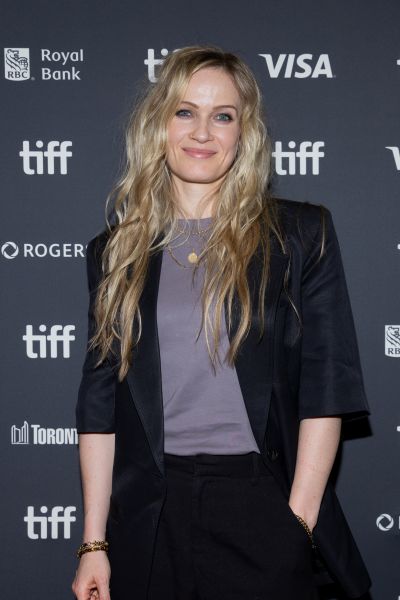
POV: Which leads to the epilogue, where we are introduced to the touring drummer Anika Nilles and hear of a forthcoming tour to further celebrate Neil’s legacy. At what point in time did the idea for the tour coalesce during the shoot?
SMF: It was pretty tight to when we were finished. We said to Geddy and Alex that we’ve got to include this, right? They were reluctant, because they didn’t want it to seem like it was about them. It was meant to be only about Neil. We assured them that, no, it really is Neil’s music, it’s Neil’s lyrics, but you guys are going out and it’s a celebration, that’s what the tour is. It was a matter of convincing them that this wasn’t going to take away from Neil by putting in this epilogue. So, we went back out in April about six or seven months after we had already finished editing the film. The film would have been fine and complete without it.
POV: I think the film would have been fine, absolutely. But I think the film improves dramatically with this epilogue because it injects the fact that their conversation is continuing. I think that if it was only the guys that you had, it would have been interesting, but it’s the inclusion of a woman who didn’t know Neil that actually elevates it even more.
SMF: She never met Neil, but she is learning about him through his music, and that is the essence of what was fascinating about it. She feels like she knows him. She says that she wishes she had the nerdy drum conversation with him, because the guys are unable to have that conversation with her.
POV: She is us. It’s through her learning what is extraordinary that allows us to see that too, whether you’re a pre-conditioned fan or not.