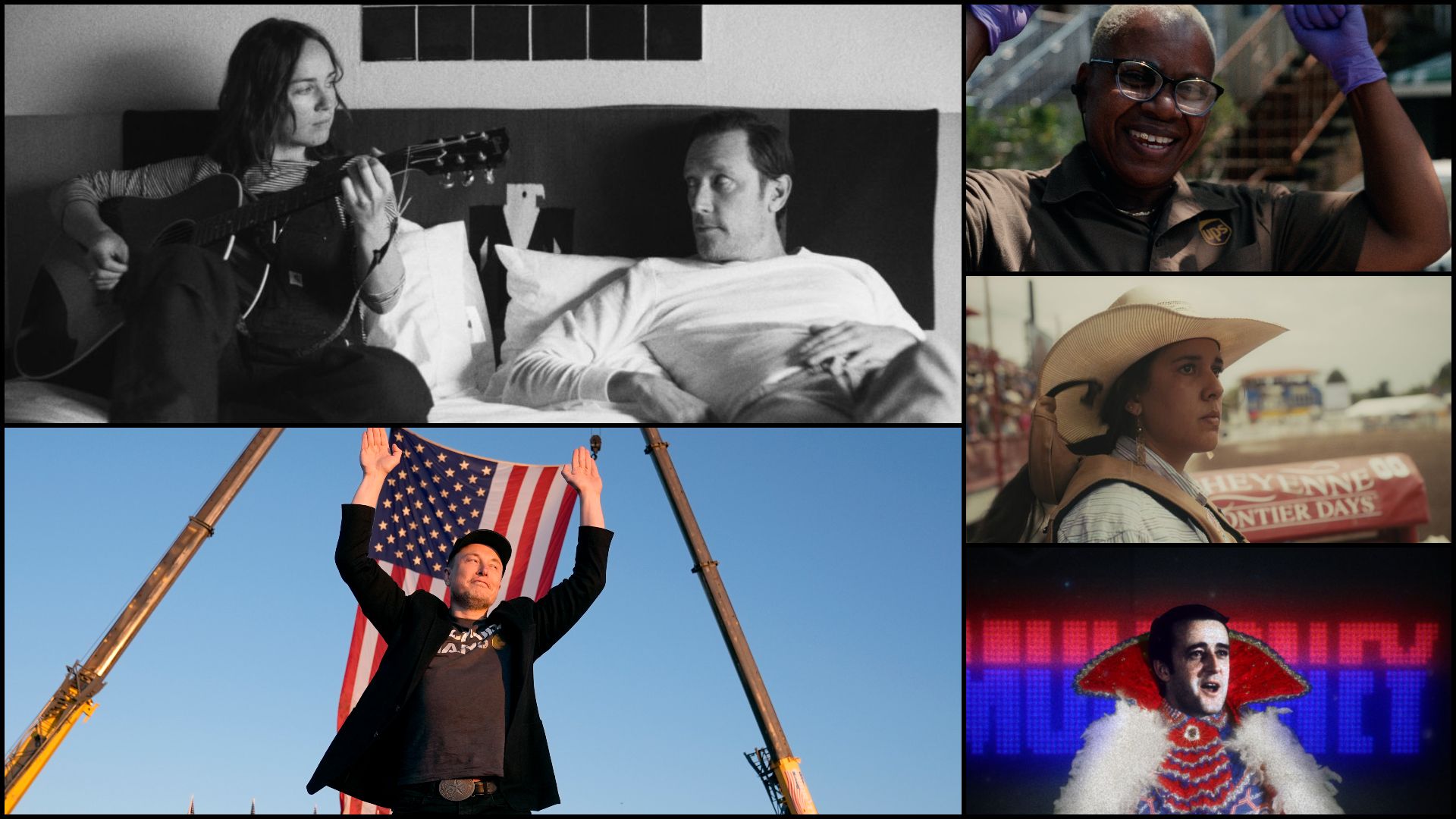



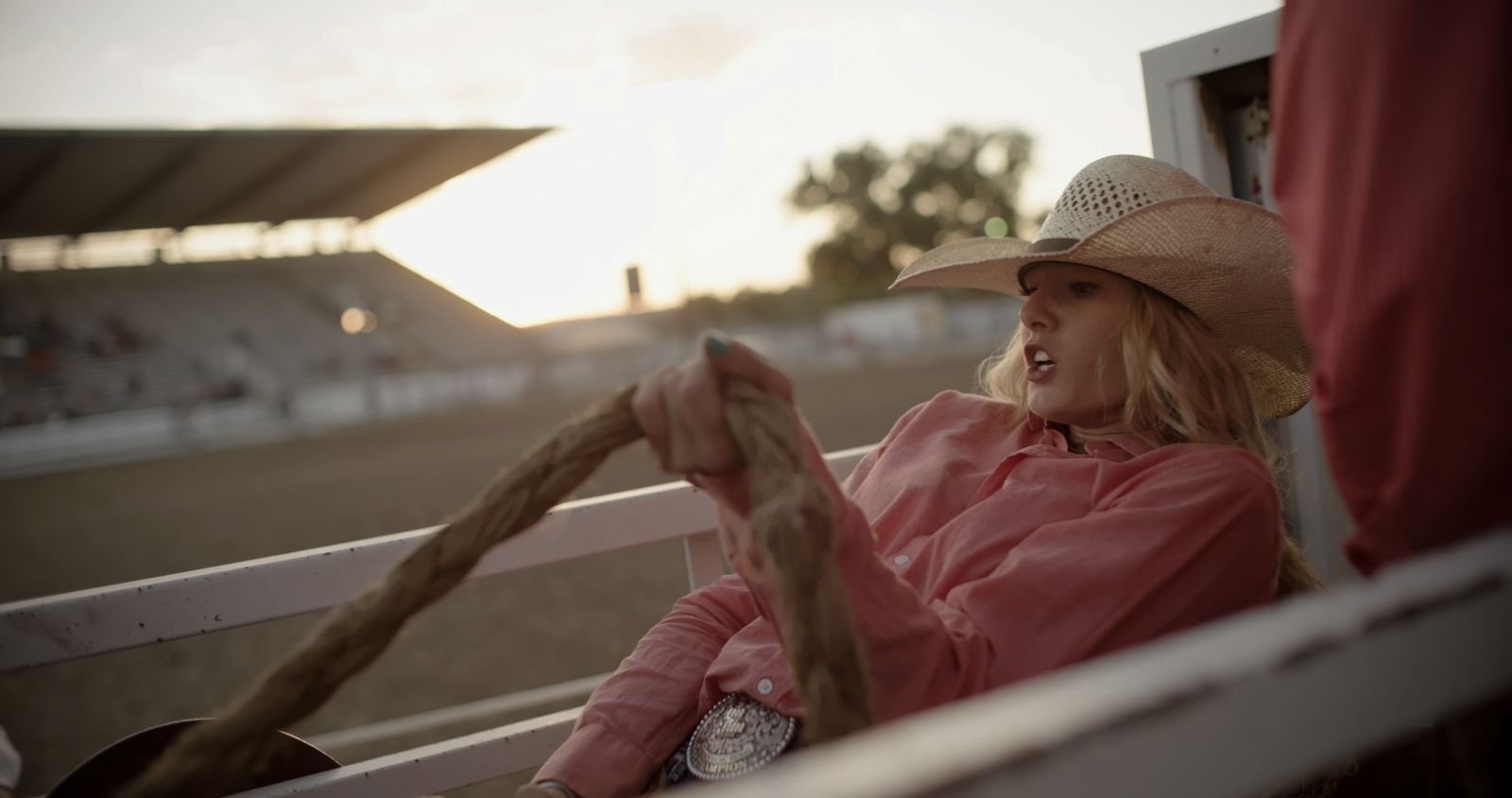
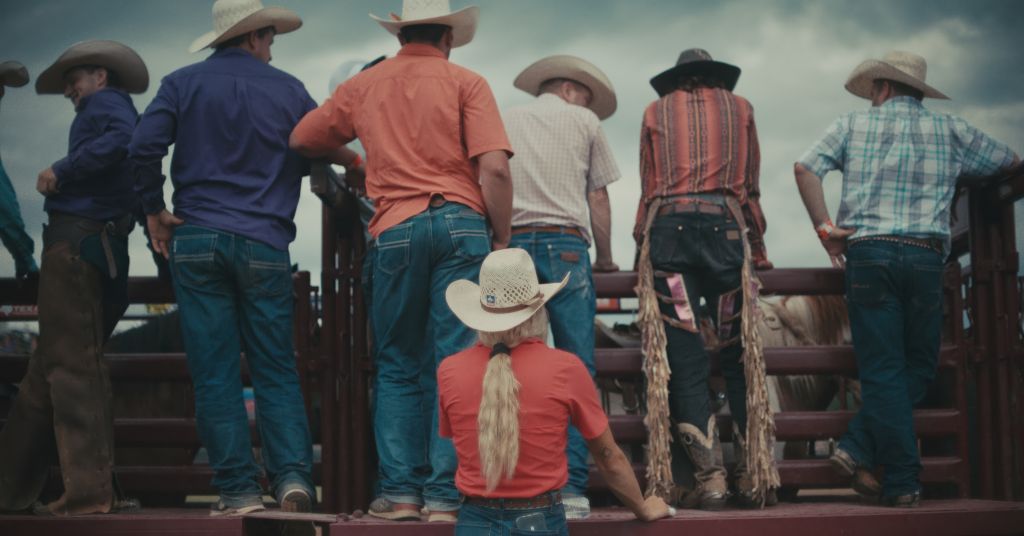
The riders of Cheyenne share a code: “No crying in the arena.” For the women riding wild broncos on the rodeo circuit, crying in the arena risks legitimizing the 90-year ban that prevented them from competing in the sport. Men get bucked all the time, but women riders can’t show their emotions, lest a tear betray them and be perceived as weakness.
However, at the heart of Taimi Arvidson’s invigorating documentary Cheyenne, which premiered last week at the Toronto International Film Festival, are several women leading the charge by proving that they can ride just as well as the boys do. They’re fearless, and the exquisitely shot film follows them in the arena as they dust themselves off after getting bucked off. Little fazes them. The ride-of-die spirit fuels them.
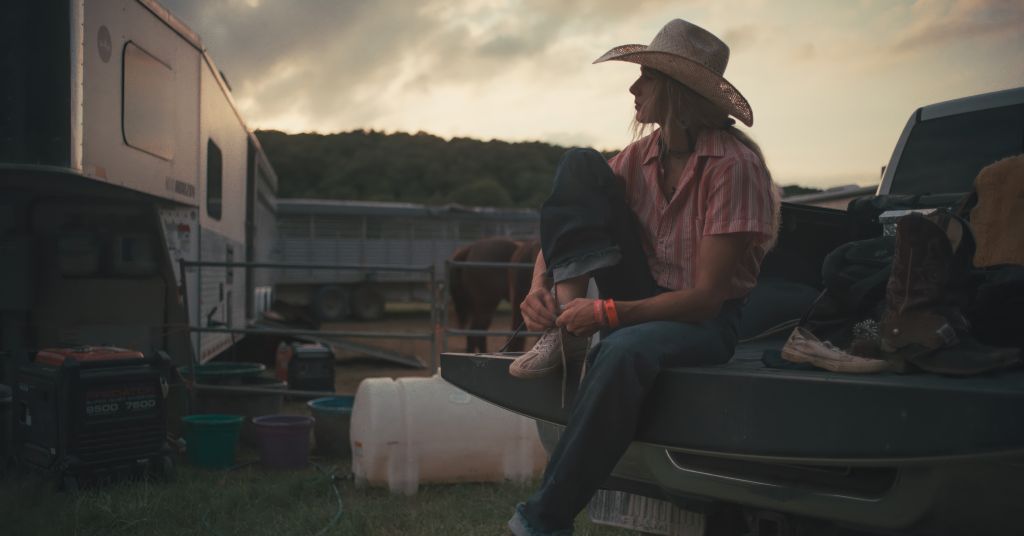
Cheyenne generally follows the makings of a competition doc as it follows several riders as their paths are set to converge at the titular rodeo. The riders include Allysa, a three-time world champion working hard to translate her passion into a professional path. There’s also Bea, a working mom for whom riding allows her to set an example for her son. Then there’s Brooke, a skilled rider who faces a life-altering twist when her horse steps on her; and then Australian rider Emily embodies the international appeal of the sport as cowgirls from around the world train to compete at Cheyenne.
All it takes is eight seconds atop a bucking bronco to change the trajectory of their careers. Cheyenne captures the tenacity and spirit of these women as they support each other in their shared passion. They’re largely self-taught, having been forced to learn through experience. Or, as Spierings tells POV, understanding the sport through “trial by fire.” She attests to learning about harnesses the hard way after scooping a boy’s fingers from the dirt and putting them on ice, for example. But the culture around the sport says that the boys have an easier time getting back up again. Cheyenne proves that the women deserve an equal playing field as they make it just as far, but without the same support systems. They’re breaking barriers with each ride. As each woman shares her story, Cheyenne builds to an exhilarating and ultimately inspiring story about perseverance and true grit.
POV spoke with director Taimi Arvidson and riders Allysa Spierings and Emily Collits following the world premiere of Cheyenne at the Toronto International Film Festival.
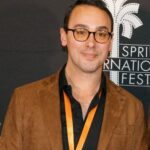
POV: Pat Mullen
AS: Ally Spierings
EC: Emily Collits
TA: Taimi Arvidson
This interview has been edited for brevity and clarity.
POV: Ally and Emily, what do those eight seconds on the back of a horse feel like and what keeps drawing you back to the sport?
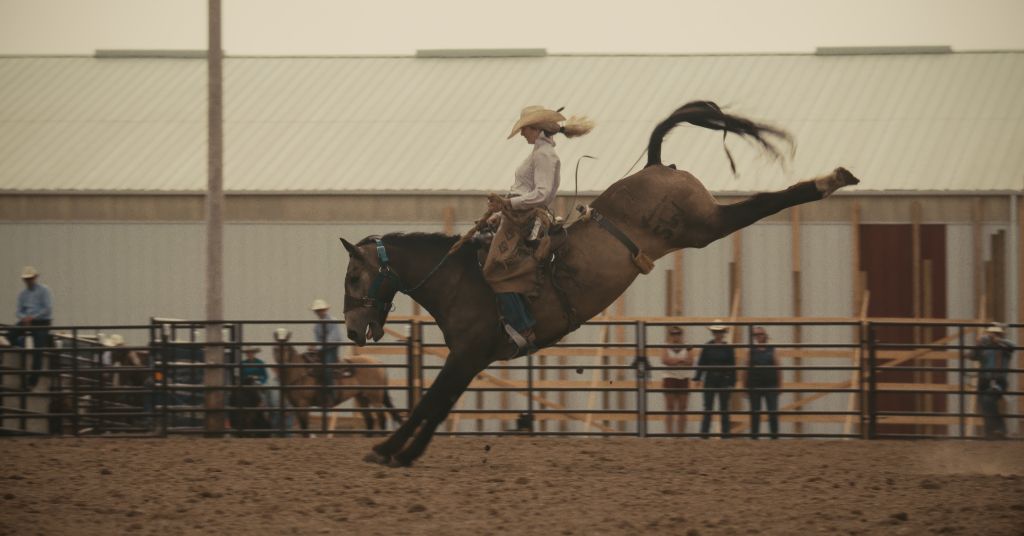
AS: The biggest part for me, personally, is that it is utterly liberating because in that moment, only you and that horse can exist. Nothing outside of that can exist. If you’re thinking, you’re already bucked off, so you can’t think. That’s really liberating for a lot of women who are drawn to the sport because like Blake mentioned [in the film], she was running from everything going on in her life. I was running from everything in my life. It makes you feel utterly alive in the fact that you don’t want to die. As I’ve continued to ride, it’s just a massive adrenaline hit.
EC: I guess that’s why people jump out of planes and keep going back to do it again and again. We get such a rush out of it, but I think it also quietens down everything else around you for those eight seconds. There’s nothing else going through your head. It’s just you and the bucking horse. It doesn’t matter if there’s five people watching or 20,000 people watching: It’s going to be the exact same thing. It’s just you and the bucking horse. Nothing else matters. And it’s liberating as well as it’s empowering to be able to have an animal that you’re trying to match jump to jump. They’re so powerful. They’re so beautiful and we’re along for the ride trying to match their power.
POV: Tami, what drew your interest in turning a lens on the cowgirls?
TA: Like they said, rodeo is addicting. I get why it’s addicting to ride because it’s addicting to film. If you guys were like, “Hey, I’m a rodeo next week.” I’d be like, “We’re not even making the documentary anymore. Can I come anyway?” It became addicting even for me, so rodeo’s engaging. Also, when I learned that it was this incredible moment in sports history, I didn’t want to miss that. It’s this resurgence of women coming back to the sport after a hundred years of being kicked out of it and not allowed in on a large level. The first world championship was pretty special, so we didn’t want to miss that moment in sports history. There are so many films about rodeo, and they always asks the question, “Why would anyone do this?” But that question never really gets answered.
And for me, I wanted to know why. I saw you guys and I saw that anytime you got on a bucking horse, you could die and you know that. And why do you want to do that? And then in one conversation that’s in the film with Bea, our subject, she was like, “Oh, we’re chasing demons. I could be in an alley doing drugs. I could be doing way worse things to deal with what I’ve gone through, but I’m out here. I’m doing something that makes me feel empowered. I’m travelling and I’m with a sisterhood. This is helping me work through things.” And that was when it all clicked. That happened to be the story for every single person that we were filming with. I felt like women were uniquely capable of illuminating rodeo in a way that I hadn’t heard before.
POV: Ally and Emily, when the ban was overturned and then you were allowed to compete, what was that moment like for you?
AS: Truthfully, there wasn’t much of a “moment” that the ban was lifted. It was more or less slowly expanding what we were allowed to do over years. I have rode broncs coming up on eight years now, but I didn’t know there was an avenue. I didn’t know there was a Women’s Ranch Bronc Championships. The film just says, “She rode with the boys.” It’s because I didn’t know that there was a women’s association. Originally, I rode bulls for about seven years. And then I started riding broncs. And through that, though, I didn’t know there was this amazing sisterhood and community of women for women enjoying a sport. I thought the only opportunity that I had to ride was to ride with the guys, kind of like playing a pickup game of basketball. I didn’t know there was a women’s team.
TA: Sometimes you would sign up under a man’s name.
AS: I’d do that in order to get in. There was times where, if I called and said, “Hi, I’m Alyssa Spierings. I’d like to ride tonight,” they’re like, “We’re full.” It wasn’t necessarily that you’re not allowed to ride because you’re a woman. It was, “So sorry, we can’t get you in. We’re just full.” When in reality, my buddy would call and he’d get in.
TA: It’s interesting how you would do it. You’d have a man call for you and then you’d show up last minute.
POV: Any time you’ve gone on the horse, could you see perceptions changing?
AS: Yes. That became one of my goals. When I was a junior in high school, I wrote a research paper about women in rough stock because I didn’t know women could ride rough stock. I knew that my mom rode bulls before she had me and I was infatuated with that idea and wanted to get a mechanical bull. And in the state of Wisconsin, there wasn’t anywhere at that time that I could find for me to practice on steers or learn how to ride the same way that my mom did. But then that got bigger and bigger. I went to rodeo Bible camp and I asked my pastor, “Hey, can I enter in the steer riding instead of the barrel racing?” He’s like, “Let me think about that for a minute.” And he actually got back to me and said, “Who am I to stand in your way? If you want to do it, do it. Be safe while you do it. Be prayed up, but do your thing.” From there, we slowly started opening doors because then three years later we had another girl who got in because it wasn’t problematic.
It’s like what we touch on in the film: “No crying in the arena.” If you show up and you’re a problem, you’re going to be a lot less likely to be invited back. I feel like there’s a lot of times where, as bronc riders, we’ve had to operate under a big umbrella of grace and just do the best we can. If you get screwed over, take it on the chin; move on. And so through that, I feel like we’ve opened doors until it became what it is now.
EC: I’d say we’re about five years behind what we are in the U.S. over in Australia. I didn’t even know that these pathways existed when I first started riding. I went to one school and it was to prove a point to say that I could do it, and I can do it. There was one rodeo I went to that entire year and then I started riding saddle bronc with men’s schools because I didn’t have my own ranch saddle. In Australia, we’ve got about 20 girls riding now and we’re putting on rodeos and people want us to come. There’s been a big shift back home to we’re proving ourselves all the time. No crying in the arena. You go there, you might eat dirt, you pick yourself up, brush yourself off, say, “thank you so much for the opportunity,” and you move on with your classic curtsy.
AS: Even when she gets whooped out the arena, she’ll get up and she’ll curtsy.
POV: There’s great showmanship to it. What do you like about that part?
EC: At the end of the day, people come and watch rodeo because it’s a show. We’re entertainment, but we take it quite seriously as a sport. We’re getting seen more and more across the board of rodeo as a professional sport. But at the end of the day, you’ve got to get butts in seats. It’s a show. But we’ve worked really hard and it’s almost like we’re not walking in quicksand anymore.
We’re up on the surface, people see us and they see the value in the sport. They see the value that women are bringing in the arena and we’re not fighting anymore. Taimi picked us at a moment where we were just starting to get big opportunities, like bringing a world finals to Cheyenne. This is not just my story. It’s everybody’s story.
AS: it’s bigger than us. If there’s only one star in the sky, it’d be really dark. Try to light it up.
POV: Taimi, how do you choose which stars to light up the story?
TA: That’s the hardest part of this film. It’s such a rich world and we shot nearly a hundred days. People who rodeo are rodeoing for a reason, right? Every one of them. Everyone is incredibly fascinating. One of the big sports stories is the international elements—all the Australians and the Canadians, and now there’s Mexico, Europe. There are women coming out of the woodwork to do this. That’s really hard for us and it really went through a lens of what can each person teach us about rodeo uniquely? Blake’s interesting because she left the sport. Bronc riding is not a forever thing. Everyone has to make that decision at some point in their career.
Bea was able to illuminate the parenthood aspect and doing that when you have more responsibility on the line. And Brooke and her catastrophic injuries are really common in the sport. She could really illuminate why people do this. What I loved about her story was that she says, “Everyone is asking me, ‘Do you want to die?’ No, I want to live.” The veil between death and life is very thin, but for her it’s giving so much. Everyone has really powerful stories.
POV: When you guys see what happens to Brooke throughout the film, how does that affect you and your drive to ride?
AS: Personally, I didn’t get to see her accident. I was back home in Missouri. I was rodeoing on a different circuit. Two days ago was the first time that I saw her accident. I’d never seen her accident, but I got the phone call going, “We need to pray for Brooke because she’s really not okay. She got stepped on and be praying for her because this is bad,” I’ve been around rodeo my entire life, and so I’ve seen a lot of really bad wrecks, especially in the part of my life where this was filmed… it is what it is. I’ve gotten older and I’ve dealt with some of my demons per se, it does affect a little part in the back of your brain that says, “This could be life altering.”
Each time you nod your head [to signal the start of a ride] could be life altering. There’s a choice there. Every time there’s a choice where you can either decide to let that rule you or you can harness it into the gift of fear of adrenaline. It’s there to keep you safe. It makes you faster, stronger. It makes you react faster. I’m going to give it to God and nod, basically. A lot of girls do rely on their faith and their faith walk, depending on who they believe in and what they believe in. It’s an integral part of rodeo. Every rodeo, we have the national anthem and a prayer. That’s to keep everybody safe. I’ve had injuries that in the moment felt horrible, but then hindsight teaches you that if I had been there four jumps later, I wouldn’t be walking. I’ll take the broken ribs here instead of being paraplegic there.
POV: The film captures that sense of community well.
TA: When I was looking for reference points when I made this film, and there’s some incredible friendship films. Cusp was a reference. Sirens was reference. But so many films out there are just about watching women get catty with each other. Even as we were pitching the story around people would ask us, “Can they fight with each other? Can that be a thing?” Luckily the partners we had, like Jenna Bush Hager and her husband, picked up that the film was about female friendship. Being catty was also never true to who you guys were. You’re all fighting for this grander goal.
EC: I was there, so I remember watching it and seeing Brooke. I saw her trying to get up and then she didn’t get up and I was like, “Oh, God.” That’s when you know it’s serious. I was the next rider after Brooke. They shut down the arena, they took her out, this girl that I had been traveling with for weeks. Her family’s taken me in, but the show has to go on. You lock in. I got bucked off and it wasn’t pretty. It’s in slow-mo. I’ve seen it.
AS: I’d like to touch on earlier when we were talking about kind of cattiness in the industry. Bucking horses are not picky. Man or woman, me or Taimi, me or Emily, they’re going to do their trip no matter what. They don’t give a shit who you are. They’re going to do their trip. That is what I think is so beautiful about rough stock because they’re not a respecter of any person: Who you are, how much you own, what you have. They’re going to do their trip and it tests who you are within yourself.
Part of that scoring system is that half of your score comes from the horse. Half of your score comes from how well you are able to ride that horse. Me and Emily, the year after this film, we travelled together 24/7. I didn’t know her. We could have loved or hated each other, but at end of the day, I can’t be mad if she beat me if my horse score is higher than my rider score. The horse beat me. I have homework to do. Why would I sit here and be upset at her? There’s just so much controversy in the world, so why can’t we just support each other and be happy when we see somebody else succeed? Kat shows that in the film where she sees a girl who was really struggling with her mental demons go out and make a ride. She starts sobbing behind the bucking chutes because that’s who she is. She cares so much about what every other girl is going through. That came through really beautifully in the film.
EC: Even at Cheyenne this year when Emilia won, I was in the arena and bawling my eyes out because I was so proud of her.
POV: You broke the rule!
EC: Happy tears are okay.
POV: That idea of community but also being scored against the horse makes the rides really intense. What was the process of actually getting those shots of the bronc riding? You’re right in the thick of it and the rides are eight seconds, so there’s no reshoots.
TA: Rodeo is a tough sport to film. Everything happens in eight seconds. It’s a live event, but Cheyenne is like a six to twelve minute event, so you need a lot of cameras simultaneously, which is a logistical problem. It’s a money problem if you’re an independent filmmaker. We shot this entire thing on my own dime. I maxed out every credit card to make this film, so it was really about getting cinematographers to come out for free, which we’re really grateful for. We made sure that everything was captured very naturally, so we cameras there as much as we could to let things unfold.
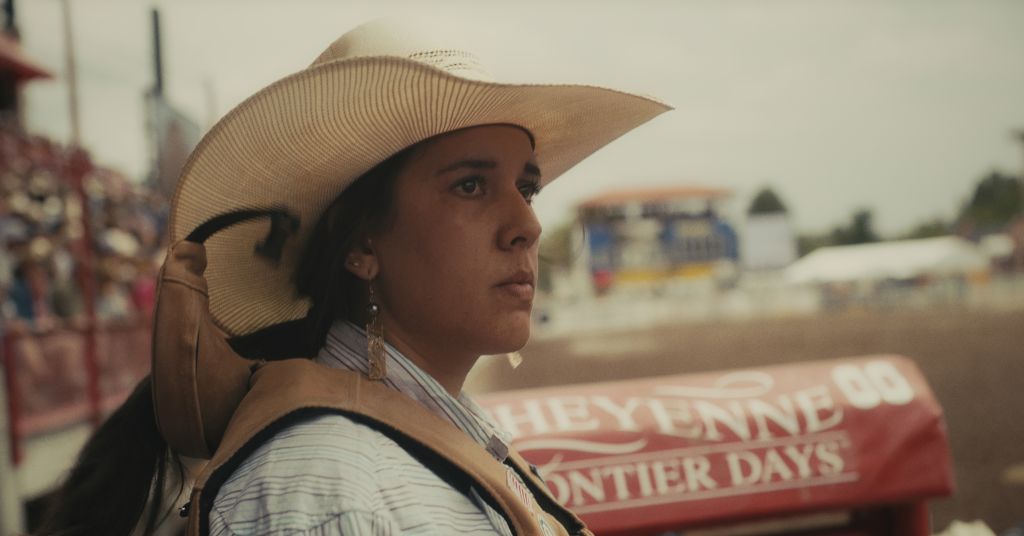
But it’s a high pressure situation, especially for the ride cam and capturing that ride because that horse could go away from the camera in those eight seconds. It’s funny because you can see it in slow motion. The horse goes this way and then the cameras are to adjust. There’s some serendipity to it. At Cheyenne, you’re boxed in. We showed up three hours early and [the cinematographers] weren’t even allowed to go to the bathroom. They just had to sit in this cage because it’s at ground level, under the arena. It’s the one spot and they have to stay there for five hours straight just to hold their spot. Once you’re in, you’re in.
The horse is, obviously, a metaphor for life. You’re riding through these challenges. It’s a metaphor for everything the riders are going through, so we wanted to capture the beauty of that. It is poetry. They’re fighting the horse. They’re trying to just work with it. It’s poetry in motion.
POV: Thom Powers’ notes capture that metaphor for getting back in the saddle well. I’m mad that I can’t use it. [Laughs.] But at the end of the film, the title card says that the ban returned, so what’s happening now?
AS: Belle Fourche just didn’t allow us to come back after Brooke’s accident. That’s part of the unwritten band, basically, after Pendleton with in 1929 with Bonnie McCarroll [who was killed after being thrown from her horse during a ride]. After that happened, it was more or less a blacklisting in that nobody would allow the women at the rodeos. It very much goes back to Gene Autry and everything that he was writing at the time in national newspapers that changed a lot of the viewpoints on it. There was no official, “Women are not allowed.” It was, “We’re not going to put money up. We’re not going to bring horses for you. You’re not allowed to enter.”
TA: Some states had certain laws, so it varied by state. Wisconsin had particular things that made it pretty difficult. Australia has insurance hurdles. That’s the pressure, right? Men can get hurt in a rodeo. It happens, but they’re not worried that they can’t go to the next event. The sport has grown, but I think you guys are still very much on this tight wire. Belle Fourche was sad. They had women back after 90-something years. It’s one of the original old rodeos that had women, and it’s not Brooke’s fault, but she knows when she gets out there, the pressure is on. It’s a pressure that a lot of men don’t have that you guys have to carry.
That’s the heart of no crying in the arena, right? It’s A League of Their Own. You can’t let the sport down and that’s just an additional pressure. You fight for it every day.
POV: Right. A man falling off a horse doesn’t have an impact on every other man’s ability to compete.
TA: A big part for me was that we don’t want to see women carried out on the stretcher, but women experience violence in all sorts of ways in this world. And that’s one of the things that we captured in the film, whether it be sexual assault, domestic violence—it happens behind closed doors so we don’t have to deal with it, but it’s out an arena and women are choosing to experience it for themselves. And that’s perceived as not being okay. But that’s their form of healing. Whether it’s the violence we experience through gender-based violence, or through the things we do to our own bodies or childbirth, women know violence. They know they are tough. It’s just the fact that we’re choosing it for ourselves.
POV: I saw a video from TikTok where the rider Rocker Steiner is mouthing off on a podcast and saying that women should stay out of the sport, even though he even says his own mother did it. It’s 2026: how are we having gendered exclusion? How does it feel when you hear another rider say that?
EC: It lights a fire for me. It’s like, “We’ll show you what we can do.”
TA: He said, “I don’t want to see a woman carried out on a stretcher. I feel like they just get hurt.”
AS: We’re all human. Everybody has a right to their own opinion. I feel like the more we’re able to quietly showcase what we can get done, the better it’ll get. The more barriers we’ll quietly push. I did think it was funny, though, in the first showing [at TIFF] because I had just watched that podcast. I was sitting there in the theatre watching. I was like, “Oh, there’s Rocker in a women’s ranch bronc documentary after he said that.”
We run the circuit with these pro rodeo athletes and some of them are really kind and very sweet. Some of them have helped us behind the chutes if we have a horse that just does not want to a rider put on it. It takes a couple of people sometimes to calm them down because it’s such a high energy situation. At Cheyenne, the air literally vibrates. It crackles with energy because you’re underneath the grandstand and you can hear them screaming. You can feel them stomping on their seats, and horses are very emotional creatures and they are very, very intuitive to what’s going on. The guys will step in and help us with that.
EC: When it comes down to it, it doesn’t matter if you’re a man or a woman. We all understand what it’s like to be behind the bucking chutes and just need a little bit of help. We’ve all got each other’s backs at the end of the day. I can go out there and I can get hurt, or I can get up and I can ride just the same as the Wright brothers. Obviously I’m not a man. I’m never going to be as strong as a man, but we understand what we’re signing up for. It doesn’t matter who we are or what event we’re doing. We understand the risks.
AC: We all know what the ground feels like and we know that it’ll catch us every time.
TC: You guys can choose that, and you are tough enough to handle that. I think that’s why that comment made me upset. Everybody gets hurt. It’s rodeo, but there’s this sensitivity, this preciousness around women getting hurt, which is coming back to that duality.
POV: Just around the time that I watched Cheyenne, I saw a video of Maggie Gyllenhaal at Venice. It was during the press conference after A Woman Unknown was the only film directed by a woman in competition and it won. And one of the journalists asked her if politics came into play, and she just takes a breath and is like, “I knew this question is coming.” What are some of parallels with bronc riding and with filmmaking and where is the industry going for women?
TA: I have seen that, statistically, fewer films by women are getting made than they were 10 years ago. I think that fact was released recently. So in some ways we’re going backwards. Documentary is really a rich playing field. And in narrative, we’ve seen more opportunities for complex stories of complex women and embracing that. That’s what’s beautiful about this film: They’re swearing, they’re getting dirty, they’re slamming in the ground, they’re dealing with really hard things and that’s what complex women are. But that’s me. That’s who I am and I see myself in you guys. Women came up to us after the screening and were like, “I see myself in you guys.” I think that more stories by women need to get out there so we can see all those nuances.
EC: We probably wouldn’t have opened up as much if it wasn’t Taimi behind the scenes. She made us feel so seen and so comfortable.
TA: I feel the pressure you guys feel. We’ve been trying to get into festivals. We didn’t know what we’d get into. I have routinely thought if I do not get into a festival with this film, I will never get another shot. This is my arena and if I buck off and get hurt, I will never get another shot to make another feature.