


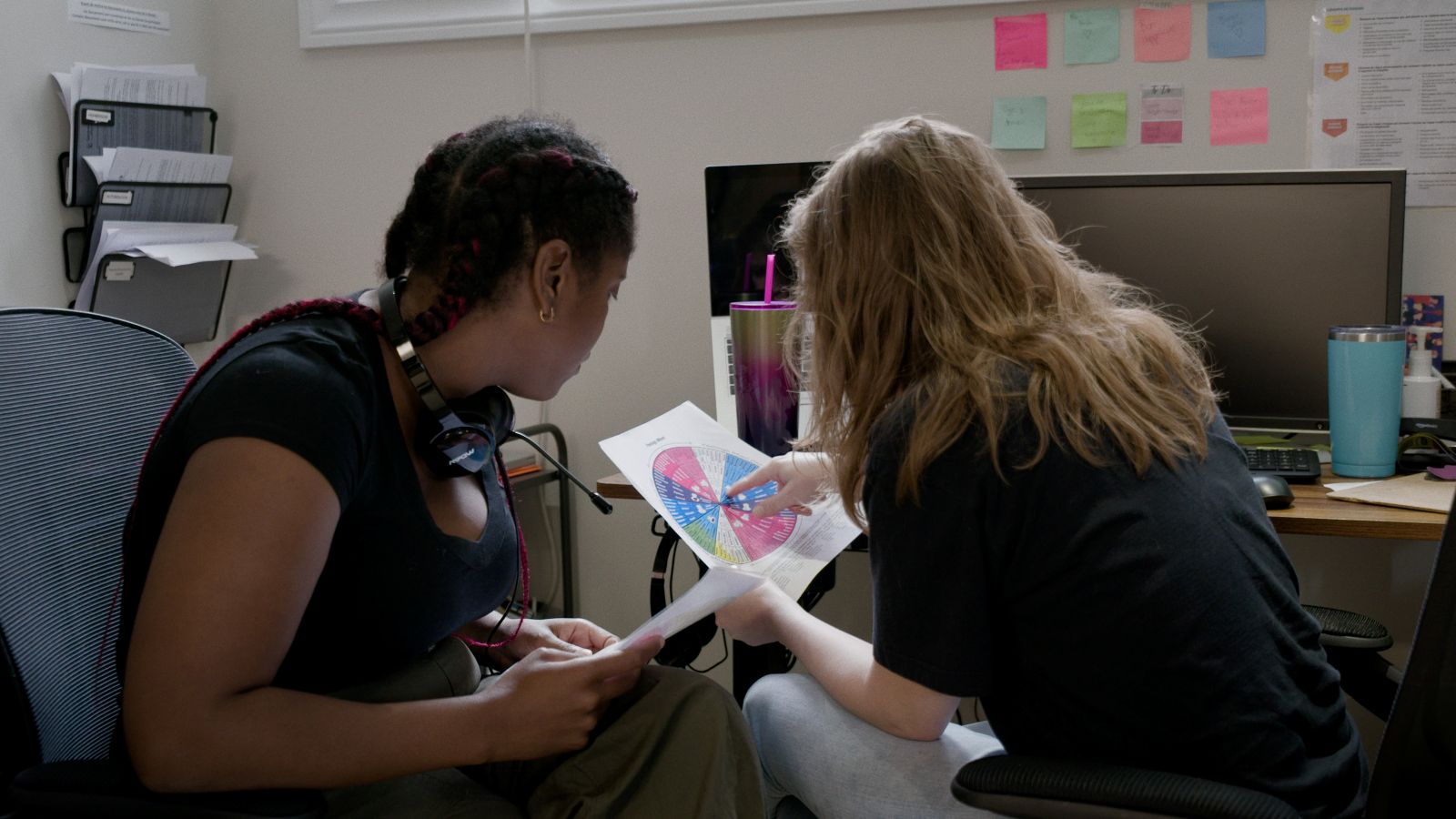

Steve Patry’s A Breath at a Time (Un souffle à la fois) opens with a man in a baseball cap breathing in and out. He’s guided into calming meditation by a worker at a social services centre in Gatineau, Quebec. Taking place on the margins, the film, which premieres at RIDM 2026, follows just over a dozen men with a history of violence enrolled in a program to manage their anger. With a focus on rehabilitation, the film splits its action between worker and patient. Through individual and group sessions, we delve into the psyche and complex work of taking accountability and transformation.
In a way, the project fell into Patry’s hands. After presenting a screening of his previous film, Waseskun, which is set at the Waseskun Healing Center and focuses on the treatment of troubled and violent men using Indigenous philosophy, someone in the audience approached Patry. “He explained that he was a social worker who worked with people with violent histories, particularly in the realm of domestic violence. At the time, I had other projects and I wasn’t prepared to make that film,” explains Patry. “Before that though, I didn’t know these centres even existed.”
In the meantime, he made two other films, I Might Be Dead by Tomorrow (2020) and These Wild Cats (2024), and the pandemic happened. Suddenly, Patry felt inundated with stories of domestic violence and femicide. “It really started to impact me and I remembered I had access to this centre. I thought to myself, maybe this is an opportunity to not just make a film, but as a man, to make something useful,” he says. He proposed the project to the NFB and thanks to Nathalie Cloutier, who serves as an executive producer on the film, the project went almost immediately into production. “I did a few months’ research, started shooting, and three years later, the film is here,” he says.
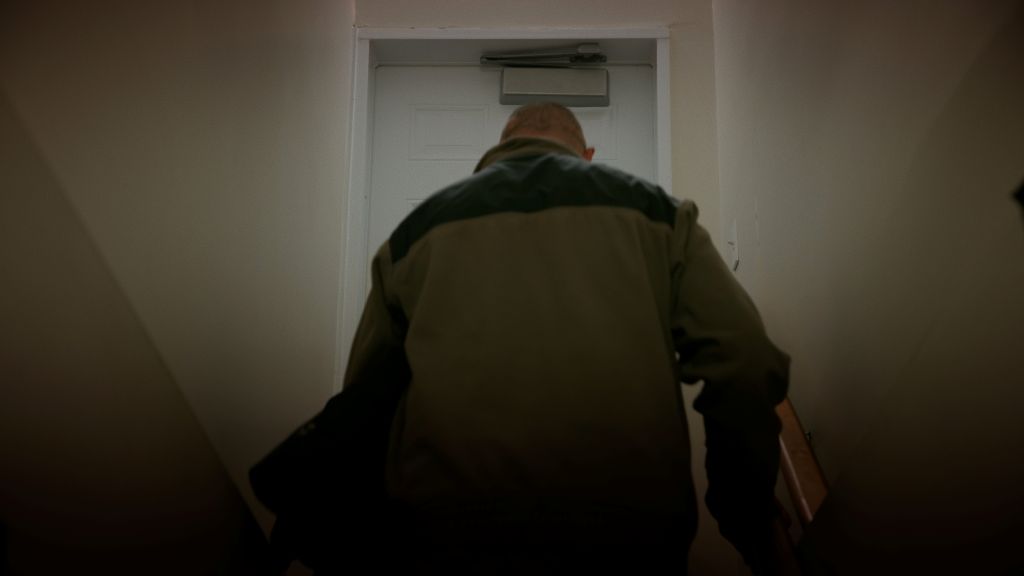
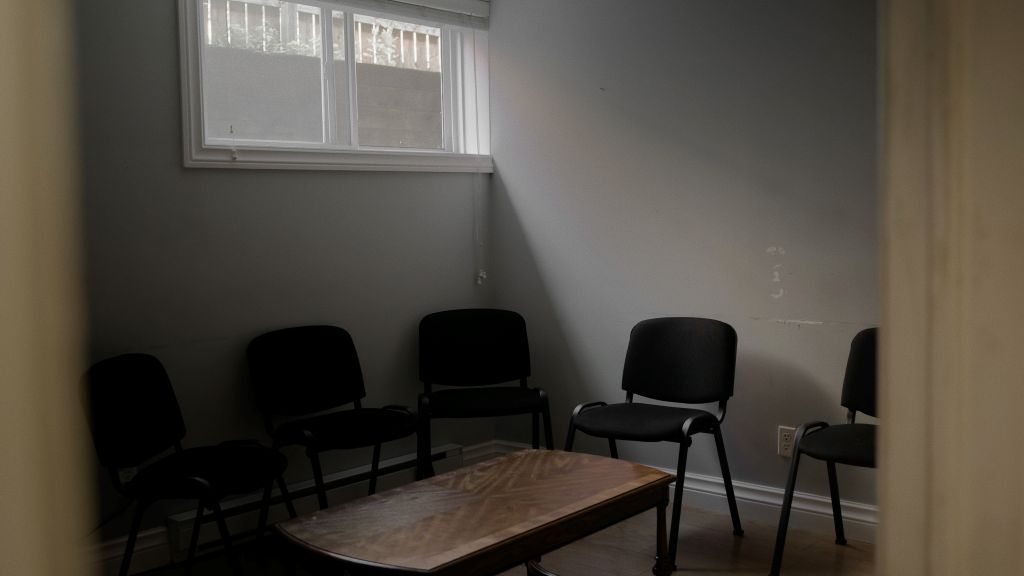
From the beginning, Patry knew the film was going to take place almost exclusively in one location, a kind of “behind closed doors” approach. A Breath at a Timetakes place almost entirely within the rather plain and antiseptic walls of the facility painted in yellowed beige and off-white. In the early stages, Patry worked hard to build a rapport with the social workers but also the men who were there to be treated. He had no interest in making a film that obscured the identity of his subjects. “A man who agrees to be filmed during this process is taking some kind of accountability.” It was his only rule: “I wouldn’t make the film if I couldn’t show their faces.”
The decision to only work with men who allowed themselves to be filmed proved complicated. The idea that only people who truly want to change would agree was swiftly challenged. “In reality,” explains Patry, “there are many reasons to accept. Maybe they feel like they’ve been manipulated into doing it, whereas others believe that the camera lends a kind of prestige to their point of view. In the end though, I can’t really control any of that. I wanted my film to be a participant in their rehabilitation.”
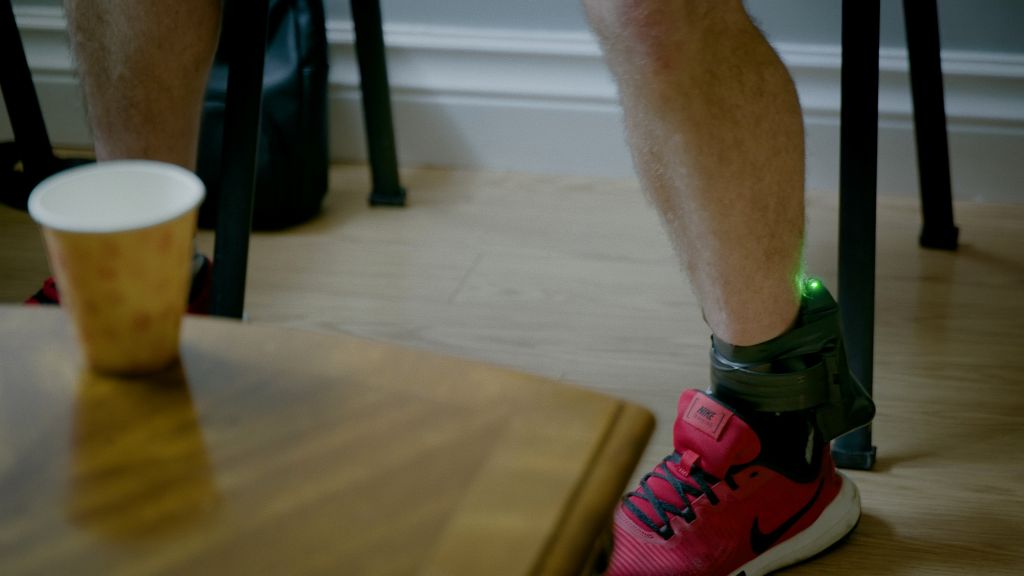
At first, Patry, who also acts as his own cinematographer, worked with only one camera. Soon though, he realized that the film was as much a story about the space and its workers as it was its patients and he added a second camera, set up on two tripods. The double camera also allows for more freedom in the relatively confined spaces. His camera, though often fixed, had more freedom to break away from more classical observational talking heads. Body language and presentation emerge as a result, with sequences focused on hands, tattoos and feet. The shape and movement of communication are transformed through this expanded focus. “In these sequences, we watch the way people talk with their hands. It’s all about non-verbal language. It even changes the way we perceive silence,” says Patry.
Most of the men in the film are white and working class. Patry does think there is an element of a socio-economic factor to the men who turn up at the centre for help, but also believes it realistically represents some of the demographics of Gatineau. The tools in those centres seem catered to that population. “They’re very practical, simple but effective. I don’t necessarily think, for example, these tools would work on someone in finance who might be super controlling or abusive in a different way,” he says. “These centres correspond to the needs and profiles of the people who go to them.”
Though mostly observational, we understand that a lot of the work involved is dismantling notions of toxic masculinity. Most of the men are uncomfortable with their emotions and struggle to ask for help. Despite sometimes being strained for resources, this means that the centre always makes immediate follow-ups with men reaching out, understanding that they might change their mind. We watch sequences of social workers talking to men on the phone, asking questions and keeping them in check. The careful balance of their work is to invite change without excusing their behaviour.
The duality of showcasing the work of the social workers enlivens the film. Patry was especially interested in debriefing sessions between workers on certain cases. “It was like a behind-the-scenes look at what we watched unfold where we got to see their point of view on the situation,” he says. “They were really special moments, a bit weird but also very interesting. It was fascinating for me, where on the one hand we are entering the psyche of these men and also the work of deconstructing these male ideals and stereotypes.”
The film doesn’t commit entirely to observation, however. Subjects fiddle with microphones and sometimes address the camera directly. The movie leads towards a spectacular and tense final scene that, without going into spoilers, is a masterclass in filmmaking ethics. The decision to integrate moments that break the fourth wall were, for Patry, a way of signalling to the audience that this isn’t a work of voyeurism, but collaboration. “I want the viewer to understand that all these people who are being filmed are aware they are being filmed, they’ve accepted it and the rules are clear for everyone involved,” he says.
Patry has worked closely with his editor, Nathalie Lamoureux, on three films now. Once he’s finished shooting, they watch all the footage together. “It’s at this point that I’m able to discuss my point of view and intentions with her,” he says. Then, she puts together a rough cut featuring all the interesting material. “We knew we wanted a kind of polyphony of voices. Before organizing them by theme, we made sure to highlight all the encounters that, in our view, demonstrated a specific process.” From there, some themes naturally emerged and it became more about structuring the narrative. “The story is built in a specific way—we set the stage at the beginning, then it builds into a kind of crescendo, tightening the tension until it reaches a certain level of gravity. Afterwards, there’s a resolution for some, while for others, there isn’t one.”
Just before picture lock, however, several men decided to pull out of the project for various reasons. This incident led to the film’s final sequence, as one of the men who wanted to pull out said he would only agree to be in the film if he’s allowed to have one more meeting, filmed with the staff of the centre. It leads to a moment that Patry describes as a kind of “mise-en-abyme” sequence, or a story within the story. Even though it wasn’t initially going to be a part of the film, finally, “everything seems to lead towards this one encounter,” Patry explains.
Ending A Breath at a Time on this note complicates a reading of the film. Rather than settle on the more optimistic morale that through hard work, people can change, it leans into the fundamental unknowability of the other. Even as Patry discusses the process of making the film, he often returns to this point: the idea that the men’s motive to change might not always be noble or intentional. Yet, the work requires a certain level of trust and openness. The social workers have to believe that people are there to change in order to help them.
In the end, the men who pulled out all end up agreeing to be in the film again. “Aside from that last scene,” says Patry, “it’s basically the same version we had already finished.”
The film doesn’t feature the testimony of any of the victims, but their voices are not absent. The social workers are there to help the men, of course, but also act as the voice and advocate for their victims. We watch as one social worker, on the phone, explains how a man threatening to throw out his girlfriend and children when she can’t legally be in Canada is predatory. Meanwhile, another man, after trying to paint himself as a victim, confesses to strangling his girlfriend. The social workers not only confront his manipulation but put into action a plan to help his partner.
Patry has long been fascinated by people on the margins. He is attracted to the non-linear nature of healing; how it features ups and downs, failures and success. “I want to show people that anyone can be rehabilitated,” he explains. “I think this help offered to men who might commit violence is very good and important. I think too we need to continue the work to provide help and assistance to their victims. I think to really solve the issue, we need to start working with young people. I don’t think there is one miracle solution but it happened to me many times over making this film where I thought, ‘Wow, change is possible.’”
A Breath at a Time premieres at RIDM 2026.
Please check your local listings for additional festivals, event screenings, and broadcast dates.