



A Fire There
(Canada, 95 min.)
Dir. Marlene Edoyan
Prod. Dominique Dussault
Programme: Canadian Spectrum (North American premiere)
“The shepherds have lit a fire there,” recites Liza. “Ah, my heart flies to that distant world. / Where our old dialect is still heard. / The shepherds have lit a fire there. / On open mountains. Oh, sweet and far.”
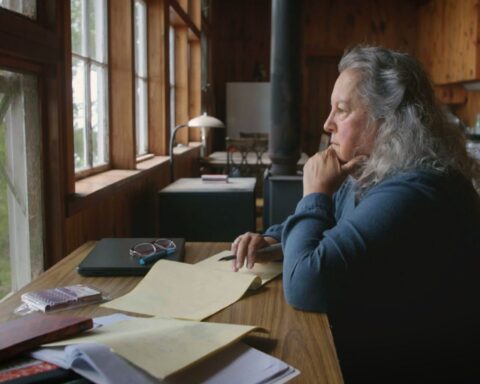
Liza’s reading of a poem by Vahan Terian brings A Fire There to its poetic close. It’s a buoyant and arresting artistic choice as director Marlene Edoyan grants the final word in a largely male-centric story to a woman, albeit one reciting a man’s verse. Liza’s captivating screen presence and her expressive, heartfelt reading of the poem nevertheless beautifully illustrates the ways in which Egoyan affords agency to women in a patriarchal community in a time of change.
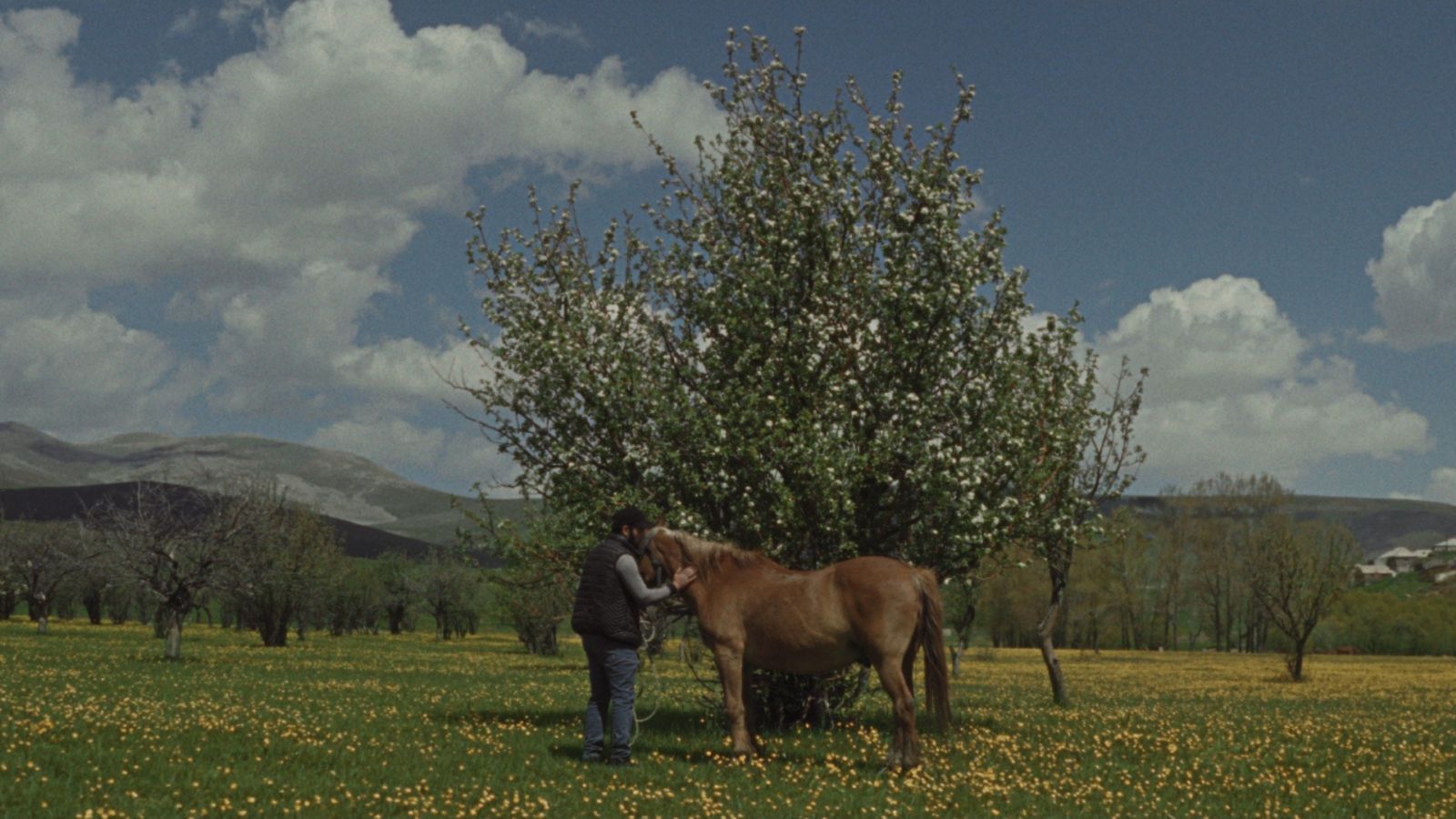
A Fire There whisks audiences to the picturesque countryside of Gandzani in South Georgia. There, a community of Armenian shepherds finds itself at crossroads both figurative and literal as boys come of age. They consider their futures, but also confront an existential reckoning when their homeland borders upon Russia. The film immerses audiences in a serene landscape that’s at once preserved in time, yet witness to a world that rapidly evolves around it.
The three young men—Henrikh, Karlen and Hakob—serve as the key eyes through which Edoyan sees this story. The boys assist their fathers at the farms, tending to sheep, working the fields, and making cheese. The three young men have their minds of this place and elsewhere. They’re rooted in concerns for their community, but their thoughts always tend to travel to faraway places. They wonder about studying down south, where they might feel stronger ties to their Armenian roots.
Alternatively, going north to study in Tbilisi, the nation’s capital, might open more doors if they can refine their Georgian and make some connections. The friends drive around the countryside and Edoyan’s ever-observant camera sees through these young men a vast world of opportunities. But the call of tradition is palpable, as the film witnesses the strong sense of community. Scenes at dinner tables, church ceremonies, and harvests reflect a tightly-knit group. The social fabric is robust, but A Fire There perceives these young men caught in a tug of war between two worlds.
This call feels especially strong with Henrikh, who becomes the most politically engaged member of the trio. He worries about living under threat of Russia when Putin’s armies invade Ukraine. They’re far from Kyiv, but awfully close to Russia. They’re ill-equipped to defend themselves militarily, but Henrikh joins a political movement. The events light a fire within him to protect his community, even if it means leaving it.
Edoyan, working with cinematographer Etienne Roussy, captures the drama of daily life in Gandzani with distinct vision. In addition to being a filmmaker, Edoyan serves as artistic co-director and programmer at Montreal’s RIDM and A Fire There reflects the poetic innovation in documentary form for which the Montreal festival is known. It’s refreshing to see this consistency of vision across roles.
The film sits between the documentary and fiction spaces as Edoyan works in close collaboration with the families to tell their story. Roussy shoots the action with an eye for dramatic grandeur: the film honours both field labour and domestic work by affording it an elevated eye, much like the painted frescoes to which the film returns. A Fire There resembles a scripted film on the surface, but it hews closer to vérité in its construction and design. It’s not quite docu-fiction or hybrid cinema per se, but rather an assertion of the poetic. Observational film and intimate stories deserve to be told with such grandeur. The scope of the film affords it a great emotional window into these connected lives.
As A Fire There considers the three young men in a time of change, it also uses its immersive view to explore how their choices inevitably shape the community. The film observes currents of tradition that hold strong, but also subtle pushes for change. In one scene, a family might sit at the table as the men eat, complain about salt, and discuss their flock. The mother sits there listening and watching, but not eating with them. She fetches water at their command. Scenes of young women lend the film its narrative cadence as A Fire There inserts community gatherings around milestone events in the girls’ lives, like a baptism or simple dance performance. It reminds everyone, men young and old, that life continues to move around them. There’s as much going on in this small community as there is in the foreign lands that occupy the young men’s thoughts.
Meanwhile, the film frequently cuts back to another woman in the community who interprets coffee dregs in villagers’ cups. She wisely perceives the winds of change in the land and stokes the fire that may push the boys to pursue the personal growth they need to provide the community its collective strength.
By observing this salt of the earth community, A Fire There finds hope among the flock. As much as tradition unites them, their strength comes from their openness to change. But their hearts remain connected to a world that seems both present and distant, suspended in time, but inevitably facing the future.