



The Wind’s Thirst
(Canada/Colombia, 84 min.)
Dir./Prod. Alejandro Valbuena
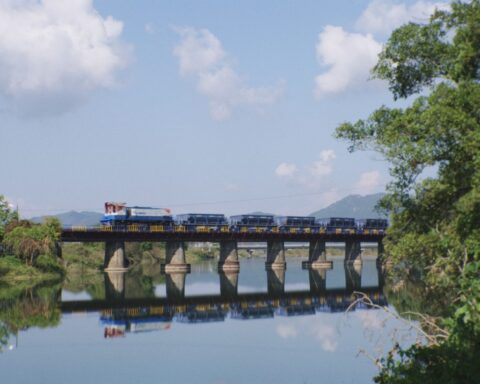
In the La Guajira desert of northern Colombia spans a land now known as El Cerrejón. Charting 690 square kilometres, it’s a larger footprint than the city of Toronto. Its population density hardly matches that of a bustling urban centre, but its environmental impact is far worse.
El Cerrejón, moreover, isn’t a city. It’s a coal mine, and the largest of its kind in Latin America. The site scars the traditional territory of the Wayuu people, the Indigenous population that thrived on the land for years.
The Wind’s Thirst tells how this mine displaces them and threatens every facet of their way of life as families are forcibly moved by the foreign company. People who stay face depleted water supplies, contamination from toxic chemicals, and even violence waged anyone who courageously speaks up. The film doesn’t name the corporation behind the violent resource extraction that devastates local communities. (That’s the Anglo-Swiss company Glencore.) Instead, the mine symbolizes a new iteration of colonial violence as a foreign entity swoops in to pillage the riches of the land with no care for the immediate or long-term consequences.
Director Alejandro Valbuena turns the camera towards everyday warriors fighting to protect the land for future generations. The Wind’s Thirst focuses on three Wayuu figures who speak out against the mine’s impact. Jazmine, for example, offers a strong voice. She articulates the plight of her family and community while situating the present struggle within a larger history of colonial and patriarchal currents. She emphasizes the beauty and the natural power of the land, though, and Valbuena’s camera trails her through the verdant, picturesque region she fiercely protects. The film’s stunning cinematography captures the awesome power of this natural landscape. Lush greenery offers a beautiful canopy that sustains the local population.
Moreover, the sense of grandeur underscores the overwhelming effect of the mine. The intimate stories serve a compelling contrast to the impersonal and ugly mine that ravages the region. There’s large-scale cinematography at its finest here as The Wind’s Thirst captures the sheer scale of the mining operation. Massive trucks navigate the dizzying switchback roads and ferry resources away from the community. The barren landscape evokes a war zone. Nothing thrives and there’s an overpowering sense of waste, while the surrounding communities ache from the fallout.
The film finds another resonant voice to convey this perspective through Misael. He and his family live close enough to the mine that every explosion reverberates through their home. He defies the pressure to leave, and the threats are real as the film tells how hundreds of Indigenous leaders have died by violence while protecting their land. Misael, like Jazmine, fights amid personal losses. Using legal and political tools, he becomes a leading voice in the community’s campaign, guided by his dreams and the lessons of his elders.
Meanwhile, the film observes how the systemic warfare against the La Guajira communities isn’t isolated to mining. Not far from Jazmine and Misael, elder Tita rallies against the large wind turbines that invade the land as alternative energy companies set up shop. They erect huge and noisy turbines across the region, including atop burial grounds. The film watches as Tita and members of her community literally excavate the bones of their ancestors as the spirits of their families are unsettled by corporate greed. She, too, fights against the company, which refuses to share profits with the community and offers only a pittance compared to the disruption it causes.
The Wind’s Thirst weaves through these connected storylines to convey a microcosm of the climate crisis. Facing devastating consequences by energy practices both old and new, the communities ask why the sites that have long sustained the Wayuu people become quickly used and ruined by outside interests in a fraction of the time. Occasionally, the narrative loses focus as the converging threads can be difficult to follow, but there’s a bigger picture impression that lasts. It’s a story of resilience and one of the fight for tradition, land, and beauty.
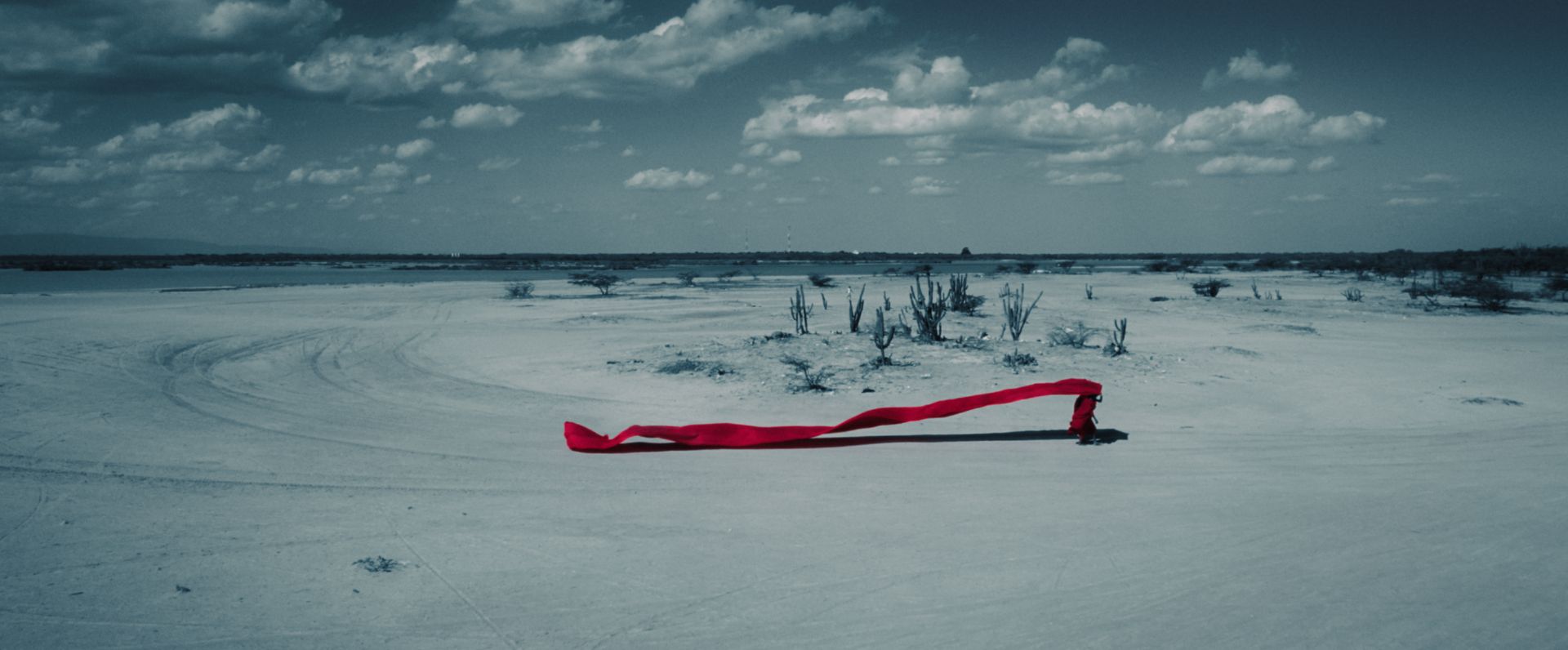
The stories emphasize a need to be attuned to the land and its rhythms in order to sustain the future. The film picks up this wavelength through poetic interludes that see Wayuu figures traverse the desert while adorned in billowing garments that add shocks of colour to the desert landscape. Red flows strikingly to evoke the traditions and practices of the Wayuu, while yellow textiles offer a nod to a life taken too soon and black adds a shroud of mourning. The music by Andrés Galindo Arteaga provides haunting lyricism while drawing upon the sounds of traditional instruments. It underscoring the longevity of Indigenous people on the land and preserving sounds of Wayuu culture on film.
Especially evocative is the dreamy sequence in which a figure dances violently while cloaked in a blue sheet. He braces against the wind, evoking images of hunger and thirst as his mouth gapes beneath the garment. The sheet catches only the wind, which can’t sustain him.
Of all the compelling images within The Wind’s Thirst, however, the final shots may have the most power. Valbuena’s camera observes the beautiful river as its serene waters feed the lush greenery that surrounds it. This healthy oasis offers everything the community needs. There’s just manmade dam that separates it from the barren riverbed we see elsewhere in the film and communities left parched. This film offers a bold assertion that those waters will flow again.