



Possible Love
(South Korea, 160 min.)
Dir. Lee Chang-dong
Prod. Lee Joon-dong, David Levine, Chadwick Pritchard
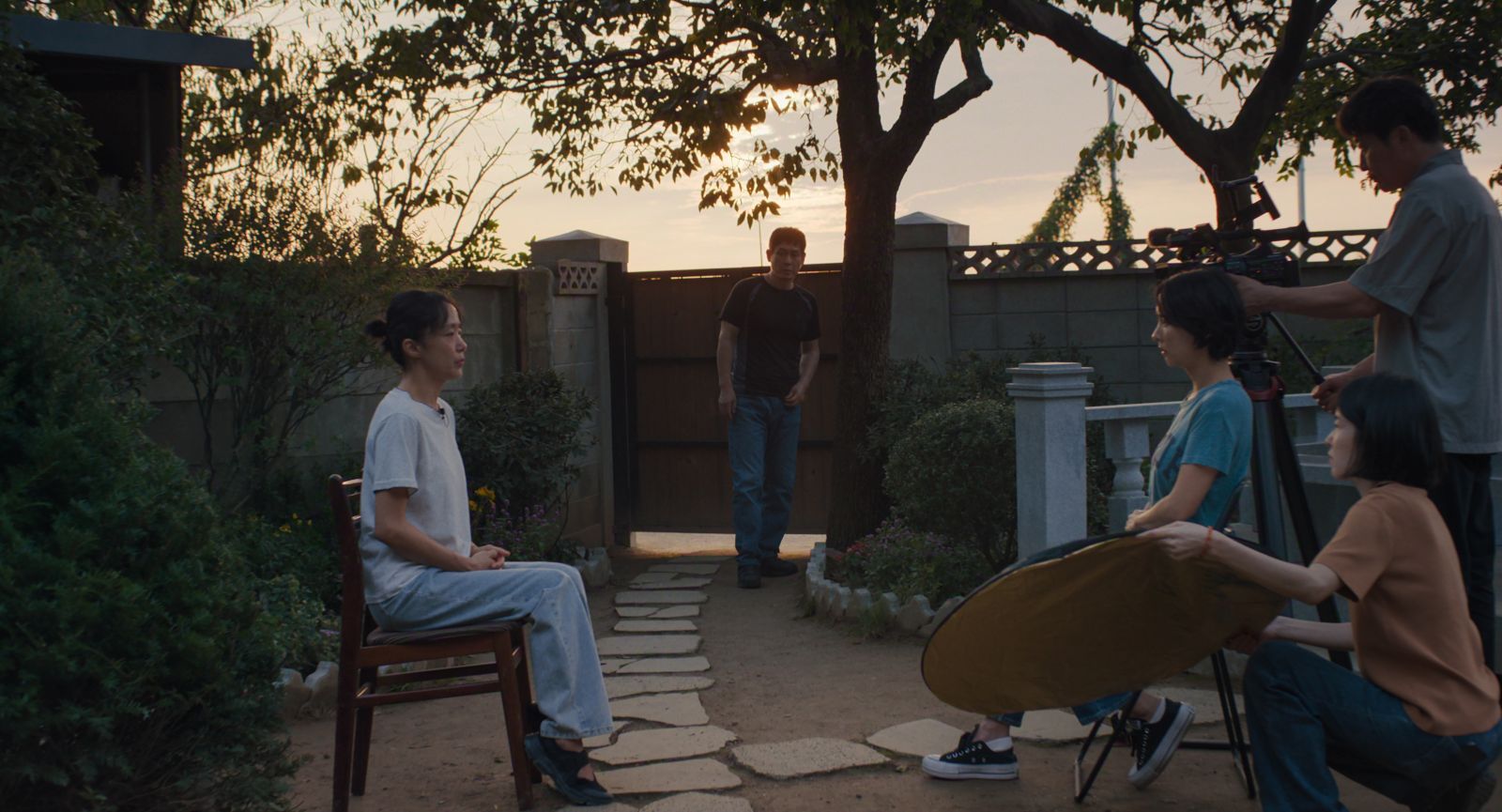
A documentary camera serves as the mediator of and catalyst for deeply rooted class divides in Possible Love. This drama from South Korean filmmaker Lee Chang-dong (Burning) observes the power and authority a camera wields. Documentary filmmaker Ye-ji (Parasite’s Cho Yeo-jeong) endeavours to make a movie about the fallout of a labour strike at a local factory. Her production intersects with the interpersonal drama of Mi-ok (Secret Sunshine’s Jeon Do-yeon) and her husband, Ho-seok (Memoir of a Murder’s Sul Kyung-gu). A marital squabble breaks out between the two at a funeral reception for a departed colleague. Sensing juicy drama, Ye-ji hovers in the background, camera in hand. She proves both an invasive presence and a therapeutic one.
Possible Love offers a fascinating spin on the dynamics of documentary and the relationship between filmmaker and participant. Ye-ji instantly sees Mi-ok and Ho-seok as ideal figures for her film. She’s especially keen to learn Ho-seok’s story, as she gleans that he played a key role in the labour strikes. He resists, as the dispute lingers like cancerous tumour that can neither be removed nor treated. He wants nothing to do with the movie. Playing hard to get, however, inevitably makes him an interview that Ye-ji covets.
Mi-ok, meanwhile, is perfectly game to participate. She takes a shine to Ye-ji and her media mogul husband, Sang-woo (Hope’s Zo In-sung). She sits down and bares herself for Ye-ji’s camera, offering stories about growing up in a working class family before becoming a factory labourer herself. Mi-ok cautiously unfolds bits of information that reveal the story of the strike that still traumatizes Ho-seok. She speaks of jail time and brutal beatings. But it’s the betrayal of colleagues and former friends that still stings. She knows, however, that some stories aren’t hers to tell. Ye-ji has to earn their trust for the full picture.
The exchange between filmmaker and participant becomes more complicated as production passes. Mi-ok clearly finds herself seduced by her director. Ye-ji and Ho-seok live in another world and enjoy the riches of the upper class. For example, Mi-ok takes a moment to check the price online of the chic handbag that Ye-ji carries on a shoot. It’s worth roughly $6,000, so probably more than Mi-ok and Ho-seok’s monthly income combined. Fellow labourers and even members of the film crew frequently remark upon Ye-ji’s fashionable outfits while interviewing labourers about the strikes. The more she immerses herself in the plights of the working class, the more she subconsciously brings class distinctions into the fold.
But Mi-ok and Ye-ji become genuine friends throughout the production. The languid film mixes work and play. The women dine together and gradually call one another sisters. They introduce their husbands and their kids–one human, one dog–to the relationship. Lee unfolds the quietly moving drama in a manner that allows brief moments where happiness exists outside of bills to pay and having someone to answer to. And yet for Mi-ok and especially Ho-seok, reminders of hardships wrought by their work and their push for equality are never far away. Each reminder brings a new story to the film within the film.
Relating the story of the previous labour strife also inspires Mi-ok to fight for a union at her new workplace. That’s great material for Ye-ji, too, as she seeks additional storylines to expand the documentary. She also has a hand in setting the unionization in motion, as the repetitive action of the factory proves bit too boring for her liking. Meanwhile, Mi-ok offers direction of her own, like advising Ye-ji to dress down around workers with financial struggles.
The relationship between Mi-ok and Ye-ji probes the challenges of keeping a remove while making documentaries. The friendship between the women seems genuine, and there’s some fetishization on either side of the class divide. Mi-ok clearly romanticizes Ye-ji’s comfortable life with Sang-woo. She photographs all their meals together and envies the freedom the high life affords. From where she stands, money does, in fact, buy happiness.
Ye-ji, similarly, displays sympathy for her friends’ blue-collar life, but doesn’t fully understand their plight. Her displays of generosity tread the line between earnest and condescending. Sang-woo, who doesn’t pretend that his wealth makes him different from the other couple, teases that it’s all a performance. Ye-ji insists there’s some possibility for a genuine friendship at the other side of the documentary.
Lee, speaking in the post-screening Q&A at the Toronto International Film Festival earlier this year where Possible Love had its North American premiere, says his affinity for labourers long inspired him to make a film about their situation. However, he noted during the conversation that he initially felt that documentary was the only way to do their story justice and, being a dramatic filmmaker, could never quite find the angle. He explained that co-writer Oh Jung-Mi introduced the idea of a documentary filmmaker as a framing device for the labour struggles and the in-movie director’s point-of-view arguably expands the class commentary.
On one hand, the intimate confessionals of the interviews illustrate the power relations that extend beyond the factory floor. Ye-ji holds authority over Mi-ok and Ho-seok and she knows it. Saying when to roll and when to cut, deciding which aspects of their lives are worthy of airtime, her calls as a filmmaker visibly weigh on her friends. Possible Love observes the fickle complexity of distinguishing “subjects” from “participants” through Ye-ji’s interactions with the couple. Her approach favours the former role, while Lee’s film suggests that such passive relationships between filmmaker and actor inevitably perpetuate hierarchies and divides. Lee smartly critics the documentary filmmaker without putting down the artform she practices.
On the dramatic side, seamless flashbacks create visual and narrative parallels in the present. As the two families explore life within strange economic brackets, Lee evokes the ways in which class structures are ingrained and perpetuated through labour, particularly manual blue-collar work.
Moreover, the nuanced and deeply empathetic performances by Jeon and Cho illustrate how two women living under the same moon can be worlds apart. As Mi-ok gradually summons her confidence in her standings and her comfort with her modest life, Jeon commands the film with a moving portrayal of a woman who values love, freedom, and loyalty above the material wealth her friends flaunt.
Cho, meanwhile, beautifully captures Ye-ji’s inability to connect on an interpersonal level with the people whose lives and struggles she seeks to represent. She can’t quite seem to learn from all the interviews she conducts and the challenges that she observes. For all her immersion into class structure and labour strife, her film seems fully void of personality. She won’t reckon with her own privilege while probing lower rungs on the social ladder and can’t translate the lessons of the filmmaking process into her own life.
Lee’s film suggests that relationships within the artistic process must ultimately be active and engaged. Ye-ji may conduct the interviews from behind the camera, yet Mi-ok proves to be the active and attentive listener and observer. She hasn’t seen the film—obviously, it’s still in production—and yet she understands the moral of the story better than her own director does. And yet in creating this expansive canvas for women like Mi-ok and Ye-ji to navigate the intricacies of class and labour, Lee dexterously shows how to tell a story with a voice that feels authentically one’s own.