



As the old cliché goes, a picture is worth a thousand words, but when it comes to the Vietnam War, two images in particular have stood out for decades as emblematic of the entire conflict.
1972’s “The Terror of War,” or as it was initially known, “Napalm Girl,” is the starkly horrifying image of a naked, badly burned child wailing as she flees the aftermath of a napalm bombing of civilian targets. It is often credited, though not entirely accurately, as turning the tide of public opinion in the U.S. about the war, leading to its eventual full withdrawal from Vietnam.
The survivor pictured in the photograph, Kim Phuc, has spent much of her adult life using her status as a symbol of war in order to push for world peace. Nick Ut, the Associated Press (AP) staff photographer credited with the shot, won a Pulitzer Prize and built a decades-spanning career off the impact of it.
The other image, “Point of Impact,” is an even more shocking photograph by another AP staff photographer, Eddie Adams, shot in Saigon in 1968. In it, the image captures the moment a Viet Cong soldier is executed in the street by a South Vietnamese general. At first glance, the man in the photo appears to be grimacing in anticipation of the bullet from the gun at his temple, until you realize that the trigger has already been pulled.
In Saigon Story: Two Shootings in the Forest Kingdom (2026), directed by Kim Nguyen, Vietnamese journalist Vo Trung Dung refers to the Eddie Adams photo as an image that sums up, “the cruelty of war and loss of our humanity.” It is, along with Bao Nguyen’s The Stringer (2025), which is about the “Terror of War” shot, one of two new documentaries about Vietnam as seen through the lens of two extraordinary photographs.
Both films add to our understanding of a conflict that has had veritable seas of ink spilled about it over the five decades since it ended. Watching these documentaries, it becomes clear that, as Nigerian American author Chimamanda Ngozi Adichie famously points out, there is a danger in holding onto a single story.
In The Stringer, almost fifty years after Nick Ut won the Pulitzer Prize for “The Terror of War,” a source comes forward with an astonishing claim. It is asserted in the film that the iconic photograph was actually taken by Nguyên Thành Nghê, one of AP News’ Saigon-based team of local freelance photographers, or “stringers,” but was knowingly miscredited to Ut, an official AP staff photographer, instead. The claim itself is backed up by an impeccable source: Carl Robinson, AP’s photo editor in Saigon at the time, who claims to have received the order from above to make the name change.
At its best, documentary is relentless in the pursuit of truth, so it stands to reason that rigorous self-examination should be a cornerstone of the industry itself. But what happens when that self-examination comes at the cost of long-held pillars of the field?
The film follows Gary Knight and his team at the VII Foundation, an organization dedicated to ensuring that the truth is documented even in problematic circumstances, to track down the veracity of this claim. We see them digging through almost 50 years of record-keeping—both human memory and physical documentation—while facing scrutiny and rebuttal from AP for investigating what they consider spurious claims about an iconic image, one that won them a Pulitzer and historic acclaim.
Interrogating our deepest-held assumptions should be a constant and ever-evolving process in documentary, and never more so than when uncovering the stories behind the stories, which can often have reverberating consequences.
But this film makes the fervent case for all the anonymous pillars of our recorded history to have their stories unearthed, especially when there are racial implications at play. As the film itself observes, a Western freelancer would have been correctly credited and their contributions rightfully acknowledged—and that was not what took place for Nguyên Thành Nghê. Ethics has to be the guiding force in journalism, the film seems to be saying, or else what is the real point?
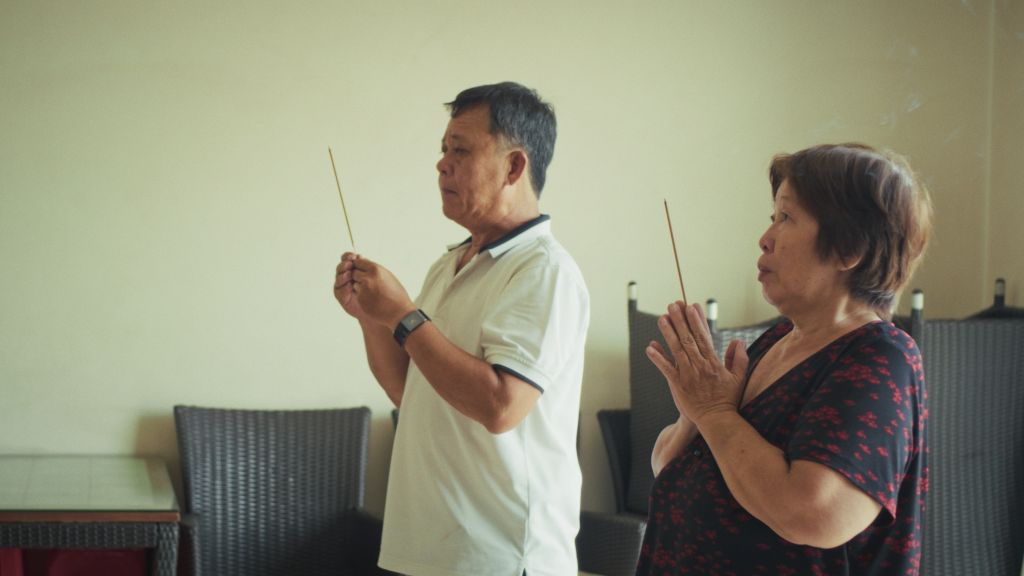
Saigon Story takes a similar tack of expanding and examining the stories behind another one of the most famous Vietnam War photographs. But in this case, it does not question the authorship of the image: Eddie Adams was already an award-winning photographer by then, and a Westerner, to boot.
Instead, the film questions the narrow understanding of the conflict that the picture has been used in support of for decades and actively unearths the stories of those in the image itself. This incisive film shows us the people caught up in that moment: General Nguyên Thành Nghê who is holding the gun, the captured Viet Cong commander Nguyên Văn Lém on the other end of the barrel, and General Nguyên’s second-in-command Vinh as well as the people connected to them whose lives were irrevocably changed by that same moment of impact.
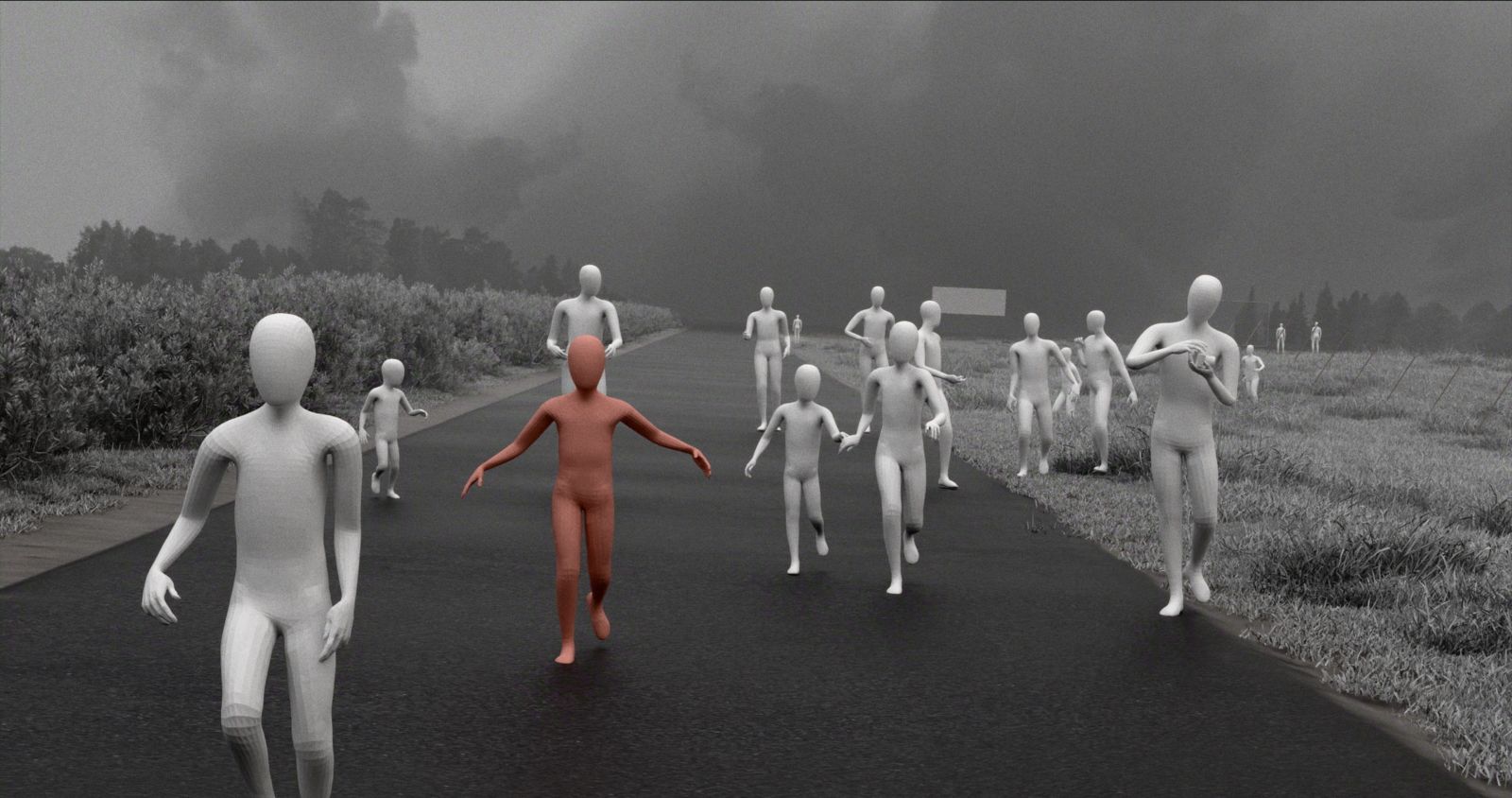
A framing conceit of the film is making Eddie Adams’ image itself a character, with a voiceover that begins the film with, “My name is 16…” as in, image number 16 on the contact sheet. Later on, this same voice lays out the central purpose of the film:
“My story is about life cycles. Not just my own, but the life cycles of the humans connected to me, in all their shades of lightness and darkness.”
The murdered Lém’s two children, raised on Viet Cong revolutionary bases, are on a mission in their middle age to locate their father’s remains for a proper burial. Mai Ly Hafer, the former wife of second-in-command Vinh, survived a murder attempt by her celebrated soldier husband shortly after the execution of Lém, and her life since then has been a steady burying of everything that connects her to the past.
This film makes the point that there are no easy villains and victors when you scratch below the surface. Some public heroes are private monsters while the most publicly vilified are often revered and canonized by the ones who knew them best. The narrative that the public knows is often contingent on whose story holds the most compelling imagery.
Further, both of these films make the case that the invisible “others”—the anonymous non-Western stringers without whom the historical record would be much less rich, and the families of those historical combatants labelled “enemies,” who suffer the blowback, both in real time and through the cementing of the historical narrative over the years—deserve their stories told, too.

The fact that these stories are considered worth exploring at all may come down to the sheer volume of documentation that exists from the era. The Vietnam War has been called the most documented armed conflict in history, thanks to television and photography, which documented the major events for a decade. It is considered common knowledge that having Vietnam brought into the living rooms of ordinary Americans had a profound impact on public opinion, and that photographs like the two Pulitzer Prize winners galvanized the anti-war movement to the point of ending the conflict.
But in the present era of visual hyper-saturation, where people receive an endless bombardment of previously unthinkable images through social media and 24-hour news—from police brutality to urban mass shootings, to natural disasters, to war zone atrocities—what does it mean to tie a complex issue to a single emblematic picture?
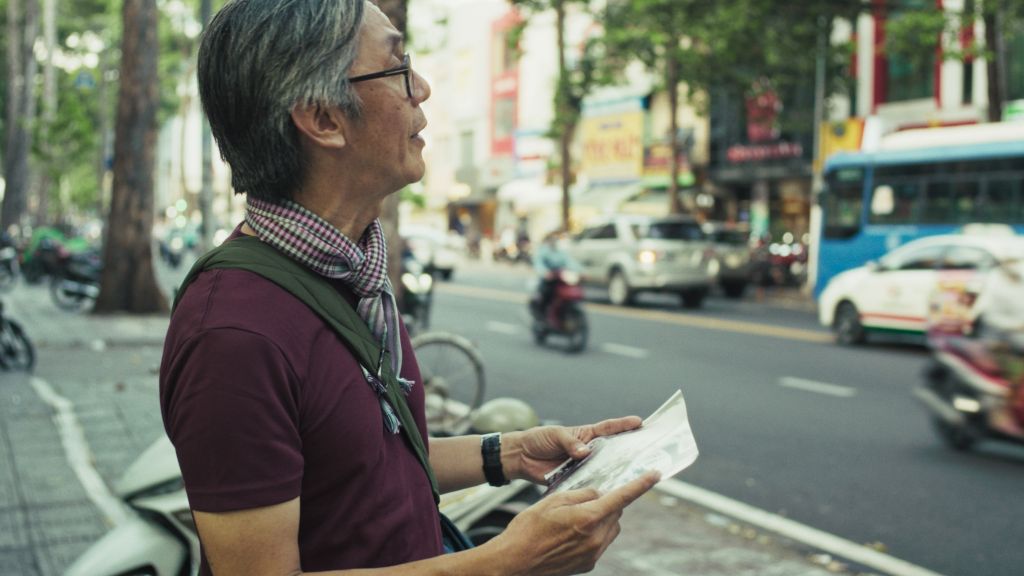
In The Stringer, one interview subject notes that, during the war, the press corps were considered “honorary generals,” and one could pull rank on an army captain for the last seat on a helicopter going out to catch the action. In Saigon Story, the Vietnamese journalist Dung, who was inspired to become a photographer after seeing “Point of Impact” in college, notes that the U.S. army was obligated to take the press with them wherever they went.
“It was the last war where the press had total freedom.”
It seemed like a sacred duty was being performed every time a journalist made a photograph that captured the essence of the war.
The impression, both then and now, was that of a mutual reverence, regardless of which side of the conflict one was on, for the role of the journalist as witness and truth teller.
Every successive war since Vietnam could probably be called the “most documented.” In 2025, that dubious title goes to the violence in Gaza that escalated in October 2023. Mainstream reporting from correspondents in blue press vests bring the realities of genocide to life on television and news radio. Instagram livestreams document the frenzied lives of Palestinian survivors on the ground through smartphone screens, and TikTok reels shared by Israeli Defense Force soldiers revel in successful missions or show them mocking their adversaries—laughing at women’s underwear in bombed-out homes, riding in circles on comically small children’s bikes.
All these and many, many more have created a 24/7 window into the atrocities of the war in Gaza, and as one might expect, many in the generations raised on the Internet have been paying attention and clamouring for change. But the impact one would expect, given our collective memory of Vietnam, is starkly missing.
As the tech giants behind the biggest social media platforms lean on their terms of service agreements and adjust their algorithms to deploy takedown strategies, media-savvy citizens in Gaza and their supporters around the world pivot in real-time, finding ways to document their lives under combat, up to and including their moments of death.
Unlike in Vietnam, the press corps covering the conflict have not been granted the impartiality of bearing journalistic witness. According to a recent report by the Committee to Protect Journalists this has been the deadliest conflict on record for journalists, including multiple reports of active targeting of members of the press, despite overt and repeated identification of themselves as such.
One of the earliest controversial actions the Israeli government took was banning Al-Jazeera from reporting on the conflict, and the world was privy to video of the agency reporting live as their offices were swarmed by Israeli forces intent on evicting them.
Under these circumstances, how can a single image even hold the same power for change when a genocide can be livestreamed in real time with no noticeable political will to change, even in the face of societal discontent?
Fifty years since the end of the war in Vietnam, what has happened to the contract between the press, the people, and their governments?
One tenuous reason for hope is that, for all the endless documentation passing by seemingly unacknowledged, there may come a time where all these images will be resurrected to bear witness for a retroactive reckoning. Maybe for now, all that can simply be done is to not look away.