



Who Is Still Alive
(Switzerland/France/Palestine, 115 min.)
Dir. Nicolas Wadimoff
Prod. Nadia Turincev
Programme: World Showcase (Toronto premiere)
The absence of a punctuation mark proves startlingly effective in Who Is Still Alive. This sombre film provides palpable catharsis for nine Palestinians who survived the ongoing genocide. It’s an important film to witness, if an emotionally exhausting one to experience.
The survivors recount in gripping detail their escapes after Israel escalated its attacks on Gaza following the October 7 massacre by Hamas. Director Nicolas Wadimoff (The Apollo of Gaza) leaves the story both as a soul-searching question of what remains and as a proud assertion of survival. These nine figures escaped, but how many loved ones and friends are still standing lingers as an interrogation point too difficult to commit to writing.
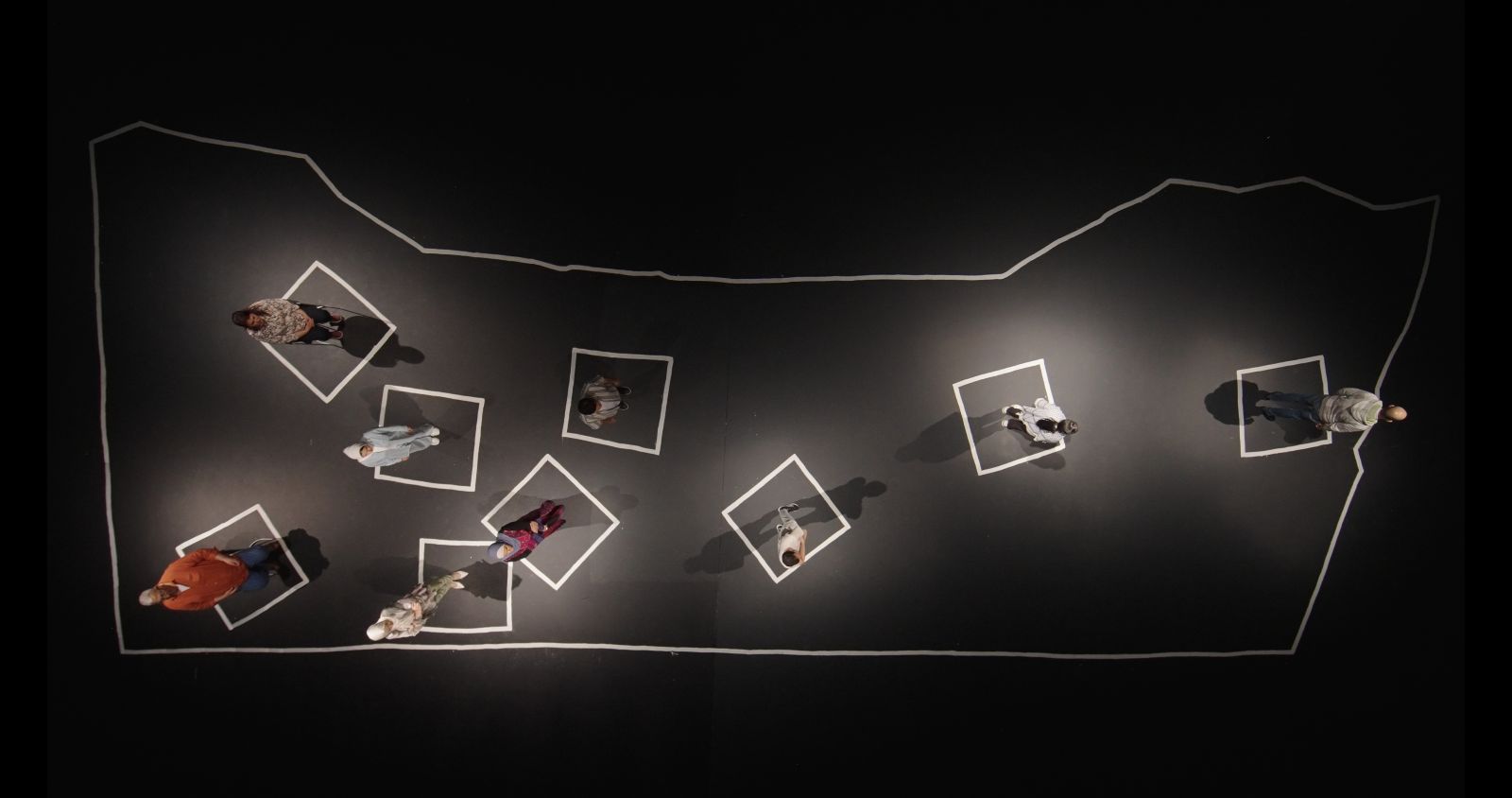
Who Is Still Alive resonates with an overwhelming sense of absence as Wadimoff invites these survivors to share their stories. Although many of them escaped to Egypt, they appear together in a sound stage in South Africa. The country, a far journey from their homeland, allows Palestinians to enter without a visa. It therefore provides a practical haven as they collectively navigate stages of exile.
The exercise recreates Gaza Dogville-style as Wadimoff brings the participants to a set covered with a block canvas. The city’s perimeter appears as a white line. Each survivor then identifies where they lived. They craft a collective memory map of Gaza’s neighbourhoods and camps, recalling where they resided, worked, and played. There are fond memories of the sea and pockets of the city where kids were raised. Tracing white lines in canvas, they rebuild Gaza from the rubble. An elder carefully traces figure of a cactus and stresses its significance as a symbol of patience. The odds that the cactus still stands are slim, but they carry its significance and wait to one day return to Gaza.
In one exercise, they each find their markers and then share stories of displacement. Participants move from the north end to Rafah, while others detour to Khan Younis. Memories of a vibrant and culturally rich city crystallize as they share stories about their work as authors, musicians, filmmakers, etc. But each white shape contains its own landscape of tragedy.
Who Is Still Alive then lets each of the nine speakers tell his or her story. These are harrowing and extremely moving accounts of escape, but also love and loss. Everyone speaks of loved ones martyred. They piece together tense stories of navigating bombed-out roads, and, in some cases, being pulled from the rubble. Other times, stories appear as second-hand memories that convey accounts told to them in the aftermath of trauma.
Wadimoff confidently allows the weight of each testimony to carry the story. Who Is Still Alive features nary a cutaway to archival footage from Gaza. It reiterates this sense of loss visually as the interviewees tearfully recreate the setting through descriptive portrayals of images seared into their memories. The effect is very powerful. It tasks upon a viewer to create the image in his or her own mind. We’ve all seen the extent of carnage and destruction in Gaza, but viewing it through these survivors’ eyes is doubly compelling.
“If we don’t tell these stories, who will?” one survivor asks the rest when the emotions seem unbearable. The documentary presents a twofold opportunity to the group. On one hand, it puts on record further stories about Palestinian experiences in time of dire need. As they share the loss of family members and the disappearance of homes, which in some cases vanished with full neighborhoods, the film puts human perspectives on the stories simplified by media. On another hand, Who Is Still Alive affords space for the participants to grieve. They can’t go home again, but at least they can find hope together. And when one looks them in the eye and hears their stories, how can anyone deny the atrocities that continue to claim further lives?