



Vegapolis
(France, 71 min.)
Dir. Micha Barban-Dangerfield
Prod. Romain Rampillon, Benjamin Costes
Programme: International Spectrum (World premiere)
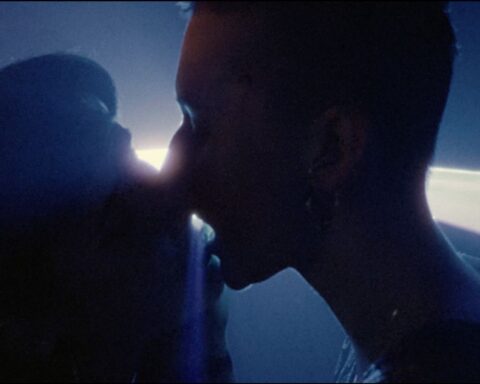
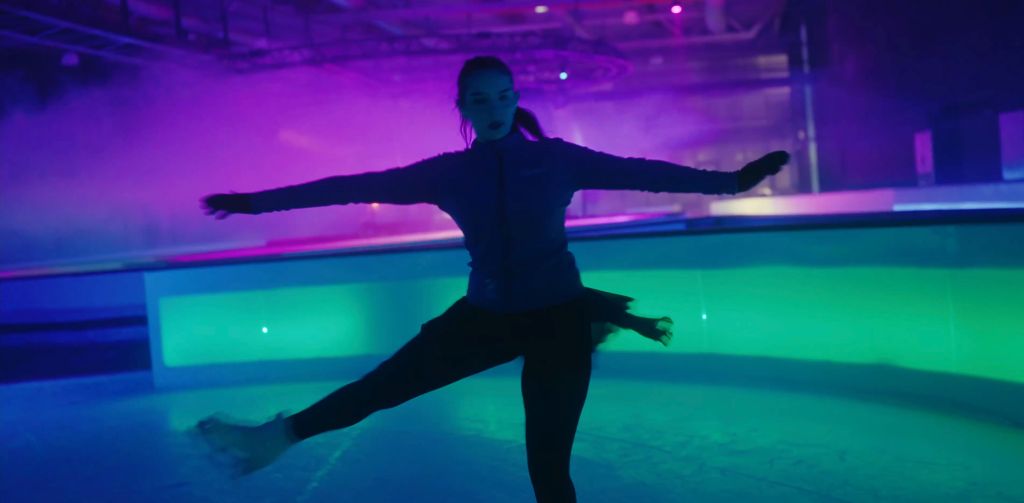
At the Vegapolis skating run in Montpelier, France, dozens of young people put down their phones and hit the ice. They tour around the rink as the lights sparkle and the awesome bass beats throb. The rink provides an open arena for the growing pains and joys of youth. But within the ecstasy of the arena, which resembles a dazzling and intoxicating nightclub, the skaters work through the inevitable vicissitudes of adolescence. This vibrantly alive and cinematically youthful film invites audiences to enter a space and (re)experience the exciting, messy, and confusing stages of growing up.
The arena sits in an odd place in the dense European country. Tucked between a Three Brewers pub and a Popeye’s chicken takeaway, Vegapolis resides in a space that resembles an American suburban mall. But these teens exude a distinct French flavour despite their proximity to Louisiana fried chicken. Their leisurely je-ne-sais-quoi attitude evokes a carefree and relaxed attitude. They blow off steam by twirling around the rink and doing jumps, and work out their differences in the bleachers between bouts.
The teens include recent high school dropout Nao, her BFF Morgane, and star skater Jules. They’re all in various stages of facing the future. Nao looks ahead to work– she plans to drive a lorry or maybe coach skating, while Jules sets in motion his dream to move to Paris and advance his training. Other teens simply have their eyes on boys and girls in the rink. Vegapolis captures a space where teens navigate retaining their innocence and coming of age. The rink evokes a refreshingly judgment-free zone as the cameras capture little gossip—okay, there’s a whisper or two about one guy who really gets around, plus a fun Instagram page for love-struck skaters, like Craig’s List “Missed Connections” for screenagers. The arena mostly serves as a kind of bubble. It’s a reprieve from the anxieties of the outside world.
Director Micha Barban-Dangerfield introduces herself with an extraordinary feature debut here. She follows the teens over three years of growth, joy, and heartache. We watch some skaters come of age, while others exit the picture and a new generation enters. Working with cinematographer Alfred Thirolle, Barban-Dangerfield harnesses the free-flowing nature of handheld cinéma vérité to inject the observation of the students with verve and vigour.
Vegapolis matches the teens’ energy beat for beat, and there’s a fluid sense of motion as the camera whirls around the rink, observing the human flow in a space that looks perpetually in motion yet feels removed from time. Structurally, Barban-Dangerfield doesn’t let one or two skaters guide the narrative. She ebbs and flows with the dynamics of rink and finds shared traits among the skaters. Personal asides grant the teens individual autonomy, but the film frequently circles back to the collective as it captures a universal essence of the transitional phase between youth and adulthood.
The film also lends a space for young people to be themselves. Vegapolis keeps its eyes on the young folks. No adults or parents are in sight here. And yet the teens convey maturity and carefree naïveté with equal measure. The film observes a frequent game in which skaters lie down on the ice side by side. They create a danger zone over which their friends’ boldly leap. It’s a nerve-wracking game as one skater after another leaps with mighty ambition to ensure his or her blades don’t knick anybody on the way down. (Or worse.) But these youths accept responsibility for their actions in the rink. No adults seem to supervise them, but the rink exists with a code of shared responsibility.
As Vegapolis observes the young people maturing over the course of their skating sessions, it also lends a purifying sense of escapism to the rink. The immersive sound design by Matthieu Gasnier and score by Stephen Vidal ensure that the rink pulses with vitality. Barban-Dangerfield bookends the film with a sense of circularity. It’s like going in perpetual motion around the rink. The pulsating music conveys the sense of being within a place that’s the lifeblood for a generation. If only we could all stay this way forever.