



Black Sunflowers
(Ukraine/USA, 97 min.)
Dir. James Marcus Haney
Prod. Pedram Rezaee, Mikayla Jean Miller, Yevhenii Zdorovylo, Samy Mosher, Eric Maldin, Volodymyr Yatsenko, Anna Yatsenko, Vlad Bolyelov
Programme: TIFF Docs (World premiere)
“These soldiers never wanted to be soldiers,” says Nikoletta at the end of Black Sunflowers. “And I never wanted to be a war photographer.”
Kids just wanna have fun, but a generation of Ukrainians has come of age with wartime as their sense of normalcy. For Ukrainians who were children during the first Russian invasion and became adults by the time the full scale war besieged their nation in 2022, that means the journey from adolescence to adulthood likely grew in tandem with their participation in the war effort.
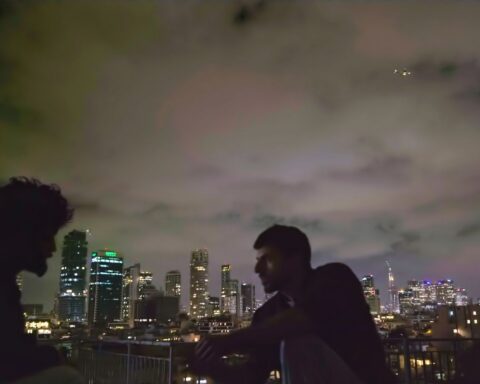
21-year-old accidental war photographer Nikoletta is one of several sets of eyes through which Black Sunflowers sees this generational tragedy, as well as the courageous fight for Ukraine’s freedom. That includes using a talent like holding a camera to show the reality that counters the web of lies propagated by Russia’s war machine. Nikoletta hopes to expand her portfolio, but finding unconventional angles for evidence of life during wartime has to do for now.
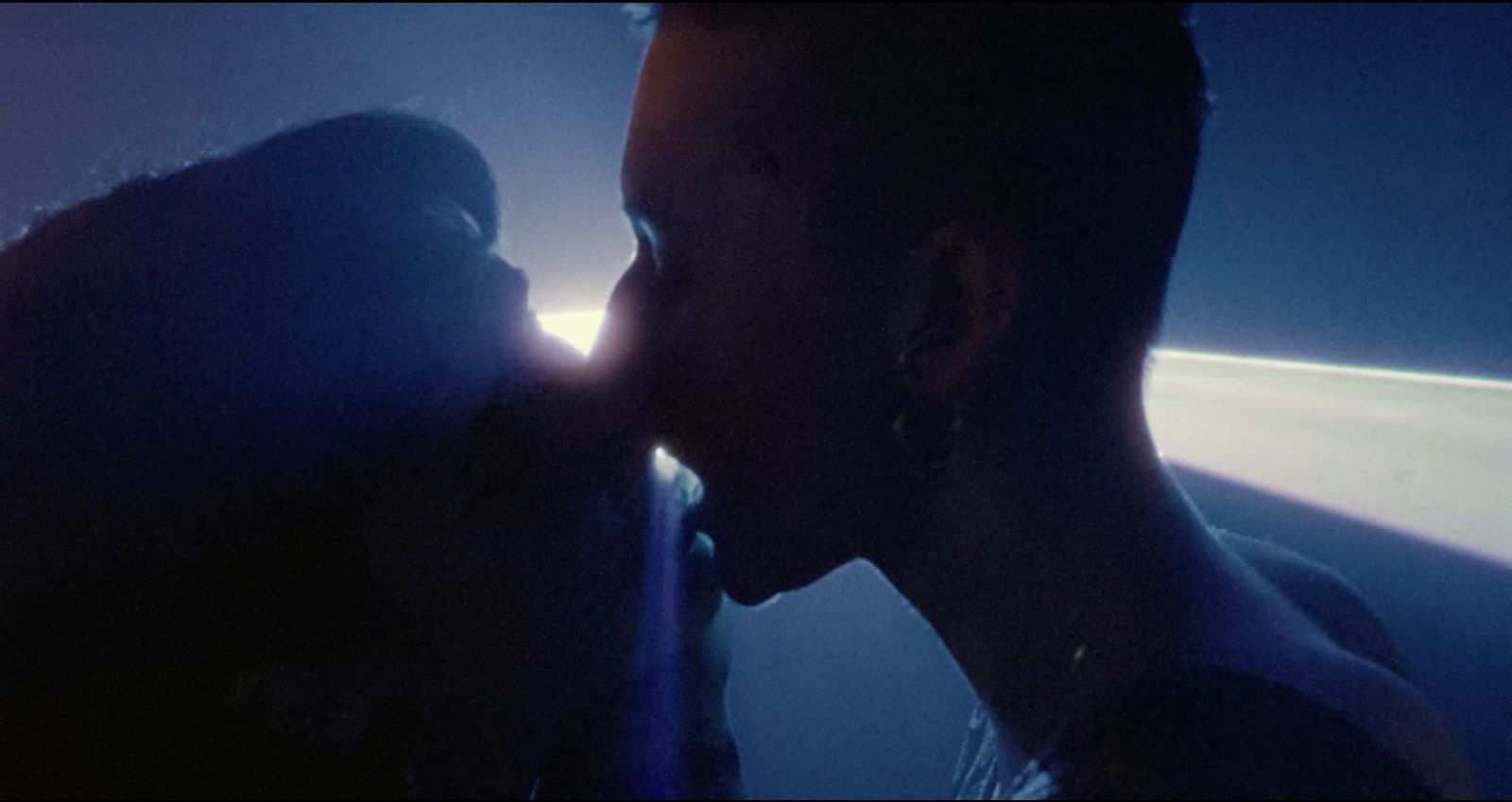
Black Sunflowers tells the powerful story of several young Ukrainians who learn how to fire artillery instead of pursuing studies at university. This lifetime of shell-shocked anxiety, however, leaves considerable tension in their blood. Director Marcus James Haney energetically captures the fight hard, play hard mentality of these young Ukrainians as they blow off steam in raves, drag races, and intoxicating swells of first love. Dancing as the world burns seems inappropriate to some people, but what are they fighting for if they don’t keep the party going?
Besides Nikoletta, the participants include young soldier Sofia, who worries about her eight-year-old sister or whom life during peacetime is an unknown concept. Sofia and her boyfriend, moreover, enjoy target practice as dates. It’s not as romantic as going to the movies, but it has to do, too.
Meanwhile, Olekh deals with PTSD, a lingering metaphor that echoes the experience of being kicked out of his home as a teen when his mother learned that he’s gay. But he tells of finding love on the dance floor, and Black Sunflowers weaves between the explosions of the battlefield to the thumps of the house beat and the sparks of love that persevere. His attitude is much like that of “drifters” Vania and Zhenia. They blow off steam by burning rubber with cars and motorbikes. These young Ukrainians find release however they can. Friends Anya and Tanya find comfort in their shared freedom, but remain wary that the day will come for them to join the front.
Haney, who shot the film with Misha Lubarsky, finds a restless free-flowing lens through which to capture this strong-willed if wayward generation. These young adults aren’t directionless. Rather, they’re fixed as a united front, all forced to move together with the hopes that they’ll all be free to go in their own directions once victory is won. As Black Sunflowers pulses through these distinct if interconnected threads like a DJ mixing and sampling songs, the kinetic tempo feeds the energy of one story into another. Editors Olaf Woldan and Gary Forrester adopt the style of a kaleidoscopic remix, harnessing the ravers’ language into the film’s design. Each youth fights for the other’s freedom, whether that happens in the front or in the clubs.
The participants boisterously bop and collide to the heavy beat at the raves with the underground scenes evoking the clandestine world that pops up in alternative spaces, just as families make do with new apartments. The spirit of the rave sometimes extends to homes or barracks. Haney observes assault rifles and grenades littered throughout bedrooms and sitting quarters. These young folks do a dance with death daily. It seemingly infiltrates their entire lives, while ravers on the floor bounce with the spring of prosthetic devices or with amputated limbs marking their sacrifices.
Black Sunflowers offers harrowing footage from the front, too, as Ukrainians defend the homeland against the Russians. Graphic rescue missions afford unfiltered views of fallen comrades, as well as corpses of enemy invaders. No matter the deceased soldiers’ nationalities, Haney witnesses a generation of young people besieged by violence. However, the extraordinary access both on the front and on the homefront affords an intimate view that this generation, while ostensibly a “lost one” upon first glance, refuses to be victims.
This youthful portrait straddles the no man’s land between hope and despair as situations worsen, particularly when Trump’s second presidency shuts off essential aid and stalls any humanitarian efforts that don’t align with his personal politics. These driven young people are determined to find a way, though, and articulate how the Ukrainian defense has always been one of innovation and adaptation: being sidelined by the Trump administration just adds another variable, if a tricky one since soldiers are less likely to receive pay or necessary supports with the funding cut off. But the music plays and Black Sunflowers pumps up the ravers and, in turn, the audience to have faith in their mission.
With absorbing and adrenaline-pumping bass beats fuelling an adrenaline rush in the rave scenes—musical contributors include Fred Gibson (Fred Again), Brian Eno, and Koloah—and the eerie silence of the front contrasting sharply, Black Sunflowers offers a distinct perspective on the war effort told through a civilian lens. The invigorating bass line adds a distinct echo of a heartbeat that defiantly asserts how life goes on.