


A few days are left in the countdown to Hot Docs 2026. This year’s festival promises lots of discoveries that we look forward to reporting on in the weeks to come, but fortunately, our team has been busy on the circuit all year long and can share some recommendations for films that are finally coming to Toronto.
Hot Docs 2026 includes several acclaimed Sundance favourites, including Grand Jury Prize winner for World Cinema To Hold a Mountain, along with acclaimed premieres like American Doctor, Jaripeo, and Barbara Forever headlining a list of hot titles from the circuit, with IDFA hits like A Fox Under a Pink Moon touching down in Toronto after drawing rave reviews in Europe.
Here’s a rundown of all the Hot Docs titles that POV has covered so far, and subscribe today for first word on festival selections including Antidiva: The Carole Pope Confessions, The Sandbox, Concrete Turned to Sand, and Saigon Story.
All the Hot Docs 2026 Films We’ve Seen So Far
Aanikoobijigan [ancestor/great-grandparent/great-grandchild]
A striking consideration of reconciliation and repatriation comes in this innovative documentary by siblings Adam Khalil and Zach Khalil. The Sundance award winner considers the colonial violence that endures as the remains of Indigenous persons continue to be house in museums and academic institutions where bones become caught in a war of ownership. This film observes the fight to reclaim what’s lost so that bones may be put to rest and spirits healed. “Aanikoobijigan testifies to the necessity of laying these bones to rest. An interviewee explains the Indigenous perspective of returning the body to the earth to continue the cycle of life,” I wrote in POV’s review from Sundance. “As an elder’s body decomposes, his or her memories nourish the trees and other plants. A proper burial therefore keeps knowledge alive. To keep bones in campus storage simply holds hostage a history of stories and traditions.”
American Doctor
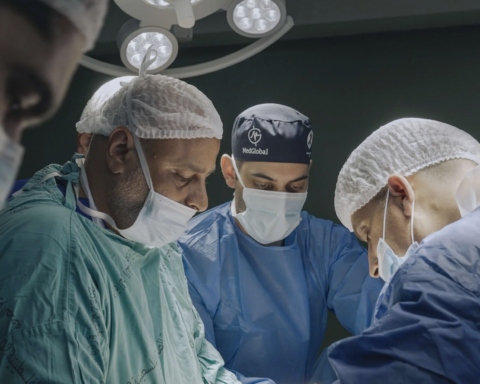
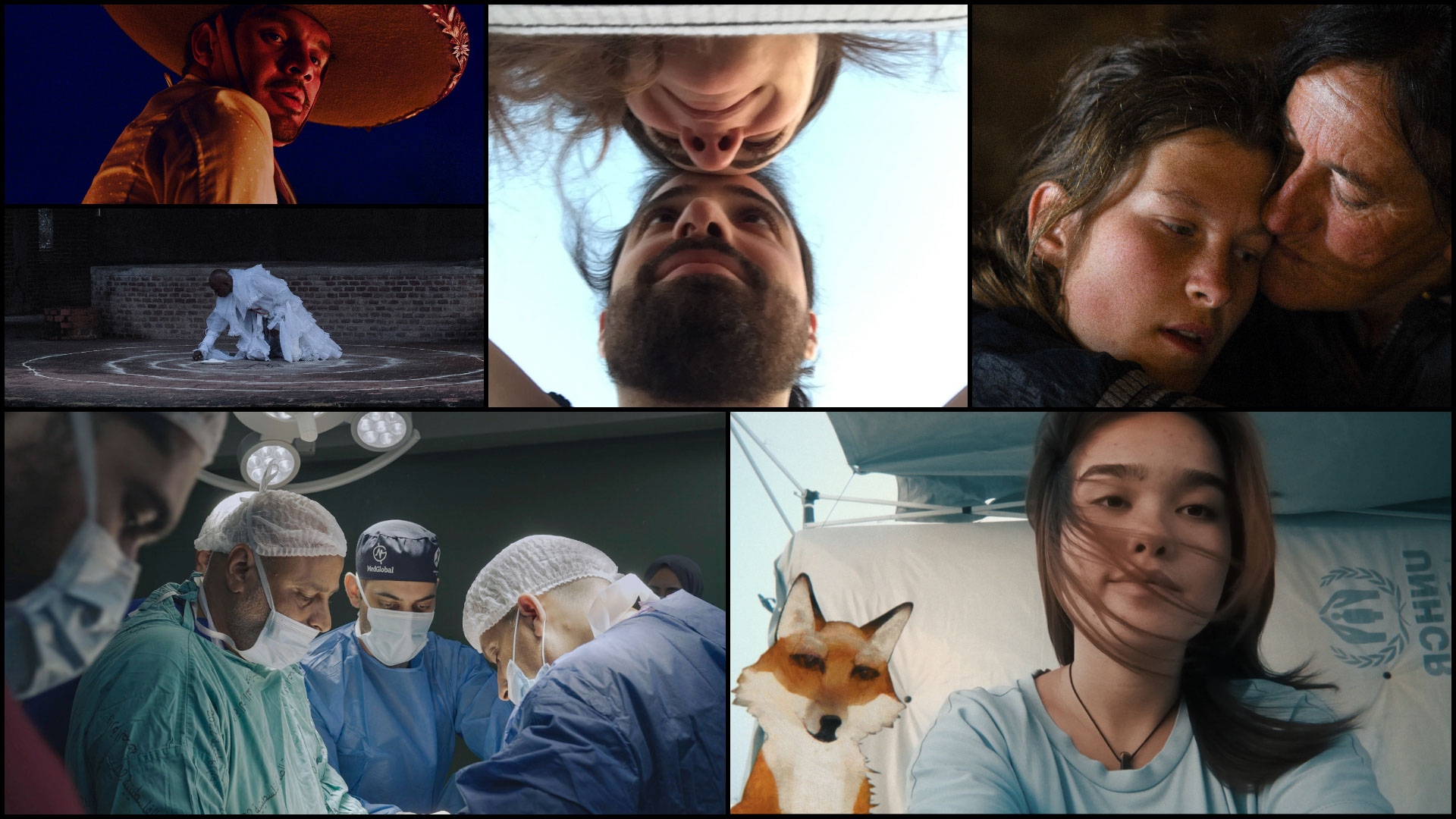
A compelling portrait of courage under fire, American Doctor goes to the frontlines on the war in Gaza with three doctors—one Palestinian, one Jewish, and one Zoroastrian—as they rally for one of the most urgent human rights catastrophes of our time. Director Poh Si Teng makes a strong directorial debut that captures what it means to refuse to be a silent witness to war crimes and to step up when duty calls. “A year into the genocide, it became really hard to see day in, day out what’s happening in Gaza and then seeing colleagues I respect being targeted and executed,” Teng told POV in an interview during Sundance. “I’ve seen the three of them transform over time because they’re not spokespeople, they’re just regular Americans. They’re just doctors…None of them chose this path. They were compelled to do something and over time they got really good at it.”
Barbara Forever
All aboard the Lesbian Express! The life and work of singular filmmaker Barbara Hammer receives a welcome appreciation in this doc portrait. The film chronicles Hammer’s ground-breaking work as a lesbian experimental filmmaker who put images of women’s sexuality on the screen at a time when curators, even in the experimental scene, shied away from women’s stories and frank depictions of queer life. “Barbara Forever is an expression of Hammer’s self-actualization as a person and as an artist and an activist. It reinforces how she was aware of existing in a context – one where a second wave of feminism was emerging – and in that environment, she wanted to expand her vision to present a world where not just women gained a voice, but all marginalized people did,” wrote Barbara Goslawski in our review from Sundance.
Birds of War
Rihanna sang it first, but they truly found love in a hopeless place—or, rather, through the circumstances created by it. Birds of War chronicles the love story of journalists Janay Boulos and Abd Alkader Habak, as the former served as the commissioning editor for the latter, who brought stories of the war in his native Syria. The film captures their evolving romance via messages and videos as work and passion gradually blur. “One of the things that makes Birds of War so endearing is the audience gets to observe the subtle shifts in the couple’s dynamics as their relationship evolves,” noted Courtney Small in our review from Sundance. “Boulos becomes more involved with on-the-ground reporting as the winds of change in her native Lebanon inspire her to do film amidst a revolution and Habak is the one who worries for her safety. In charting their road to romance, the filmmakers ensure that the conflicts that brought them together in the first place remain top of mind.”
Black Zombie
The Midnight Madness crowd loves to see Zombies as a bunch of brain-eating ghouls, but the beloved movie monsters have changed considerably from the culture from which they emerged. This film by Maya Annik Bedward traces the zombie’s roots in Haitian Vodou culture and draws upon a treasure trove of film images, cultural artifacts, and voices from the field to reclaim the undead’s specificity. “A lot of people, even from the African diaspora, don’t understand how critical Haiti is in terms of the resistance narrative,” Bedward told Courtney Small in an interview for POV. “What’s happened to Haiti today is hard to put in words. A country that fought for its independence, and to preserve all this knowledge and tradition, has just been destroyed.”
A Fox Under a Pink Moon
An exciting addition to the field of documentaries that afford their subjects agency and an active role in telling their stories, A Fox Under a Pink Moon chronicles the five-year journey of Afghan artist Soraya Akhalaghi as she tries to escape Iran. Akhalaghi shares directing credits with Mehrdad Oskouei as her personal video diaries comprise the spine of the film as the documentary chronicles her quest for asylum. “Via Soraya’s cell phone recordings, we witness harrowing scenes of her and fellow asylum seekers’ repeated attempts to cross the border from Iran to Turkey en route to Europe,” noted Megan Durnford in her report from IDFA. “But beneath that bravado, there is a young woman who has grown up with little parental care and who is married to a man who beats her. Soraya deals with constant feelings of intense fear and loneliness by creating her own world with coloured pencils, markers, and papier mâché.”
Ghost in the Machine
Artificial intelligence ranks among the most pressing issues of the moment, but also one of the hardest to understand. It’s also tricky to capture on film as the technology evolves so rapidly that docs risk being overly speculative, but also dated, while trying to keep pace. This one by Valerie Veatch takes a deeper intellectual approach. “Ghost in the Machine is in many ways a perfect film of the age – messy, argumentative, grasping at answers in what feels to be a state of deep uncertainty,” said Jason Gorber in our review from Sundance. “While it may not deliver a desired catharsis for anyone on the periphery of these radical changes to our technological capacities, it gives us something far more required. By collecting these thinkers in one place, providing an accessible yet deeply intellectual forum for raising questions of this sort, Veatch elicits her own mode of generative information, giving rapt audiences some tools to explore these deeper queries, and some starting points to make more profound sense of where we stand during these tumultuous times.”
Jaripeo
Some swoon-worthy cinematography makes Jaripeo a smart ticket for the big screen at Hot Docs, but amid the magic hour portraits are stirringly beautiful portraits of a queer community stepping out of the shadows. Filmmakers Efraín Mojica and Rebecca Zweig explore the queer rodeo scene in Penjamillo, Michoacán, and consider what it means to exist as an LGBTQ+ person in a small town. “Jaripeo reframes the rodeo anew as more challenges to traditional gender expressions enter the frame. Neither celebration nor elegy, Jaripeo finds a community gathering where all types—masc, femme, and everything in between—mingle gaily,” I said in POV’s review from Sundance. “The horse and bull events fuel the crowd as audiences revel in a shower of cervezas and tequila shots. As the party ends with a dance and bodies melt together in the throb of a techno beat, Jaripeo observes a fleeting ritual where identities and labels don’t matter. But as the cameras follow the cowboys throughout their magic hour reveries, the film pensively ask why an oasis of acceptance remains but an annual affair.”
My Father and Qaddafi
Mononymous director Jihan probes her family story in this engrossing and intimate story of a father lost and mother discovered. The filmmaker revisits her father’s journey from being a Libyan diplomat, Minister of Foreign Affairs, and staunch supporter leader Muammar al-Qaddafi until a political awakening turned him from ally to opponent. He then disappeared and his absence forever shaped their family. “’m now an adult with these fragments, with this kind of shattered, fragmented identity. I asked, which one of them will have a thread that will take me all the way back to the beginning? The film was trying to take me all the way back 100 years. That was the thread I was trying to find that would then connect me to my father, to my father’s country,” Jihan told Jason Gorber in an interview at the Marrakech Film Festival.
The Oldest Person in the World
Growing old ain’t for sissies, so veteran filmmaker Sam Green boldly goes to a place that makes many people uncomfortable: old age. Green speaks with a variety of interviewees to learn about their golden years while his personal health scares inspire him to reflect upon the time he has left. “Green’s film serves as a kind of travelogue where we get to meet these individuals, but when it comes to answering deeper questions about how their choices could affect our own, there’s little to be gained,” admitted Jason Gorber in POV’s review from Sundance. “There’s little in the way here of electric conversation or deeper philosophical musings about all that these people have been able to apprehend. There’s more of a sense that they’re sitting around waiting for the inevitable, their bodies at best barely holding on, their minds inured to more profound existential or philosophical concerns.”
Public Access
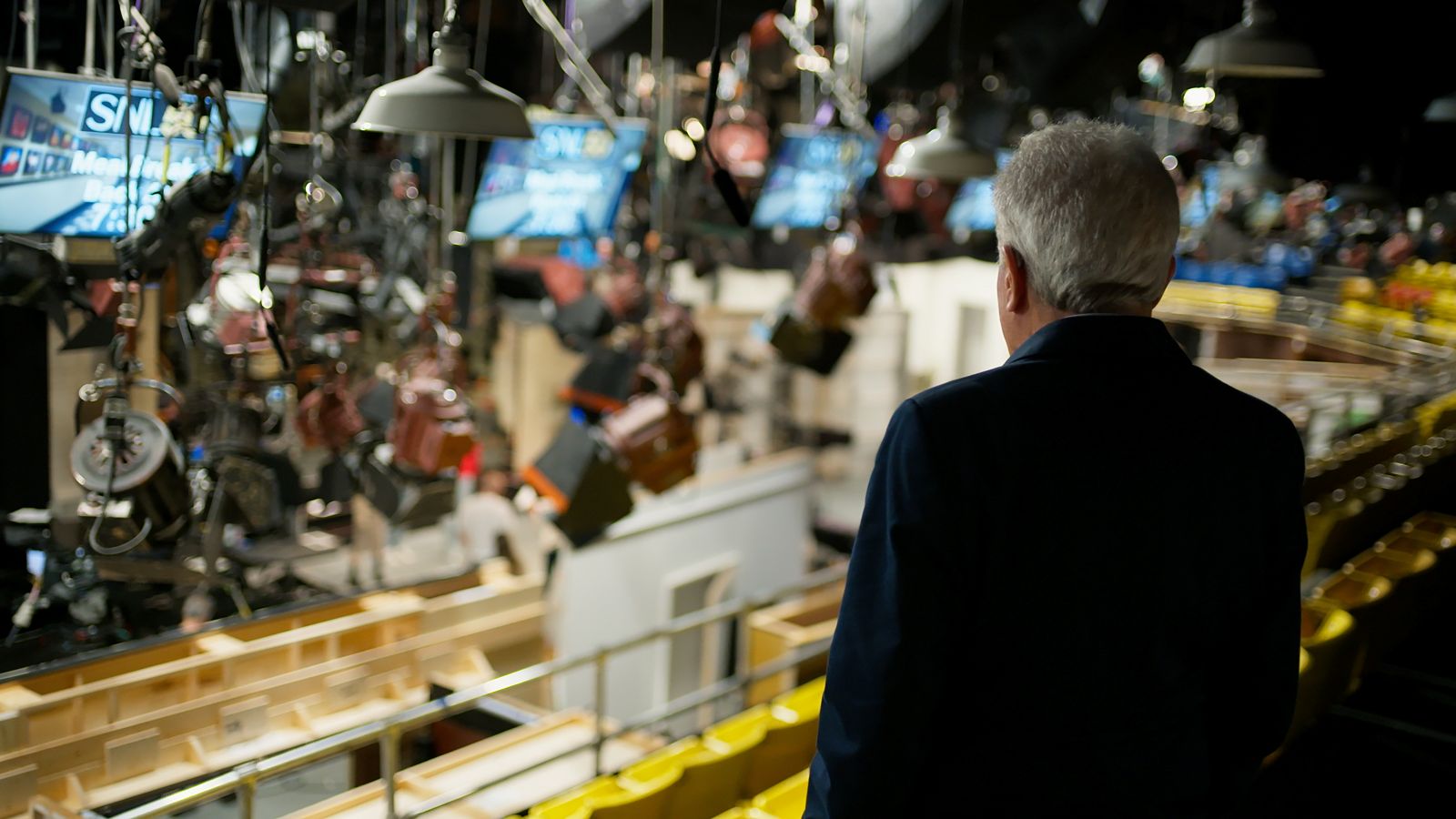
Before the era of the Perpetually Online, there was public access television. This all-archival documentary revisits the heyday of Manhattan Cable’s Channel J, which strove to democratize the airwaves, but quickly proved that if you give people a platform, many of them will just whip their dicks out and engage in inane drivel. “Like most of the programming it shares and the contemporary equivalents it evokes—influencers, lip-syncing influencers, online flashers, etc.—Public Access often resides on surface-level novelty,” I noted in POV’s review from Sundance. “It nevertheless impresses as a technical accomplishment. The editing resurrects an archival puzzle that leaves little desire to further explore all the nuggets left on the cutting room floor. Alternatively, the perspectives about the idiosyncrasies of navigating public programming are fine, but there’s a missed opportunity to explore deeper questions of exhibitionism and voyeurism.”
Saigon Story: Two Shootings in the Forest Kingdom
Academy Award nominee Kim Nguyen (War Witch) returns to documentary over a decade after Le Nez with this exploration of the legacy of Eddie Adams’ Saigon Execution photograph and the stories of families forever connected to the iconic war image. “This film makes the point that there are no easy villains and victors when you scratch below the surface. Some public heroes are private monsters while the most publicly vilified are often revered and canonized by the ones who knew them best. The narrative that the public knows is often contingent on whose story holds the most compelling imagery,” wrote Gesilayefa Azorbo in an essay for POV 124. “But in the present era of visual hyper-saturation, where people receive an endless bombardment of previously unthinkable images through social media and 24-hour news—from police brutality to urban mass shootings, to natural disasters, to war zone atrocities—what does it mean to tie a complex issue to a single emblematic picture?” Subscribe today to read more about Saigon Story with an interview with Kim in our new issue.
Sentient
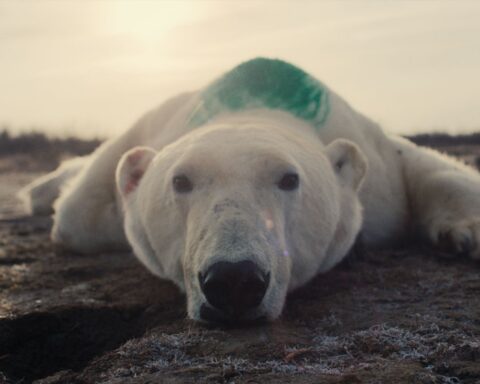
A provocative animal rights message fuels Sentient as director Tony Jones creates a forum to discuss the moral, existential, and practical questions entailed within the controversial practice of animal testing. Sentiment considers how the animals on which scientists test everything from vaccines to household products have inner lives and feelings of their own. “Obviously I find myself sympathetic to those who want to create medicines. I take medicines myself. We all do. Who does not?” Jones told POV in an interview during Sundance. “The COVID vaccine was critical to getting us back to normal life as quickly as possible. I think the film is very far from being anti-vax in its perspective, so we want people to understand that, but also to understand that if you want to change this, then taking advantage of the science that’s now available requires reinvestment on a large scale because there’s a lot of money that’s gone into building these worlds of animal testing.”
Steal this Story, Please!
A headliner in Hot Docs’ Big Ideas Series, this on-the-grounds documentary follows Democracy Now! journalist Amy Goodman as she strives to tell stories that nobody else will. Directors Tia Lessin and Carl Deal chronicle Goodman’s career-long fight for independent investigative journalism and ask why objective reporting serves as an anomaly rather than the norm. “Goodman’s story offers an inspiring call to action for audiences to seek better alternatives and support independent journalism,” I wrote in POV’s review from DOC NYC. “If Goodman’s philosophy is for other outlets to steal her story, then the film’s call to action might be for those readers and listeners to migrate to indie outlets that are doing it right. Maybe this kind of fearless journalism will be enough of an incentive for mainstream media to steal them back—or provide a new benchmark to change the status quo.”
Time and Water
Sit back and get ready to consider layers of time and memory in Time and Water, this Zen exploration of the environment and history from Fire of Love director Sara Dosa. The film considers the life force of glaciers and what it means for our collective memory when they melt and centuries’ of history housed within layers of ice slip away. “I was very interested in the concept of something called disenfranchised grief, which is the idea that ritual can provide a way of collectively mourning and finding meaning out of that which seems to not have meaning—the senseless, the absolutely tragic, the ineffable,” Dosa told POV in an interview during Sundance. “In this unprecedented time of the Anthropocene, there’s so many new losses that we don’t have languages or rituals around, so how do we build community? How do we mourn? How do we make sense of the ever-shifting crisis-driven parameters of our world? A funeral for a glacier, while absolutely devastating and surreal, can at once provide a way of gathering to process our moment.”
To Hold a Mountain
This well-deserved winner of the Grand Jury Prize for World Cinema at Sundance delivers a rousing feminist tale. Directors Biljana Tutorov and Petar Glomazić pensively observe Gara and her daughter Nara as they tend to their homestead on Montenegro’s Sinjajevina plateau. Their idyllic pastoral life faces a reckoning, however, when NATO-backed military training interrupts the community and a relatively with a violent past threatens to return. “To Hold a Mountain finds an understated portrait of resilience and strength in these two women. Although the threat of violent men looms in the background, Tutorov and Glomazić keep their focus on the connection between the women, their animals, and their harmony with the land,” I wrote in POV’s review from Sundance. “There’s a soulfully moving portrait of transhumance as the film soaks up the pastoral lifestyle and the rhythms of the landscape that forge a deep connection between the women and their animals. Beautiful cinematography by Eva Kraljević captures the grandeur of the pastures and the intimacy of the relationships with equal measure.”