



“There’s been a relationship between Black traditions and stories and film since the beginning of film,” says Maya Annik Bedward when discussing her new documentary Black Zombie. “Hollywood has been pulling from these stories and misinterpreting them.”
Building a bridge of tales and legends using the planks of cultural appropriation, the film industry has a long history of distorting the perception of Black culture for profit. The lingering ramification of such representation is on vivid display in Black Zombie. A decade in the making, the film charts the evolution of the zombie narrative from its roots in Haiti to becoming an unstoppable Hollywood juggernaut.

Commonly associated with works such as Night of the Living Dead (1968) and the hit television series The Walking Dead, which debuted in 2010, there is no denying that zombies have had a firm grip on the throat of pop culture for decades. While others were mesmerized by the depictions of the undead assimilating unsuspecting victims into their fold, Bedward felt disconnected from them prior to making the film. “Before I learned about Haitian Vodou, zombie films never spoke to me,” recalls the Jamaican-French Canadian director. “They never felt like there was a rationale for why they existed.”
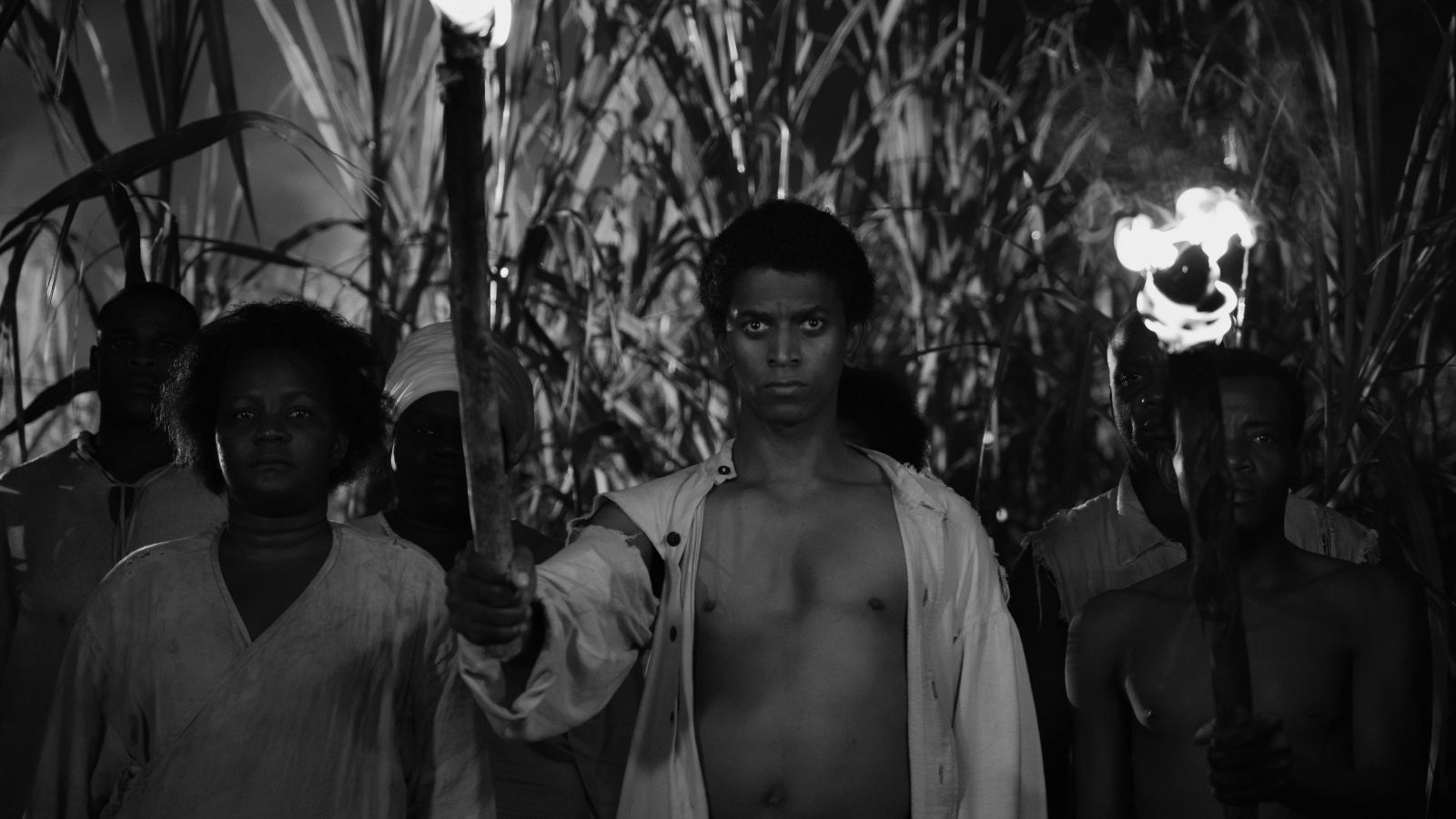
A Haitian Vodou metaphor for enslaved individuals whom not even death could save from the plantation fields, the notion of the zombie perfectly encapsulated the horrors of slavery. Intrigued by how such an important origin had been stripped away and replaced by the mindless ravenous monster narrative, Bedward’s film offers an in-depth examination of the ways anti-Blackness has continually been used to keep the resilient people of Haiti down. Speaking with historians, Vodou priests, zombie enthusiasts and horror aficionados including author Tananarive Due and musician Slash, Black Zombie captures how influential cinema can be in shaping cultural narratives.
Expecting pushback for walking over the sacred ground of the undead, the director was surprised by just how supportive the horror community was when she pitched the idea for the film at Frontières, the industry market at the Fantasia Film Festival. “In the early days, people would ask if I was alienating horror audiences because [I was] criticizing their love for zombies,” she recalls. However, the pitch session reaffirmed why it was important for this story to be told. “The genre community was so excited for the film, they wanted to learn more about the origin and better understand how Vodou had been disparaged,” she adds. While the birth of zombie culture in cinema is the hook that reels the viewer into the documentary, Haiti’s turbulent history and the unfair ways that Vodou has been demonized are the true heart of the film.
Tracing the origins of Haitian Vodou to the traditions of enslaved West and Central Africans in the French colony of Saint-Domingue in 1790, Black Zombie paints a devastating portrait of the various ways colonialism actively worked to stifle and distort a religion that gave many an empowering light in dark times. Despite its deep connection to ancestral spirits through rituals involving dance and music, and its ability to heal via herbal remedies, Vodou was outlawed by those in power who wanted to keep the Black population oppressed and promote Christianity.

The degradation of Vodou expanded to Western culture when foreigners began sculpting their own interpretations without knowing the culture imbedded with the clay they were reshaping. An example of this is William Seabrook’s popular book The Magic Island, which was adapted into the film White Zombie (1932). It was the very first zombie movie and proved influential in promoting many of the negative stereotypes that most people associate with Vodou to this day. Labelling the religious practices as a form of witchcraft that causes white people to lose control and succumb to Black rule, Hollywood sold Seabrook’s fear-mongering version to the masses.
Even when the cinematic tides changed with the release of George A. Romero’s Night of the Living Dead, and the undead was reinvented into the creature audiences identify with today, the ship full of racial caricatures refused to return to port. As Bedward’s documentary notes, those inadvertently responsible for perpetuating exaggerated portrayals of Vodou, like Canadian author Wade Davis, whose novel The Serpent and the Rainbow was adapted into a film by Wes Craven, refused to speak out against Hollywood depictions because it was financially beneficial to remain silent.
Considering the numerous ways outsiders have tipped the financial scales in their favour, at the expense of the Haitian people, Bedward was acutely aware of her role in telling this story and the pressures to not add further to the legacy of exploitation. “I would ask myself, why am I making this film? Why am I the one to make this film?” says the director. The answers were found in her own experiences as a member of the African diaspora. Growing up, her Christian grandmother would warn her to beware of those who practiced Vodou, despite using herbal remedies that had ties to the religion.
Buried deep in the soil by the shovels of colonialism, Vodou’s influence on various aspects of society remains largely unknown despite being practiced globally. Just as the benefits of the religion have gone unnoticed, many of the key aspects of Haiti’s history continue to be systematically erased. “A lot of people, even from the African diaspora, don’t understand how critical Haiti is in terms of the resistance narrative,” says Bedward “What’s happened to Haiti today is hard to put in words. A country that fought for its independence, and to preserve all this knowledge and tradition, has just been destroyed.”

Originally planning to shoot primarily in Haiti, and work with the local community, the filmmaker faced many challenges in getting the film made. Not only did it take several years to secure the funding needed, but the global COVID-19 pandemic impacted both her travel plans and added to the unstable climate in the region. The volatile nature of violence in the country, due to political and economic instability, made it too risky to pull out a camera on the street. Despite shooting research footage in Port-au-Prince and Jacmel, which she incorporated into the film, Bedward made the decision to bring both her Haitian crew and some of her subjects to the Dominican Republic to complete the production.
Hyper-aware of both the Dominican Republic’s large Haitian population and the country’s own fraught history of racial tension, Bedward made it clear to the newly blended production team that the project was about dismantling the barriers raised by colonialism. “It was really important that there was a framework in which things were safe, and people could operate and work together.”
Despite the shift in production locations, the beauty of Haiti and its significant role in Black liberation and rebellion is felt throughout Black Zombie. “I really want people to come away from this film and be curious to learn more about Haiti in a very different way than Haiti’s often represented in the media,” she says.
Recontextualizing the importance of the Haitian people and the true nature of Vodou, Bedward’s documentary pours sobering water on a colonial anti-Blackness bonfire that has burned for far too long. While Hollywood continues to weave zombies and Vodou together in insidious ways, the filmmaker finds hope in a new wave of Black-directed works such as Jordan Peele’s Get Out (2017), which she considers a zombie film, and Ryan Coogler’s Sinners (2025), that offers more accurate interpretations of zombies and Vodou in their proper context. Bedward hopes that her film will also open audiences’ eyes to Hollywood’s fabrication of Vodou. “I hope there is a shift that happens in the way that people understand Vodou and people are critical of products that perpetuate these negative stereotypes.”
Black Zombie has its world premiere at SXSW 2026.
This article originally appeared in the Fall/Winter 2025 issue of POV.