



Nekai Walks
(Canada, 90 min.)
Dir. Rico King
Prod. David Mcilvride, David Paperny
Program: Canadian Spectrum Competition (World premiere)
“I wasn’t supposed to survive that night” say Nekai Foster when recalling the horrific summer evening when his life changed forever.
Walking home after playing basketball with friends in Toronto’s Jane and Finch neighbourhood, Nekai heard the screeching of tires as a car sped down the road and showered the air with 127 bullets. Struck in the head, arm, and leg, the 16-year-old’s chances of survival were slim. What sparked this burst of violence, much like the identity of the shooter(s), remains a mystery to this day, but as one learns in Rico King’s documentary Nekai Walks, the incident was another example of the revolving door of retaliatory shootings terrorizing the community.
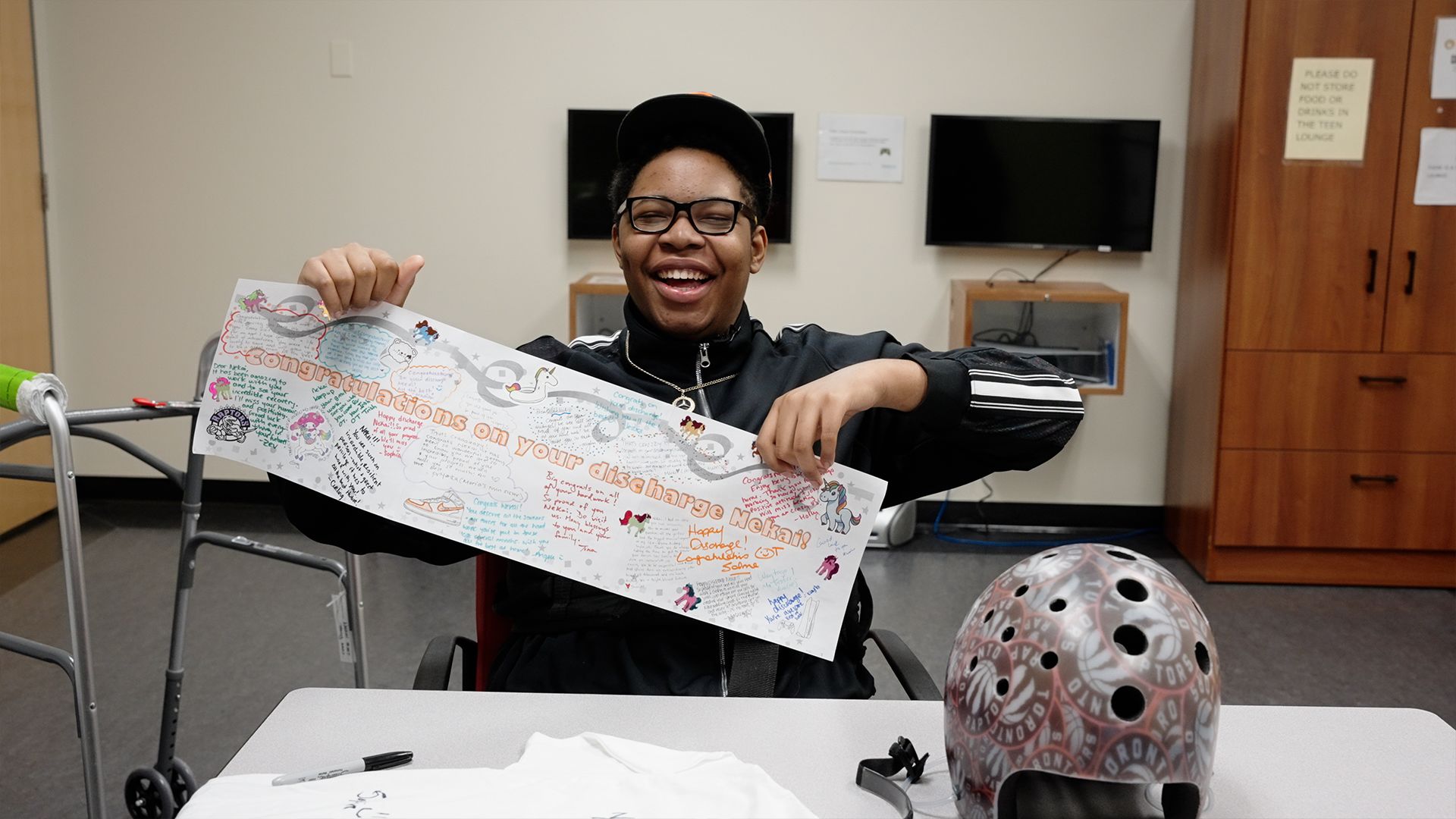
Living within a nightmare they can never fully wake up from, residents of the area must not only endure the traumatic fallout of such violence, but also go about their lives like it is just a normal day in the neighbourhood. Documenting how individuals like Foster get caught in the crossfire of a gang culture they were never apart of, King’s film effectively captures why Toronto needs to reevaluate how it looks at gun violence and the communities affected by it. Following Foster’s year-long journey to recovery, in which he had to relearn basic movements that most people take for granted, the filmmaker highlights the deep reverberations that shootings have on the victims and their families.
Foster may use humour as a coping mechanism, but he will always have to deal with the fear and frustration evoked by that fateful night. Not only does the sound of cars on the street trigger his anxiety, but part of his rehabilitation includes overcoming the feeling of being trapped in his own body. At one point in the film, he even compares a rehabilitation hospital to a prison after being in it for months.
The sense of feeling confined by circumstances beyond one’s control is something with which Foster’s family had to wrestle. His mother and sister are not only forever haunted by that night, but they must also adjust to the new normal that comes with Nekai’s quest to walk again.
In documenting how the family’s strong bond and faith got them through the darkest of times, leading them to become activists for safer seats, King’s film understands that Foster’s situation is merely part of a multifaceted issue. To truly tackle gun violence, one needs to understand that it affects more than just the victims.
Introducing audiences to educator and community advocate Devon Jones, Nekai Walks highlights how the community is taking proactive approaches in paving a different path for young people to walk down. Covering the work that Jones and others are doing with YAAACE (Youth Association for Academics, Athletics, and Character Education), the film shows why investment in these types of programs are beneficial. Since gun violence is most prevalent in communities with populations marginalized along social economic and racial lines, YAAACE not only provides youth with opportunities to learn skills and build community, but also to help them see each other as people and not by street affiliations.
Noting that a lot of the reciprocal violence occurs between individuals on the North and South sides of the Jane and Finch community, establishing early bonds of friendships and fellowship can make a huge difference in steering youth away from gangs. Jones also points to the fact that not only do programs like YAAACE need adequate funding, but we should be rethinking how equity and equality negatively affects schools as well. Areas that have a higher rate of violence, and underperforming scores as a result, should receive more funding and resources than schools in well-off neighbourhoods. The idea of one guidance councillor serving eight schools is not beneficial to schools where students are walking across bloody bridges from the shooting the night before.
As Imo Lewis, a man serving life for murdering two people, notes in the film, having access to a good councillor might have changed his circumstances. By including interviews with Lewis, and a letter written by the son whose life he cannot fully be a part of, Nekai Walks reminds audiences that even those holding the gun can be victims of a system that fails generations of youth.
Challenging audiences to rethink gun violence and those impacted by it, Nekai Walks is a moving and thought-provoking exploration into the empathy, community and resilience.