




Let Our Mountains Live
(Norway/Finland, 100 min.)
Dir. Håvard Bustnes
Prod. Håvard Bustnes, Johannes Vang
Program: World Showcase (North American premiere)
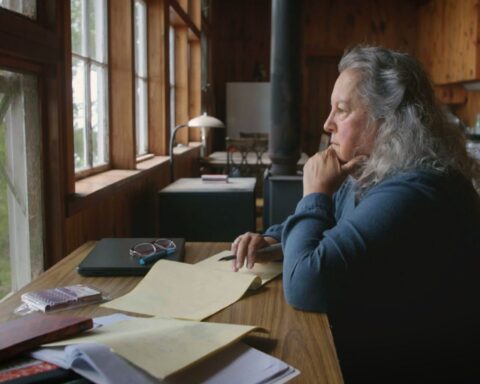
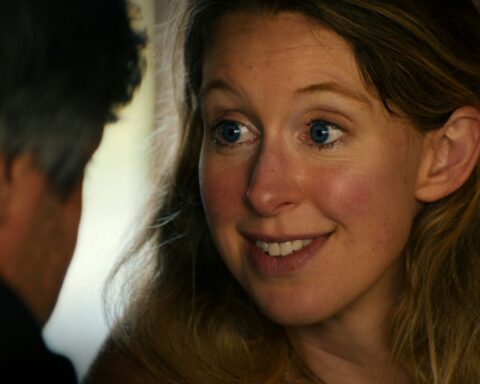
“When money is the determining factor, it’s hard to turn things around” remarks Sámi reindeer herder Terje Haugen to his colleague Sissel Stormo Holtan. The comment comes during a moment of reflection on the ways the partnership between corporations and governments has greatly impacted their livelihood and Indigenous culture. Aware of the defeatist attitudes that such statements can evoke, Holtan notes, “Someone has to bring about change, it could be us.”
Filmmaker Håvard Bustnes (Golden Dawn Girls) shows in his wonderful new documentary Let Our Mountains Live that scaling the mountain of change is even more difficult when those at the top strategically roll down boulders into one’s path. Unfortunately, this is something that Haugen, Holtan, and fellow herder Elise Pavall Årbogen, learn when they find themselves going toe-to-toe with the Norwegian government.
By all accounts Haugen, Holtan, and Årbogen should not have even be required to step into the political boxing ring since they were already declared the victors before the starting bell was rung. In 2021, the Norwegian Supreme Court ruled that the wind turbine project—the largest of its kind in Europe—had violated the human rights of Sámi herders when the energy corporations placed wind farms in the mountains of Fosen. Using a legislative loophole that allowed them to install the wind turbines before the court ruled whether it was even legal, the addition of the structures demolished the vital grazing land that the reindeer used to feed in the winter.
Taking the side of the wind farm corporations in the legal proceedings, the government found itself in quite a predicament after the ruling. Reluctant to even consider removing the numerous turbines, representatives from the various ministries employed several delay tactics while actively trying to get the folks affected in North and South Fosen to find amicable solutions for the problems they caused.
As if expecting the Sámi to simply ignore the court ruling was not insulting enough, the state tried to intimidate those who dared to speak out against them by suing the youthful activists and protesters who brought the plight of the herders to the media’s attention.
Unfolding like a gripping court drama, Bustnes uses the legal proceedings of the 2024 Oslo District Court case, The State vs. Sámi Activists, as the root for his story branches to grow from. The result is a fascinating examination of both the power of activism and the troubling ways legal rulings no longer denote governmental action. Capturing everything from arguments in court to closed door negotiation meetings with the ministry to the impact on the Sámi herding culture, Let Our Mountains Live is a stirring and eye-opening film.
Observing the sheer brazen nature of how the Norwegian officials operate in their conversations with the lawyers for the herders, activists, and even the judges, one understands why so many, especially the Sámi community, have lost trust in political intuitions. It is hard not to feel the same sense of anger that Haugen, Holtan, and Årbogen constantly wrestle with when Bustnes’ camera documents the ways in which ministry officials skillfully talk out of both sides of their mouths. As a historian notes in court, one element that makes the situation frustrating is the fact that this is not the first time the government has infringed on Sámi human rights.
In 1979, violent clashes between police and protesters erupted over the ways the government’s industrialization initiatives would have major impact on the Alta River water. The difference between forty years ago and now is that the Sámi respected the court’s ruling in favour of the government. The same level of respect has not been reciprocated to the Sámi people, who constantly have their Indigenous rights trampled on.
Unwilling to be the government’s doormat, the Sámi community now finds hope and strength in the young Sámi activists who took up Haugen, Holtan, and Årbogen’s cause. Highlighting the importance of speaking up against injustice, even when the powers that be attempt to silence them with the same legal system they themselves don’t want to adhere to, it is the organizing and commitment of the protesters that eventually shift the government needle.
Considering the political standoff between the government and herders, after the ruling, spanned over 800 days, Let Our Mountains Live forces audiences to ponder what justice and change looks like in a world where capitalism is the one ring that rules all. Can comprise even be reached when one side was never negotiating in good faith to begin with?
Raising awareness to the fact that even the green energy boom can have a devastating environmental impact, Let Our Mountains Live makes it clear that community speaking truth to power is the purest way to stand up to those whose abuse of power often goes unchecked.