


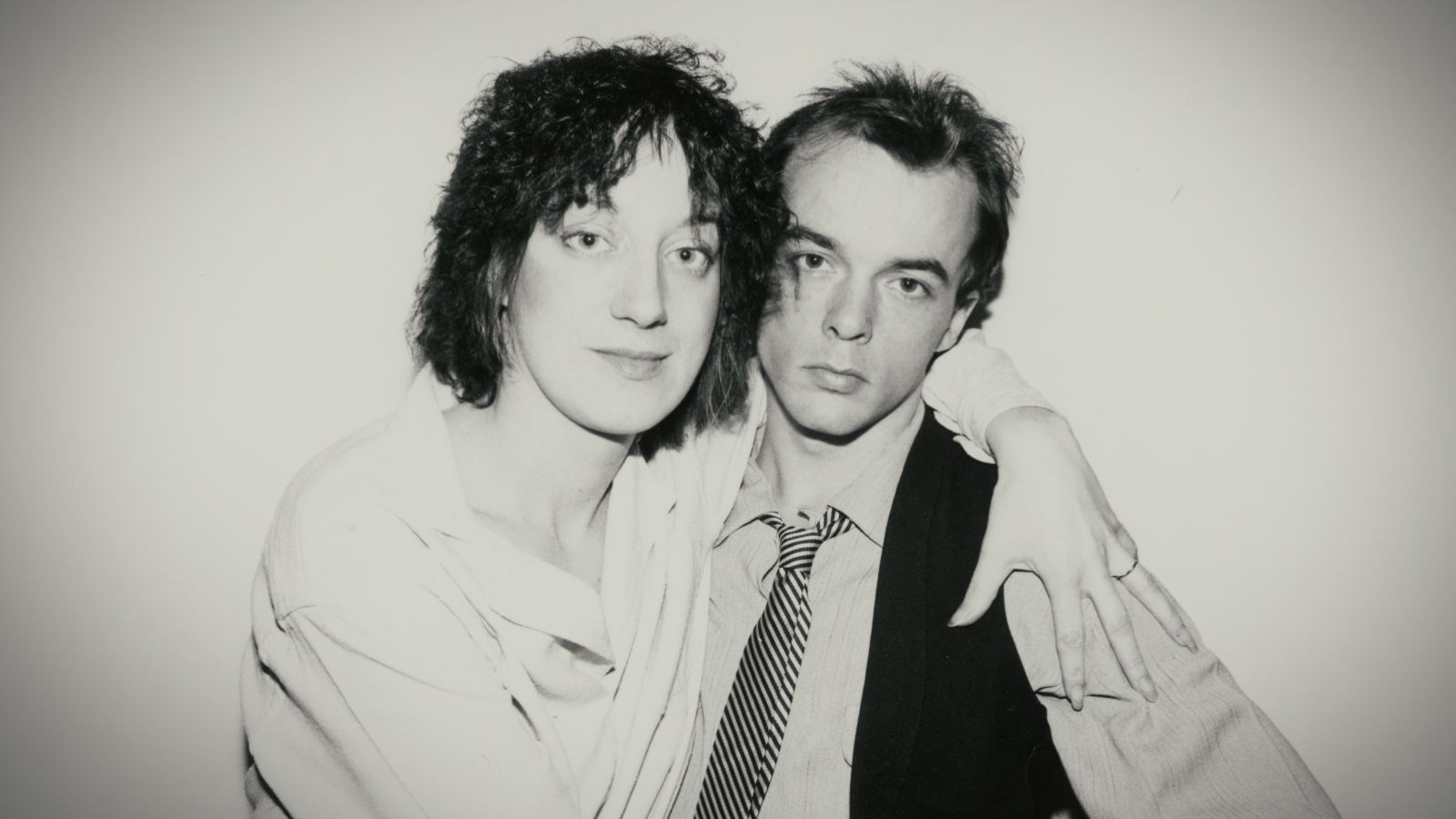

Antidiva: The Carole Pope Confessions
(Canada, 89 min.)
Dir. Michelle Mama
Prod. Bill Taylor, Allison Grace
Programme: Special Presentations (World premiere – Opening night)
“I’m the godmother to all you bitches,” declares Carole Pope in Antidiva. The Rough Trade rocker savours the moment during a sequence that cuts together the voices of several queer women who acknowledge that they wouldn’t be where they are in their careers had Pope not gone first. Peaches, Jann Arden, and k.d. lang are just some of the voices who pay tribute to Pope in Antidiva, Michelle Mama’s terrific and frequently surprising look at the Canadian music icon.
The film gives Pope fair credit for breaking barriers in the rock scene when women and queer people were sorely under-represented. It also takes one by surprise. Antidiva lives up to its name by providing a stark portrait of what happens when the industry simply doesn’t know what to do with singular artists. Sure, she’s buoyed by the voices that thrive thanks to the doors she’s opened, but financial success seems to have skipped her. So did stability, but Pope keeps hustling and connects with fans old and new. As the film observes Pope working as hard as ever, it captures a living legend who won’t quit. The film’s a welcome acknowledgement of the role that queer elders play in shaping our stories.
Audiences will cream their jeans regardless of what’s between their legs as Antidiva looks back at the career of the singer who made CBC audiences blush when she sang about girl-on-girl desire during the Junos and grabbed her crotch on the air. The film weaves back and forth between Pope’s present-day workaholism and her rise as the lead rocker of the band Rough Trade. Antidiva gives a rude awakening, however, when it reflects what success as a Canadian rocker looks like. As Pope welcomes the camera into her Los Angeles apartment, she barks over the noisy neighbouring traffic. Inside, her abode is sparse: there’s a bed, an $89 couch, and an upside down cardboard box for a nightstand. The film peels back conceptions about the glamorous rock star life. One can have hit songs, win numerous awards, and tour for years, but starving artist status doesn’t ever really go away unless one makes it in the States. While The Tragically Hip doc might be the “most Canadian” music film ever, Antidiva may be the frankest reflection of how hard it is to make it as a Canadian artist.
The film smartly mixes appreciative fandom with a critical eye for the music biz. As Pope reflects upon her humble beginnings, she sets the stage for Toronto’s Yorkville arts scene that provided a cultural oasis in an otherwise lifeless city in the 1960s. She recalls her frustration coming to Canada after growing up in England where her abusive, bipolar father constantly moved the family around, but found strength in her artsy mom and her little brother, Howard. Then, meeting Kevan Staples, music history was made as they formed Rough Trade.
Antidiva features archival clips and extensive photos that reveal the band at the front of a music scene coming into its own. Pope and Staples, who passed in 2025, look back on breaking barriers musically by experimenting with genres and styles. Even more, they captured the pulse of revolutions both cultural and sexual with edgy lyrics and saucy performance styles. As one of the film’s talking heads notes, Rough Trade oozed what popular bands like RUSH lacked: sex.
Pope proves a fascinating subject for a documentary for someone who spent a life in the spotlight. Perhaps a product of her Britishness, Canadianness, and queerness, she’s not always the most open of speakers. (As Susan G. Cole notes in our current cover story, Mama had to go to bat several times to get the meat of her interviews.)
In conversations outside of her direct address master interview, Pope may be funny or reveal aspects of herself through self-deprecating quick wit, but she’s quite protective of her story. Take, for example, a conversation that Mama observes when Pope arrives in Palm Springs to discuss shooting a music video with a gay porn director. The song, “Play Fisty for Me,” offers an ode to, well, fisting. And while the director shares ideas about spicing up the video with porn-movie outtakes, and expresses relief to be shooting “something other than a dick sliding into an ass,” Pope remains very reserved for someone who personifies pushing the edges of sexual taboos. In her master interview with Mama, though, finally she rips off the Band-Aid and dishes a-plenty.
Pope’s a great storyteller when she wants to be. Perhaps that’s a facet of her rocky road with stardom. She remembers electric years with Rough Trade as she and Staples, who were initially lovers, clicked artistically. Like Elton John and Bernie Taupin, they complemented each other musically and lyrically. Even when Pope left Staples for backup singer Jane Cessine, they never lost their spark. Antidiva makes clear that Pope’s sexual awakening with Cessine let music be the same jolt of life for her as it was for the women who heard it. Pope tells how she always knew she was gay, but never had the confidence to follow-through with it due to her upbringing.
After seeing that light, Antidiva explores a new era for Rough Trade musically. Their lyrics up the ante with sex appeal and expressions of desire. The band’s big hit “High School Confidential” receives the most thorough assessment of their discography as interviewees like Rob Bowman, George Stroumboulopoulos, and Jeanne Beker—perennial Canadian arts docs talking heads—join the likes of Peaches, Lang, and Arden to explore the hot, taboo-pushing lyrics of girl-on-girl desire crooned in “High School Confidential.” Only in Canada could one hear a woman sing, “It makes me cream my jeans when she comes my way” on AM radio.
For all those breakthroughs, however, Antidiva asks why Pope doesn’t enjoy the same level of esteem that artists like David Bowie or Madonna do—or even Dusty Springfield, with whom Pope had a passionate relationship. They lived together with Springfield only acknowledging the romance later in a dedication after their break up: “Because of, and in spite of, Carole Pope.”
The film rightly credits Pope for unabashedly owning her sexuality in the spotlight as Rough Trade made their concerts safe spaces for queer people when few such places existed—and when the world further abandoned them during the AIDS epidemic. As the editing by Sarah Bachinski ingeniously weaves between Rough Trade’s tumultuous ride in the 1970s and ’80s and Pope’s present-day grind living gig to gig, writing songs, and working overtime to get a Broadway musical off the ground, Antidiva makes a strong case that the entertainment industry simple doesn’t know what to do with outsiders and frankly lacks the creative juice to invest in the very artists who uplift and inspire others.
Similarly, the film sees a generational divide through Pope’s struggle with contemporary audiences and distribution. At a recent Toronto Pride concert, the stage manager kills her power mid-concert to keep pace for the run-of-show. The call is, at best, disrespectful to a queer icon. The camera observes as the veteran rocker leaves the stage flabbergasted that the young crew cut the juice without a warning. The same goes for the record industry, in a way: Pope shares how the shift to streaming decimated revenue streams. Artists who built their base with vinyl simply couldn’t keep pace with young stars who could maximize streams to let the pennies add up.
Pope expresses fair words of love and pain, as well as pride and regret, throughout the film, but she doesn’t look for pity. In fact, the film’s the better for it as the rocker’s story simply doesn’t fit the hagiographic mould into which so many music docs fall. If she’s tight-lipped in parts, Pope says more about her experience in the biz by refusing to waste time looking back. She keeps hustling with the cameras seemingly determined to keep pace. Antidiva works because of, and in spite of, Carole Pope.