



Detention
(France, 132 min.)
Dir. Guillaume Massart
Prod. Céline Loiseau
Leave it to the French to take the fun out of the Police Academy franchise. Growing up watching Steve Guttenberg, Bobcat Goldthwaite, and Michael Winslow with his magical sound-effects shtick, fans of the 1980s’ comedy franchise might have developed a playfully skewed view of law enforcement.
While Guillaume Massart’s brilliant bit of observational filmmaking in Detention may not aspire to Police Academy’s farcical fare, it manages in its own quiet, wise, and Wiseman-esque way to provide startling insight into the vagaries of institutionalization and incarceration.
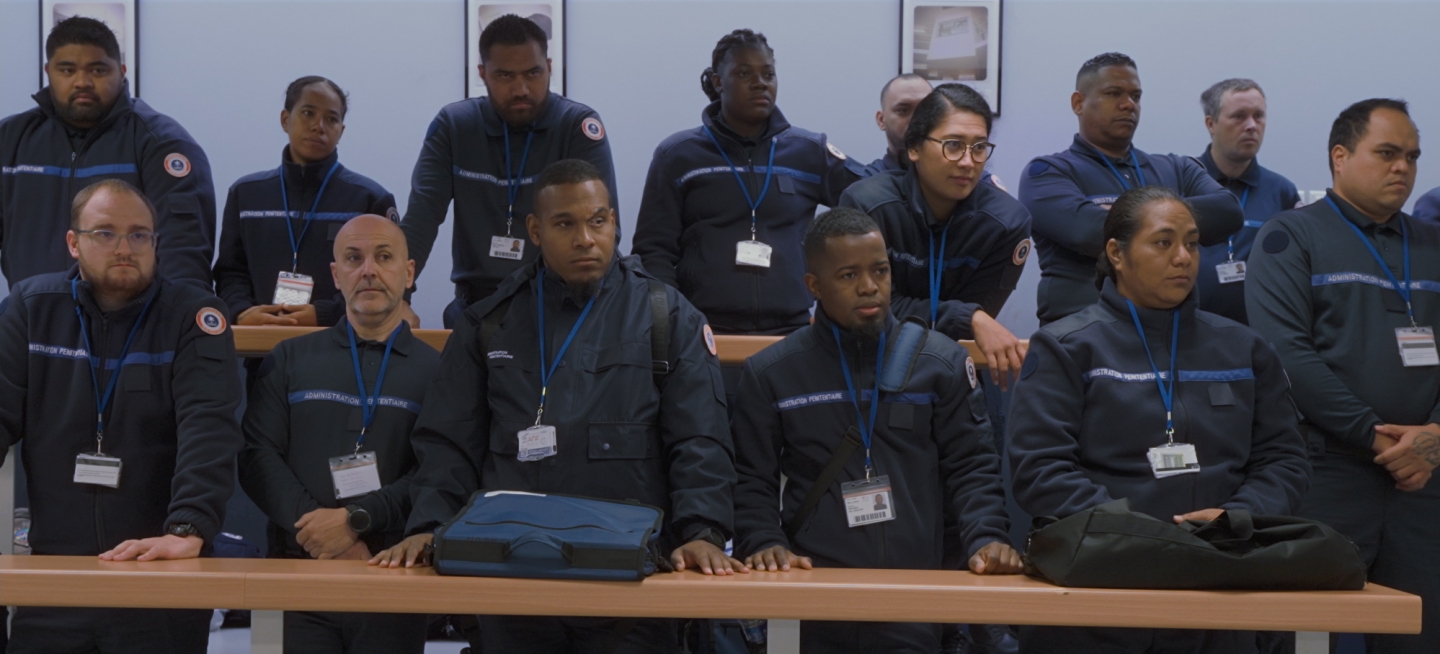
Massart’s keen yet subdued camera captures the class of 2024 at a prison guard education centre. Here students learn everything from self-defence posture to the fine details of paperwork while navigating the various stresses and challenges required to keep incarcerated people under control.
The gaze never wanders from the school itself, with the actual jail cells mere simulacra in far more controlled circumstances. It’s only through the stories told by the students and staff alike that the film reveals the gulf between the regulations taught in the curriculum and the reality of life within the locked penitentiary.
This kind of fly-on-the-wall feature often risks being dull and detached if it revels in its quotidian nature without creative treatment. Yet given the stakes of this material, there’s inherent drama baked into the daily life that Massart captures. The lessons that these students undertake expose aspects of greater questions of justice that would make the likes of French philosopher and prison critic Michel Foucault proud.
Detention presents these glimpses into acts of state control over citizenry without aggrandizement or heavy-handedness and rewards by consistently upending expectations. It provides real depth when we see the faces of individuals as they process concepts that are at odds with their own experiences, or witness the almost-silent screams of educators who are let down by the actions of their colleagues (or even superiors!) as they manage the realities of the prison yard away from the sanctity of the classroom.
When participants appear drenched during a rehearsal for graduation, the scene offers a subtle indication of the vagaries of power, whereby strictly adhering to seemingly innocuous policies and procedures results in ridiculous outcomes. The view of the senior individuals wrapped in rainwear while the students shiver is indicative of larger implications of power and control, one of many times in the film that these facets of political, sociological, and even philosophical concerns are made manifest through something as simple as a training course.
The regimen is compelling in and of itself. We see how factual-based reporting of cell searches shouldn’t include anything approaching judgement, simply implying rather than explicitly stating whether something is hidden or not. The students are taught different modes of seeing, and this inculcation into imprisonment culture that feels both foreign and fascinating, providing a rare portrait into the mentality of this incoming class before they confront the realities from within. Audiences have been treated to innumerable sights of lock-up, yet this documentary seems unique as it navigates the very questions of protocol and training for those who guard the ones in conflict with the law.
Despite its quiet nature, Detention is a blisteringly powerful piece, navigating profound themes surrounding state control over individuals, the menial requirements of maintaining calm captivity, and the instillation of good practices with the tacit understanding that reality is far messier than spelled out in any curriculum. An exquisite work of direct cinema that elevates its seemingly banal subject without ever raising the volume of its voice, Massart and his team have crafted something truly remarkable that speaks to experiences on either side of the locked gate.