


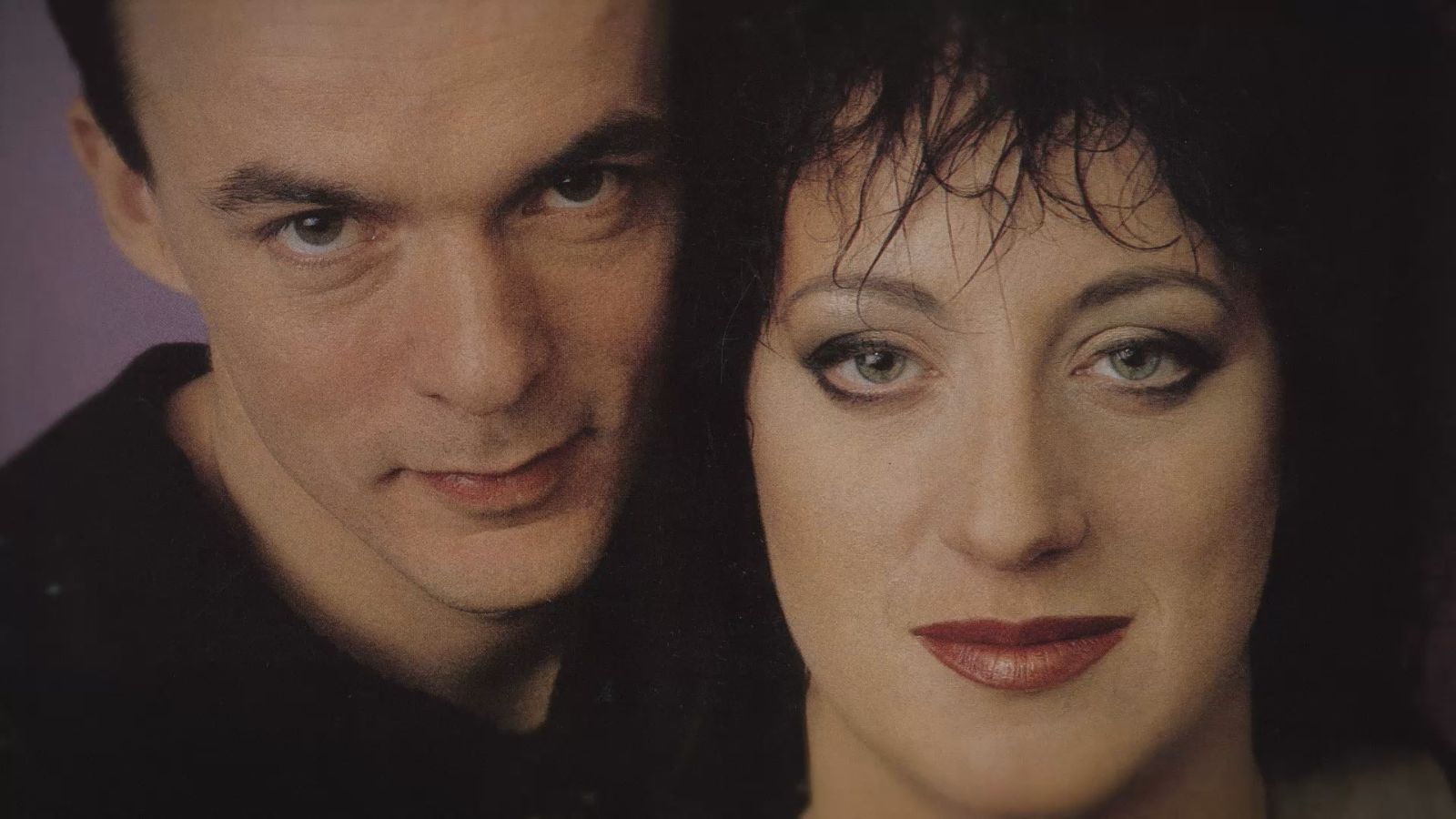

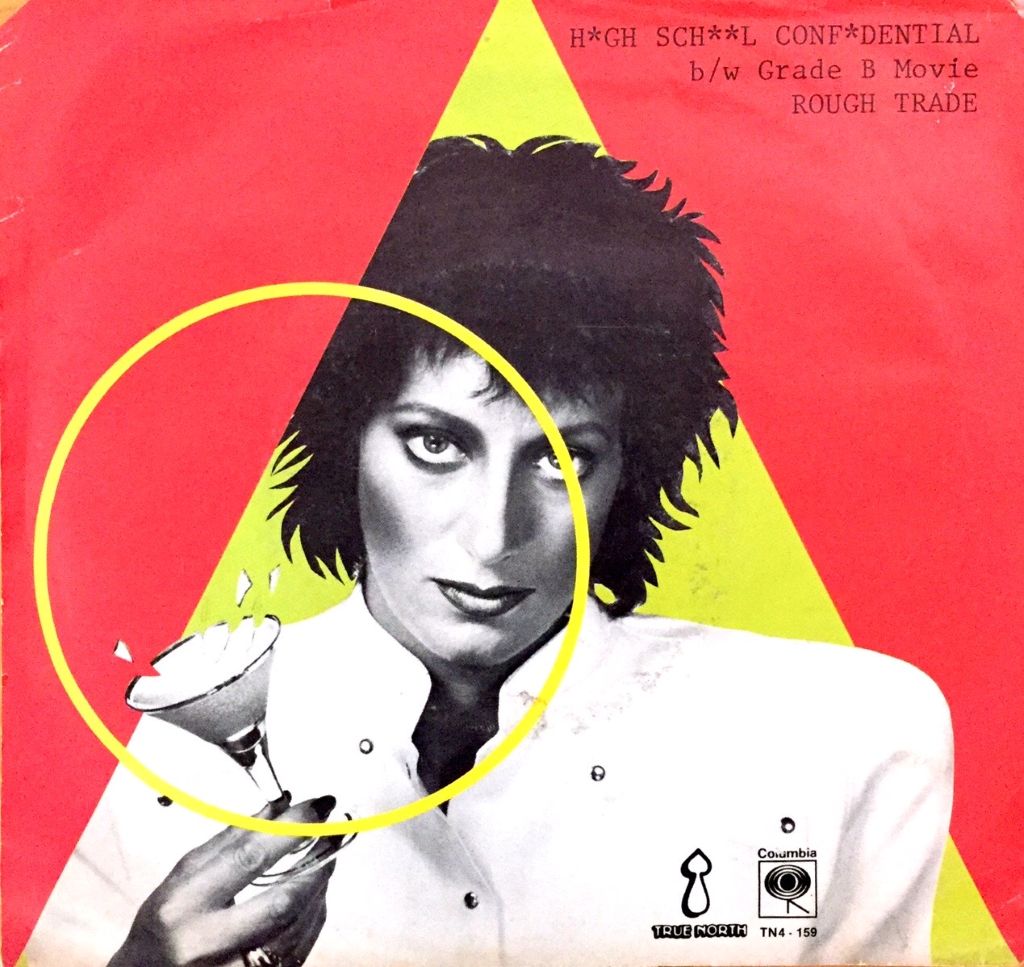
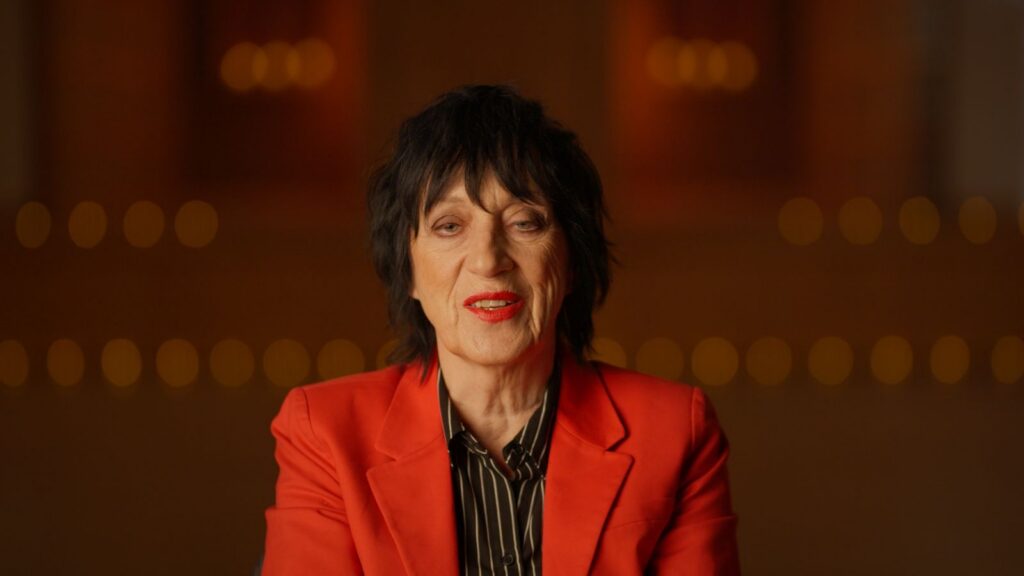
It’s a surprising title for a movie about someone who many might think was the epitome of diva-ness in her prime. But Antidiva: The Carole Pope Confessions, Michelle Mama’s documentary about the musical provocateur Carole Pope, lead singer for the band Rough Trade, uncovers another side of the artist. She was known for her frankly sexual, in-your-face queer and explosive punkish rock, with an I’m-just-kidding attitude on the side. Off the stage she perfected the performative pose, evading questions or responding to criticism with a witty riposte. But in the doc, looking spry, her face etched with the lines she’s earned, she’s honest and emotionally authentic.
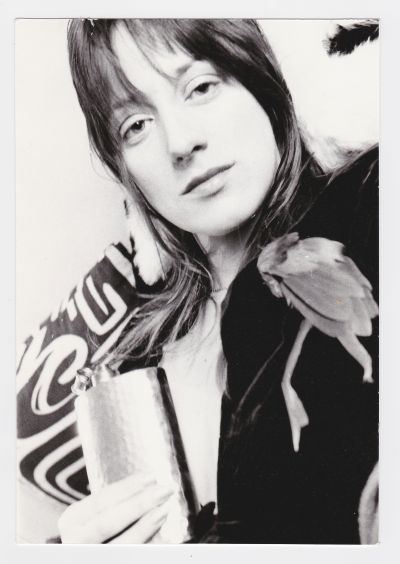
Not that it was easy for the film’s director to elicit that frankness.
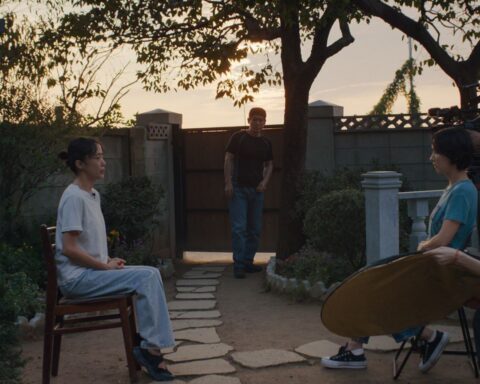
“She wasn’t being difficult on purpose, but it was really hard to pry vulnerability out of her,” admits Mama in the lead-up to the Hot Docs festival, where Antidiva has scored the opening night slot. “She’s inscrutable on a good day.”
“It was a bit of a struggle,” allows Pope on the phone from Los Angeles, “with the film crew watching and everything.”
She was so guarded that CBC reps looking at a raft of Antidiva’s footage told Mama they still couldn’t see Pope’s vulnerability. Mama had no choice but to do one last extensive interview with Pope.
“I told her, ‘We’re going to do it all. You just have to. It’s gonna hurt, it’s gonna suck and you’re gonna be open.’ This was the biggest challenge I’ve ever had.”
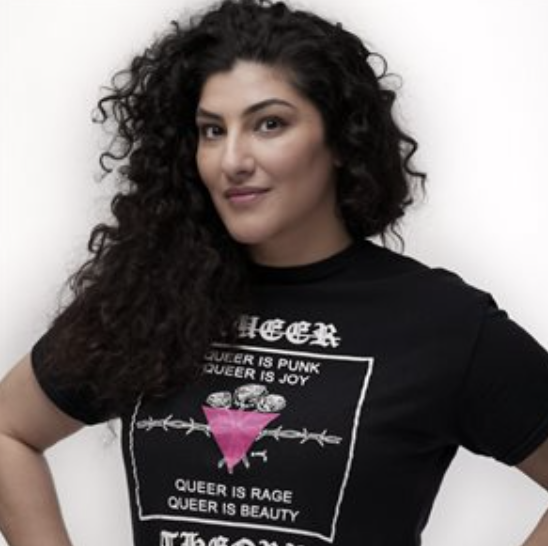
With another feature doc on her resume (21 Days to Nawroz) and after nearly two decades in the industry, mostly in TV producing, writing and directing, Mama realized that a documentary had never been made about Pope. The magnetic performer seemed like an obvious subject for cinematic scrutiny. And the idea of a Pope project dovetailed with the mission of Mama’s production company Gay Agenda, which she hopes can continue to “blast queer content into a world where they’re taking driver’s licences away from trans people in Kansas.”
With the encouragement of executive producer Allison Grace, she approached Pope.
“It’s about time,” is the response Mama recalls. “There’s a lot of sublimated rage in there, about the record label, a feeling that she hasn’t been given her due. She has an artist’s ego, and she wants to talk about her work.”
Pope tells it slightly differently. She says her first reaction was “Why?” But she allows that she also wanted the recognition. “Obviously I was into it, but I don’t want people to know my business. I do want people to know that I did it all first,” something she stresses when addressing the recent queering of pop music, via the likes of Chappell Roan. She appreciates the new LGBTQ+ visibility but declares that circumstances are a lot different now.
“It was a fucking nightmare for us, but now it’s easier,” she says with an edge. “I did a lot of things before other artists, and nobody really knows that.”
Well, not exactly nobody. Mama’s film opens with culture heroes including Peaches, k.d. lang and Jann Arden reading the lyrics to Rough Trade’s mega-hit “High School Confidential” (“It makes me cream my jeans when she comes my way”). Throughout the film, they and others, including Rufus Wainright, declare they couldn’t possibly have been as successful as they became were it not for Pope’s daringness.
Mama presents archival footage that makes vivid Rough Trade’s incendiary performances. The CBC, the documentary’s broadcast partner, had a trove of gems from the band’s appearances on late-night shows such as 90 Minutes Live and Canada After Dark. The film also delves into Pope’s personal life, giving space to her relationship with the iconic British pop star Dusty Springfield.
After the opening sequence, we’re in Los Angeles, where Pope was living when shooting began. “Welcome to my Hollywood pad,” she says with a sly wink as she swans around her small apartment, so not upscale that some rooms are furnished with cardboard boxes. It doesn’t exactly conform to the image of a glamorous rock star’s digs.
“I wanted to give a reality punch,” says Mama. “Everybody assumes she’s living in the Hollywood Hills and making lots of money and that’s not the case.”
Pope doesn’t consider herself a diva. “I invented the term antidiva,” which she first used as the title of her 2001 memoir. “The only time I get diva-ish is when I have to deal with idiotic people, club owners or promoters.”
An antidiva, yes, but wholly insistent that she still has something important to say while, she declares openly, she’s living simply and, looking for housing and financial stability, still dependent on gigs. At one time, though, she was a huge star at home in Toronto.
UK-born, she grew up in Don Mills and, living with a father who abused her mother, couldn’t wait to get out of there. Then, Toronto’s Yorkville became a hippie haven and a place for Pope to escape to. There she met Kevan Staples and they began performing and writing together, later forming full-on bands. They began appearing on stage in bondage trappings and from these beginnings developed their edgy, sexually aggressive stage attitude which they put into full gear in 1973 when they coalesced into the queer-forward band Rough Trade, still with Staples creating the music and Pope the lyrics.
They released the Rough Trade Live album in 1976, followed by six more in the ’80s with the True North record label, starting with Avoid Freud, which featured their monster hit “High School Confidential” about a female with a crush on the hottest girl in high school. (Pope wishes she could be remembered for more than that.)
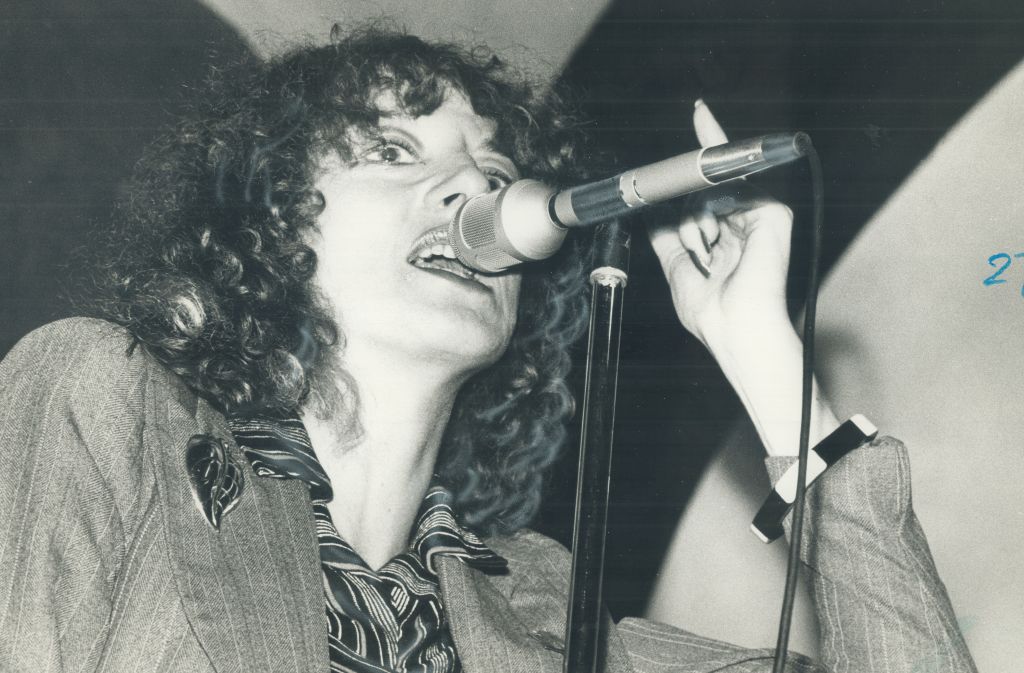
By the ’80s, the peace and love vibe in Yorkville was eclipsed by an unprecedented creative surge centring around Queen Street West between University and Spadina. Here, artist-run galleries blossomed, clubs flourished, energized by new bands like the Parachute Club, Blue Rodeo and the Pursuit of Happiness, and progressive politics was on the agenda.
Pope says Rough Trade wasn’t part of any scene, per se. Their music, anchored by lusty lyrics, didn’t really fit in with the folkie vibe at Yorkville clubs and, though Pope liked to hang out at restaurants like the Fiesta and the Peter Pan on Queen, her band was making noise before Queen West’s ’80s renaissance. And certainly, Rough Trade’s queerness wasn’t made for the rock scene either.
But by the mid ’80s the band’s records were selling and fans were revelling in Pope’s celebrations of all things butch in lyrics that left admirers gobsmacked. She invented the term “fashion victim” and redefined another in the song “Crimes of Passion.” She garnered three Juno Awards, one for most promising female vocalist and then two more for best female vocalist, one of them in a category with Joni Mitchell and Anne Murray, no less. Everything was going swimmingly, the band had Junos, hit songs—“High School Confidential” was mammoth, “All Touch” almost as big—and packed gigs. Then, suddenly, in 1988 it was over and Pope went solo to not nearly the success she had won with her band.
What happened? Antidiva answers that question.

Money was one issue. Rough Trade became popular, but the band was never exactly raking in bundles of cash. To make ends meet they had to gig constantly.
The documentary posits that the beginning of the end of the band may have come just after Rough Trade joined David Bowie’s Serious Moonlight tour in 1984. The bill was a smash in Toronto and Bowie wanted Rough Trade to tour with him, but CBS Records, which had become the band’s label via various complicated business machinations, refused to offer tour support.
“This is my thing with Canada’s labels,” says Pope. “They don’t see the big picture. They’d probably do more now but at that time they didn’t see the point of investing in us. But we knew that it definitely would have helped us break out.”
When asked in the doc whether she’s bitter about that, she’s blunt: “Fuck, yeah.”
Some say that Pope, approaching 40, was perceived as having reached her best before date. Others, like music writer Rob Bowman argue in the film that the band’s shtick had worn out its welcome; the shock value had dimmed.
But who else was doing anything like Rough Trade at the time? Even Bowie had dropped his gender-bending stance in favour of a straight vibe for the album Let’s Dance and the Serious Moonlight tour. Women may have been content to sexualize themselves for the male gaze, but the decade’s pop music scene wasn’t rife with female artists delivering strong, explicit commentary on pleasure and sexuality. There was Madonna and, really, nobody else. At the time, Rough Trade was still, as a band, unique.
Like other Canadian success stories—The Tragically Hip and Blue Rodeo are two good examples—Rough Trade never got the American record contract that would have given them a foothold internationally. But while Blue Rodeo consistently toured Canada, playing outdoor concerts and smaller venues like Massey Hall, and the Hip returned from their SNL appearance, still without a contract, to cement their identity as Canada’s band, Pope had bigger ambitions.
“I was over it. I always wanted to move to New York or L.A,” Pope declares. “But Kevan didn’t want to move. He loved Toronto. He had his family. I didn’t have that. I just announced, ‘I’m going to L.A.’”
“She’d outgrown Canada,” says Mama. “Had she stayed in Canada, she may have done better here, because we knew her and the culture was more forgiving. But there was no reason to believe that her going solo was something that she couldn’t do.”

At one point, Pope candidly wonders whether her solo song writing was as strong as her Rough Trade material; she never found someone like Kevan to work with who knew how to bring out the best in her.
Ego be damned, Pope has always been an eager collaborator. In the early years she and her band developed a rich partnership with General Idea, the innovative artist collective that thrived on subverting forms of pop culture and relished the art of self-mythology. Eventually, the trio designed Rough Trade’s True North album covers and Pope gives them credit for creating their image.
Since she went solo, she’s worked fruitfully with many artists, from Rae Spoon on the title track of Pope’s 2004 Transcend album to Kevin Hearn in 2018, on the excellent track “Resist It.”
But nothing comes close to Pope’s most important personal and artistic relationship with Staples. It generated superb songs, immense pleasure for Rough Trade’s audiences and a friendship that survived the kinds of cataclysmic ruptures that would have decimated anyone else’s.
When they first met in Yorkville in the mid-’60s, the connection, as Pope tells it, was immediate.
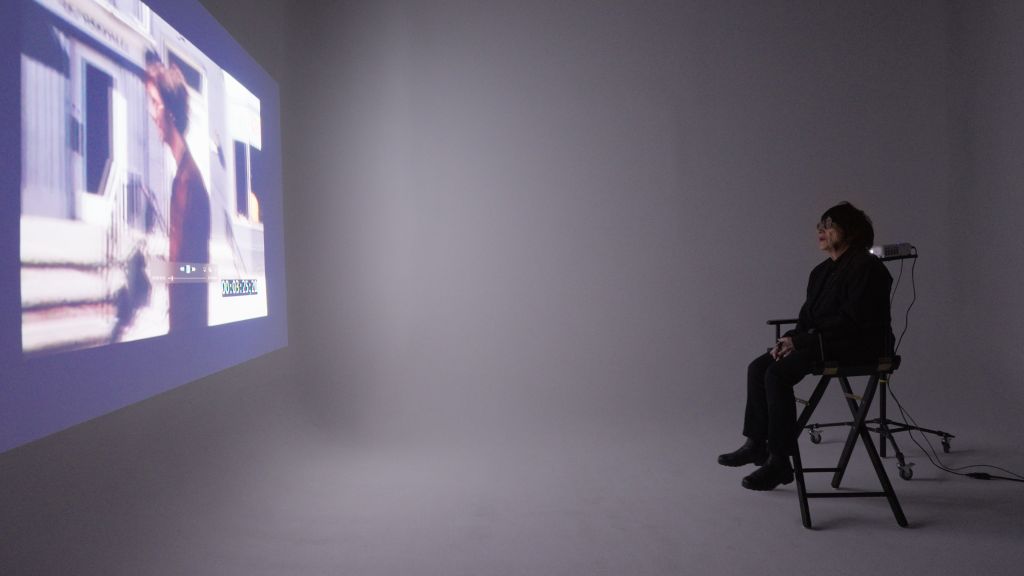
“We just really clicked the minute I met him. We were on the same creative wavelength. He wrote the music, I wrote the lyrics and I think it all really gelled. We had the same sense of humour and we really loved each other. He was my best friend. That’s the important thing.”
They became lovers and remained so until early into Rough Trade’s career, when Pope, who’d had lesbian affairs before, fell hard for one of the band’s female back-up singers, Jane Cessine. The doc sheds light on Staples’ deep devastation. Testimony to his commitment to Pope and the band, Staples forged on as Rough Trade got more polished and expanded its loyal fan base. Eventually Staples found love and family with his wife Marilyn but maintained his bond with his best friend Pope.
Pope later embarked on a troubled relationship with Dusty Springfield; alcohol got in the way of what was a passionate affair.
“Dusty was a powerhouse,” Pope remembers. “I knew going into it that it was going to crash and burn. But she was worth it, fascinating and funny, a brilliant artist and ahead of her time. I never got tired of all her stories. She was with me but in the closet and was tortured.”
Staples remained a steadfast friend throughout. He died in 2025 and, as Mama sees it, that still really rocks Pope, who talked to Staples every day until he died.
“She feels unmoored. Kevan was the other half, even when they lived in different cities, a brother, a lover, a father. There’s something so beautiful about that love story. I think it’s the beating heart of the film.”
Pope has never stopped writing, performing and recording, and continues to gig, sometimes with a band, sometimes with her guitarist Tim Welch.
“I’m always astounded by how good she sounds,” Mama says. “She jokes about how they were all hedonistic monsters, but she has always taken care of her instrument. She does her garlic, she drinks her tea, she doesn’t talk before a show. She’s very disciplined.”
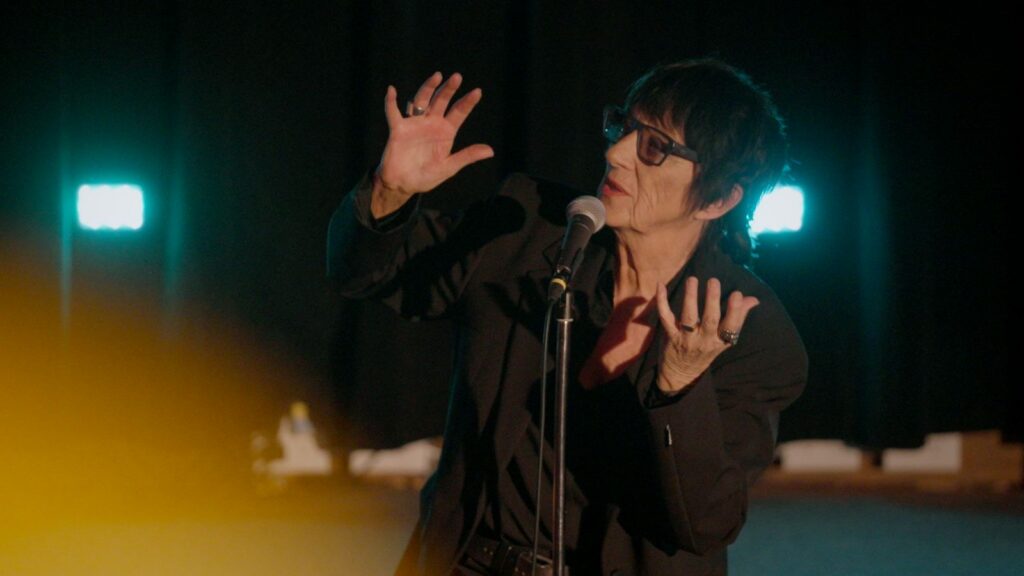
Her latest passion, driven by her love of Broadway, is her musical currently in development, based on the life of her brother Howard, whom she adored, and featuring Rough Trade’s songs. Howard lived in New York, formed a band and joined the AIDS activist group ACTUP. Tragically, he himself died of AIDS.
“(During the workshop process) the queer kids in the cast were so moved that they cried all day,” Pope says. “The project is constantly evolving. But we need to find a producer who’ll throw some more money at us.”
It’s not necessarily an impossible dream. Pope and writer Kate Rigg have snagged Canada’s musical theatre sensation Chilina Kennedy to play the lead and Pope is all in trying to make it happen. Antidiva: The Carole Pope Confessions could generate enough new interest in Rough Trade to help the theatre project gain traction.
Pope herself had mixed emotions when she watched the upcoming documentary.
“I had a hard time, given that Kevan had passed. And I don’t like looking at myself but wow,” she laughs, “I was a babe. We were in an innovative place, and we got away with so much.”
Times are much tougher now for the antidiva.
“I’m just a struggling artist. But as long as I feel creative, it gives me a reason to live.”