



House of Hope
(Netherlands/Palestine, 91 min.)
Dir. Marjolein Busstra
Prod. Ruby Deelen, Olivia Sophie van Leeuwen, May Jabareen, Ossama Bawardi
Programme: International Spectrum
As Israeli settlers continue to terrorize Palestinians living on the West Bank, Mana and Milad, heads of the Waldorf alternative school House of Hope, try to maintain a sense of normalcy. They make sure to begin each day with a prayer for peace, non-violence, and kindness. They end the day by sending their elementary school students home to the words of Martin Luther King, Jr.’s famous dream.
But as this heartbreaking, yet subtle, documentary conveys convincingly, lived experience can get in the way of maintaining these lofty aims. The teachers are feeling the contradictions intensely and their young charges are hearing news reports that affect their views and their behaviours. How can anybody teach positivity in this kind of environment?
This question constantly arises via director Marjolein Busstra’s fly-on the-wall strategy that eschews voiceover and talking heads, relying instead on training her camera on the school’s everyday activities, where students garden, learn, and play. She also turns the camera on the home life of Mana and Milad’s family.
Outside, security cameras are everywhere, while Israeli forces close down borders and checkpoints – where Palestinians are not permitted to use the bathrooms – seemingly on a whim, making it difficult for students to get to the House of Hope and for the school to function properly.
At home, Manar and Milad try patiently to explain the dangers of simple travel through the West Bank to their son. They insist on going through detailed rehearsals of what it takes to make it through the checkpoints. His eyerolling response to their warnings doesn’t make them feel any more secure. No wonder they find it difficult it to let him walk out their door.
And, naturally, the atmosphere in the West Bank, the constant news reports of vicious settler violence and their own families’ experiences can’t possibly be ignored by the remarkably perceptive students. The children are obviously stressed and come to blows in the classroom. During an art session, they sit around a table and are asked to draw something that represents how they’re feeling. One of them announces proudly, “I’m going to draw missiles,” and tells the story of what befell his brother. The IDF arrested him and jailed him for three months and never gave him the benefit of a lawyer.
“Israel is the daughter of the dog,” he says defiantly, to which Manar responds, “Don’t use bad words.” How can prayers for peace and this ineffectual response stand up to what these children know too well?
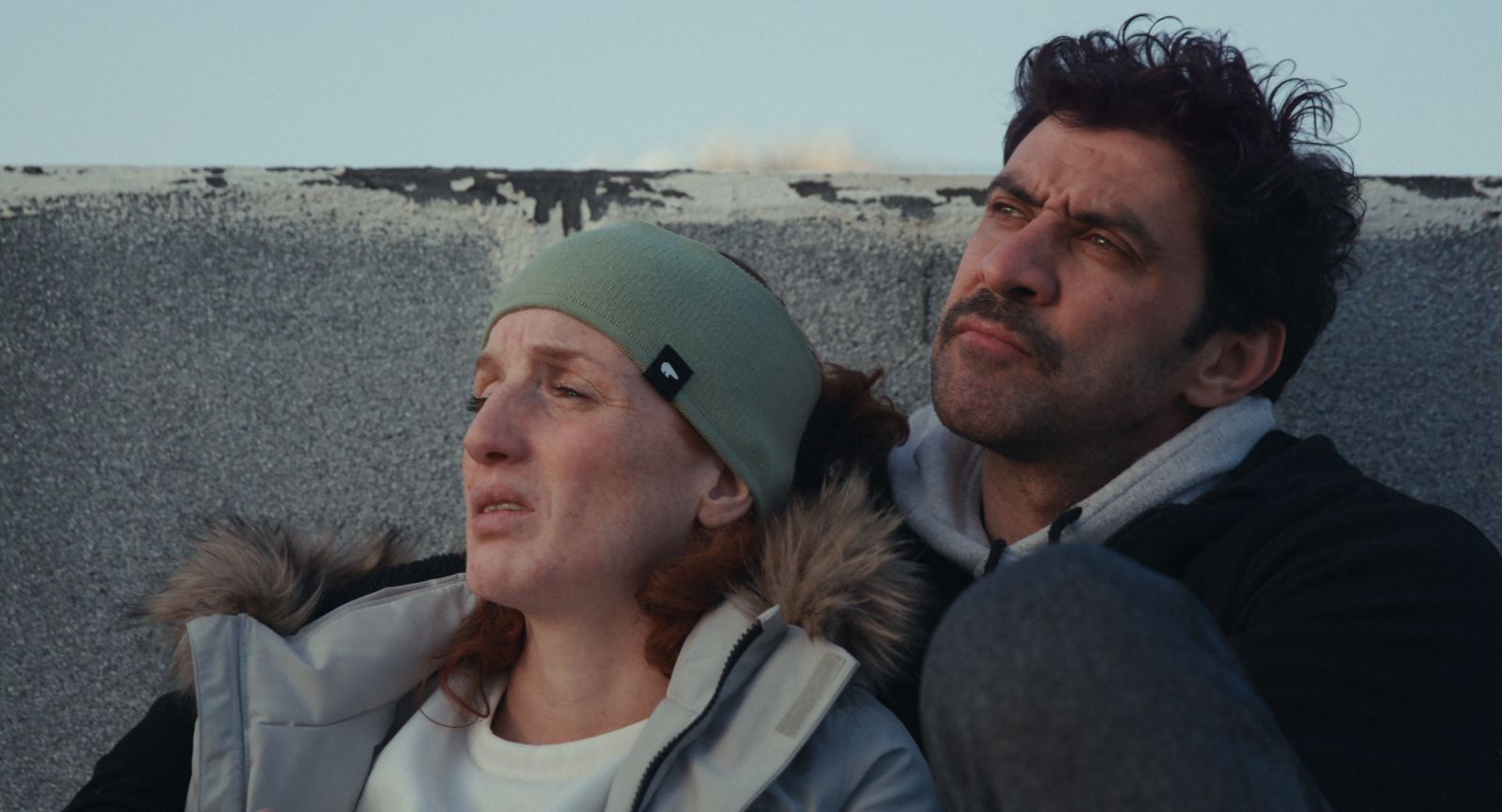
The teachers are feeling it too, especially Manar, a compelling character intensely sensing the contradiction between what the school is trying to teach and the reality her students experience. She has lived her entire life under occupation – as a child, being harassed by Israeli soldiers on her family’s way to the beach sowed the seeds of her anti-occupation consciousness – and it’s crushing her spirit. A key sequence features her and her husband trying to navigate their way across town only to encounter barricaded road after barricaded road. It typifies Busstra’s strategy of eschewing bloody violence at the hands of the Israeli forces in favour of the demoralizing frustration of quotidian activities. As Manar’s female colleagues try to encourage her with the words, “We are Palestinian women, we need to be titans,” her belief is weakening.
“When there is no freedom, no dignity, life is worth nothing,” she replies.
Accompanied by soundtrack by Jesse Koolhaas and Yamen Martini, including unsettling jazz elements, House of Hope offers a nuanced portrait of the impact of occupation.
Amazingly, its subjects continue to plant, to teach, to hope.