



Everybody has their own unique Christmas traditions. For many North American households, the image of an average holiday gathering features stockings, gifts, and inebriated quarrels with problematic relatives. The season simultaneously brings out the best and worst in people, as they are forced to engage in absurd capitalistic rituals.
For the people of Penjamillo, a township located within the Michoacán state of Mexico, the residents congregate on Christmas Day at their neighbouring rodeo for a gargantuan celebration. They queue early in the morning for guaranteed seating, patiently waiting for the show to begin. At noon, the bull finally enters the corral with a gaucho riding the manic animal. The crowd cheers with excitement, as they are transfixed by the heroism and insanity of the life-or-death sport. The kinetic experience is followed by a legendary dance party, where neighbours, friends, and strangers dance and drink to their hearts’ content. Known as the jaripeo, the legendary rodeo is a cherished tradition of the community.
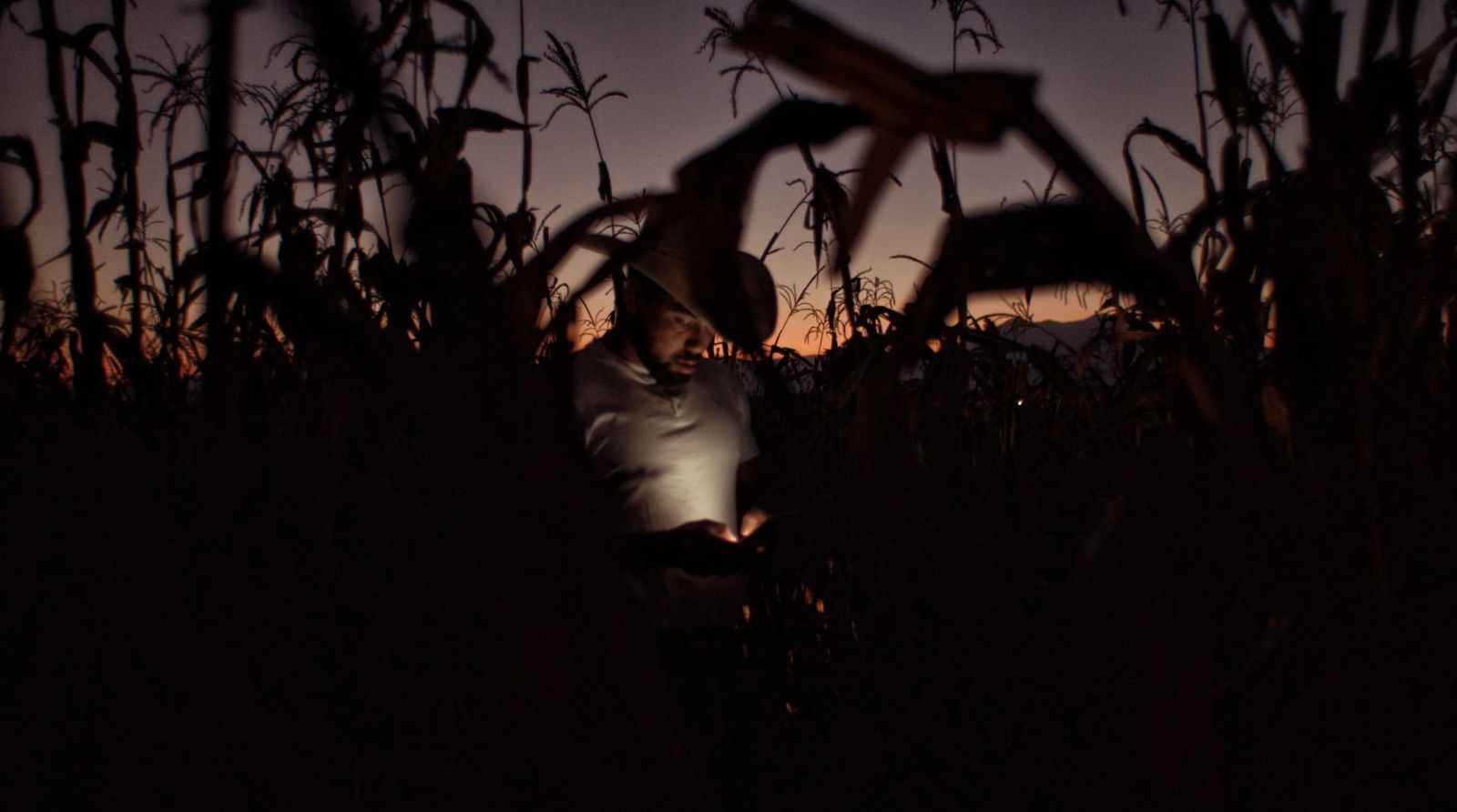
The hyper-masculine sport is at the forefront of Efraín Mojica and Rebecca Zweig’s eponymous debut Jaripeo. Simultaneously bridging its bull-riding extravaganza with conversations about the participants’ sexuality, the documentary playfully intersects intimate self-reflection and queer desire with its elliptical form. In-between the kinetic rodeos, the documentary spotlights the lives of three queer participants based in Penjamillo, including Mojica and their friends Noé and Joseph.
After pitching the film at the Hot Docs Forum in 2024 and premiering the film at Sundance earlier this year, Mojica and Zweig travelled across North America for their homecoming screening. Despite their exhaustive travels, Mojica and Zweig sat down with POV Magazine at Hot Docs. Within the confines of the festival’s private greenroom, we discussed the backstory of their documentary, their unique shooting methodology, and the queer significance behind the film’s delectable aesthetics.
POV: David Cuevas
EM: Efraín Mojica
RZ: Rebecca Zweig
This interview has been edited for brevity and clarity.
POV: How did you first two meet?
RZ: We met in Seattle, probably around ten years ago. We were just kind of there, being little punks. In 2018, Efraín invited me to come spend Christmas in their home town with their family. Part of the Christmas tradition is going to the jaripeo. I was just really struck by it, by the atmosphere, the community. Obviously, this is a world that Efraín knows really well. I was very much coming in as an outsider. I kept thinking that I wanted to do something with this place and this world. For years, we kept going back together. In 2021, I approached Efraín. They said yes.
EM: But only if we made it gay.
POV: I’m curious Efraín, what was your first jaripeo experience like?
EM: When I was young, I was sent by my parents to save seats for them. At 8 AM, they told me to go to the jaripeo and bring three cushions and blankets. The actual bullriding doesn’t start till noon, but people show up early. That was my first experience, not really caring or wanting to be there. I was forced to go to save the seats for my parents. As soon as my family would arrive, I would leave. I was bored and it was hot outside.
POV: What eventually won you over?
EM: The hot men. When I was a teenager, my friends wanted to go. It’s a big party. As teenagers, you get there, you start drinking, you party with your friends. Besides the hot men, it was about partying with the entire town. Everybody’s grandparents are there, children are there, the dogs are there, literally every single person goes to the jaripeo. Every township has their own jaripeo corral. The big jaripeos are on Christmas Day and New Year’s Day. A lot of people that live in the U.S. throughout the year come to visit their families during the holidays. That’s when there’s the most people.
RZ: We filmed basically at the same two rodeos for four years in a row. We filmed both the Christmas Day and the New Year’s Day jaripeos every year.
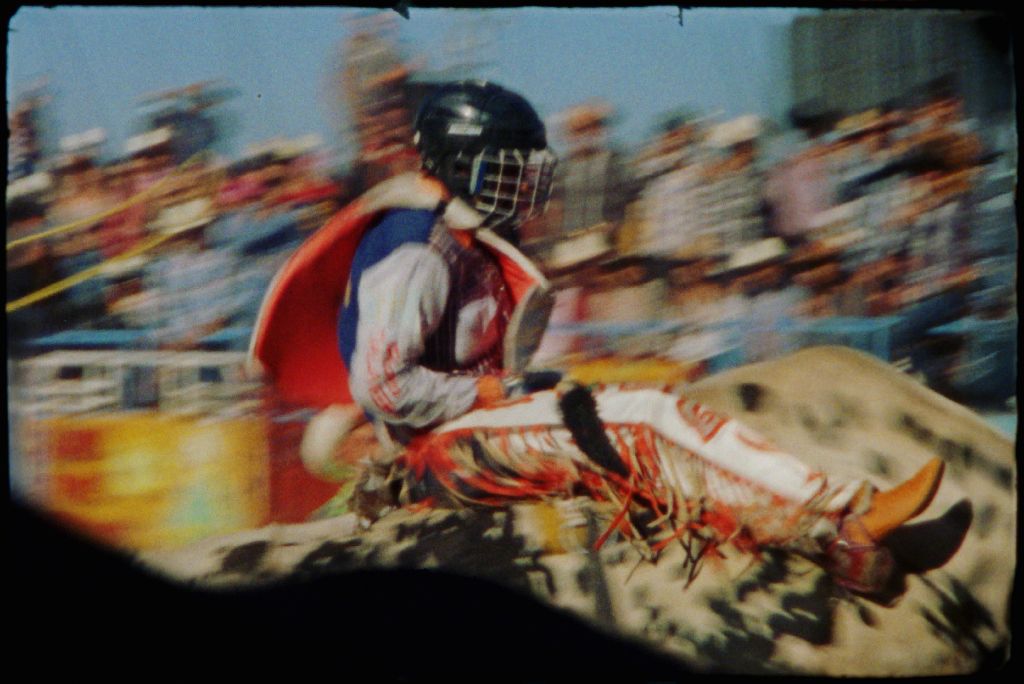
POV: With the unpredictability of bullriding, what was your shooting method for the kinetic rodeo sequences?
EM: Between the two main rodeos, Rebecca and I would go to different jaripeos to touch base with our subjects. We knew we had different types of angles to shoot, so at some point we looked back at the footage. There was a lot of trial and error throughout the shooting process.
RZ: We had a really mobile team. We didn’t have a station during any point of the rodeo. But that was also something that we really wanted aesthetically, we didn’t want things to be super set and clean. We wanted there to be a lot of movement, for there to be a lot of intimacy. I don’t know how many rodeos we shot in all. We probably shot at least fifty rides. We wanted each ride to encapsulate the aesthetic we were looking for. We never wanted this to be a very cleanly shot film, we wanted it to be raw.
EM: Chaotic, just like how jaripeos are!
POV: Speaking on the topic of aesthetics, your film intercuts Super 8 footage that welcomes cinematic subjectivity. The film also features various techniques such as step-printing, strobe-lighting and super-impositions. What was the importance of introducing these techniques within the context of a queer story?
EM: We wanted to depict the different states of mind. The queer subconscious. It’s cerebral, especially with the neon strobelights. The Super 8 footage is the queer eye. It’s like a magnifying glass to a very traditional macho world. The footage is showing you the subtleties of the gay shit. For the super-impositions at the end of the film, it embodies a rave. There are thousands of people dancing. There are strobe-lights, there are lots of speakers blasting bass on your face. I can’t articulate the feeling of the dance party in words. People are wasted, people are making out, men making out! The only difference between a jaripeo and a rave is the music.
POV: The film’s soundtrack also builds an immersive sonic-scape, ranging from pulse-pounding electronic music to gentle acoustic guitar. What was the music composition process like? Did you have the tracks ready before shooting, or was the score composed after the editing process?
RZ: We had the music we wanted to use from the very beginning. We knew that these were the tracks we wanted to have. We never used temp music, because everything was composed from the start. The tracks came from our composers and our friends. We never had that heartbreaking moment of not being able to use music we wanted.
EM: There was one song we included from one of our trips. On the trip right before we started shooting, we were listening to our friend’s music to see what easy copyright tracks we could incorporate in the film. We were listening to our friend Luisa Almaguer’s song “Hacernos así.” It’s a song that comes in at the end of the film. It’s such a beautiful ballad. I remember driving to Penjamillo, with the song in the background. It was so magical. That’s the one song that existed previously in the film. Music was a big part of the way we edited this film. With our editor Analía Goethals, she had folders of different options that our composers made. She would put together scenes and try out different cuts.
RZ: We always saw music as being a big part of this film. We felt like merging traditional music with electronic tricks felt true to what we were trying to accomplish in terms of narrative and visuals. The jaripeos have music going on from 10 AM to midnight. There’s no point in us filming where we can really get any sort of silence in those places. We started with a challenge when it came to direct sounds. That was going to be an opportunity for us to really experiment. We wanted to see the wider angle, looking at things in a specific way while zooming in on textures. We wanted sound to reflect the perspective. It definitely came from us having a soundscape to begin with that was so chaotic and blown out that we had to do something with it.

POV: The aesthetic and sonic implementations which highlight the queer perspective coincides with Efraín’s involvement in the narrative. When was the moment you two realised that their story had to be included in the film?
EM: I don’t think there was a moment when I realised this was going to be about my personal journey. It was a slow, progressive process. We were listening to what the film wanted from us. The genesis of it was from a conversation that Rebecca and I had in the truck on the mountain range. It’s my favourite spot, where you can oversee the valley and the tiny little town. We just started talking. For the four years that we filmed, that was the place we kept coming back to. Every time, we would return to continue our conversation; to think about my relationship with the town, my family, and myself.
It’s a vulnerable space where I’m being psycho-analyzed by Rebecca, while not really thinking about what’s being said. It’s just me and my good friend talking at my favourite spot in town. It was easy to let go and not think about what’s going to go into the film, or how to phrase something so that it sounds more interesting. The goal was to really let go, to the point where I was saying things that I would later realize that my mom was probably going to discover. I’m talking about things like cruising or sneaking out of the house to meet up with a guy. If I had those thoughts about people listening to our conversation, I would have probably held back.
RZ: The aggregate of those four years of conversations between us was not what we had anticipated. This was very much a process film. Our perspectives, in particular with Efraín’s perspective, was changing how they saw the town through the act of us making this movie. We found that emotional change happening through those conversations. With Noé and Joseph, it made our relationships with them so much better when Efraín came into the frame. You could see their relationship on camera. In a lot of ways, it did feel like night and day with how comfortable they felt with us and the film. They were opening parts of themselves to us. We had to honour that vulnerability.
EM: It was very important to share this space of vulnerability with them and be on the same level. We were just comfortable. We really did become good friends while making this film, which was my favourite part.
POV: Since the shoot, has the community and participants of Penjamillo seen the film? What were their reactions?
EM: We showed them a cut before submitting to festivals, to make sure they were comfortable in the way they were being portrayed. They loved it!
RZ: Noé came to Sundance with us and had the best time ever. It felt like he was born to be at Sundance.
EM: Joseph clearly has this star-energy to them. They were very happy with the film. Unfortunately, Joseph hasn’t been able to attend a festival with us yet, because of visa shit. But, I saw him recently. He was very happy with the reception. He can’t wait to share it with his family and friends. It’s true with Noé and myself. We can’t wait for our hometown to see this, to celebrate what the film represents and the community that’s a part of it.
RZ: Penjamillo is really excited for it. We have to wait because of our Mexican premiere. We’re planning something big, but everyone is very excited and proud.