



Virtual Girlfriends
(Czech Republic/Bulgaria/Slovakia, 91 min.)
Dir. Barbora Chalupová
Prod. Pavla Klimešová, Monika Loštáková, Tonislav Hristov
Programme: Digital Witnesses (International premiere)
Before the global COVID-19 pandemic shuttered cinemas and public get-togethers, a triumphant documentary success-story emerged from the Czech Republic. In the harrowing investigative documentary Caught in the Net, filmmakers Barbora Chalupová and Vít Klusák brought together three young actresses who were asked to perform as under-age girls on popular online chatrooms. The actors appeared on sound-stages disguised as average suburban homes. Working in collaboration with local authorities, the social experiment eventually led to the arrests of real child predators. The frightening and relevant subject matter appealed to a greater audience, receiving over 115,000 spectators on opening weekend. The following weekend, the positive reception encouraged 96,000 more people to catch the documentary on local silver screens. Breaking domestic numbers, Caught in the Net quickly became a cultural phenomenon in Czechia.
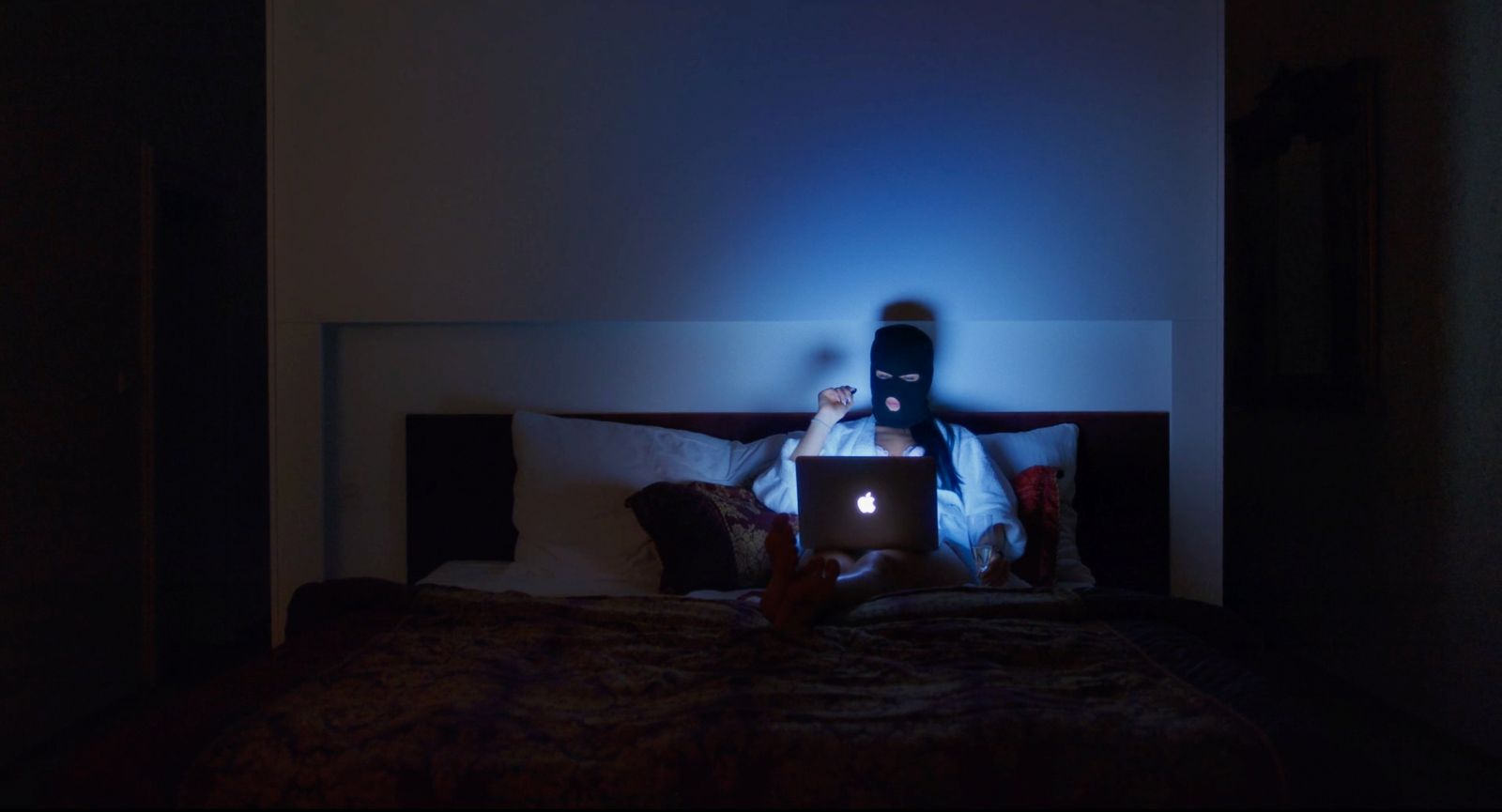
Since the release of Caught in the Net, documentary enthusiasts have been patiently awaiting Chalupová’s return. With her latest feature Virtual Girlfriends, Chalupová again employs performances in another cautionary tale about the internet. Diverting from the subject of child predators, Virtual Girlfriends focuses on the daily routines of three entrepreneurial models who engage in virtual sex work. Utilising OnlyFans, the infamous platform that revolutionised the way we consume pornographic content, the women aspire to make it big in hopes of turning a profit. Spanning over the course of a single year, Chalupová’s observational documentary intimately highlights her protagonists’ work ethics, philosophies, and existential searches for validation.
Told through effective stationary long-takes that capture the protagonists’ extended conversations with their romantic partners and online subscribers, the film’s detached shooting methodology is purposefully unsexy. Virtual Girlfriends is largely sustained by nonchalant conversations, capturing the quietude of the protagonists’ private lives. The quotidian edit conscientiously includes scenes of humdrum camera set-up before a steamy livestream, humanising these women through the normalcy of their tasks. Emphasising the circuitous production of their self-made content, Chalupová includes montages of ordinary day-to-day routine to visually emphasize the commonality of experiences within the remote profession. Sonically enforcing its interconnected structure, the documentary’s electronic soundtrack interlinks the different perspectives through harmonious synthetic beats.
Akin to any other industry, the OnlyFans economy is highly competitive. With over 300 million touch-starved users accounting for the platform’s consumer base, Chalupová explores the search for individuality within an algorithmic system. Altering the performers’ personalities to appease their male demographic, Virtual Girlfriends explores their relationships, whether platonic or romantic, that dictate financial stability. Despite the overwhelming competition, the documentary subverts expectations by including scenes of workplace camaraderie. Chalupová highlights interactions where the subjects engage with one-another, seeking advice about concerns like their virtual identities.
However, the market is unpredictable. In one harrowing sequence, Chalupová highlights one model’s unlucky day on OnlyFans. Performing to a crowd of unenthusiastic tippers, the model concludes her 53-minute livestream with only $6.50 earned. Earning significantly less than the minimum wage, the unglamorous realities of the platform emerge from the women’s revelations and experiences. Virtual Girlfriends discusses both the sociological and economic implications behind the capricious profession, where content creators manufacture and alter their bodies for monetary gain. In the OnlyFans economy, bodily enhancements are financial investments. For example, one model increases her breast size to reach a wider spectatorship.
While the film aims to capture the different facets of social stigma that loom over the livelihoods of the young women, the casting proves limited. The models share experiences and perspectives related to their race and class. Anchored by a familiar heteronormative and white perspective, the repetitive conclusions ultimately reiterate similar struggles and hardships shared between the three influencers with an emphasis on occupational self-reflection. A more diverse cast of engaged subjects would have better illustrated the trials and tribulations of the OnlyFans industry, while potentially providing multifaceted commentary on the performers’ identities, social status, and fetishistic desires.
In spite of the similarities of the different participants, Virtual Girlfriends ultimately showcases Chalupová’s versatile talent. Shifting from a participatory mode to an observational lens, Chalupová’s controlled methodology captures an unromantic perspective of a stigmatized occupation. While it lacks the adventurous and investigative bite of Caught in the Net, Chalupová ultimately serves a satisfying portrait that successfully captures the persistence and honesty of the young women, without resorting to needless misogyny.