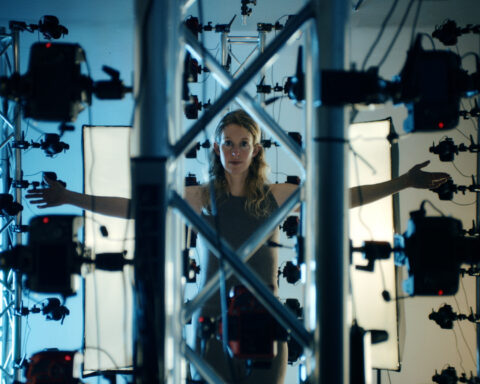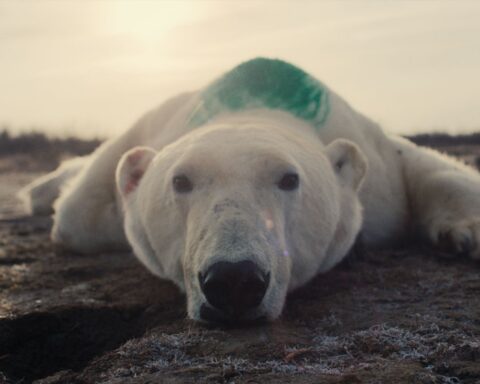




In August 2025, nearly a year ago to the day, I wrote about the development of generative AI. The integration of the technology in filmmaking has changed significantly since then. As identified by Variety’s Corbin Bolies in an article from July, around 300 Netflix programs employed generative AI across various steps in their production processes this year. Of Netflix’s own admission, the titles named in their report use gen AI across the pre-production, production, and post-production pipelines to assist the filmmakers in actualizing their visions while bringing down the streamer’s costs.
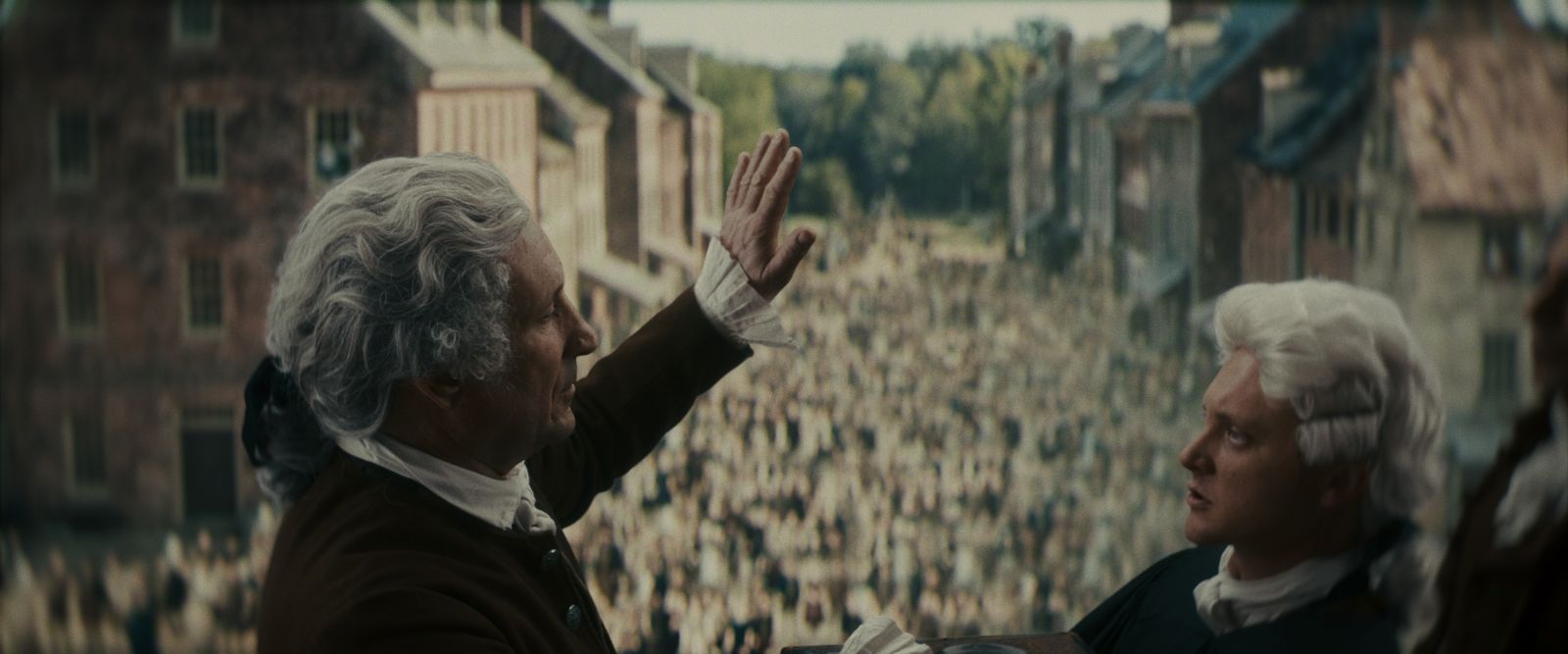
In its report, the company singled out the docuseries Brazil 70: A Saga do Tri and The American Experiment as having employed gen AI technology to “create highly complex sequences (e.g., enhanced crowds, historical battle sequences, and worldbuilding establishing shots).” For co-CEO Ted Sarandos, these scenes would have been difficult to incorporate into the films prior to gen-AI technology, due to the huge costs attached towards filming them had the filmmakers taken traditional means like dramatic recreation or animation. Speaking of the 17 minutes of AI enhanced footage in The American Experiment, Sarandos said that the material was produced, “twice as fast and at half the cost of previous options,” making it mutually beneficial for the filmmakers and Netflix. Sarandos’ enthusiasm towards the technology is expected for an executive focused on the company’s bottom line, but it poses great concerns for the future.
Whereas in recent years, AI generated material in Roadrunner and What Jennifer Did caused massive uproars with audiences rejecting the use of processes they found deceptive, the climate has noticeably changed this year. Neither of the docuseries mentioned by Netflix is receiving as much criticism as the titles from recent years and evidently there exist other Netflix-backed documentaries that used generative AI but haven’t explicitly been mentioned in the report. Acknowledging that fact, regular consumers of Netflix documentaries have likely watched a recent title that used generative AI for stock footage, archival material, crowd sequences, voice enhancements, or other aspects of the filmmaking process.
Irrespective of how a viewer may feel towards generative AI, according to Sarandos the tech is here to stay, and the company will continue to leverage it to bring down costs and strengthen their production pipelines. What is interesting about Netflix’s model for adopting AI technology is that instead of producing content made entirely by AI, they seem to be soft launching the concept to their consumers.
For instance, in The American Experiment, a docuseries about the formation of the United States, where one sees and hears from notable politicians including Hillary Clinton and Mike Pence, and former Supreme Court associate justice Stephen Breyer, one would not be inclined to question the production methodology of fleeting sequences of large crowds or stock footage that complements the talking points. As the AI generated footage does not interfere with the real, authentic footage of the talking heads, the series appears to maintain its contract with the viewer by not disturbing the experience of watching the film with material that might seem out of place or out of character.
This form of involving generative AI in production while retaining the authenticity of the film/series itself reduces the extent to which the viewer acknowledges that they are interacting with AI content. It is a shrewd and calculated way to introduce the viewer to AI technology without clearly stating it from the offset. Additionally, as Sarandos stated that the generative AI technology is being employed in pre-production, it can be inferred that research or fact-finding work that would otherwise be undertaken by humans could also be at risk of being offset to artificial technology.

This brings us to Sarandos’ classification that Netflix does not anticipate gen AI replacing filmmakers but rather intends to use it as a tool to assist the real humans involved in making the film. It is a questionable claim, however, considering Sarandos also said that the sequences produced using gen-AI are created at a significantly lower cost than other options. Undoubtedly, the cost here is reduced because employing people to produce physical or digital recreations, or to hunt through the archives for footage or material that could be used are processes that would take up time and money. Netflix can now get away with replacing these people with AI technology. By involving the technology throughout the process to expedite filmmaking and reduce costs, audiences must question how many jobs have been cut out as a result. How many people have been removed from the process to cut down the costs for Netflix? Sarandos’ empathy towards real humans must thus be taken with a grain of salt as Netflix’s approach appears to cater to a hierarchical order within filmmaking that protects the above the line credits like director or producer (for now) but not the roles of the countless below-the-line talents, like visual researchers or composite artists, involved in making a film successful.
Beyond the detrimental impact to the filmmaking industry in this regard, the introduction of employing gen AI in docs poses a different set of problems for the genre itself. When writing last year’s article, I could only find gen AI “documentaries” on the r/aivideo subreddit – a forum dedicated to discussing AI videos – but in the last year, prominent Indian filmmaker Rajkumar Hirani made Kathni Karni Ek Si, an AI generated documentary to honour the legacy of the Bajaj Group in India. A hybrid piece of docu-fiction, the short film uses gen AI to bring back to life the father of the nation, Mohandas Karamchand Gandhi, making him the central protagonist who marvels at the modern-day developments that the Bajaj Group has made in an independent India.
Those familiar with Hirani’s work will recognize the use of Gandhi as a self-reflexive homage to his comedy Lage Raho Munna Bhai, where the gangster Munna Bhai studies Gandhi’s philosophies to the extent that he starts seeing an apparition of Gandhi around him. If one were to compare the films, there is nothing that the AI generated Gandhi adds to the film that Dilip Prabhavalkar’s portrayal of the figure in Munna Bhai did not. In fact, the character in the short doc appears hyper-realistic in its animation, giving the film an uncanny feel as did the animation in The Polar Express, detracting from the messaging and reducing the impact of the ‘documentary.’ Nevertheless, Hirani is clearly amazed at the technology, as he has gone on to say that he plans to use generative AI in his films in the future.
Hirani, like Sarandos, appears as an industry pioneer who exists in an untouchable bubble. The specific technologies they back are unlikely to harm their careers and are likely to encourage more industry personnel to use them. Other examples include James Cameron (director of Stability AI) and Martin Scorsese (a partner and supporter of Black Forest Labs) who have also backed generative AI technology in their filmmaking process with qualified praise for its role in the creative process. However, while these industry leaders, alongside other propagators of generative AI, claim that the technology is democratizing the art form for young people, there is a resurgence in analogue photography and filmmaking among Gen-Z. If the packed 70mm shows of Christopher Nolan’s The Odyssey are anything to go by, audiences appreciate analogue filmmaking now more than ever. Last year alone, we saw One Battle After Another, Sinners, Bugonia, Die My Love, and even Jurassic World Rebirth shot on some form of film stock. In fact, the reason Jurassic World filmmaker Gareth Edwards opted to shoot on 35mm film was to give the dinosaurs, “a gritty, grounded reality reminiscent of the original 1993 classic.” On both accounts, be it democratizing for the new age or employing AI for ‘special effects,’ the technology has yet to offer anything to the medium beyond being a mere cost-cutting method. That would justify why money-minded executives such as Sarandos are so keen on engaging with it and co-opting it as integral to the filmmaking process.
For documentaries, this poses a different question. How can a visual that has been artificially generated, using a model that is trained on actual human labour be considered an aspect of documentation? If documentation is a presentation of facts, of life, of events as they happened or are happening, what space does artificial intelligence have in this truly human way of depiction? It is important here to distinguish between formally experimental documentaries that may use animation or CGI, as the images being produced remain a product of human labour and often reflect subjective experiences. For example, Chris Landreth’s animated short doc Ryan, which won the Academy Award for Best Animated Short, remains a human-made film that depicts real struggles and facets of life using animation. Landreth’s imprint and understanding of humanity are present in the unique animation of the film and its construction of famed Canadian animator Ryan Larkin’s struggles with addiction.
Today, artificial intelligence replaces this human imprint by constructing visuals that copy and are styled after the actual creations by other people without due credit or consent. And if artificially produced images that are developed using computer code instead of any human thinking are actively employed to create documentaries, what does that mean for the field itself? Audiences and filmmakers will have to reckon with that question and others while the technology advances.