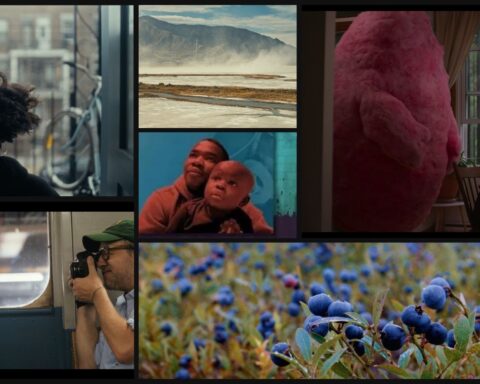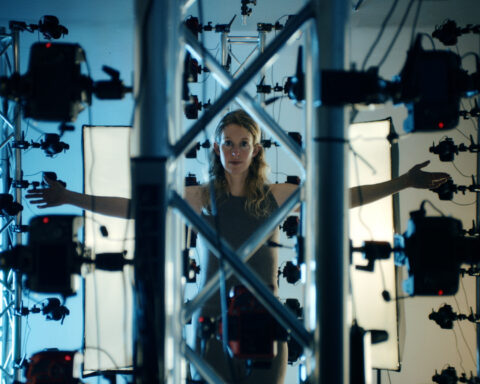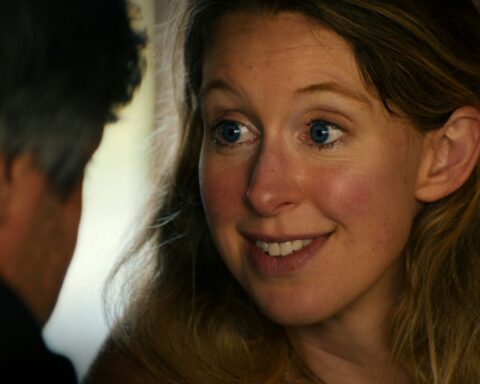





If you’ve heard of Brampton, you’re probably familiar with the negative stereotypes that are often associated with the city and its largely South Asian immigrant population. These hate-filled narratives often originate on social media and spread like wildfire, consuming and corrupting the minds of all who come across this discourse. Challenging this wave of vitriol, Amreen Kullar’s I See Myself in You offers a compassionate account of Brampton and its misunderstood and often misrepresented inhabitants. “I wanted to take the time and capture the moments that go unseen in our city,” says Amreen, whose film features spellbinding visuals of Brampton, layered with a narrative that preaches solidarity above all else.
Shot entirely on 16mm film stock, the doc hears from three Brampton residents as they talk about their relationship with the city, their impressions of their neighbours, and what it means to live in the city as an immigrant. The nine-minute film ambitiously crafts an intimate portrait of the city and its residents while asking hard-hitting questions challenging xenophobia, hatred within the South Asian community, and the differences between first- and second-generation immigrants. Through these testimonials, Kullar’s film universalizes the nuances of immigrant experiences, ultimately playing out as a tender vignette of humanity itself – asking to see ourselves in the people that surround us.
POV spoke with Amreen via Zoom ahead of the Hot Docs premiere of I See Myself in You.
POV: Nidhil Vohra
AK: Amreen Kullar
This interview has been edited for brevity and clarity.
POV: How did the film come to be?
AK: I made an Instagram post about Brampton that consisted of 35mm photography and prose that was calling out the barriers to access, how we only have one hospital for the whole city, and how the hate towards Brampton is race-based. That post got traction on Instagram within the local South Asian community and so I realized that there was a gap there – that people actually wanted the validation of how they were always feeling, and for someone to articulate how they felt. That post gave people pride about Brampton and it was nice to interact with people that felt the same way but hadn’t heard someone say it publicly. Since then, I’ve wondered whether I should convey that feeling through another medium, especially because film is my predominant medium. I always wanted to make a film about Brampton, but I didn’t know what it was going to be like at all.
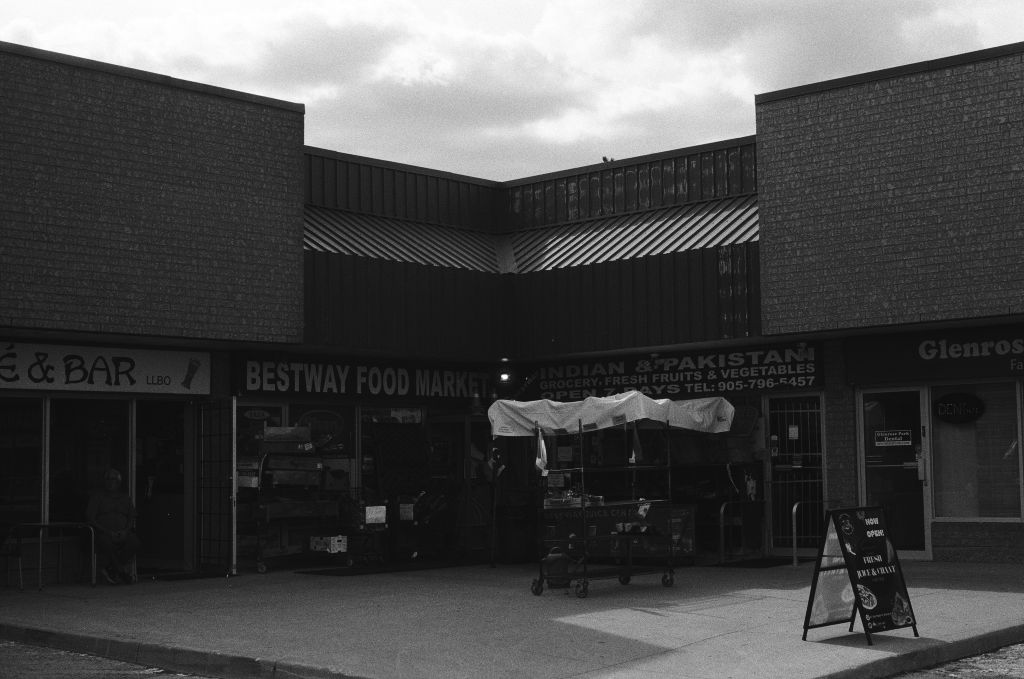
POV: Your shot composition and soundscape captures the city’s industrial roots which is complemented by the tender shots of the people you film. It’s the prettiest I have seen my city look. What was the significance of shooting on film for you? What does it add to the story you were trying to depict?
AK: South Asian people don’t always get to feel beautiful or worth capturing on a medium like film. It’s a similar situation with Brampton where it has attained quite an infamous reputation around the world. I wanted to make the city look beautiful and take back the narrative of what defines Brampton. Even making a film about Brampton shows that it’s worthy.
There’s so many talented people from Brampton and I get the feeling that people are taken back by it because of the reputation that the city has. When you’re from a place, you don’t see it the same way as others do. You don’t give it the attention that you would to a foreign city when you’re travelling. With Brampton, I wanted to take the time and capture the moments that go unseen and undervalued in our city. The idea with shooting on film, especially on black and white, is that it gives you a freedom from the colours. You think more about the composition and what you are trying to say through the frame. I also wanted to give it a timeless feel, a nostalgic feel, because I was born and raised there and I’ve seen so many changes but so much has also stayed similar to how it was. It is really important to have archival footage from places in certain moments in time. I watched this NFB short film about a Sikh boy in B.C. from the 70s. [Gurdeep Singh Bains.] I was like “Woah, the fact that this was even captured.” If you don’t capture things, they will be lost.
POV: The film has a voice but there is an inner language that the film develops the more it progresses. What was the process of designing the visual language of the film like?
AK: Even initially when I recorded the interviews, I was talking to people who had experience making documentaries and they advised me to not capture endless interviews. So, I thought of asking them questions about what I wanted to [document] – their first impressions of Brampton, coming here for the first time, what they missed about back home. With the shot composition, I knew I wanted the people I filmed [to be] looking at the camera. I did a few variations where they were looking defiantly into the camera and later I rolled on them just to see what they did naturally, which was nice. I am really inspired by Nordic films and that was something I’ve seen from one of my favourite DPs, Maria von Hausswolff [Godland; A White, White Day]. She works with this Icelandic director [Hlynur Pálmason] that I really love. Those shots have always stayed in my mind, and she also always shoots on film. I really love that stylistic choice within Scandinavian film and that comes with the symmetry of the landscape, which obviously Wes Anderson has also been inspired by. Mike Mills does similar stuff too, especially in 20th Century Woman. That’s one of my favourite films.
It is interesting to adapt choices from the narrative format to the doc format. We were driving around Brampton, and I had a rough list of shots I wanted to capture but if drove past something that I found relevant to the film I would shoot it. Part of it was just driving around initially. When I was doing pre-interviews, I would pick them up and go to a café, and in this process I became re-acquainted with Brampton. I saw neighbourhoods that I hadn’t seen in a while and how things had changed but also what had stayed the same. That was really cool.
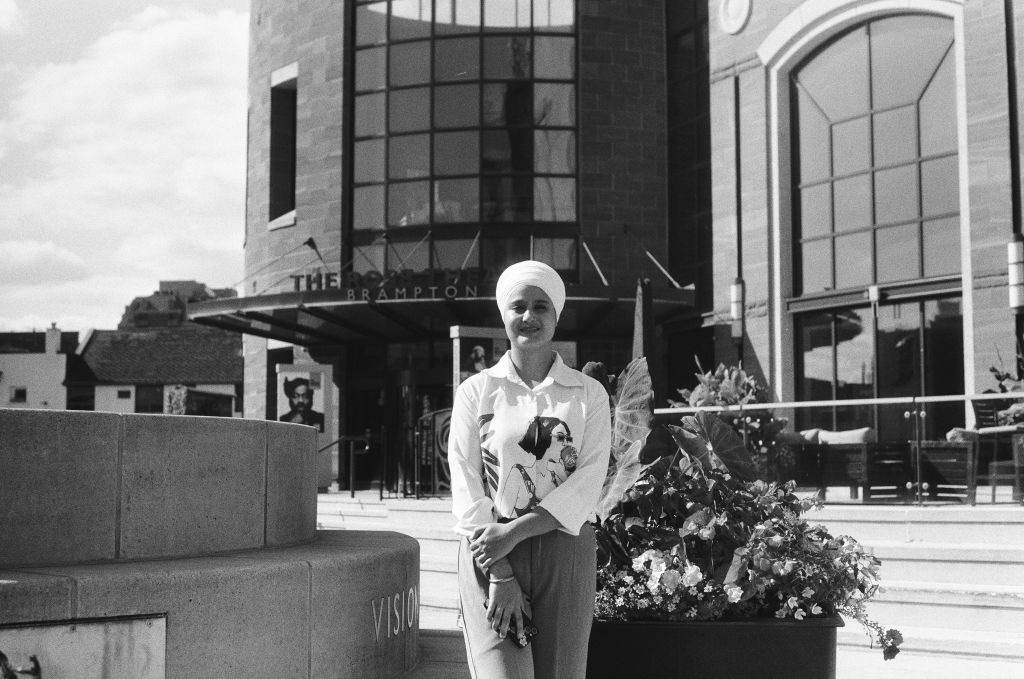
POV: There are no talking heads in your film. You never know whose voice exactly is it that you’re hearing. Why this choice?
AK: Initially, I put out a call for [participants] since I didn’t want to film people I already knew because I didn’t want to influence the narrative. I wanted to hear what other people thought. The conversations I had with these people ended up being so impactful and overall healing for me that I cried on the way home. I kept asking, “Why don’t we do this more?” I loved making others feel that their story mattered. So, from the callout, I got emails and in the process of figuring out how focused to make it, I figured out I wanted younger people. Everyone in the film is in their 20s as I wanted more newcomer voices than second generation [voices] because even though I don’t narrate in the film, I am still a voice of the film. I ended up choosing two newcomers and one second generation, accounting for diversity in gender and experience – there’s a student and there’s someone else who was recently married. After pre-interview chats with them, I gave them a layout of the film and my expectations. This was helpful because I wanted to get their voices, experiences, and favourite places from Brampton in the film. I wanted to capture places that may not mean a lot to me but might mean a lot to other people knowing that other Bramptonians may resonate with them.
The choice of not specifying who is talking when was made to bridge the gap between folks. They are articulating conversations which a lot of us have had about the city and the ambiguity adds to the narrative, making it more about the ideas and conveying the thought that these experiences despite being specific to these individuals, are in fact universal.
POV: The film narrates a certain feeling of hostility that exists between first- and second-generation immigrations. What do you think is the relationship between these two communities in the city and how have you seen this dynamic develop in your time living in the city?
AK: There’s always been tension between first and second gens and you first see it when you’re growing up: The way that we talk about and talk to our parents as opposed to each other. Correcting their accents and other behaviours that we’d picked up on outside and were socialized to repeat at home. That same stuff comes back and now that there are more immigrants and more newcomers, we’re seeing a similar situation. Negative terminology towards newcomers happens in a more insular way. People make fun of folks at school and that language becomes normalized. Even though we know it’s wrong, people still use it. There is so much harmful language on social media, and we don’t even know what is propagated by bots and what discourse is actual people. Also, when you say things publicly, it gives everyone permission to do the same. Right now, everyone’s scared of the rising hatred towards immigrants and this anxiety fuels division with our community itself. So, in a way that everyone else is scapegoating immigrants, we are scapegoating recent newcomers.

POV: How important are films like yours with the current rise in anti-immigrant discourse?
AK: A lot of what we need to do with film is imagine different futures. In terms of changing discourse, people need to be given permission to have certain conversations or take certain stances or stand up for things. A lot of the times, we feel that we’re the only ones who feel a certain way. It again comes back to the consistent language and discourse that is being spread. It becomes important then, to give people permission to have those conversations and think about things a little differently. To bridge the gap between the communities and remind people about what is more similar between us than what is different.
POV: That ends up becoming the thesis of your film – I see myself in you. How can this message reach the people who are unwilling to see themselves in you?
AK: It is about reminding people that a lot of our life circumstances are not because we deserve them, but they are rather simply chance. It is really just chance that I was born here. I don’t think anyone can just grind and get to the same level. There are so many things at play that we don’t and can’t control. When people are reminded about how close they could be to having a certain experience, it reinforces how similar we all are as humans.
I See Myself in You screened at Hot Docs. It also plays at Leverage Lens Film + Art Festival on May 15, 2026 and at Doors Open Toronto through the Regent Park Film Festival on May 23 and 24.