



POV is pleased to present the creative exchanges—highly personal and thoughtful—between filmmaker Gabrielle Brady and narrative therapist Poh Lin Lee.
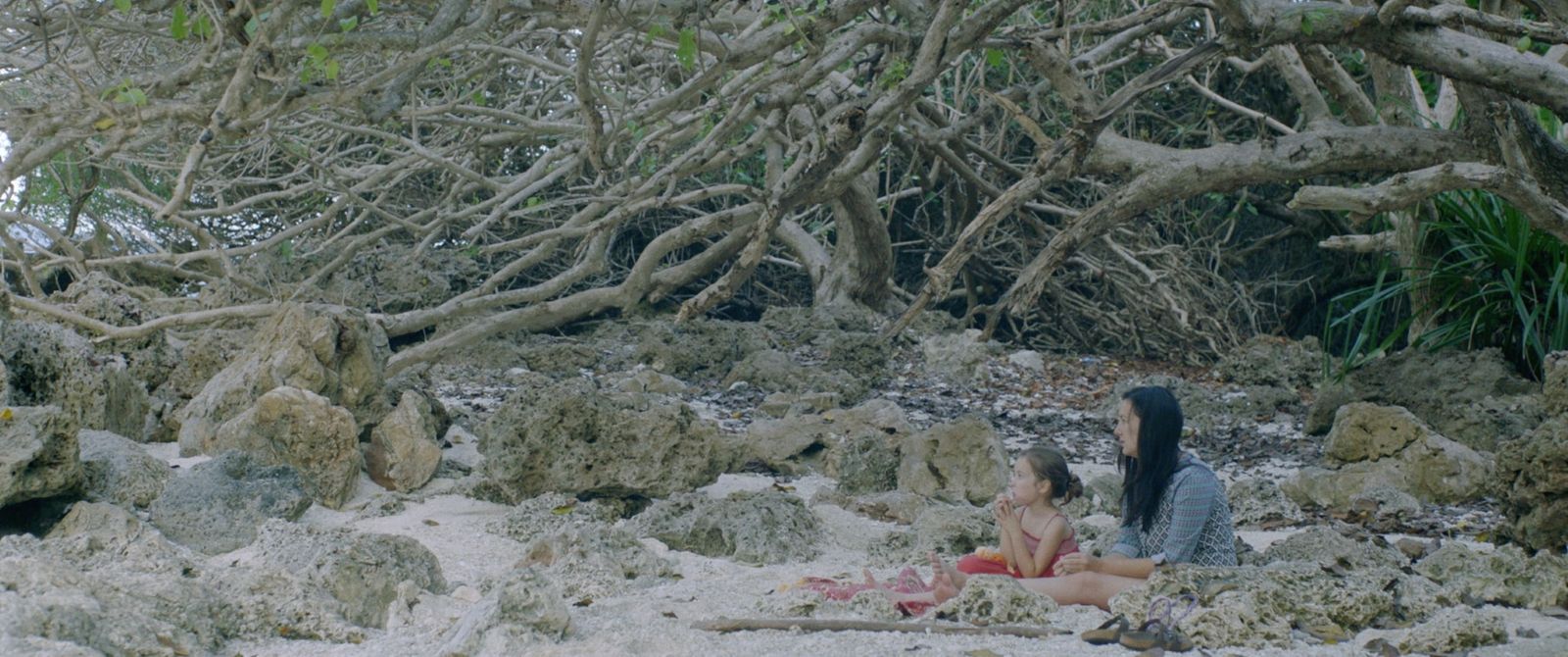
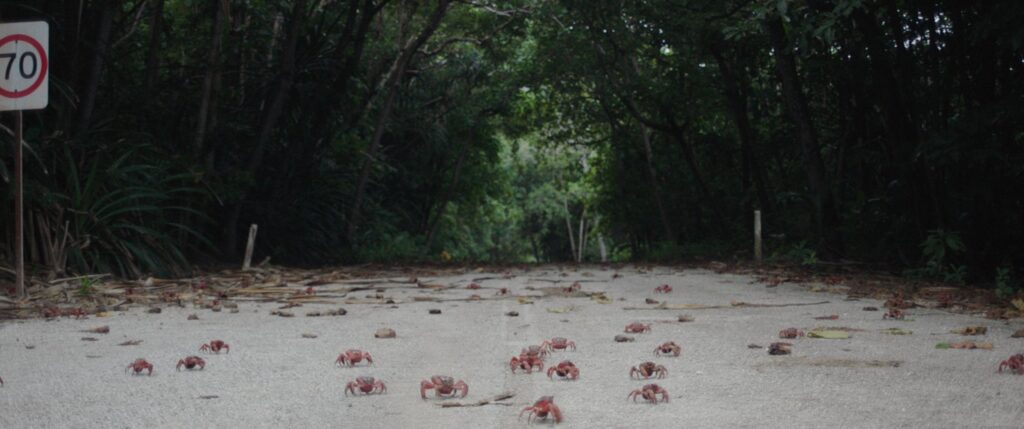
Their ever expanding collaboration began on the acclaimed hybrid documentary Island of the Hungry Ghosts, a film that won prizes at such renowned festivals as Visions du Réel, IDFA, Tribeca and Mumbai. The film contrasts the natural migration of millions of land crabs on Christmas Island in the Indian Ocean and the indefinite detainment of thousands of asylum seekers in a high-security detention centre on the same island. Gabrielle directed the film and Poh Lin both appeared in the film and was a consultant on trauma-informed processes.
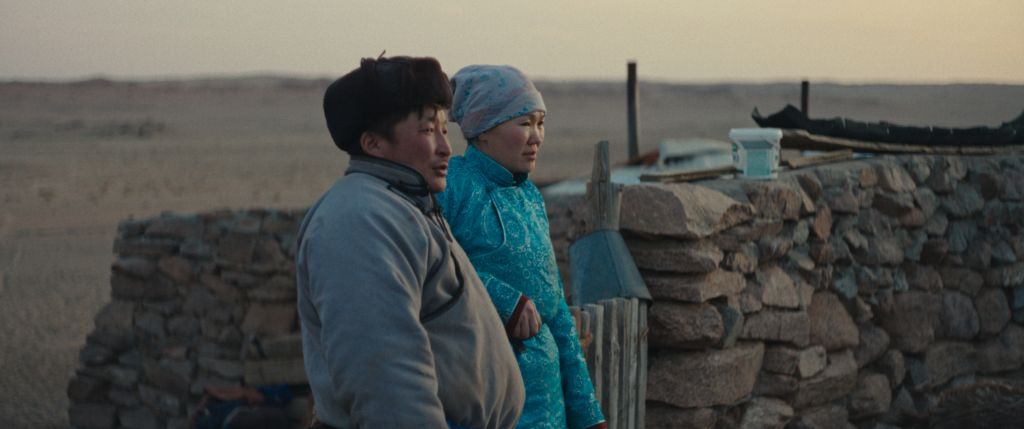
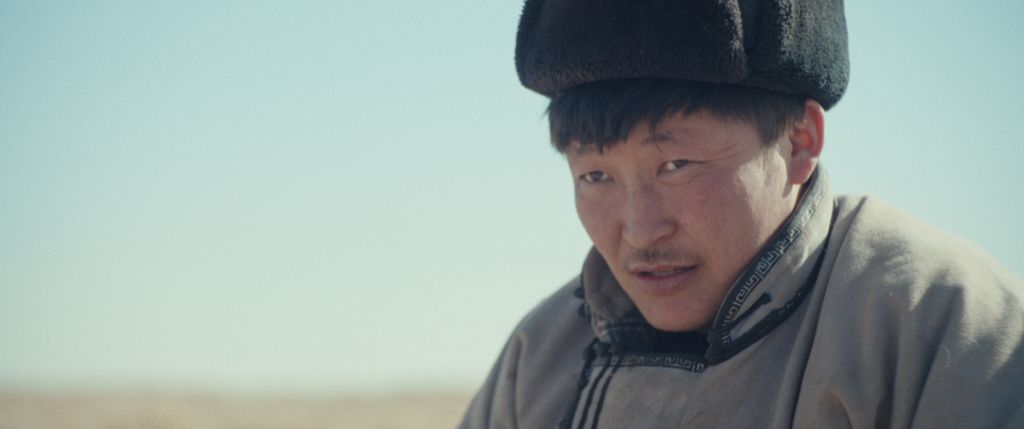
They later collaborated on the hybrid documentary The Wolves Always Come at Night, as director and narrative therapy consultant, attending to decolonial and non-extractive film practices. The film tells the story of Daava and Zaya, a Mongolian herding couple who are attempting to raise four children in the immense Bavankhongor region during a time of climate and economic change. It’s an intense story that merges fact and fiction and was Australia’s entry into the 98th Academy Awards.
In this piece, the two explore their cross-practice collaboration which brings together ideas from narrative therapy and hybrid filmmaking and led to an approach they refer to as “filming in retrospect,” which navigates the process of filming traumatic events and re-engaging with memory in multi-storied ways.
Please note that excerpts from the journals of Gabrielle Brady and Poh Lin Lee are italicized in the following text. The journal writings signal the poetic and introspective nature of their personal reflections on the filmmaking process. A regular text font is used for the rest of their essay, which offers follow-up responses to their collaboration. — POV
Extract from a journal entry by Gabrielle Brady after filming scenes with Poh Lin Lee for Island of the Hungry Ghosts (April 2017)
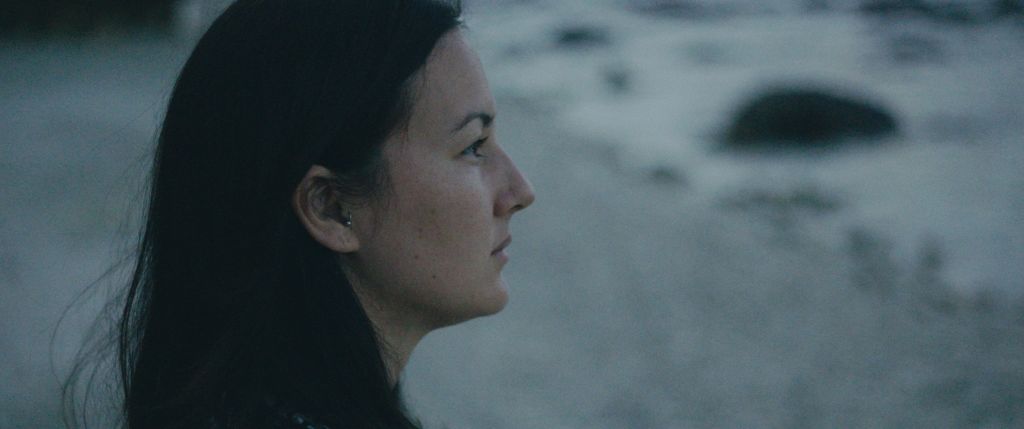
Gabrielle: In the car on the way to the location, I am looking at Poh Lin. She has her headphones on, listening to a song only she can hear. I am aware that this situation would have looked completely strange to me just a year earlier. Poh Lin is a trauma therapist, and my dear friend, yet here in front of me I was seeing an actress preparing for a scene. My heart explodes … I just want to hug her… but our agreement instead is that I stay back and allow the moment to unfold.
We park at the side of the road. Poh is wearing a blue dress, flowing to the ground, covered in small strangely elongated cats. She is pacing along the warm granite road with no shoes on. I murmur to the sound recordist Leo Dolgan and cinematographer Michael Latham to follow as best they can. I offer no other direction as I can sense we are being led.
Without talking, Poh starts to move. She is walking, pacing ahead towards the water as cars hurtle past her. I can sense from behind the fullness of her emotions, the stream of her expression. In this moment, Poh Lin is a performer, playing the role of herself. Her body is motioning for us to follow. I stay at Michael’s side as he attempts to move with the unpredictability of the moment.
A whistling wind suddenly whips up from the water. The island sighs.
It moves its way across Poh’s face and through her hair, blowing the cats on her dress around her.
She suddenly breaks into a run.
We follow.
Poh runs until she is close to the water’s edge where she slows, zigzagging up the long jetty that connects water to land. It is as though her body is being pulled, captured, by the water. She walks to the edge and teeters. Looking down, she sways like a magnet resisting the pull.
I am mesmerized.
As Poh leans her body forward, she is suddenly thrown back with a gust of wind.
It breaks the spell.
She turns and looks at me, her eyebrows raised slightly, as though asking me, “What’s next?”
Gabrielle: A film, a piece of cinema, is actually an invitation to unnumb the senses. To remember more fully, more deeply and completely who we are in the world and to remember the deep silence that sits in each of our own bodies. True cinema asks us to be in revolution against the fracturing of spirit that over productivity and capitalism has tried to claim over our lives. It is about reclaiming the ma, the space in between, the dream world, the absence.
Extract from a journal entry by Poh Lin reflecting on filming at the Jetty (2016)
Poh: This day started like this, on edge, a sense of a lot up in the air and swirling around me, the electricity in the air before a storm. Gab proposed this particular place on the island. This was no ordinary place. The only jetty on the island; the place we’d witnessed people being escorted off boats by the police. The waters where our babies learnt to swim. The place we held candlelight vigils for people lost in these waters. The place where we saw the monthly supply ship break anchor in a storm and come apart on the rocks. The place we witnessed the birth and return of baby crabs turning red as their bodies touched the shoreline. This place asked me to remember, sifting through archives in the present.
Poh: Gab never told me what to do on the Jetty. It was a place full of stories but as of yet felt unlanguaged. A traditional director might have told me what to do. She didn’t. I wasn’t performing a story from an already written script. The trust I had with the team and the countless conversations we had prior to filming allowed for a different kind of storytelling, one which was already alive and circulating within me, between us, and with this particular place.
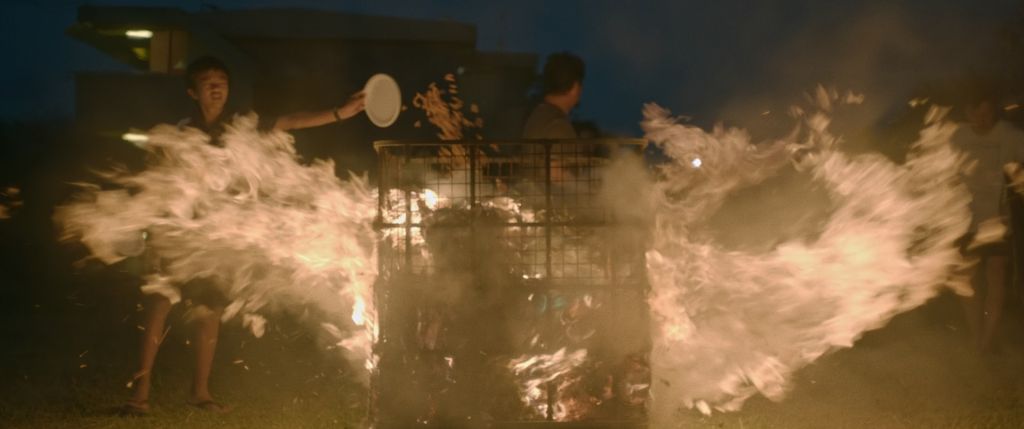
For me, hybridity offers an intersection spacious enough to host multiple truths. The middle space, the not-yet-said, where we are unlearning and imagining into being.
Without a hybrid approach, as a film participant, I would have felt very much on my own to try and represent myself in my story. Left to my own devices, I would have responded to the invitation to share my story based on some kind of external idea, loosely formed from fragments of having watched a documentary or having read something somewhere about documentaries.
I have always been set adrift by the prompt to speak your truth. What happens when my truth is multiple, and contradictory?
I saw how the hybrid form positioned Gab, as filmmaker, differently. It seemed to shift her from a position outside looking in to actively engaging with my lived experience through creative co-research. In this process I came to understand and have agency over how I could share specific parts of my experience in ways that felt personal and accurate to my recollections. There was sufficient time and space to consider the implications of sharing such stories in the context of my life and those I’m in relationship with.
Extract from a journal entry by Poh Lin. In an intense, impressionistic account, she explores the consequences of working within systemic injustice and the internalizing of surveillance in preparation to be a film participant for Island of the Hungry Ghosts (October 2015)
Poh: When I would see uniforms, the detention centre, the navy ships—on sight, the immediate policing of myself awakes. The immediate voices saying “contain yourself, don’t show this, don’t show that. Keep your politics on the inside.” Shrinking into yourself. No following impulse, no following urge, no moving freely. And now I just see the fences are nothing more than an object, before they were alive, they were wired. They had real effects on people’s lives. But now without the people, both in and out, they look frail and flimsy.
Gabrielle: For me, the idea that a filmmaker knows more than the protagonists/participants of the film has always been a flawed idea. I think early on in filmmaking I was getting trapped into the belief that I need to “surprise” or “shock” participants into a reaction. But what I instead found is that the more that film collaborators are part of the creative process and knowing exactly what you are both setting out to do, the more safety there is, and in safety, more creative risks can happen.
I think the binary idea I was always struggling with was the idea that there is a singular notion of filmmaking that means you are either harming people for the sake of art or being so protective as to completely sanitize the process. I think in our conversations what Poh and I explored is the idea that to dive into the mess and chaos of making cinema does not need to be apart from care, ethics and decolonial practices. It is a process that sits alongside the film, informing decisions as the film takes shape from development through to distribution. And it’s never perfect…
Cinema to me is about sensations and story. And the power of collective experience (yes, I still believe in an actual physical cinema space). It is the chance to be profoundly moved. And it is important how you made it, how you got there, how the collaborations worked.
Hybrid filmmaking for me has always been about context and cinematic approach. The context of the situation you are working with, therefore working with hybrid elements may allow for a different kind of safety and engagement. And to work with hybridity meant I could work with the cinematic language of the film in a more nuanced and planned way.
On making Ghosts together we navigated the idea that to film a short time after a significant or traumatic event, rather than during it, would be to “film in retrospect.” And that this kind of short but significant time distance between the event and the filming would allow for a different kind of safety, power dynamic and collaboration…
Poh: …Yeah, when we first discussed the idea of filming in retrospect for Ghosts, it instantly connected me to narrative therapy’s ideas and practices for engaging with memory, particularly in relation to traumatic or contested memory. In responding to trauma, the dominant stories are often centered around what was imposed upon the person and regularly emphasized by systemic demands to document memory as evidence towards a case for protection and care. Returning to the site of memory where trauma is present risks re-experiencing the initial distress. Stories of response, resistance and agency, vital in attending to trauma’s dominance, are often overshadowed, dismissed or devalued for not being able to stop the harm itself.
“Filming in retrospect” creates a context in which a person or community can return to the site of memory, examine the multiplicity of experience and enact preference and agency over what is described, shared or made visible. It centres the person’s experience as the point of accountability. “Filming in retrospect” is not only accountable to not doing further harm but attending to aspects of the harm itself through the creative process.
Here I think cinema and therapeutic exchanges share similar ground in allowing the possibility to return to memory in ways that attend to power whilst bringing community, relationships and stories of responses to the fore.
We use the term “filming in retrospect” to indicate the role of agency of the protagonist/film participant in how we engage with these lived experiences without expecting a re-performance of some past event. For the sand play therapy scenes in Ghosts, it was not possible to film the scenes whilst people were held in detention because the therapy rooms were guarded with prison staff and filming was strictly prohibited. To film in that setting would have been to place all the risk on the shoulders of the people seeking asylum given that follow-up care and contact was not guaranteed whilst they were detained. The construction and continuation of therapeutic conversations away from Christmas Island was a hybrid device organised around care, safety and agency. While the film crew re-created a familiar setting i.e. the therapy room, no attempt was made to direct the person to retell or re-experience something that had already taken place.
Instead, we were, in effect, continuing therapeutic conversations in the present. This approach was developed on the agreement that the first intention was therapeutic. Then a subsequent agreement was negotiated between Gab and the participants about what might be included and how it spoke to the larger film.
Gabrielle: Reconstruction is normally understood as recreating a moment that occurred in the past. It is an attempt to perform a moment that has already happened. But this just did not describe the way that we worked on Ghosts or Wolves. We didn’t reconstruct moments “as they were” but rather we showed moments “as they are now.”
The Wolves Always Come at Night was co-written with the films’ participants Davaasuren Dagvasuren (Daava) and Otgonzaya Dashzeveg (Zaya), who are nomadic herders originally from the Bayanhongor region of Mongolia’s Gobi desert. A scene that comes to mind when thinking about “filming in retrospect” is where Daava was telling me the details of how he and his family had left their homeland for the city. He described it as a very quiet moment. They essentially packed and left without saying goodbye to extended family members. But he told me that this time, with the filming, he wanted a chance to speak to his uncle about their decision to leave.
So, we decided on a location, but not much beyond that. What unfolded was a conversation that had not previously had the chance to exist. When we completed the scene, both Daava and his uncle shared how significant it was for them to have been able to speak the words that had previously been too hard to access. I had the feeling that the film itself had given a space for an alternative moment to occur.
This was not a reconstruction but an alive exchange.