



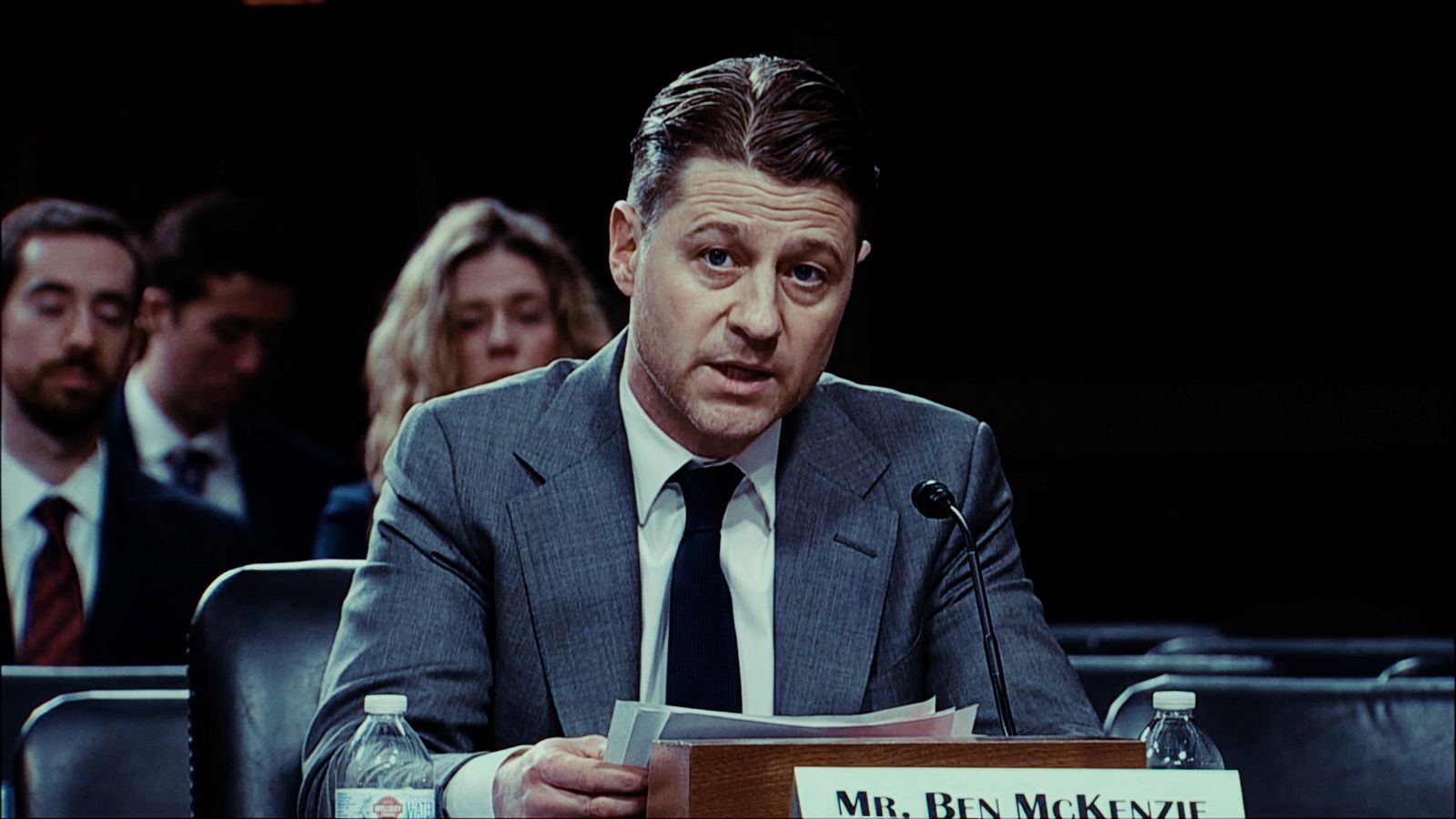

“It’s real gift to be underestimated,” admits Everyone Is Lying to You for Money director Ben McKenzie. The actor of The O.C. and Gotham fame makes an impressive feature directorial debut with this documentary that provocatively plunges into the rabbit hole of cryptocurrency. As McKenzie speaks with various players in the crypto racket and becomes a pundit on the topic following the 2023 publication of his book Easy Money: Cryptocurrency, Casino Capitalism, and the Golden Age of Fraud, authored with Jacob Silverman, he often finds himself introduced as an actor with a newfound interest in crypto, even though he has an undergraduate degree in economics. The dynamic frequently puts McKenzie in a situation where he must prove himself to others, but that position often lets participants underestimate him.
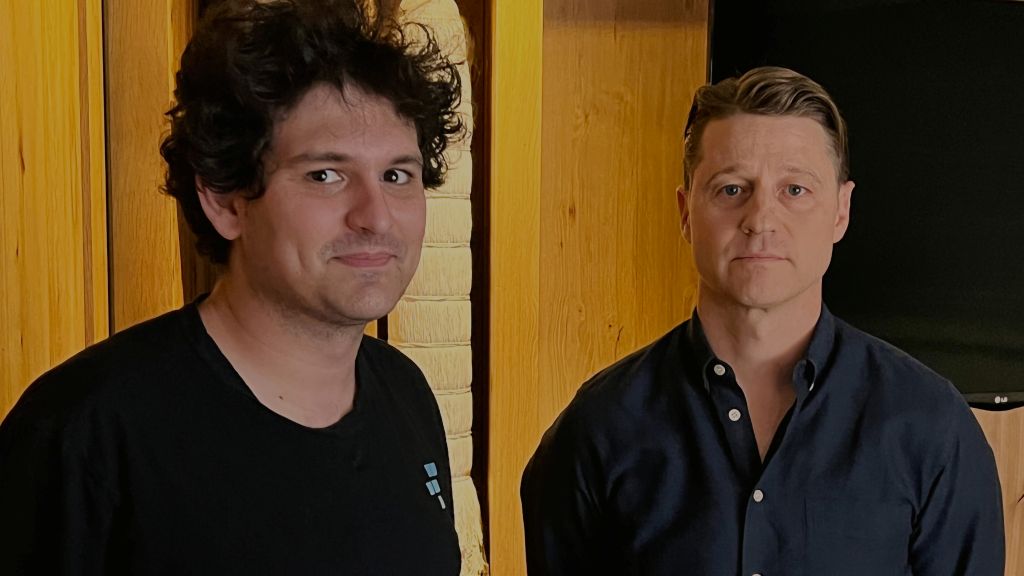
Take, for example, one of the film’s key interviews. McKenzie lands a sit-down with FTX cryptocurrency exchange founder and former crypto pseudo-messiah Sam Bankman-Fried. The young billionaire tells all to McKenzie in a jaw-dropper of an interview. “I don’t think that Sam Bankman-Fried thought when he was walking into this interview with Ryan Atwood from The O.C. that he was going to get a lot of hard questions,” says McKenzie. “I don’t think what I did in that room was incredibly remarkable, but I was prepared and I understood what he might be saying to me because I watched interviews with him. Honestly, I just did my homework, as would any journalist knowing that this was probably my only opportunity to talk to him on camera.”
The scene provides Everyone Is Lying to You for Money with some of its richest answers. The former tech bro stammers when McKenzie asks how much he spends on lobbyists. He becomes visibly flustered, and says he doesn’t know. A voice from offscreen clearly tries to move the interview along. McKenzie shows his interviewee how good acting is often all about reacting.
He says his experience, on one hand, provided an asset as a storyteller, and, more frankly, embedded a “bullshit detector” into his interview process since acting inherently requires one to play someone else.
“In that sense, acting prepared me very well for this profession,” he observes. “It also gave me a different angle on it that you sometimes need in order to find out frauds. Frauds often exist because they’re just a new iteration of some earlier fraud that has gotten outside of the legal or regulatory system. You need someone with fresh eyes to come in and look at it from a different angle in order to untangle.”
The documentary observes how, shortly after the interview, Bankman-Fried faced a wave of charges. His rap sheet includes wire, commodities, and securities fraud, plus money laundering and, unsurprisingly, campaign finance law violations. By March 2024, he was sentenced to 24 years in prison and ordered to return $11 billion.

Bankman-Fried’s conviction underscores a distressing point about cryptocurrency. He’s actually the second interviewee in McKenzie’s film to score prison sentences during the course of the production. The film also features Celsius Network’s Alex Mashinsky, who earned 12 years in the slammer with convictions for securities and commodities fraud charges. The former cryptocurrency network, like FTX, swindled countless hard-working Americans out of millions of dollars with the false promise of an alternate financial system.
“I can take some credit for betting that this was going to happen in general, that the crypto market was going to crash,” McKenzie notes on seeing two crypto houses fall. “That was a macroeconomic thesis, that we had been printing a lot of money over COVID and this was leading to all sorts of wild speculation. But when the Fed[eral Reserve] starts to raise interest rates, a lot of this stuff is going to go away. And sure enough, it did. But in terms of interviewing Alex Mashinsky and Sam Bankman-Fried, both of whom are in jail, that was a lot of luck. I was very fortunate to come across both of them, but it was quite wild to watch their empires fall apart very quickly.” The director notes that in each case, the fraudsters’ empires collapsed mere months after the interviews.
McKenzie adds that coming to the cryptocurrency story without the traditional journalism background, and then becoming a pundit after the release of Easy Money, offers an illuminating, if frustrating, peak behind the current state of media. “I was frustrated by a lack of [journalists] asking basic follow-up questions—not just accepting the industry boilerplate language and spin uncritically,” notes the director.

The dogged questioning eventually gets the tech bros to reveal how much—or, rather, how little—money is actually within the crypto networks. They peg an estimated ten to fifteen percent real money in the networks with the rest serving as, basically, placebo dollars to facilitate trades. Meanwhile, deviant coding makes it extremely difficult for average investors to turn a profit or, worse, reclaim their money.
“With Alex, it was clearer that whatever Celsius was doing, it was not sustainable because they were offering this very high interest rate with no real explanation of where this interest rate comes from. That’s literally a red flag for a Ponzi scheme,” McKenzie explains. “With Sam, I couldn’t tell exactly what he was doing, but I did suspect that things weren’t adding up, hence the ‘fraud investigator’ mug [a prop that McKenzie buys to inject his interviews with a sense of humour], but it was really wild to watch it come apart. I felt proud of myself and Jacob for doing our homework and doing the job of journalists, but I was also aghast that more there weren’t other people doing this.”
Everyone Is Lying to You for Money lets audiences see the consequences of the failure to ask these deeper questions. It shows what happens when an alternative financial system that few people understand needs more oversight and regulation in the way that conventional banks do, albeit in a flawed manner. The film features interviews with Americans cheated by Celsius’s game. McKenzie hears devastating stories about thwarted retirement plans, lost savings, but also pure embarrassment and humiliation over being swindled.
The film preserves the victims’ anonymity, but lets audiences feel the weight of this predatory industry. McKenzie adds that the range of these experiences offers one way that the documentary differs from his book Easy Money, which ends with the story of a preacher whose father dies in a suicide after a crypto scam. These perspectives allow him to provide closure to the Celsius story in was the book couldn’t, simply due to timing. “You meet the guy who conned them, then you meet the people who were conned and you’re able to reflect on their experiences,” he notes.
“It was important to me to demystify the human dynamics here,” McKenzie continues. “Crypto tries to wrap itself in this story of technology and this futurism and all of this stuff. But at the end of the day, it’s investors, usually dudes, almost very much dudes putting money online and hoping to make more money off of it. That’s a very human thing that hopefully we can all relate to.”
The film also does some extra digging to show audiences how cryptocurrency simply fails to gain traction among consumers. Investors like it for high-stakes trading, but McKenzie observes minimal evidence that people use it for daily retail transactions.

For example, McKenzie flies to El Salvador where Bitcoin became legal tender in 2021. Like the tech bros, the nation’s president, Nayib Bukele, champions the aspirational elements of the cryptocurrency: lower transaction fees, freedom from traditional banking systems, and encouraging investment. But when McKenzie goes to markets and asks if vendors accept Bitcoin, they simply laugh. Literally nobody uses it. Cash remains king.
As McKenzie visits with El Salvadorians, including residents displaced to make room for the promised “Bitcoin City” that seems unlikely to materialize, the film witnesses the devastating consequences of the false promise of crypto. “The story that advocates tell is of this emancipatory new form of money that’s going to democratize and decentralize traditional finance and everyone’s going to get rich,” observes McKenzie. “In the movie, we go into all the ways that that’s not true.”
Moreover, whereas fintech bros like Mashinsky and Bankman-Fried pay for their fraud, Bukele succeeds by gutting the nation’s Supreme Court and stacking it with allies, who then overrule a 2014 precedent saying that presidents had to wait 10 years before running for re-election, allowing him to secure a consecutive term. McKenzie sees an important cautionary tale of which the financial aspect is just one part.
“Bukele’s ruling with an iron fist. He’s imprisoning an enormous number of people in a very small country and building that huge prison that Trump had sent some people living in America too,” says McKenzie. “So you’re talking about an authoritarian regime. The irony there is quite thick: the supposedly emancipatory fund of money in the only place where it’s being tried is under an authoritarian. The reasons it didn’t work are the reasons that plague crypto more broadly. The system doesn’t work that well. People can’t really use it, and so they don’t trust it and they shouldn’t.”
Tellingly, Everyone Is Lying to You for Money adds that the world biggest fraud, American President Donald Trump, now plays the crypto game too with, what else, $TRUMP. McKenzie says that seeing the President of the United States enter the racket has serious implications. “It’s opened the floodgates to all sorts of resurgence of fraud and criminal activity via cryptocurrency. You’re seeing it quite clearly inside the White House. It’s just so shocking and it’s hard to comprehend,” says McKenzie. “The bigger thing that I did not anticipate was Trump’s turn to crypto because, as recently as 2021, he called Bitcoin a scam. And then in ’24, in the summer of the election year, he pivoted.”

McKenzie cites Trump’s many reversals to policies and protections, leaving consumers even more vulnerable. “The issue has come back in a way that I could not have anticipated, but it is very on brand thematically,” says McKenzie. “If we’re talking about trust and we’re talking about a convicted fraudster who is the President of the United States, convicted of 34 counts by a jury of his peers in New York, that illustrates what we’re talking about. Can you really trust this person and the system that he and the people around him set up? My argument very strongly would be no. We need to rebuild the trust in the normal system, which, quite frankly, was not working as well as it should have. If crypto serves any purpose, it should redirect us to fixing not just our economic system, but really our democratic system here in the United States.”
The latter argument stresses how all parties in the documentary agree that cryptocurrency represents hope as an alternative. McKenzie acknowledges the truth to that part of the crypto story: the current system doesn’t work and breeds inequality through a rigged game of unfettered capitalism. Unfortunately, the system means at least two more years of Trump, unless he pulls a Bukele. It also means holding Democrats accountable to not drinking the crypto Kool-Aid or not turning a blind-eye because they worry about campaign investments.
“The version of capitalism that we’re practising in America in particular is predatory and because of a lack of guardrails from our democratic system, capitalism is eating our democracy. The amount of money that’s flown into politics because of Citizens United and things like that has allowed both parties, quite frankly, to be co-opted by industries and lobbying groups like cryptocurrency,” says McKenzie.
“These are deep, deep fundamental flaws in the current system. They were going to require, unfortunately, I think quite significant change to really our democratic system as much as our democratic system in order to affect our economic system,” he continues. “But that’s things like reform of the Supreme Court, bringing back rule of law, codifying into law, the separation of powers within the branches of government of the United States. Trump has violated every norm possible there and the [Department of Justice] now acts as his own personal legal vendetta force or whatever, while also protecting him from any possible settlement they have or they can never be audited again.
“But the big change is going to have to come in ’28, I’m afraid, and after.”
Everyone Is Lying to You for Money screens at Hot Docs Ted Rogers Cinema on June 13 and 27 with Ben McKenzie in attendance, and June 16 at The Revue.
Follow @everyoneislyingfilm on Instagram or go to EveryoneIsLying.com for more info.