


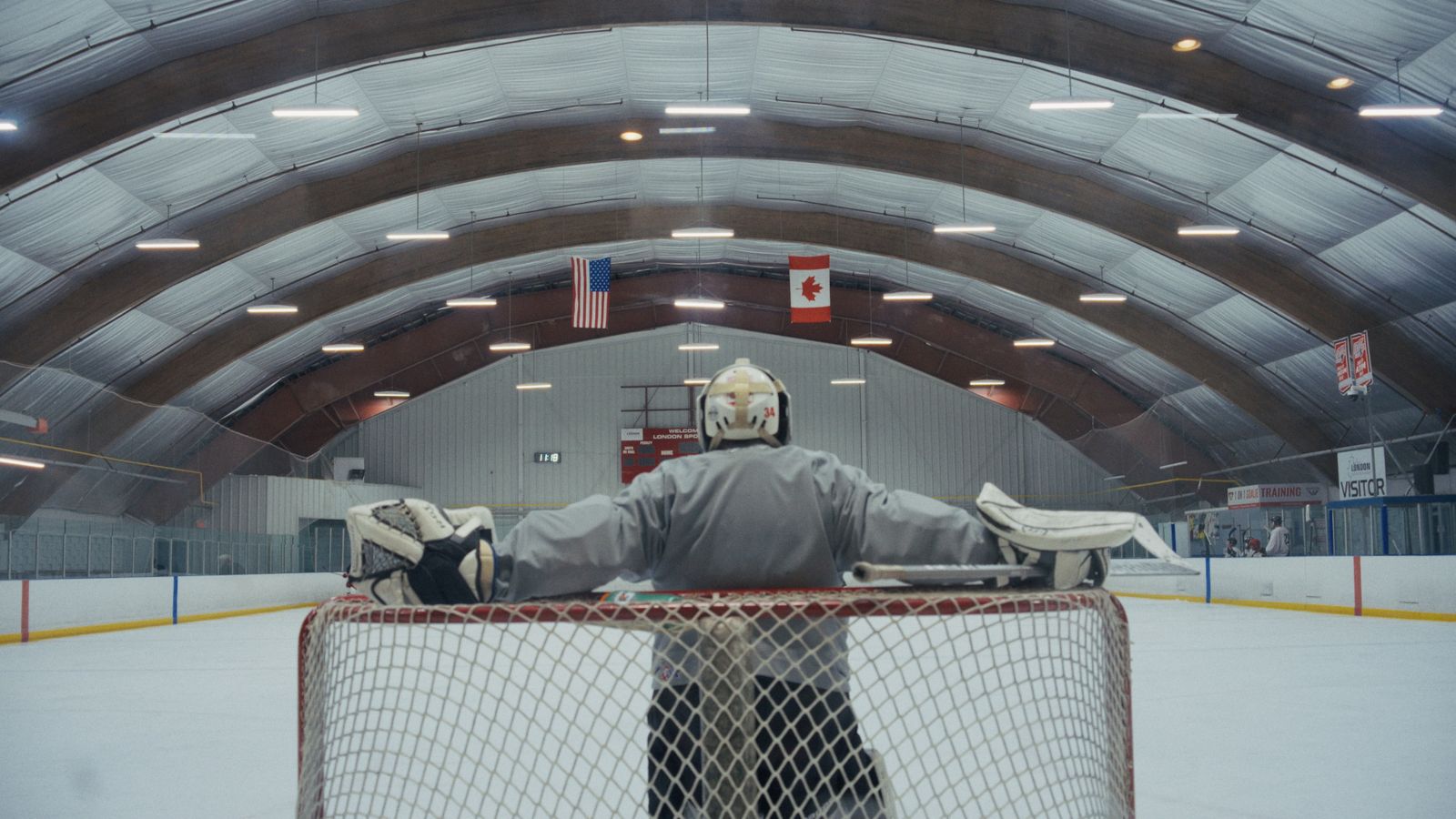

Ready to be outraged? Sébastien Trahan’s Hot Docs entry Code of Misconduct, about the sexual assault trial and acquittal of five world junior hockey champions, is sure to get your blood boiling.
Those of us who followed the proceedings diligently may not get much new information about the trial per se. But pile up all the levels of unfairness – the accused’s selective memories, incriminating texts among them not admitted into the record, rape myths accepted, an unprecedented cross-examination of the victim by five lawyers over a never-before-heard-of nine days, to name only a few – and people with little knowledge of the case will be gobsmacked. The rest of us can only wonder when our legal system will do justice in sexual assault cases.
But a critique of jurisprudence is not the main mission of Code of Misconduct, Trahan’s follow-up to It’s Not Funny Anymore, a portrait of Gavin McInnes, Vice co-founder who left the publication to found right-win extremist org the Proud Boys. (Trahan does have an abiding interest in men behaving badly.) With noted journalist Rick Westhead as his guide, Code provides the trial’s essential outlines. But Trahan is more interested in the hockey culture that normalizes violence, and gender violence in particular. Getting to the root, he says, is the key to making change.

“I’m Canadian and so hockey was always a part of my life. Playing and watching are part of what we are as a country, a part of Canadian society,” he says on the phone from Montreal. “But it doesn’t represent the best part of Canada. Like Shakespeare says, ‘There’s something rotten…’”
The facts of the case are clear. EM [the victim] willingly went to Michael McLeod’s hotel room for a sexual encounter. When she emerged from the bathroom, four of McLeod’s teammates (later more), recipients of his text asking who might want a three-way, were ready for action. EM was completely taken by surprise. Why, Trahan wants to know, did the players so gleefully jump at this sexual opportunity?
Investigative journalist Westhead caught Trahan’s attention when, in 2022, he broke the scandalous seed story about Hockey Canada’s use of a slush fund to pay off women who laid sexual misconduct accusations against other junior players – to the tune of $17 million. With the players’ criminal trial coming up, Trahan engaged Whitehead to participate in a documentary about the case.
“Talking with Rick, I saw that it wasn’t only a criminal story, but the story about hockey culture,” Trahan explains. “The players have a mentality that makes them think that their behaviour is normal. When McLeod asked his world junior teammates in a group chat if anyone wanted a three-way, not one of them questioned it.”
In essential elements of the movie, Trahan explores how toxic attitudes develop. Interviews with players who as younger teammates couldn’t speak up during boastful locker room conversations about sexual conquests and what’s known as “the kill count” or to intervene during violent, testosterone-fuelled hazing rituals, speak to how the hockey cohort is groomed to embrace hierarchy and its sexual privilege.
Influencing Trahan’s decision to give considerable attention to these issues and not to put a full-on Law & Order-type focus on the trial itself was the fact that cameras aren’t allowed in Canada’s courtrooms. Compared to conditions in the U.S., where cameras are welcome and network shows such as Dateline thrive on true-crime stories, Canada’s rules are strict: no cameras in court, no interviews with jurors after the trial, no coverage of the trial beyond exactly what’s said during the proceedings.
“It’s not that the trial is not important,” Trahan explains. “Some people don’t know the difference between a criminal and a civil case. People think if (the accused) are acquitted, they didn’t do anything when acquittal only means that you didn’t meet the burden of proof. It was important to demystify the trial and to expose the harsh reality. (EM’s) nine days on the stand cannot serve justice well.
“But how,” he asks, “can we do a good trial movie in Canada? I think it’s impossible.”
Via Westhead’s daily reporting from inside the courtroom, the doc gives a day by day account of what went on. But plainly Trahan wanted a strong female presence. Interspersed with Westhead’s accounts are comments from mostly female observers of the trial, including The Athletic’s Katie Strong and detective Lyndsey Ryan, who first investigated the accusations for the London police. They talk about, among other things, how the accused’s testimony differed from their original police interviews, the predatory behaviour of the accused’s lawyers toward EM, and the ways they perpetuated ignorant and long debunked ideas about the meaning of consent.
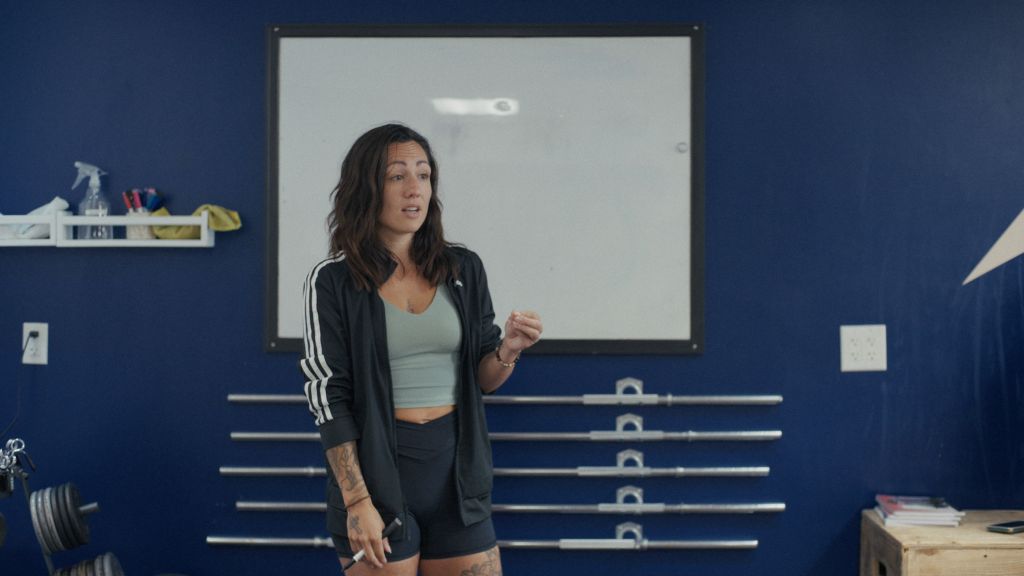
Another compelling voice comes from Catherine Laroche, who recounts her own experience of being drugged and assaulted by a hockey player. She contacted her attacker afterwards to ask what happened and he insisted she’d consented. When she denied it, reminding him that he left her unconscious, he begged her not to report him: an NHL team was considering giving him a contract. Laroche freely admits on camera that she didn’t have the nerve to go to the authorities.
“For me, it was important to have another victim’s voice. We needed a woman to identify with EM and to respect her courage,” recalls Trahan. “But Catherine’s wasn’t the perfect story. She didn’t bring her story to the trial. My personal view is [that] I want the bad guy to be punished. Then when I met Catherine, I was impressed with how strong she was and how she could personify that no matter what happened to her, she owned her choice.”
Laroche has gone on to develop a series of workshops geared towards raising awareness among emerging athletes about gender violence, the attitudes that perpetuate it, and how each of them can do serious self-reflection of their own values and behaviours. The athletes’ newly acquired insights testify to Laroche’s powerful impact. They also offer what a movie like this needs – a note of optimism.
But the main hero is Westhead who Trahan says is to this story what Bob Woodward was to Watergate.
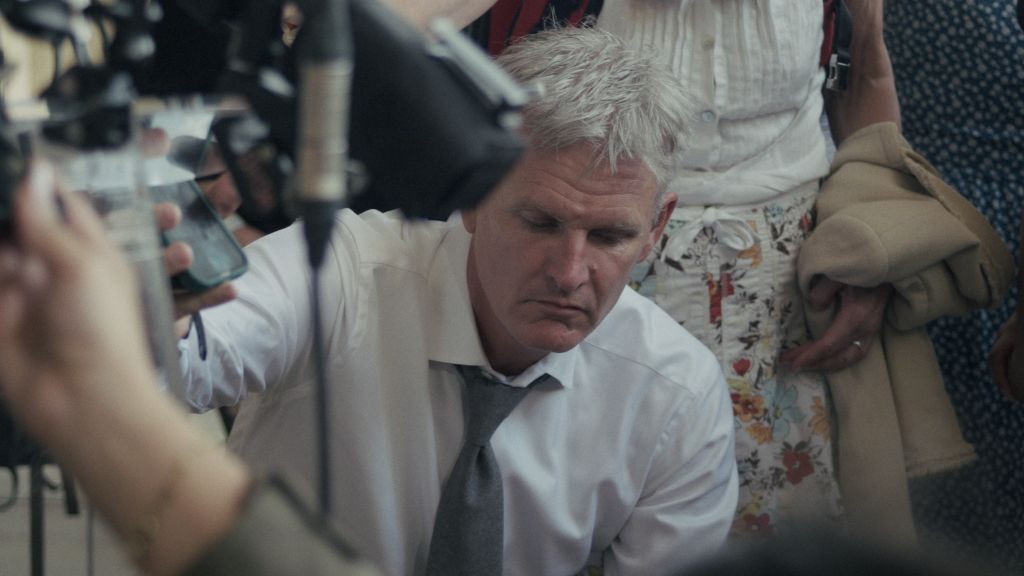
“Without him, nobody knows about this story. Integrity is great to film,” he declares. He also credits investigative journalism and bemoans its slow decline. “You don’t make a lot of friends doing that kind of work and it’s hard to find the truth without the money and the time to investigate.”
Trahan doesn’t pretend that he’s a neutral observer. That’s reportage, he says, and he makes documentaries, which have a point of view. When I ask him whether he considered including interviews of the accused players themselves, Trahan says he and his team reached out to them but they declined. Did that bother him?
“I’m like a gold digger. I make a documentaries so I want everything, but no I didn’t really care,” he admits. “We could have done something about what it was like for these guys to be in their situation but it was more important to look at the situation in society that made it possible for that situation to exist.
“And what can we do about it?”
In the meantime, pay attention to those high profile trials. Jian Ghomeshi’s was one. The five hockey players’ was another. Magna CEO Frank Stronach’s trial is next.