



Hex
(Norway, 93 min.)
Dir. Maja Holand
Prod. Mari Nilsen Neira
Programme: Artscapes (North American premiere)
Very heavy metal, witchy ritual, and radical feminism combine in this wild ride of a documentary out of Norway.
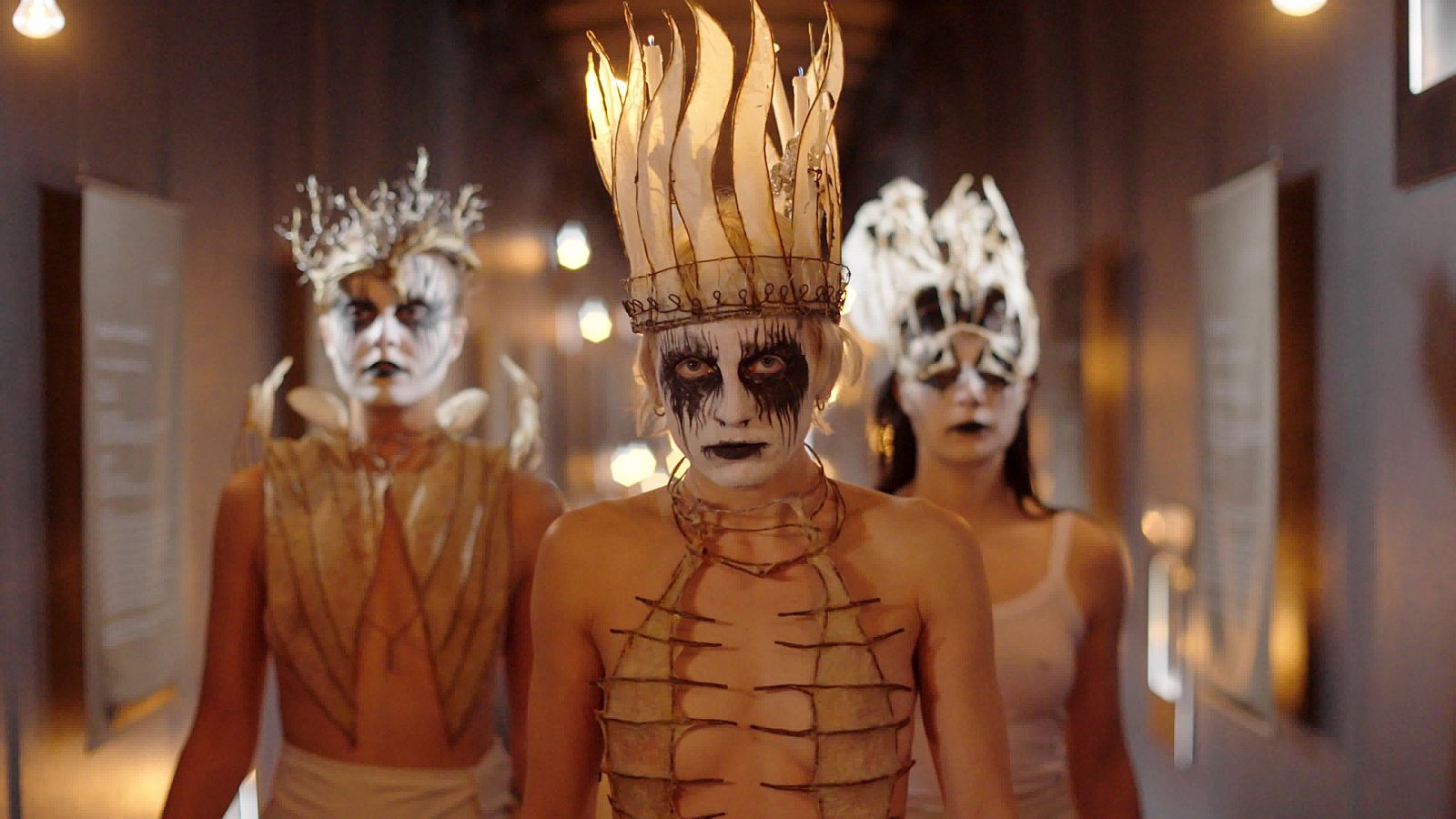
Three young women, performance artists and writers with vastly different personalities, pledge to spend three years releasing their inner witches via the creation of their black metal band Witch Club Satan. Their aim? To scream, play power rock and deliver a message of female empowerment, giving black metal a new voice in the process.
A few things stand in the way, however, for Victoria, Nikoline and Johanna. For starters, none of them play well; drummer Victoria not at all. And once they get their footing in the scene, the haters descend from all sides.
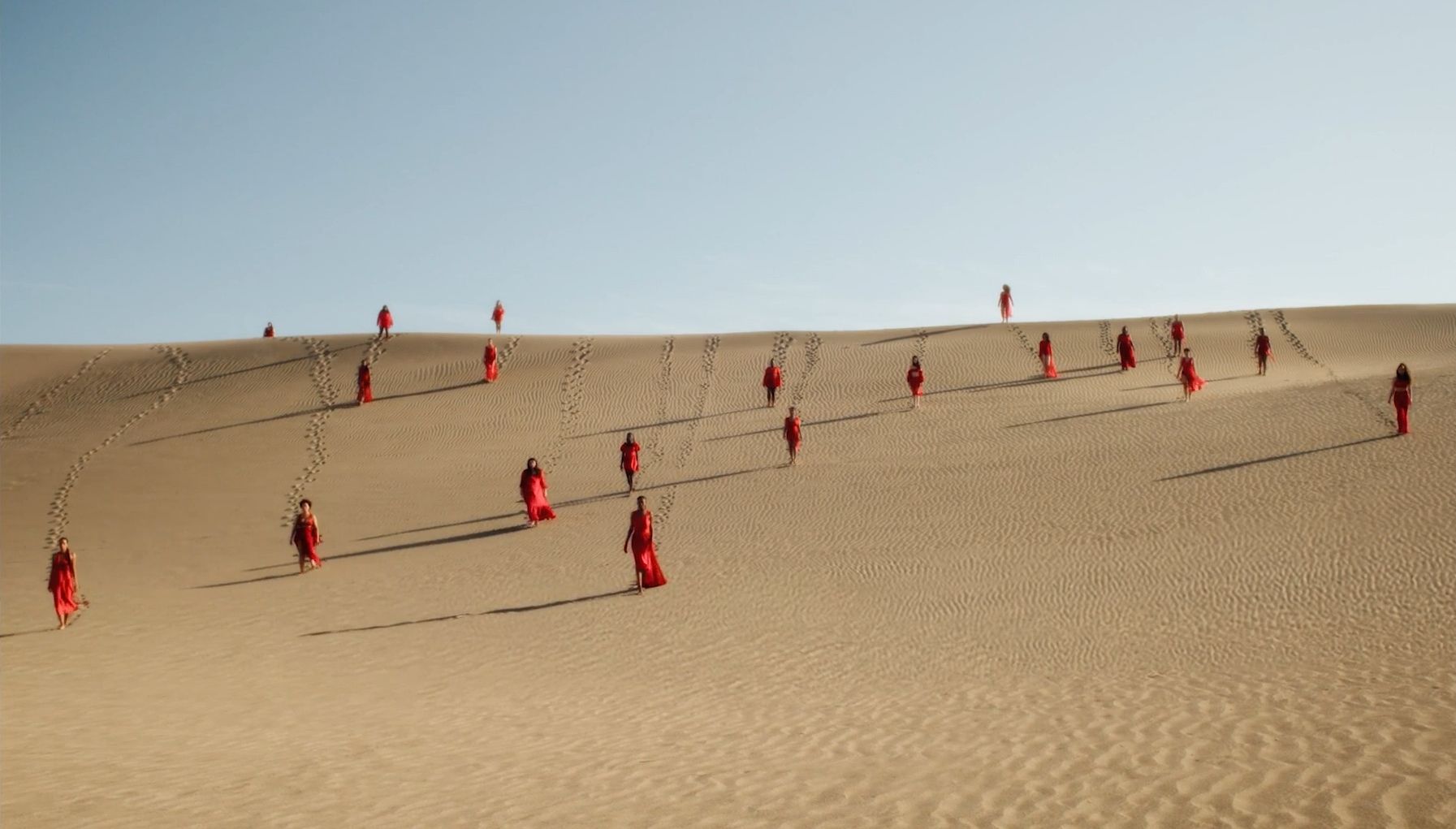
Visually, Hex is a marvel, as it toggles among a mock trial of Witch Club Satan, the band’s incendiary performances and their often beautiful seaside rituals. As their popularity increases, they attract more and more participants eager to unleash their inner witches in what becomes a bona fide movement. The Club’s shows, sometimes performed in the nude, are vibrant and raw. The rituals can be raucous or quietly contemplative, but the music is always loud.
As their fascinating internal disputes demonstrate, the strength of Witch Club Satan’s chemistry is their differences, As Victoria, the drummer, tries to defend her desire to look beautiful – “I want to be who I am” – even as she’s applying the band’s macabre over-the-top black-on-whiteface make-up, guitarist Nikoline, the Club’s intellectual heavyweight, wonders how she can be who she is when she’s not the one defining beauty.
Just as the band is considering touring more widely and for longer, bassist Johanna is not so sure. She wants to have a child and while tours of other musical genres may afford more space for children, black metal is probably not one of them. But none of these exchanges threatens the band’s profound bond.
Every strategy adopted by the trio has a political intention. For instance, conventional black metal has always featured musicians elaborately made up, but this musical coven uses makeup as a strong protest against conventional standards of beauty.
The song lyrics and the ritual texts are gloriously pointed. “We are done kissing the ass of the devil: we are here to kiss the mask of our sisters’ faces,” they proclaim in a song called “Fresh Blood, Fresh Pussy,” a tongue-in-cheek paean to menses.
They begin as wholly incompetent musicians. But as their project progresses, their collective skill increases and they become confident performers. Eagerly urging their female followers to scream along with them “like they’re giving birth,” they become a big, raucous hit on the black metal festival circuit.
That’s when the haters come out in force. The aforementioned mock trial, designed to recall Norway’s 1617 law demanding that anyone consorting with the devil must be burned at the stake, features testimony both for and against the band. The club has its supporters, but those against it can be vicious. One male calls it genital metal. “Hope it doesn’t spread like gonorrhea,” he gripes.
Not all women are fans, either. The band does nothing to sexualize their bodies, but one women who calls herself a feminist is apoplectic that the Club thinks it can promote empowerment when it sometimes performs nude.
These responses underscore the complexity of the issues the band is constantly dealing with, which they do with impressive equanimity.
Hex has many contradictory elements: beauty, ugliness; feminism, women haters; vocalists screeching, choirs singing gorgeously, women disturbed by the band, parents refreshingly supportive.
You don’t have to be a black metal fan to love Hex. But it does help if you’re interested in women who take enormous creative risks.