



Parasisi
(Belgium, 61 min.)
Dir./Prod. Zaïde Bil, Sébastien Segers
Programme: International Spectrum Competition (World premiere)
The Wayana of South America have a term for outsiders. They call them “parasisi.” The term assumes a well-earned negative connotation, interchangeable with “intruder” or “parasite.” They have reason to be suspicious of a parasisi.
With the advent of colonialism in the west, the Wayana faced near-extinction as Dutch and French settlers landed in their region, forever shaping the physical and human geography of the Lawa River, which creates part of the border between Suriname and French Guyana. Barely 2000 survivors remain, and the Wayana continue to live with the ripple effects created during the 1885 gold rush as diseases entered their territory and the miners’ exploitation of the natural landscape introduced toxins into the picturesque corner of the Amazon rainforest that would affect generations to come. However, the surviving descendants draw power from the land and continue to thrive.
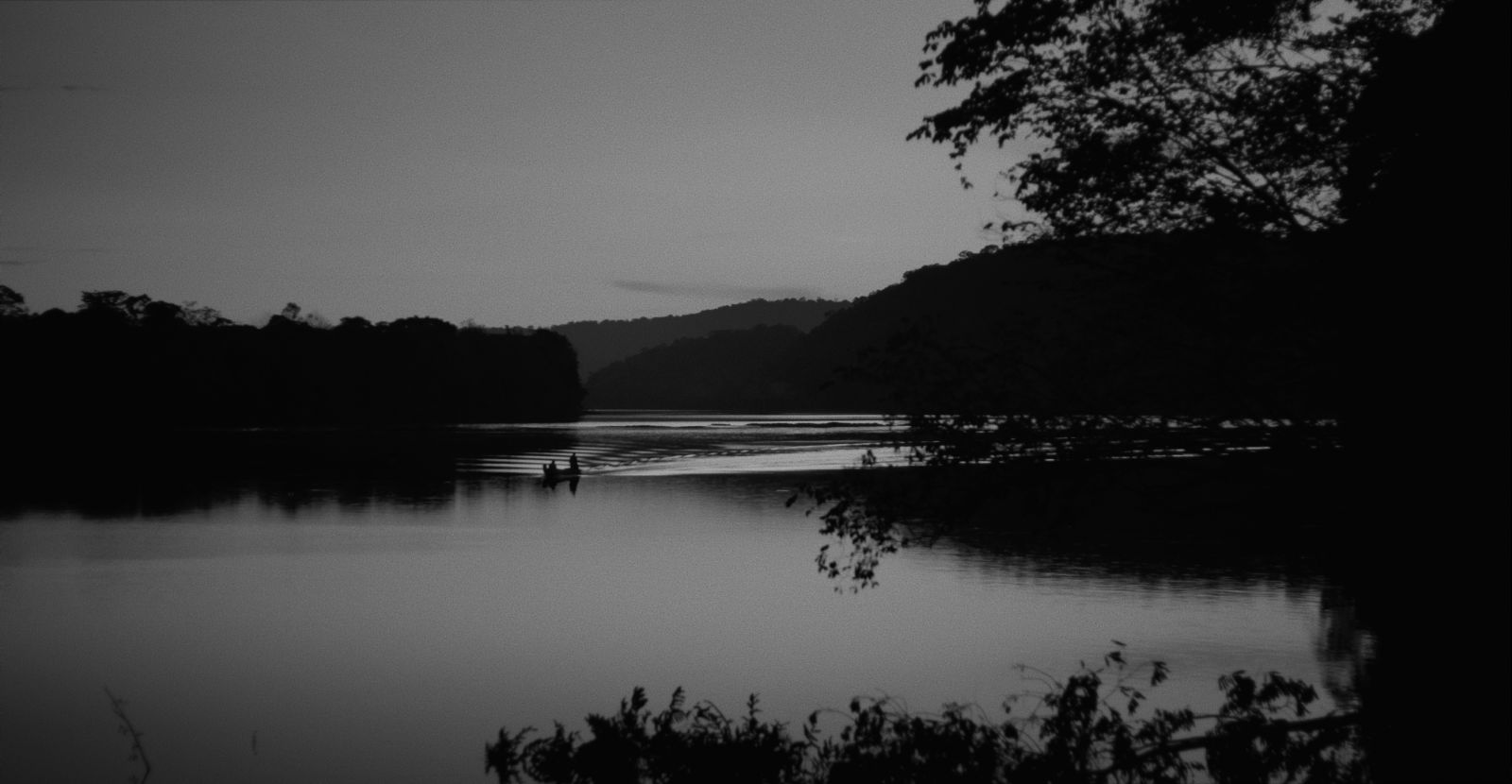
The Wayanas’ story fuels Parasisi, an artful observational documentary about what it means to feel like an outsider on home turf. The film’s carefully composed aesthetic, owing a nod to Embrace of the Serpent, and its understated nature somewhat elevate what feels like a relatively “small” title in Hot Docs’ Oscar-qualifying competition. The sparse if visually striking film captures the enduring forces of colonialism in a land shaped by intruding forces. However, directors Zaïde Bil and Sébastien Segers generally keep their eye on the Wayana as the Indigenous population navigates its land using foreign tongues and systems forced upon them.
Shot in beautiful black and white by Angela Otten, Parasisi follows several Wayana, mostly young mothers, as they traverse the waterway. They seek appointments with doctors, who quiz them about how much fish they eat and take samples of their babies’ hair. The doctors test for mercury poisoning, as the gold mine pumps harmful toxins into the water. The filmmakers observe as one woman serves as a translator for a young mother who visits the doctor. She more or less answers the questions faithfully and considers how much information the doctor needs to know. The interpersonal dynamics reveal much about the tensions in the region.
Later in the film, a similar scene arises, but the camera largely fixes its gaze on the pencil busily filling out paperwork as a French woman quizzes another Wayana mother. The Wayana encounter daily documentation in a language that’s not their own and a bureaucracy that insinuates itself into their lives to contain and control them.
In another scene, some bored Wayana attend a church service. A well-intentioned missionary speaks to the congregation and explains why she returned to the region for an overdue baptism. “My first memories are from here,” she tells them in English. “It’s where I learned to love god’s creation and where I loved being in the river and in the jungle, and playing with many of you growing up.” Without editorialising, the film captures how life around Lawa affects the missionary and how the Wayana played a role in her growth, but on her terms and in her language. “You’re my village. You’re my people,” she says with palpable emotion. The film lets it linger that use of the settler language is an assumed dynamic, while an effort to learn the native tongue is nil.
Parasisi methodically and lyrically weaves through daily actions as life endures despite this legacy. The film asks how one can every truly feel at home when foreign forces, customs, and languages define daily life. But it also asks what hope there is for the future when that colonial legacy infiltrates the very air the Wayana breathe and the water they drink. As the film closes with two girls bobbing up and down in the water, playing a game in a river contaminated by these very forces, Parasisi hauntingly suggests there’s no way to repay generations sold down the river.