



Give five up-and-coming filmmakers the same question and they’ll respond with five wildly different films. That’s the magic on display in the doc series Redefined, a collaboration between the National Film Board of Canada and the Toronto International Film Festival that asks filmmakers under 30 to articulate through a short film what it means to be Canadian or Indigenous today. The five results selected from 240 applications illustrate that there’s no singular experience in the land of the maple leaf. Moreover, the shorts exemplify the impossibility of putting Canadian and Indigenous films in a box.
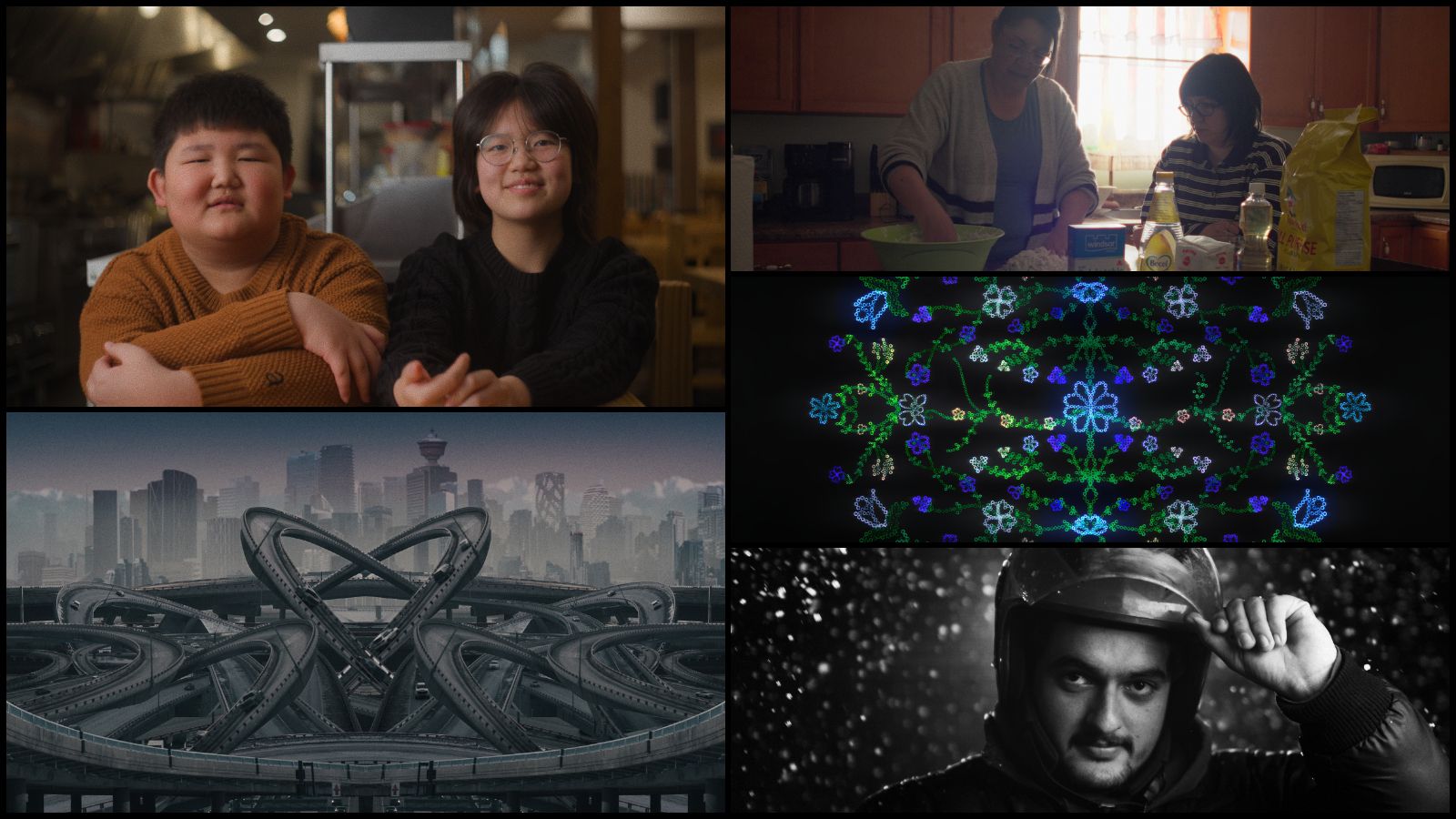
Three films in the series could loosely be connected through their relationship to food, but the similarities essentially end there as the filmmakers take vastly different approaches to the ways in which food carries relationships across communities and the diaspora, and the ways in which culturally-specific dishes are fed into mainstream culture, then warped and westernized—a clear metaphor for the complexities of having so many flavours when the pot itself doesn’t have the most adventurous taste. In Butter Chicken to Go, Toronto-based filmmaker Prajj captures the stories of food-app delivery drivers who cycle around the city. They whiz through snow, rain, and traffic to drop off warm meals that Torontonians enjoy from the comfort of their home, and often rely on the modest tips they receive to support their families, often from afar.
Meanwhile, Sylvia Mok from Halifax invites audiences to take a seat in some of the city’s Chinese diners with Restaurant Kids. The film books tables in local eateries where families serve westernized variations of dishes from back home and pass recipes down across generations as the kids who grew up doing the dishes in the family business will one day keep the orders flowing. The laughter is as warm as the dishes as “restaurant kids” pay tribute to their second home and school.
Family recipes also get kneaded together in pahkwêsikan sâkihitowin: Bannock Is Love from Cree filmmaker Tyra Delver. The film similarly shows the power in sharing a meal as Delver learns how three people—her mother, a friend, and a local chef—make bannock in very different ways. Each recipe comes from a specific place and each participant puts her or his own spin on it, whether cooking bannock at home in the oven, over a campfire like a hot dog on a stick, or in a restaurant with a side of artisanal jam. It shows how one comfort food can be deceptive in its simplicity.
On the flipside is Where Our Flowers Grow from Red River Métis animator Maxime Kornachuk. The film combines a huge question of identity and belonging as three pairs of interviewees reflect upon what it means to be Métis and how one’s relationship to place and language shape one’s sense of belonging in the wider community. As the participants navigate the multiplicity of experiences that hail from a specific milieu, beaded animation takes shape around them with beads evolving into flowers as the conversations become firmly rooted in community.
Finally, animation fuels Re/Route from Montreal-based filmmaker Gabrielle Côté. This hybrid doc/animation offers a dazzling collage of urban centres in Canada as cities form the central characters. Iconic landmarks pop-up amid a whir of human activity as cities blur and bleed into each other through the energy that travels from coast to coast. The kaleidoscopic style presents these communities as distinct, but ultimately connected as Côté fashions the city symphony film anew to raise questions about our shared stake in re-imagining city life to create a sustainable future.
Ahead of the premiere of Redefined at the Toronto International Film Festival, POV sat down with the five participating filmmakers from a roundtable conversation about reimagining Canada through film.
POV: Redefined is asking you guys to each re-imagine questions of identity and belonging through a short film. When you were putting together the pitches for your projects, how did you pinpoint the essence of which story to tell?
Prajj: My film was inspired by seeing the statistic that said butter chicken was the most ordered dish on Skip the Dishes for two years in a row. This was at the peak of the anti-South Asian movement. It inspired me to ask the question about what does it mean to be Canadian when your presence is so essential upholding gig economy services like DoorDash, but so contested because of your presence? When the question came out for the Redefined program, “What does it mean to be Canadian to you?” it was all I was thinking about. What does it mean to be Canadian when you want to be Canadian so bad, but people don’t want to hear that your culture is accepted? That contrast was what I really wanted to explore.
POV: Sylvia, butter chicken is like a westernized dish and your film is looking at restaurants and Canadian Chinese food. How did you sort of zero in on food?
Sylvia: I also grew up inside a restaurant and I had a restaurant as a second home, so I felt like my identity of being CBC, Canadian-born Chinese, is something that I wish I had more representation of. Food has always been in the background of specifically the Chinese immigration from Hong Kong to Halifax. But I’m sure here in Toronto or elsewhere, food’s always been a huge part of that shift because, coming to Canada, they needed to find a way to make money and survive. One of the most accessible ways they could do that without having a degree or going to university, because a lot of them came without having formal education, was to work in service, work in food, work in the kitchen, and start their own business. Food was always embedded in there. But there also is a conversation about Westernized food because the food that we’re serving is westernized Chinese food. There’s no Kung Pao chicken or egg rolls in Hong Kong or in China. Part of the identity was bringing in food to fit in and bring yourself into the country, but still figuring out what’s your identity beyond that.
POV: Tyra, you’re looking at bannock and traditions of how that’s passed around through families. Why that food specifically through film? Has there been a Westernization of bannock as well?
Tyra: Originally, it’s not Indigenous, so having to create something that wasn’t inherently ours and make it was sustainable and accessible to our families has always been important. And it’s so important within community as well. If people who are struggling, there’s always the community around that will give them bannock because it’s so filling and so easy to make, and you can make a lot of it. I think this perspective is new. People don’t really talk about it as much and it’s not until the last two or so decades where my generation and some before me have started to claim it as ours.
POV: Maxime, your film is also about reclamation in the sense that people process what mixed identity means. Why did you zero in on that very large question?
Maxime: I didn’t grow up in my culture. I didn’t know that I was Métis for a very long time. I kept hearing the word, but I didn’t understand the weight of that word until I reached my 20s. While I was in university, I went on this journey of discovering what that was, working with elders in my community, involving myself in the culture and the community. My first project, Our Beaded Flowers, was my final student project and it was another bead animation. It was about my grandmother and my mother telling their stories about growing up knowing that they’re Metis, but not being able to talk about it. For this film, I wanted to give myself the challenge where I asked myself, “I know my family’s story, so what if I gave the challenge to other people?” I wanted to show a spectrum because there’s not one way to be Métis. There’s not one way to be Indigenous. The more you try to compartmentalize us into boxes, it actually makes it even more confusing. I find that’s happening right now in social media and general media where they try to standardize what Indigeneity means in Canada. That is inherently problematic. You can’t put something in a box that was never meant to be in a box. The film was a way of reintroducing what Métis means to people and what Métis means to me because Red River Métis is very specific.
POV: In terms of being outside the box, Gabrielle, your film takes a real formal adventure through the city. What inspired you to look at urban landscapes and city life?
Gabrielle: This film is for everyone that has experience with urban life because it’s about our lifestyle with transportation and what makes us more individual and collective. It’s really important for our identity to start looking to the future and thinking about what we want to do. There’s so much going on with the planet right now. We could have an impact as a young generation on the one that comes next. The city shapes the way we do that. We have to be together and it’s part of our identity.
POV: On the theme of identity, these films all have such distinct visual identities. For five filmmakers who had the same task, you approached it so differently. What was the process of finding the right aesthetic or style to sort of tell your stories?
Sylvia: The visual approach was always really clear in my mind. But even when I was writing my proposal, I drew a lot of references and they were my north star throughout the filming and editing. One reference was the documentary films of Ben Proudfoot, who is also Halifax-born and raised! I had a pleasure of getting to have a Zoom call with him facilitated by the NFB: It was crazy! I took inspiration from the intimacy his documentaries have with the characters and getting so up close and personal with such a depth of the field. The Bear was something else in terms of the tone and the style: I just absolutely love fast cuts and the way they edited The Bear. It’s just so quick and there are these photographs, archival images, throughout their sequences of Chicago. They don’t tell you what those photographs are, but if you know, you know.
Prajj: I really wanted the film to capture what it was like to be a delivery driver. I used to be a delivery driver as well, but I was on a bike and the political climate has changed so much since when I did it in 2018. But I still remember biking uphill with some hot stuff in my backpack, trying to not spill anything and deliver it so I can get a good tip. I wanted to demonstrate that in the film. I also didn’t want to focus on conversations that have been so dominant online and on Instagram—comments around immigration and South Asians and the racism. I wanted it to be more experiential. We wanted to have all those visual techniques represent an aspect of that delivery journey.
Gabrielle: My film was all social observation and we shot the images in eight different cities in Canada. I had some composition in mind, but I did not try them before. Once we shot the film, we had so much media. We have 115 terabytes! The whole process of making one shot in the film is a lot and we were a team of six. We started with one image. Sometimes I would do the first layer and have more pieces to the make puzzle and the image will take shape. I would do the first layer, give it to my animators, and then they would cut the edges and make some shadows. It was a team collaboration.
Maxime: I was always really fascinated by beads. Bead work was my way in to my culture. I started going more experimental where I began working with a paper scanner and a picture frame and from there I could cut out the background and I could duplicate and mirror the sequences of random shapes. It started to reveal itself through experimenting. At one point, I remember making a teardrop shape and originally I was going for a teardrop falling, but I realized that when I put them together, it made a flower. Flowers are huge in bead work for Métis people. Flowers have always been my symbol. They’re also a symbol of resilience. Our roots connect us, and so mixing it with the interviews was my biggest challenge. As much as I love maximalism, I needed to pull back on the visuals. There’s no bead animations during any of the interviews because we wanted to put the focus on the subjects and their stories.
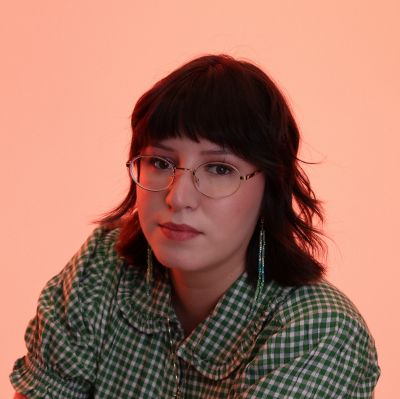
Tyra: I wanted the film to originally be a tutorial, but eventually it turned into having my mom be part of the film. I wanted it to be extremely personal because one of the most important things that we were told as a cohort was to portray our stories as personal. To have her there to reteach me as an adult and share stories and have those very personal moments was super. I loved it and it made me feel proud. I reconnected myself back to those moments as a child where sometimes it wasn’t very fun or great to learn. That aspect of having her beside me was my driving force.
POV: How you all chose who came along with you on this journey in terms of who was in the film, whether it was one person, several, or a city?
Tyra: Jacob [who makes bannock outdoors after the scene with Tyra’s mom] is a university friend. We were both from the same reservation and we connected because he grew up in the city and he didn’t have much connection to our culture. Although it looks like super rural where we’re filming, it’s actually in the middle of the city, so to be surrounded by urbanism and be in such a sacred space inside the teepee around a fire and making bannock was so surreal for him. I was so happy to be able to provide that safe space for him to share his stories. Chef Brittany [who makes bannock and Saskatoon berry jam in a restaurant] was recommended to me by a coworker. I was so happy to be connected to her because she has inspired me. She’s worked hard watching her aunties make bannock and make traditional foods. She took it to the next level with being a chef and being classically trained and going to Norway, but also keeping her roots strong and making sure that she’s always aware of where she comes from.
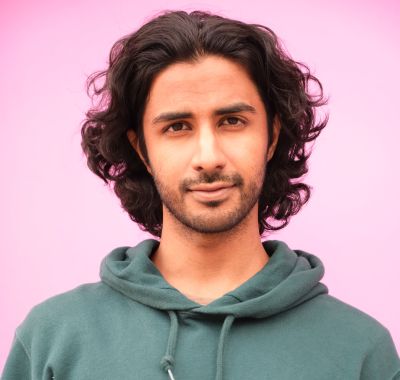
Prajj: Honestly, our options were pretty limited because most of the delivery drivers we asked said no. Classic immigrant mentality: you want to do your job, keep your head down, work hard, and go home. At the end of the day, we found three people who were perfect. We had maybe six people in total and then we narrowed it down to the best range. But beggars can’t be choosers. We were really limited in terms of who we could have, but I’m very happy with who we got. I think the answers and how vulnerable they were was so special.
Sylvia: I remember being in a semi-state of anxiety over how I’m going to narrow down these people that I want to interview. The Chinese restaurant community is so small and everyone does really know each other, there were definitely still people that, despite me knowing them well, were upfront about being not comfortable with sharing [their stories] because it can come from a very vulnerable place or they might have complex emotions that they don’t want to share. Not just the restaurant kids, but their parents, the owners, might be like, “I don’t want to be on camera.” But I was so thankful that I was able to have three of the main restaurant kids. One of them was my cousin, so she couldn’t say no.
But honestly, I’m the most thankful for Gary, who is the oldest of the restaurant kids, because from day one, he was like, “I’m happy to help however I can.” He was able to have us film in multiple of the May Garden locations and he was source of a lot of photographs. Surprisingly, though, the table of elders who I interviewed, who I thought would be the hardest to get, was the easiest. The whole group, the table of elders, they just naturally meet weekly anyway. They always meet up on Mondays over dim sum or they go to a mall and have coffee. And so the film was very much simulating their weekly activities.
Maxime: I already had four people locked down, and that was my grandmother and my brother, and then the brother and sister pair. So the sister is actually my best friend, and I used to teach her little brother dance growing up, so I knew them personally, and I knew that there was this beautiful story of resilience after their parents had passed. I knew that I wanted my grandmother and my brother because, this didn’t make it into the final cut, but they talked a lot about how me and my brother were the perfect example of someone who knows how to reconnect with their culture. You learn things, you understand the language, you speak eloquently, you know the history, but my brother was blonde-haired, blue-eyed, and even the moment he tried to say Métis, people would be like, “Yeah, whatever white boy.” They kind of just discarded him. I was really curious to see how that would relate to my grandmother because of a generational shame: my grandmother was very privileged to have fair skin and light hair when some of her siblings didn’t and they were treated differently. I wanted to see how they help one another reflect how silly it is to think that your skin colour or your hair colour or your eye colour dictates whether or not you can belong to a culture.
The challenging pair was actually John and Jeremy Lavallee, which are the Michif hunters and speakers. I originally had a mother and a son who were going to participate, but it all happened really quickly and they realized that they were not available for any of the weekend filming. I told my mom that I wanted a Michif speaker, someone who grew up in their culture to kind of show the difference between my other subjects. And then my mom was like, “Okay, I have one person who’s pretty available. He’s a Michif speaker. He’s from this small village called St. Ambrose, Manitoba. Shoot him a message on Facebook Messenger.” I sent him this long paragraph explaining everything and he’s like, “Sure. I’ll show up. I’ll bring my son.” I knew nothing about this man at all, other than I knew that he spoke Michif and he was a hunter, and then—no offense to my other subjects—it ended up being my favorite interview because there was just such a richness to everything that they said.
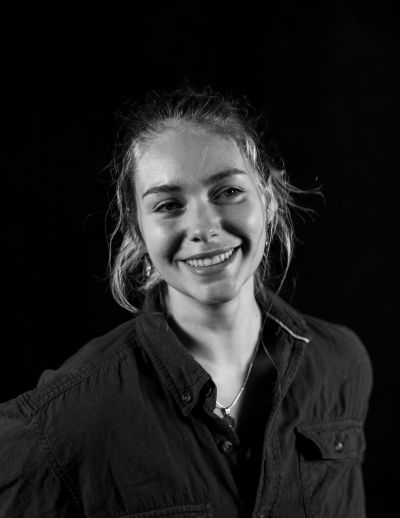
Gabrielle: I went to the biggest cities because this is where the most people live. I also did some research before we met [our mentors] and I’ve selected a few places that have new urbanism projects that are more equal and sustainable. So I started with these hotspots and with my director of production decided that these are the eight biggest cities we have to go to make this. We wanted to go to Halifax, but didn’t it didn’t make the cut. Actually, I did consider it because they have a lot of new urbanism projects that are sustainable.
POV: Can you tell me more about what the mentorship process of Redefined was like?
Prajj: We had a three day almost development class. We had a few mentors come in and teach us all about film and the themes of our documentaries and questions we should ask. We all kind of workshopped them. The NFB graciously asked us, “Who is a Canadian filmmaker that you would want to talk to?” We each gave our suggestions and then they just made it happen. I got to talk to Matthew Rankin who has a film at TIFF this year [Ladies and Gentlemen, Brian Mulroney].
Sylvia: Aside from having that one meeting with Ben Proudfoot, I met regularly with Carol Nguyen, and every two weeks, we had a meeting and we would catch up with each other and see what stage I’m at in the process. She’d give further insight and advice on my next steps when it came to finding the right people, finding the characters, how to make them not anxious about the prospect of being in a documentary. She gave me really great tips on how to make them feel comfortable about the idea of being on camera and also advice on how to prepare my questions and everything leading up to filming.
Tyra: They paired us with our producers really early on. We were selected from 240 people, which is absolutely insane. They interviewed us with our producers and it really did help get a feel for how we would work together. And also it was just good to know that was the person that we were going to have on our side. That was really helpful and the NFB was great for providing us that. Even the entirety of our post-production, I don’t think we could have done it without them, honestly.
Sylvia: I met with my producer Liz Cowie once a week, every single Thursday. It was so helpful having a weekly checkup. It genuinely felt like there’s someone right next to me helping with every step. It honestly really felt like a huge weight off of my shoulders because there’s a million things that I don’t have to worry about because Liz had it covered.
Maxime: I was a bit of an outlier because I actually was not part of the documentary unit at the NFB. I was part of the animation unit. I had a different team and a different structure for what I did, but I got really lucky because I had so much fun in the animation unit. Everyone is so awesome. The synergy was great. My producer Jelena Popović was really the push that I kind of needed and someone who was willing to challenge me. That helped make sure that I was fully intentional with every single thing that I did because we’re talking about concrete animation when I’m used to abstract. Every single bead had a purpose on screen.
Gabrielle: I live in Montreal, so I always saw that building [the NFB headquarters] and it was always a dream to work there. My producer gave me everything I needed to make the film and she really trusted me with every creative decision. I really appreciate that because as a young filmmaker, sometimes you’re told that your producer is going to go against your ideas. I was a little bit afraid, but nope—finally, it was really great. The producer saved my life.
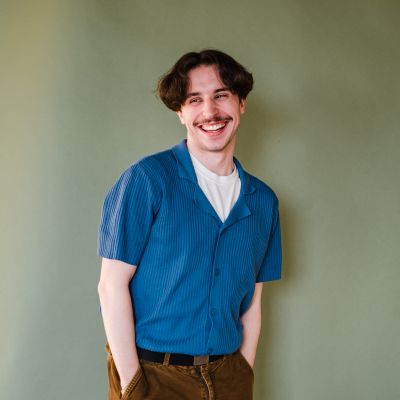
Maxime: I have heard that as well and sometimes people have a misconception about a producer. They’re trying to make sure that things are possible and keeping things realistic because sometimes we get ahead of ourselves. That actually happened a lot with my project where it was going to be a full 10 minutes of animation and we’re going to do it in six months. And everyone was like, “No, you’re not, Maxime.” It was not a dig. It was just, like, “Let’s be realistic: Would you much rather have a lot of animation and it be half done or would you want to have less animation and it be more though out and more complex?” And I was like, “Oh, the latter.” And they’re like,
I needed someone to question me because I like to think of everything. There’s Easter eggs all over my little bead animations that you can find if you look close enough. I really wanted to make sure that every single bead had a purpose on screen.
Gabrielle: I also have lots of Easter eggs. You can search through the film and find your city—all of you guys.
POV: The theme of the project is re-imagining Canada and having the next generation give a lens to Canadian culture through film. As up and coming filmmakers, where do you hope to see the Canadian film scene move as you advance in your career?
Tyra: There are so many avenues that I could take. There is so much talent out there and within this group, so being chosen by the NFB is a testament to that, but also there are so many Indigenous filmmakers, Inuit, so many non-Indigenous, so many broad Canadian filmmakers who have stories to tell. The Canadian film industry really needs to highlight the younger generations. That’s not to say that all of the elders and the senior people in the industry have to stop making films. That’s their art too. But there’s new voices, new perspectives, and I think that it’s important to highlight that.
Sylvia: Right now is a really exciting time because there are so many pieces of Canadian media that are just becoming mainstream and making waves in popular culture. I feel like now is the best time more than ever to make our way and really stand tall.
Maxime: I think that our generation is really adamant on not using AI. The biggest thing for me is the younger generation is willing to take on and do the work that needs to be done to not use AI. Is it controversial to say I think AI is evil? No. I’m with you on that. It’s killing the earth. It’s killing jobs.
Tyra: It’s taking away media literacy.
Maxime: It’s taking away artistic expression and artistry. I was terrified. I didn’t post my student film on the internet because I was afraid that it was going to get fed into AI data and then bead animations that are flowers would start showing up.
Gabrielle: Our generation was told that we would know more about climate change. Maybe we won’t see it, and maybe we will lose our jobs because of AI—we’ve been told so many bad stuff things will happen in the future. We’re like, “Let’s change the course. Our generation, we’re not asking. We just do it.
Prajj: I’ll speak about the Toronto film scene right now because we’re in a really exciting time. In Toronto, there’s this scene coming from the fringes that isn’t being covered too much, but it’s called the Toronto New Bizarre movement. It’s a lot of young filmmakers making films with no money, just casting their friends. Sylvia and I went to see Toronto Apartment at the Paradise. It was very funny and there’s been other films, like Permanent Tourist by Zero Zero Films. There’s a lot of young filmmakers not waiting for permission, not waiting for studios, just making what they want to make. It’s experimental, it’s fun, it’s innovative. I think we’re just going to see more and more of that. We’ll be hearing much more about this moment.