


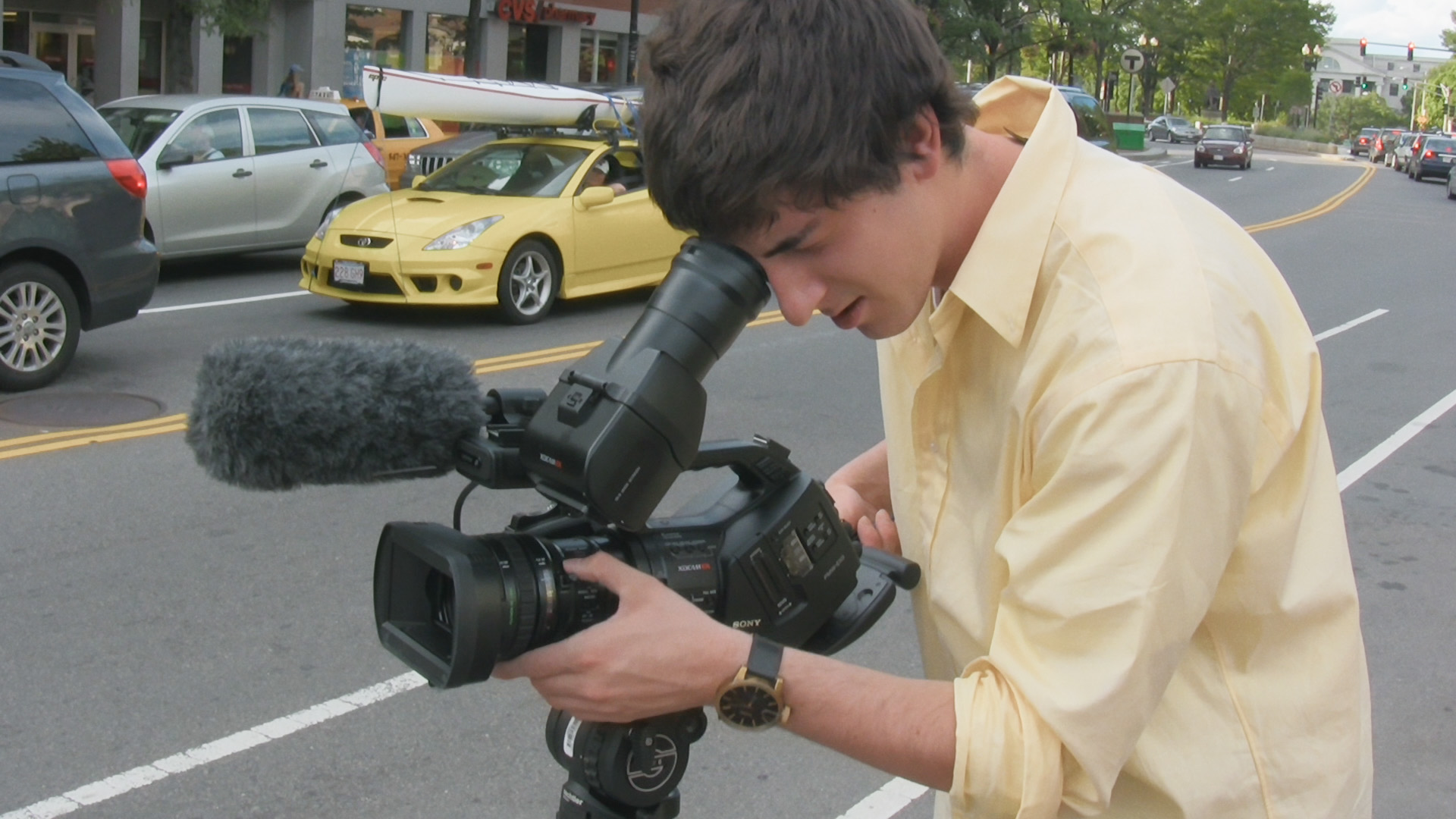

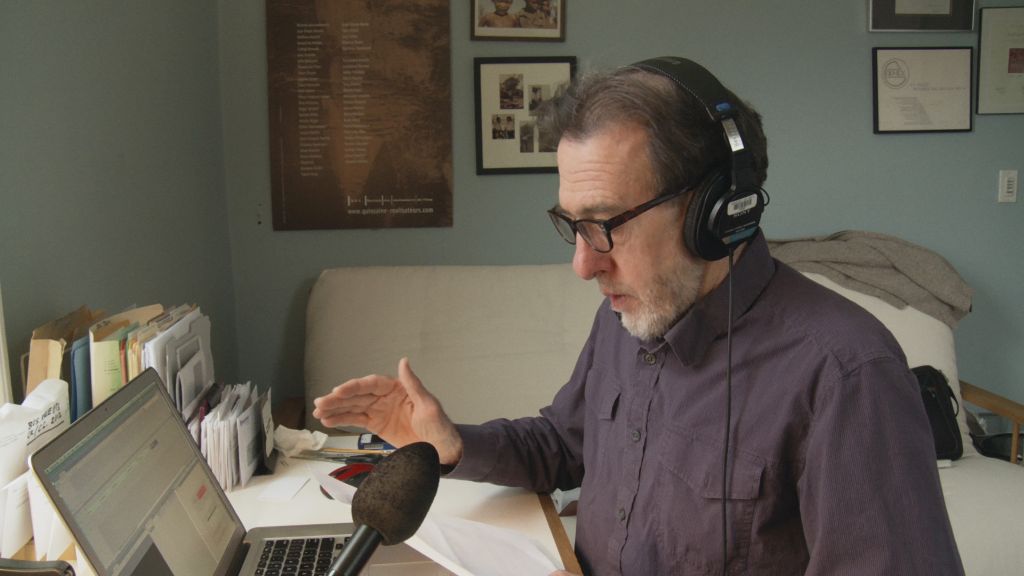
Ask filmmaker Ross McElwee who might play him in a movie and he can’t help but laugh. “I have no idea,” he says over Zoom. “You’re asking me to give you ideas about Hollywood filmmaking stars that I simply can’t.”
It’s a fair question, though, since his extraordinary Remake begins with a novel premise. Hollywood producers express interest in making a dramatic adaptation of his 1986 breakthrough feature Sherman’s March. McElwee considers the prospects of his documentary getting a dramatic spin, but the question inspires him to mull the idea of do-overs as he revisits footage from Sherman’s March, along with images he shot with his family for other films during the intervening years.
McElwee notes that Steve Carr, a producer interested in adapting Sherman’s March had two leading men in mind: Canadian comedian Michael Cera and deadpan serious Oscar winner Adrien Brody. They’re two very different choices, but McElwee’s memory of the casting process flags an important anecdote. “Both of them knew Sherman’s March,” he remembers. “Michael Cera’s response was, ‘Why do you want to remake this? It works so well as a documentary.’ I think that pretty much killed the option, but aside from that, I’ve never really given a serious thought about who should be me. I think one me is enough.”
Sherman’s March remains a landmark for personal and introspective documentary filmmaking as McElwee drolly chronicles General William T. Sherman’s Civil War trek with his own parallel feat of wreaking havoc on South as his friends and family members try to set him up with a suitable lady. As he examines the life of a starving artist in a land fraught with the storied histories of exploitation and capitalism, he can’t help but wonder if an inward-looking filmmaker can provide the life of comforts that a woman reared on Southern values might expect. However, the affable self-deprecating lens through which McElwee examines his milieu lends Sherman’s March a timeless quality that makes it ripe for a Hollywood spin, as do the many colourful characters he encounters along the way. As further proof of the longevity of Sherman’s March, the documentary receives a 4K restoration released alongside Remake.
Looking back at Sherman’s March, McElwee admits he may have done some things differently if he knew then what he does now. He says that he learned while editing the film that accosting someone with a camera, even playfully, isn’t always the best practice. “I thought moments like that represented a fashion, in my head, of filmmaking and that my feelings for the people I was filming, in fact, should be part of the film. So they’re in there,” says McElwee. “Looking back now, I can say maybe that was a mistake. Maybe I sulk, but it represents an accurate version of where the filmmaker was; the world that he was filming in the early ’80s. But with Remake, I think the way in which people appear is maybe more gentle than in previous films, less ironic, and maybe that is a good thing.”
McElwee says he endeavours to carry on that philosophy in future films. His affinity for his participants also serves as a main driver for pursing the adaptation.
“One of my reasons for at least wanting to give the fictional remake of Sherman’s March a chance was those roles of real people who appear in would all be played by actors,” says McElwee. “Also, I was curious about how I would be performed by an actor. Part of the irony I was interested in is the Hollywood attempt to turn it into fiction film, feature film, went on and on for year after year.” Besides Carr’s attempt, the storied history of stillborn Sherman’s March adaptations includes another feature and a series.
Part of McElwee’s deal for the Sherman’s March remake includes the right to make a documentary about that process. Remake therefore serves as the only film to emerge from that adventure (so far), but this meta-movie captures so much about what makes documentary a high calling for filmmakers who are willing and eager to explore the deepest and sometimes darkest corners of human experience. The film touches upon so many of the responsibilities and tensions entailed in documentary filmmaking, particularly the complexity of representing the lives of others—a point that becomes increasingly difficult as key figures from McElwee’s life and work have passed away.
“There’d been three attempts to make this thing into fiction and I felt they all centred on the character, the Ross McElwee character, who was in his late twenties at the time wandering around with the camera trying to meet women. Meanwhile, the real Ross McElwee is getting older and soon, as I’ve said to some people later, ‘If they don’t get this thing done, because I’ll be no longer on earth, I’ll be gone, they’ll have to find someone else to finish the thing,’ and I want to see the version of myself represented in the Hollywood films.”
The idea of giving Sherman’s March a Hollywood ending, however, develops as an inappropriate choice, especially in light of the ways in which life writes a new story for McElwee as the years pass. Remake instead affords Sherman’s March an appropriately poetic second wind. It’s truly McElwee-ian in the way that Grizzly Man embodies Herzoggian filmmaking.
The idea of the remake filters through McElwee’s poignant narration as he looks over images he shot across many years, some of which made it into films like Sherman’s March and others that never appeared in one of his documentaries until now. McElwee’s relationship with his late son Adrien, who died in 2016, evolves as the heart of the film. Getting a chance to make a movie anew feels trivial when life affords reboots with a departed loved one.
“Almost everything I think of Adrian seemed different to me when I went back after he died,” McElwee says of revisiting the footage.
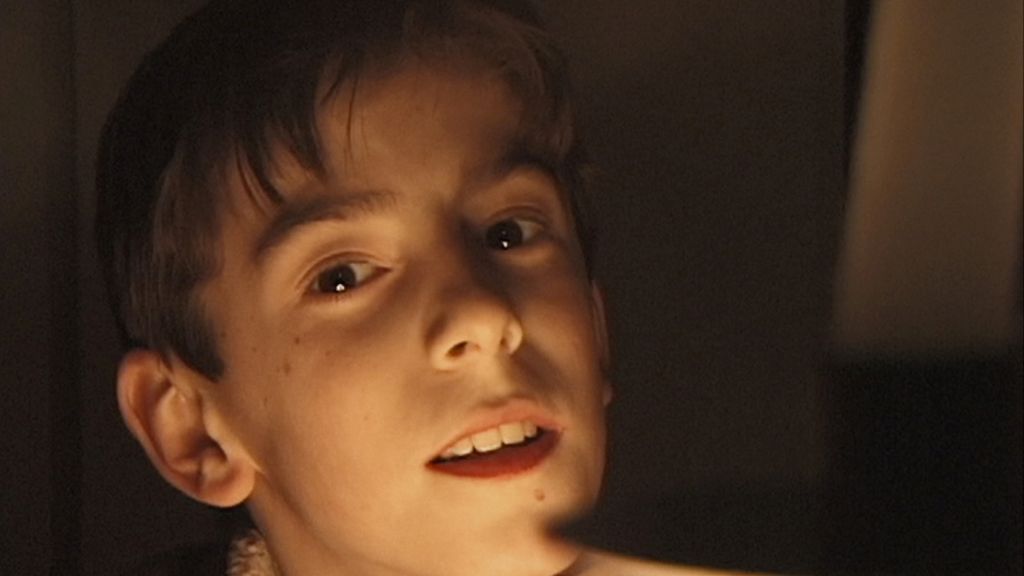
Remake sees some playful banter as a younger Adrian encourages his dad to pursue the Hollywood option. For one, Adrian cites the payday as incentive. He also teases that a Hollywood remake bestows upon a documentary filmmaker a certain legitimacy, although one hope’s that McElwee’s list of accolades, which includes the Grand Jury Prize at Sundance for Sherman’s March, satisfies his credibility.
“I don’t take seriously the fact that some people don’t take me seriously as a filmmaker,” admits McElwee. “Those people aren’t cognizant of the broader definition of filmmaking. Documentaries are everywhere.” The filmmaker notes that his son was mostly teasing, but also harboured hopes to see his dad make the leap in terms of production scale. “He was really happy about the Sherman’s March possibility and he talks about that in Remake, what he hoped for some day, but I think he also was bonded to my films. He liked travelling with me to show them and share them with all these people. If he were embarrassed in any way. It didn’t show up his personal appearances with him.”
As Remake sifts through fragments of Sherman’s March and McElwee films like In Paraguay (2008) and Photographic Memory (2011), both of which include Adrian, and their respective outtakes, the retrospective implores audiences not to take for granted the time one has with friends and family. The documentary also includes excerpts from Adrian’s own filmmaking. Adrian’s scattershot images dominate the last act of the film as he struggles with addiction, but chronicles his life with his friends before an accidental overdose claims his life. While the editing gives these images coherence, it’s evident that Adrian studied his father’s habit for navigating life through the viewfinder.
McElwee says that curating this personal archive involves no clear agenda. He walks through the memories, echoing in editing what he does with his handheld camera in Sherman’s March. Life writes the film.
“I had no guiding principles,” McElwee explains. “I’ve never worked that way as a filmmaker in terms of editing. I’ve simply made decisions based upon what I think have some inherent interest or complexity or humour depending on what’s embedded in the film itself. I start assembling those [ideas] randomly, sort of in a timeline. Then I go back and look at all of them and think, ‘What does this begin to add up to in terms of the narrative or story?’ I’m sure there’s something going on within me that says, ‘This is really usable; this probably not so interesting,’ but I can’t describe it.”
Remake illustrates this practice of finding nuggets from life and savouring them. The film examines seemingly mundane moments from the McElwee family archive, but the filmmaker’s pensive voiceover contextualises their significance. They may be memorable moments from a trip before McElwee’s first marriage showed signs of strain, like when his first wife, filmmaker Marilyn Levine (Adrian’s mother), says she doesn’t want to be on camera anymore. Alternatively, they may be breakthrough moments, like when McElwee’s second wife, filmmaker Hyun Kyung Kim, concedes to being filmed after years of protest. (It’s their wedding day.) The snippets from Adrian’s life, however, afford the most pause. They may be clips of a child’s innocence, a teenager’s rebelliousness, or an adult’s restlessness. No matter the context, McElwee thoughtfully interrogates the story that might continue today if Adrian were alive.
Ask McElwee about an image from the archive that triggered a forgotten memory, however, and he cites an example that doesn’t make the cut. McElwee points to a summer trip to Cape Cod when Adrian was four or five and recalls an outtake from Remake’s collage of outtakes.
“He loved the ocean–and suddenly there was this creature coming up out of the surf towards us and there was a seal, which you still don’t ever see in that area. Adrian was so excited. We tried to get as close as we could to it. It kept making its way back towards the surf. When I saw the footage, I had totally blanked on that whole moment,” says McElwee. “And yet it was there, the video was the proof of it. I had no recollection of it and clearly it was us. That’s an example of the degree to which you can forget things that have occurred and then relive.”
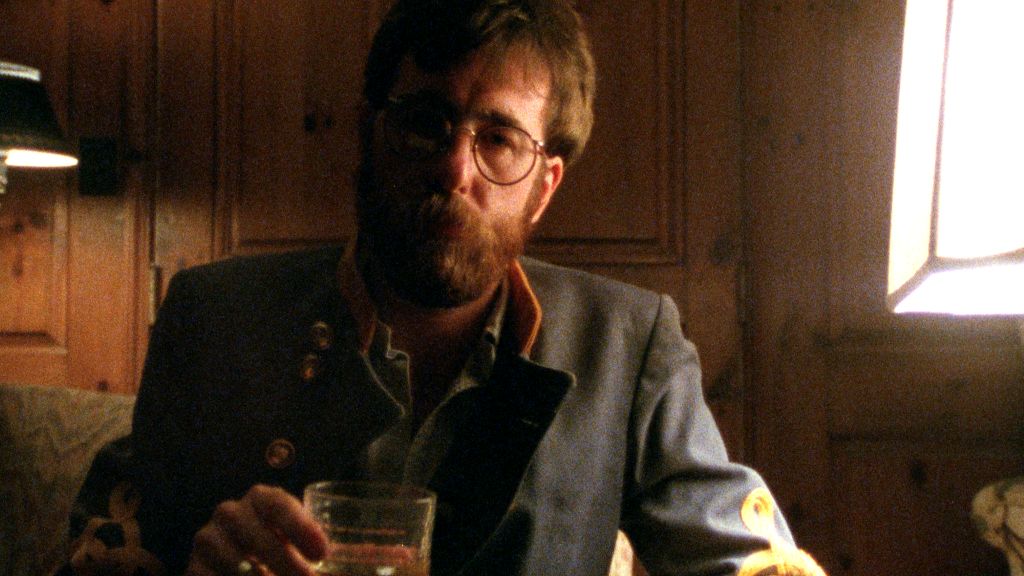
McElwee relates his filmmaking process to the work of writer Anaïs Nim and her adage, “We write to taste life twice: in the moment and in retrospect.” He lingers on the quote a moment while situating his practice within it.
“That was not unlike what was going on with me as I looked at some of this older footage. Some of it was marinated in sorrow because that little boy or that young teenager is no longer with us. He’s gone. So there was that to deal with as well,” says McElwee. “There would be that instance at the beginning of looking at the footage where there would be the pure joy of remembering [being] together and then suddenly that changed because I snapped back into reality.”
Baring himself so nakedly isn’t anything new for McElwee. Sherman’s March, for example, intimately probes his trouble with the ladies and the ways that his quirky career clashes with the life that friends and family expect for him. However, by recording so much of his life and then examining it anew, or re-living it in retrospect, the filmmaking process illustrates how seemingly inconsequential moments can be monumental. This reality adds a sombre timbre to McElwee’s narration this time around. However, he says Remake demands a greater level of vulnerability by necessity.
“There’s no way that it could be like the personas representing me in the other films,” he says. “The vulnerability came naturally because I felt incredibly vulnerable. Here I was with this archive of footage of my son and also I realized that perhaps I wasn’t as religious as I should have been as he was growing up, as he was getting older. I felt a certain amount of guilt about that, which is to some degree expressed in the film. All of this is part of the vulnerability and confusion I felt when he died.”
McElwee certainly takes Remake to painful territory as he looks back at Adrian’s final years. Much of these scenes come through footage that Adrian shot himself. Excerpts of his son’s footage suggest a work-in-progress student film, but mostly reflect lost boys joking around by smoking drugs, snowboarding, and having a laugh. The filmmaker struggles to make sense of Adrian’s material in the way he might interpret his own footage. But he negotiates the distance between himself and the images best he can.

The director adds that making the film, and sharing it with audiences, introduced him to Estrangement Syndrome, a condition that reflects a generational rift in the family, often due to trauma or differing beliefs. Remake hints at a shift in McElwee’s relationship with Adrian, and the son’s connection to his father’s filmmaking, late in the film with a clip from the 2011 Venice Film Festival. Footage shows the McElwees attending the premiere of Photographic Memory, and a press conference excerpt lets Adrian voice his discomfort with the production process. He acknowledges that he perhaps didn’t articulate this sentiment during filming or afterwards and that there might have been things that he didn’t want recorded probably shouldn’t have agreed to committing to film. The scene allows McElwee to explore the transition from a child’s innocence to a young adult’s self-awareness and the responsibilities entailed within capturing that growth.
McElwee notes that he and Adrian joke about awkwardness during the press conference, but that he thought it was important to include the remark. “It does raise the very valid point, which is [whether] people see themselves differently when the films they’ve participated in are suddenly shown. This is a very old problem for documentary filmmakers,” observes McElwee.
“Some people think they’re going to be represented one way and they see the film and actually it’s quite different than what they expected. My son really savoured those festival screenings with me over the years. He really wanted that. Also, he knew that if there was anything that I put in the film that he really did not want, I would take it out. I did show him [Photographic Memory] before it was finished. But it’s something that I deal with. Sometimes I feel like I just want to make films involving actors and have a big budget and not have to worry about this stuff. I’ve not gone there yet, probably never will.”
McElwee’s remark returns the conversation to the remake aspect of Remake. He might not have the budget for Marvel movies, but Remake and certainly Sherman’s March have the scale of epics. But both films inherently reflect facets of vérité filmmaking and life itself: there are no second takes.
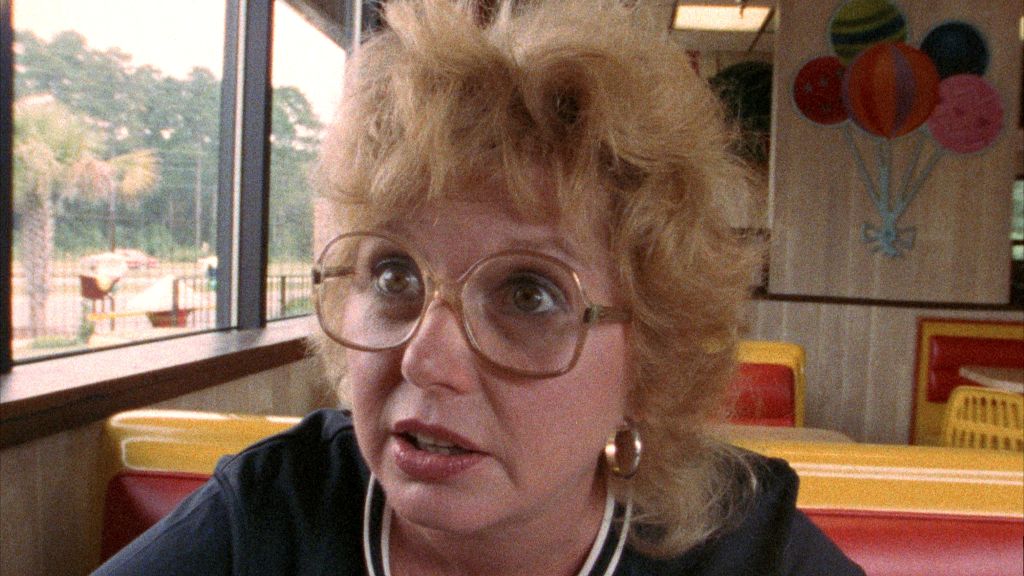
The distinction between art and life arises throughout Remake as McElwee makes clear his rumination on second chances. A clip from Sherman’s March repeats during the documentary as McElwee, carrying his camera and filming a set-up, gets a scolding from his matchmaker friend Charleen Swansea. She looks directly at the camera and says, “Put that away. This isn’t art. This is life.” McElwee sort of obliges in Sherman’s March, but plays with the dynamic between the two by letting the voice of his late friend echo a shoot that eluded her memory in later years. When McElwee interviews Swansea in Remake, she can’t remember any of their work together.
“It’s such a pivotal moment when she says that in Sherman’s March. It does kind of sum up the whole comic irony of my endeavour as I’m making Sherman’s March. When it comes back in in Remake, it is still very funny, people laugh when you show it in front of live audiences, but it also has a sadness to it for me now because what it often means, especially in the case of Charleen and the Adrian, that this is not art. This is life, yes, but art outlives life in this particular case and could continue to represent you even after you’re gone. That goes for me. If my films are shown after I die—I doubt that it’s going to be a very long period in which that happens—but if it does, that’ll be embedded into the film. There’s a mortality factor to consider.”
On that note, McElwee ends the conversation by saying that films that allow audiences to breath, to pause, are worth savouring. “I believe in films that should be able to sag if they want to sag and we make people exhale frequently. I think that’s a good thing. That kind of filmmaking is an endangered species now.”
Remake and the restoration of Sherman’s March are playing in select cities.
Remake opens at TIFF Lightbox on July 17. Sherman’s March screens at Hot Docs Ted Rogers Cinema on July 19.