

“This is not normal,” is the common refrain that has been resounding from the most distressed and disquieted of your south-of-the-border neighbours since this dystopian nightmare began over a year ago. Orwell sounded the alarm many decades ago, and University of Toronto professor Timothy Snyder, one of the foremost scholars of 20th- and 21st-century fascism, has been weighing in frequently. It is happening here, as the United States of America careens towards its 250th birthday “celebration,” with the Declaration of Independence and the Constitution having been cast aside by MAGA Nation in favour of the Heritage Foundation’s Project 2025, a 900-page blueprint for a far-right, Christian nationalist, white supremacist wet dream.
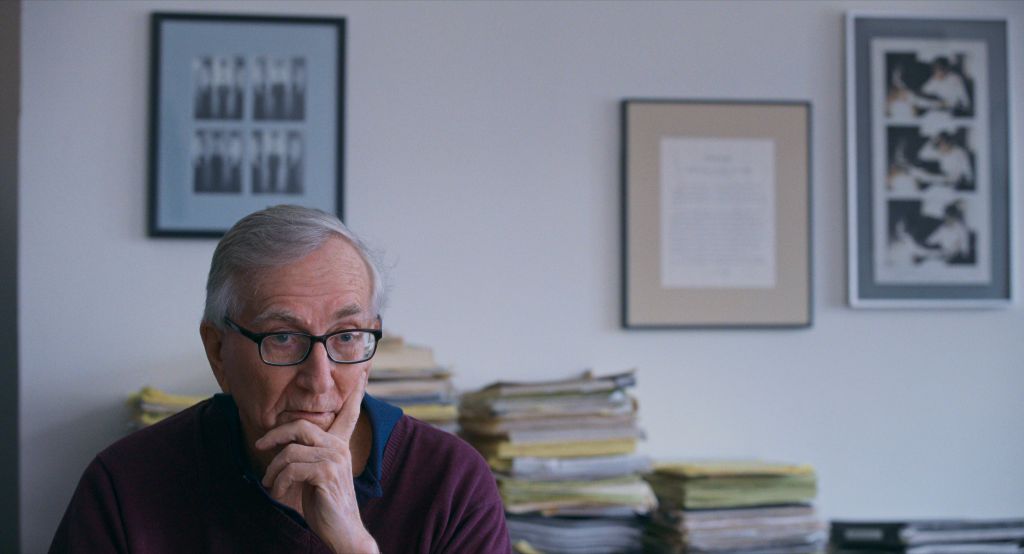
When the legendary Pulitzer Prize-winning journalist and Cover-Up subject Seymour Hersh took the stage at the Cinema Eye Honors ceremony in New York this past January to accept an “Unforgettables” award (given to compelling participants in documentaries), he declared, “I’m not sure if America will survive this.” And, given all that he has witnessed in his 60-year career, he should know.
As I write this [in March 2026], the U.S. and Israel just launched an ill-conceived, ill-advised war on Iran—ostensibly, a wag-the-dog distraction from a take-your-pick smorgasbord of calamities and tragedies: the regime’s ongoing cover-up of the Epstein imbroglio; the misguided tariff wars; record-low approval ratings for the Dear Leader; a mishandled economy; the ICE-led war on U.S. citizens, Green Card and visa holders, and refugees and asylum seekers… By the time this article is published, more catastrophes will surely have arisen.
How did we get here? Will we survive this? And if we do, what will a post-regime U.S. look like?
Like so many communities across the U.S., the documentary ecosystem has taken a beating on all fronts: The decimation of public media and the loss of the Corporation for Public Broadcasting (CPB); the gutting of public support for arts and culture; the mafia-style multi-billion-dollar shakedown of higher education; the assaults on the First Amendment and the Fourth Estate; the consolidation and propagandization of corporate legacy media outlets; and the demonization of diversity, equity and inclusion. Foundations could be the next target, as well as non-profits that exude the slightest soupçon of “wokeness.”
But there are glimmers of hope and resistance. Despite a vicious and violent siege perpetuated by U.S. government forces, the people of Minneapolis stood firm, in an exemplary show of mobilization and organization. And at the Super Bowl Halftime Show, U.S. citizen/proud Puerto Rican Bad Bunny, the biggest musical sensation in the world, galvanized an audience of 133 million with an exhilarating thirteen minutes of artistry, defiance and joy.
Bad Bunny and the heroics of the Twin Cities faithful were often cited in my conversations with a cross-section of the U.S. doc world. Filmmakers, festival programmers, public media executives and non-profit leaders all weighed in with their worries and their wisdom as we pondered the state of the union, strategies for survival, and visions for the way forward.

Asked about the tenor of conversations among their peers, some interviewees shared that many filmmakers were either hustling for work-for-hire gigs or seriously considering leaving the documentary field altogether. “I’ve been having really sobering conversations with people about the real-life impact of the turn that our industry has taken over these last several years,” says filmmaker Yance Ford (Strong Island, Power). “I know more people than ever who are teaching in some capacity, because the pool of projects that need directors for hire [is shrinking], or the timeline for getting projects funded is just so long.”
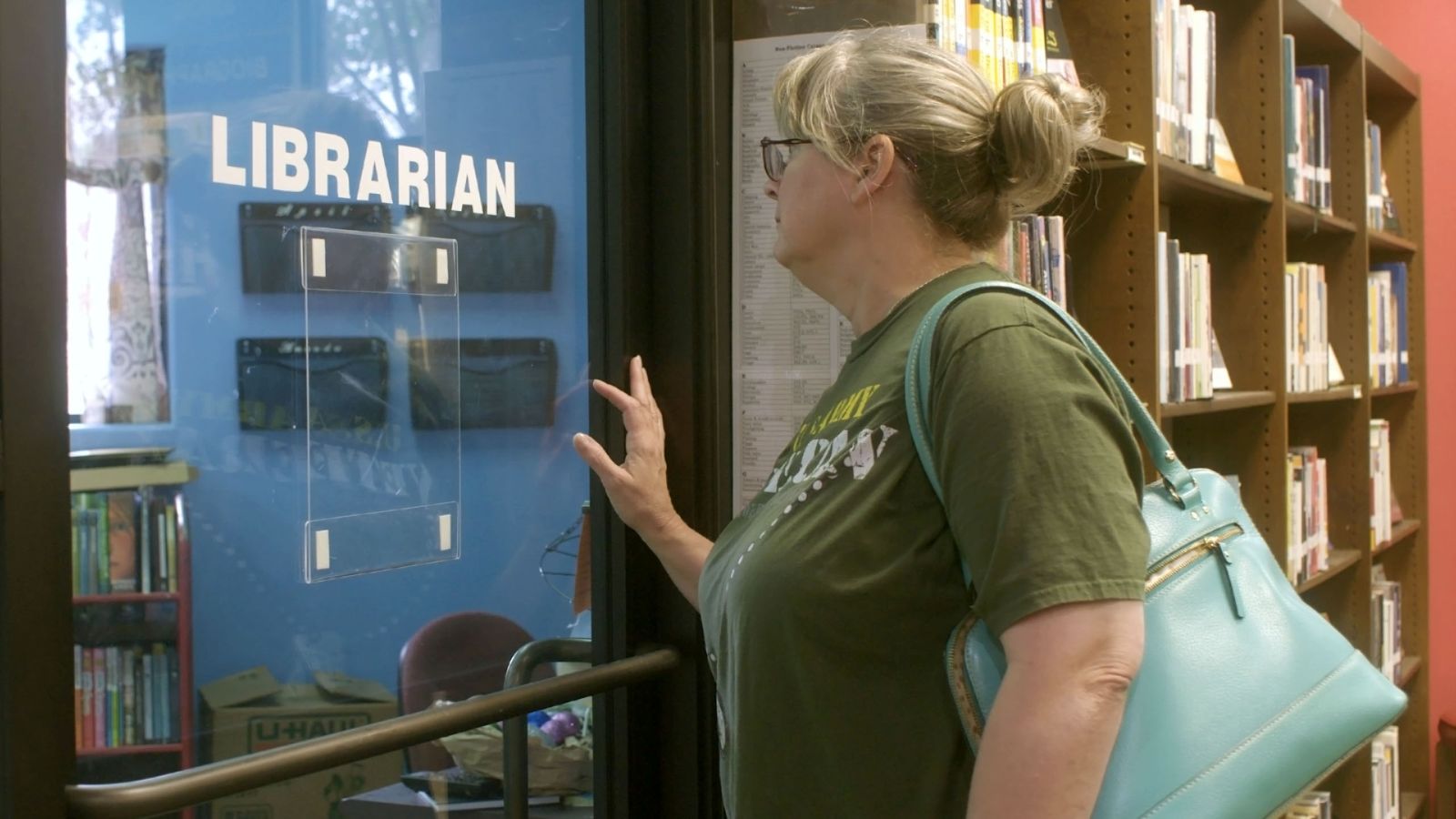
Filmmaker Kim A. Snyder, whose The Librarians focuses on the rise of book-banning instigated by the far right against public schools and libraries, notes, “The community realizes we need each other more than ever. There’s a growing importance of nonfiction storytelling, and we feel a tremendous sense of responsibility. But that’s happening at the same time that industry forces are presenting more challenges to getting films funded and distributed, and it’s also happening at a time when the very subject I covered, censorship, has a bearing because there is a chilling effect happening in my industry.”
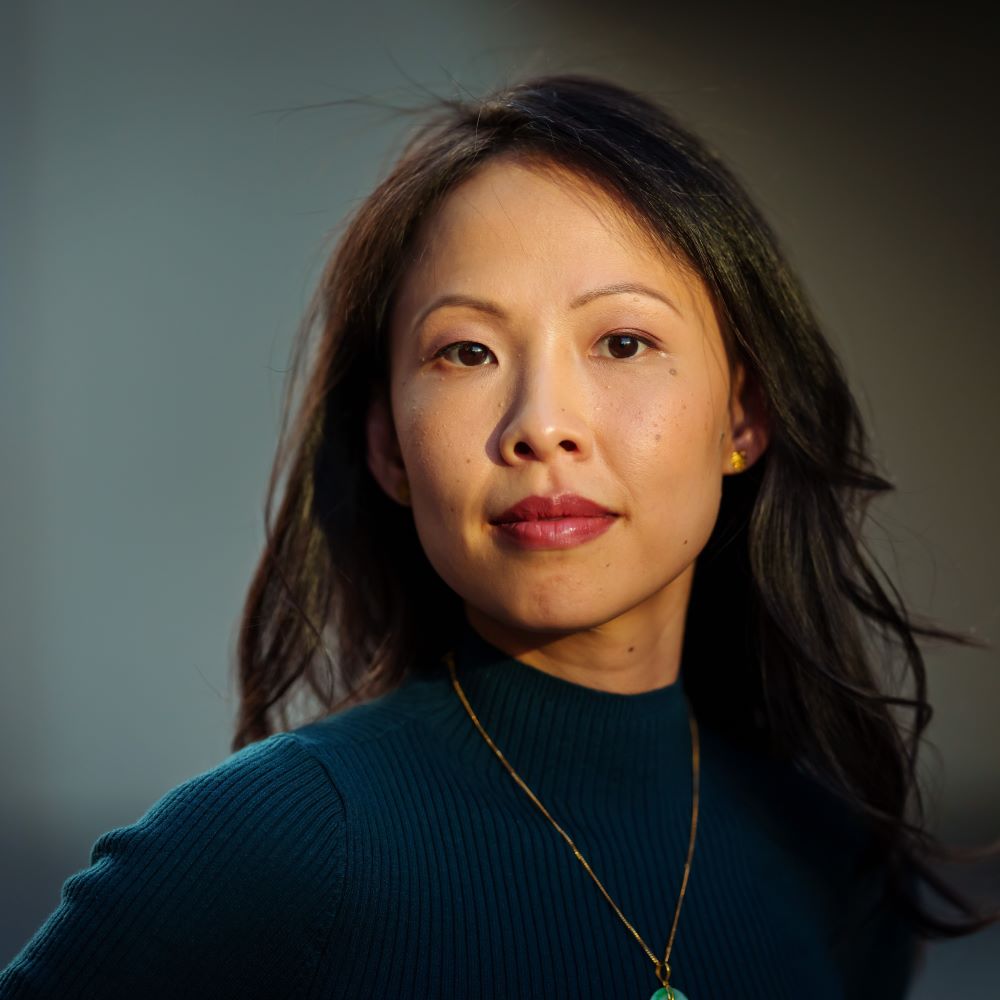
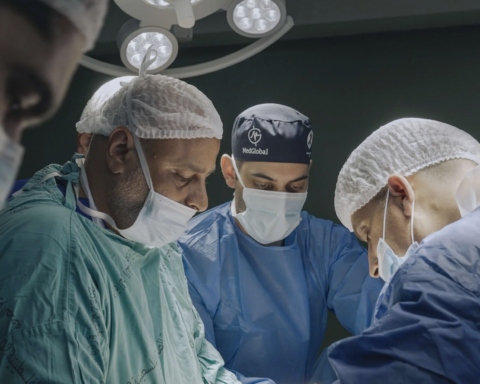
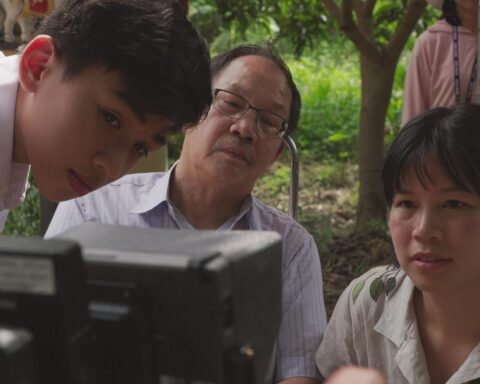
“Everybody is understandably outraged at this moment,” says Poh Si Teng, whose directorial debut (following many years as a commissioning editor, funder and producer), American Doctor, premiered at this year’s Sundance Film Festival and went on to win the Audience Award at Hot Docs. “And it didn’t just start two years ago; for the past decade, it’s been a build-up to this moment. The only way forward is to make art. That’s been the conversation with fellow filmmakers that are trying to take on different issues on what’s happening in the United States. Everybody’s trying to do their part.”
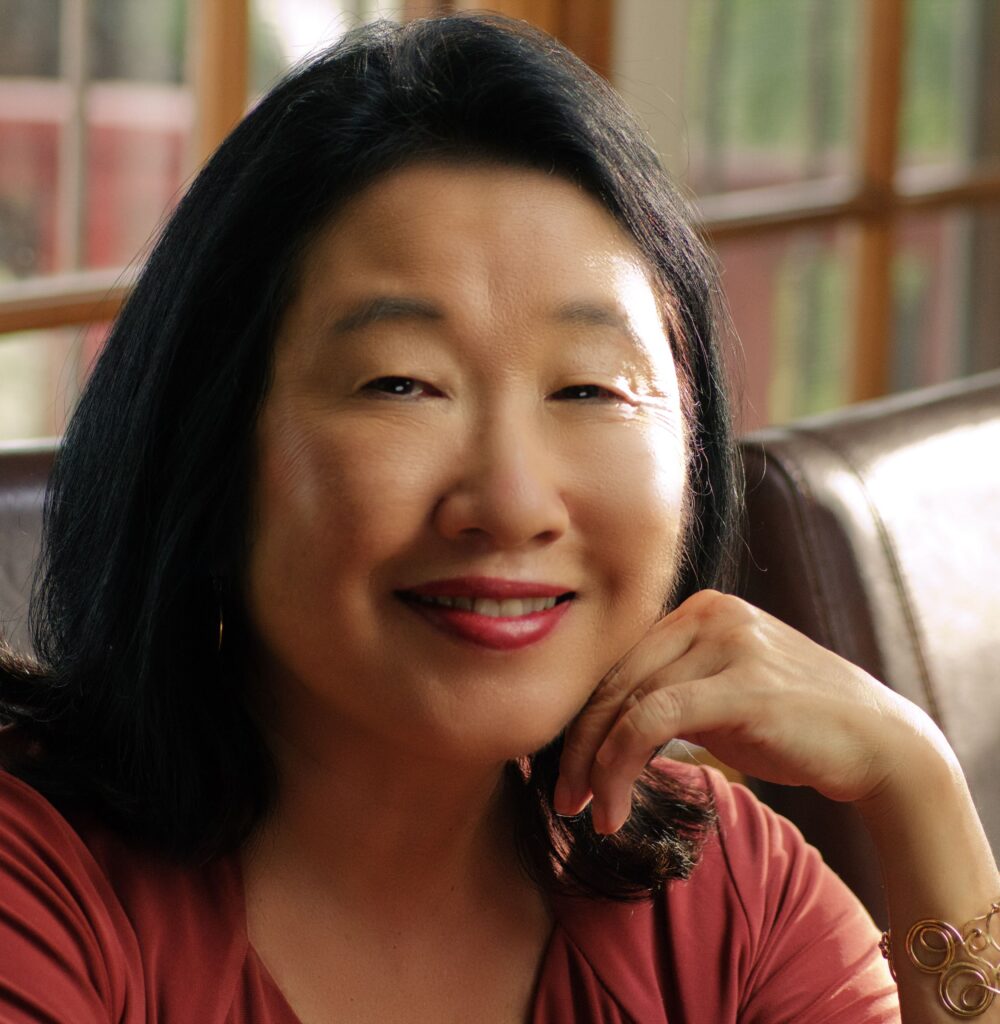
Renee Tajima-Peña, director/producer with the late Christine Choy of the Oscar-nominated 1987 film Who Killed Vincent Chin? observes, “When people ask, ‘What’s the best strategy for confronting this backlash and this loss of funding?,’ to me, over the past 40 years, you just have to fight and organize. That’s the only way I’ve seen long-term progress being made.”
Well before this all went down, the documentary community was feeling the fallout from a rapidly contracting coterie of streaming giants. Netflix, Hulu, Amazon, and HBO Max, for a brief shining moment, ponied up good money for a steady stream of singular, visionary fare. But then 2024 signalled a significant across-the-board scale-back, with notable exceptions like Geeta Gandbhir’s The Perfect Neighbor, which, following its world premiere at the 2025 Sundance Film Festival, went on to earn kudos after kudos, culminating with an Oscar nomination.
But a bedrock constant in the story of independent documentary in the U.S. has been public media. Since its founding in 1967, the Public Broadcasting Service (PBS), through its series strands like Independent Lens, POV, Frontline, American Masters, American Experience, NOVA and Nature, has delivered exemplary programming to U.S. households. And such initiatives as the National Multicultural Alliance (formerly the Minority Consortium) was designated and funded by CPB to ensure minority representation in what PBS showcased.
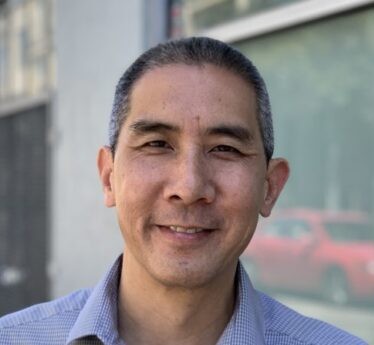
Tajima-Peña was one of the founding members of the San Francisco-based Center for Asian American Media (CAAM), which emerged in the early 1980s as a non-profit catalyst for support of Asian-American independent media-making. According to the CAAM’s current Executive Director Don Young, the organization lost 40% of its funding this past year, “although we’re in a reasonably solid position,” he maintains. “We’re all trying to wrap our heads around [the question] of, ‘How do we work together differently?’ So, whether we’re festivals or organizations, I think there is a tone of, ‘Let’s support each other and let’s look out for each other.’ And I think that part of it is better than it’s been since when I first started.”
ITVS (Independent Television Service), also based in San Francisco, was established in 1988 as an act of the U.S. Congress to support and present independent documentaries on PBS, and mainly on ITVS’ flagship series Independent Lens. ITVS lost a whopping 86% of its funding over the past year, but Lois Vossen, Independent Lens’ executive producer, remains resolute about staying the course. “We’ve always done fundraising, but we’ve never done it at the level that we’re now undertaking,” she says. “The good news is that a lot of people want to see us survive and really support what we do and understand how we are a weight-bearing wall in this ecosystem.”
One of the prime movers in bringing ITVS to fruition back in the 1980s was the Chicago-based non-profit documentary production company Kartemquin Films and its co-founder and current artistic advisor, Gordon Quinn. “One of the things we were talking about at a recent board meeting was to start thinking about some of our core values,” he shares. “We wanted to have a discussion on the board level about the role of documentary in the democratic process, but we obviously have some new challenges in terms of figuring out how to survive in the current climate and how to create opportunities for people coming into the field. It’s not just a matter of, ‘What are our alternatives to public media?’ It’s also, ‘How do we also mount a struggle to get back that kind of public support, which then creates a kind of accountability?’”
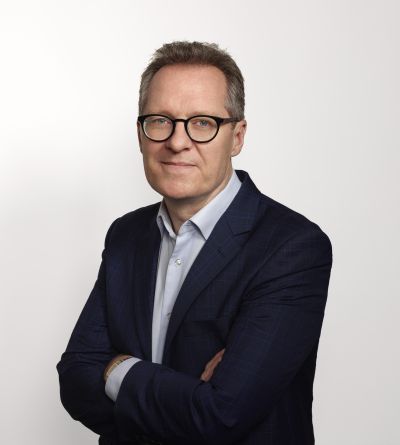
Despite the unnerving precariousness of these times, the documentary community has a long history of scrappy ingenuity and steely resolve. Thom Powers, in his multi-faceted capacity as programmer, podcast producer and educator, has observed and processed a lot about the documentary ecosystem over the past couple of decades. “When you talk about strategies for survival, the whole history of documentary film is full of hopeful examples,” he notes. “A significant one would be the career of William Greaves, which is especially on people’s minds right now, because we have the gift of his film Once Upon a Time in Harlem, which has had a gestation period of over fifty years. I think that the strength of documentary filmmaking is the time that we put into it.”
At the same time, he notes, “On top of the complicated politics and challenges to funding and to distribution, we can’t ignore a couple other things, which is a change in the way that people absorb visual information. There’s a generational shift towards shorter-form content driven by platforms like TikTok or Instagram. When I look at my sixteen-year-old and his peers, I’m not sure that the ninety-minute, long-form documentary is the format that they’re going to be looking at for processing the world. But a work like Once Upon a Time in Harlem operates as many things, including a work of history that is going to be more lasting than the short-form content of its time from fifty years ago. There’s room for both. In times that are highly tumultuous, like we’re going through politically right now, there’s an absolute need for quick reactions and quick analysis.”
For Ford, in his position as guest artistic director of this year’s True/ False Festival, “Part of what I am really drawn to right now are films that speak to the moment, not films that are contemplative of past moments. My thinking was that this festival could look like a bridge from the work that I knew was going to come in and respond to what’s been happening the last number of years. I wanted there to be a sense of looking at the world, and making sure that we maintain an international presence at the festival, but also to not be afraid to look inward and to have the festival reflect in all of its complexity all of the ways in which American political life and American life in general have been assaulted. I really wanted the festival to feel like it was responding to the moment that we’re in right now.”
Vossen and her team at Independent Lens, including Royd Chung, senior vice president of programming and production at ITVS, are also responding to the moment, limited resources notwithstanding. They continue to deploy a multi-platform strategy to complement its broadcast distribution initiatives and its fifty-state, on-the-ground engagement project, IndieLens PopUp, and last November, they announced two new endeavours: the Independent Lens Creator Lab and the Incubator Fund. This past March, they launched the PBS Documentaries YouTube Channel. “We really took the opportunity to say, ‘We don’t want to just shrink in this moment,’” says Chung. “What can we be doing with what we have? Who can we continue to support and where do we want to be, regardless of what our funding looks like? And a lot of that points to digital creators and YouTube.”
“On our end,” says CAAM’s Don Young, “we’re trying to focus on how our filmmakers can be more sustainable and how we unearth immigrant stories and how those stories, particularly on the local level, can start to be told. So, we are partnering with national Asian American organizations like NCAPA [National Council of Asian Pacific Americans], which is an umbrella civil rights organization, and we’re trying to figure out filmmaker-focused kinds of opportunities. We are developing a film with PBS on Wong Kim Ark and his legacy, which is very much in line with this year’s Supreme Court decision around birthright citizenship. United States v. Won Kim Ark was the initial precedent.”
So, let’s say that we defy Seymour Hersh’s dire prognostication, and we do survive this calamity. What does a post-regime documentary ecosystem look like?

“I think where a lot of people struggle is this question of, ‘Is there a middle anymore?’” Snyder posits. “Things have become so polarized. So, what does that mean? That means compromise, but what does compromise look like? It does make me want to make films that are more nuanced and contribute to, without sounding cliché, a body of things that create empathy and compassion. I just don’t want to contribute to the polarization. But at the same time, I do have my own lines drawn in the sand of resistance, where you have to stand up and say, ‘No, there’s no nuance here; this is just wrong.’”
“I would like to see the return of public media,” Quinn maintains. “With public funding, the leverage that that always gave us was so important in so many issues, in so many ways, that because they had that public money, they had to be accountable. That accountability meant that we could open up these discussions about inclusion, about equity.”
“As Americans, we have a certain kind of positionality and influence,” says Teng. “It is our turn to pick up the baton and move the conversations forward: get people to change their behaviour; get people to think about things that they haven’t thought about. And that rests on filmmakers; that’s how I see my role.”
The history of America is a history of resistance, struggle and solidarity, and a crucial legion of foot soldiers in that fight has been artists across disciplines, banding together collectively, yet staking their claims as individual innovators.
“We’re seeing strategies that have been in place and growing forever,” Tajima-Peña observes. “And we’re seeing how they’re playing out in really amazing ways. Going back to a lot of social movements in this country, it’s seeded in the Black freedom movement. I remember in 2020, there was a whole discussion about Black joy and resistance. You can see how that seed has taken root in Minneapolis and Chicago. Minneapolis is really showing us what a new society is going to look like.”
This article is part of a survey on the state of documentary in issue 125. Read about the Canadian doc scene here and subscribe to read about the European system in print.