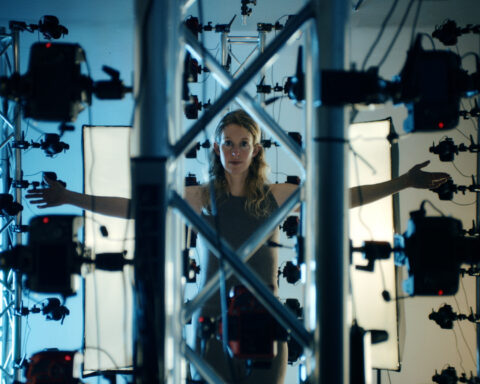





When Michelangelo set to work on the Medici Chapel in Florence, a mausoleum-cum-monument designed to glorify a single family’s name, he wasn’t greenlit by a commissioner in the modern sense. He was sustained by patronage: the Medici family’s money, protection and political heft, in exchange for artworks that reflected their power back at them. The deal was never purely aesthetic; it was economic, reputational, and quietly contractual. You make something great, and you make it for us.
For most of art history, that bargain wasn’t the exception. It was the system. Before mass markets, public arts councils, broadcast licences, tax credits or venture capital, the predominant way to fund ambitious work was to win the favour of someone with surplus wealth: an aristocrat, a merchant, a family foundation in all but name. Patronage could be enlightened, even transformative. But it was fickle. The artist’s freedom expanded or contracted in proportion to a patron’s tastes, anxieties, and ambitions, not to mention how replaceable the artist was.
Now, as Canadian documentary financing constricts and traditional pathways become ever less reliable, a familiar question is resurfacing with modern branding. Are we drifting back into a patron age? Not the fresco-and-marble version, but a contemporary equivalent in which filmmakers increasingly stitch together budgets through wealthy benefactors, philanthropy-adjacent contributions, private donations, venture capital (VC) playboys and American wealth.
If the future of documentary does require courting patrons once again, what happens to creative autonomy, accountability and objectivity, let alone the all-important question of which stories get to be told at all?

This whale-hunting has become more and more prevalent among Canadian documentarians in recent years. “The market has been through such seismic shifts in the couple of decades we’ve been at it, that it’s always a kind of a dance to keep going,” reflects Jamie Kastner, founder of Cave 7 Productions and director of docs such as The Spoils and Charlotte’s Castle.
Kastner’s latest documentary, The Great Canadian Health War, is one such example. The project arose through discussions Kastner had with Jason Chapnik, the chairman and CEO of Toronto-headquartered merchant bank Intercap.
“Jason was impressed by the degree of impact that our film There Are No Fakes had achieved,” Kastner recalls, “and he was interested in healthcare, in the crisis in Canadian medicine. It’s an extremely important topic, but also a tricky topic for a documentary because it could easily be boring, or dry and current affairs-y.”
Chapnik proposed funding a Cave 7 documentary through Intercap, which, among a variety of tech ventures, is an equity partner in the streaming platform Plex. The resulting film, due later this year, will mark the first original commission for Plex. The approach marks a significant change for Cave 7, which has worked primarily with Canadian broadcasters and within the Canadian funding system for almost all of its previous films.
“I went into it with some trepidation around, what is the expectation of the private financing world going to be?” Kastner says. “There’s a certain arm’s-length relationship when you’re producing docs for public broadcasters, or even private ones. There’s an understanding of when notes will be given and how the negotiation over content goes.

“So, it was a learning curve for both of us. We had conversations early on with me saying things like, you know, ‘I’m not going to be a puppet for a pro-privatization healthcare film.’ But Jason and Intercap were very open-minded and respectful of us as creative people who had achieved impact with our work.
“My concern was that he would have an agenda and would expect us to make a piece of propaganda,” Kastner adds, “and that wound up not being the case at all.”
As for the question of who would have final cut, Kastner says that it ended up being a stage-by-stage discussion rather than any kind of ultimatum of control, much as it tends to be with broadcasters. “We had a contract built that included out clauses on both sides,” he explains. “But they accepted my fairly offbeat proposal, which involved puppets and a boxing match and some other elements to keep the healthcare debate lively and alive.
“He trusted my creativity. I said, if we make something dry and boring, no-one will watch it. And if you make something that’s too polemical, you’re going to alienate half the audience.”
Kastner isn’t the only one looking outside the box for creative solutions to the age-old funding problem. For their latest feature documentary, #WhileBlack, producer Ann Shin and director Jennifer Holness opted to forego the Canadian funding system entirely, instead registering the film as a U.S. production in order to better access American funding despite the fact that both women are Canadian citizens and CanCon-eligible.
The film, which had its world premiere at SXSW in March and its Canadian premiere at Hot Docs, examines the ways social platforms benefit from videos of Black trauma, such as the death of George Floyd, while those capturing it are left facing both physical and psychological peril. The film features exclusive access to Darnella Frazier, who recorded the murder of Floyd, as well as Diamond Reynolds, who livestreamed Philando Castile’s killing.
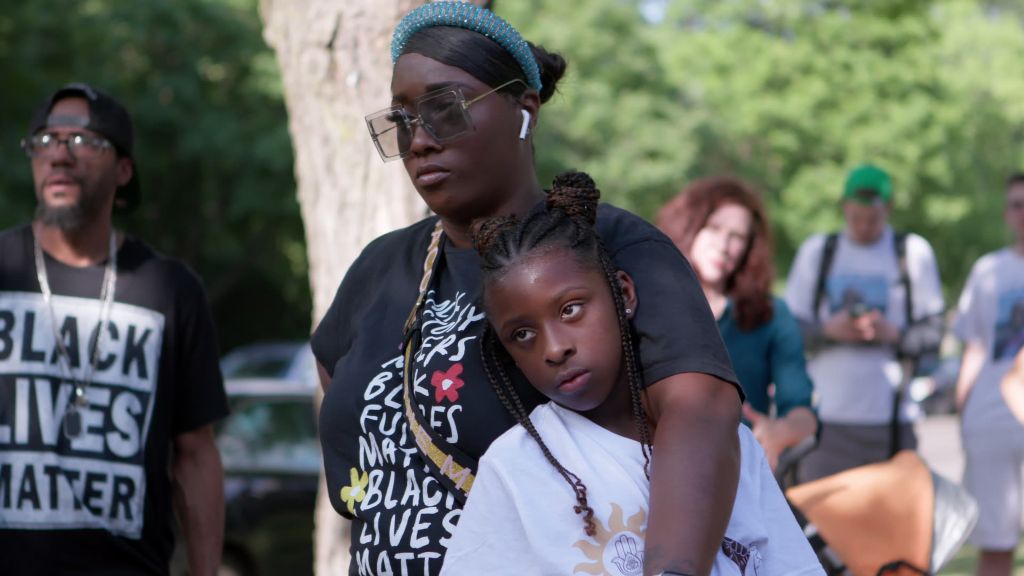
“It was a decision mainly led by the creative, in terms of the makeup of the creative team and the American content,” says Shin, the chief exec of Toronto-based Fathom Film Group. “We ended up going to a lot of foundations and funds and really learning about the American ecosystem.
“We went to Ford Foundation’s JustFilms, we got Catapult, Doc Society, Threshold Fund, the Jonathan Logan Family Foundation… We approached Perspective Fund and a range of other funds, as well as the Sundance Institute, and we were fortunate to get grants from a number of these places.”
Fathom also partnered with Exposure Labs, the social impact film studio behind Jeff Orlowski-Yang’s Chasing trilogy of documentaries, as well as the hit Netflix doc The Social Dilemma.
“They introduced us to their approach to working with investors,” Shin recalls. “It really opened our eyes to that other way of financing for film—funds and foundation money.” As for the prospect of Fathom setting up a fully-fledged full-time U.S. outpost, “we’re thinking about that,” she adds. “More and more we have to look at these alternative ways to finance films, including private investment.”
Beyond those American film funds, Shin is also exploring the possibility of working with brands to finance documentaries.
“With each project, we’re having to devise its own unique financing strategy,” she explains. “We’re starting to approach possible brand partners. Depending on whether or not [a project] goes with a broadcaster, we may end up trying to work with a brand or a corporate sponsor to finance it that way.”
She points to the success Nike enjoyed with its 2024 WNBA documentary Sue Bird: In the Clutch, which was produced through the sportswear giant’s Waffle Iron Entertainment arm and picked up after its Sundance debut by Netflix.
“What I’ve been hearing at Realscreen Summit and Primetime in Ottawa is that, particularly in the States, [non-fiction networks] are open to the kinds of partnerships that a lot of the brands are doing,” Shin explains, adding that many brands “don’t need their logo represented on screen and don’t need to affect the story at all. It’s just part of a message that helps bolster what their brand is about.”
She isn’t the only Canadian casting her line south of the border. Nova Scotian director Ben Proudfoot chose to establish his indie, Breakwater Studios, in Los Feliz, California. The 35-year-old director of A Concerto Is a Conversation, The Queen of Basketball and The Last Repair Shop, Proudfoot won two Oscars from three nominations across four years from 2021 to 2024, with a trio of shorts backed by institutions such as the New York Times and the Los Angeles Times.
Granted, struggling print newspapers are hardly an example of the billionaire patron class. But what does it say that one of Canada’s most promising and accomplished young documentarians has eschewed our funding model altogether?
Other producers I’ve spoken with, such as Ultramagnetic Productions founder Andrew Munger (Play It Loud!, The Correspondent), have been exploring overseas solutions for project fundraising, whether VC financiers in New York or Asian coproduction opportunities in Vietnam and Japan.
“The traditional model is now really strained for documentary filmmakers,” reflects White Pine Productions founder and CEO Peter Raymont. “Since COVID especially, it has gotten much, much harder to finance documentary films with a model of Canadian broadcasters, CMF (Canadian Media Fund), Telefilm, tax credits, Rogers, et cetera.”
White Pine is among the many Canadian companies looking to U.S. foundations for support. “There’s a wonderful organization called Park Foundation in Ithaca, New York, that has funded four or five of our recent films at the US$100,000 level, for example. And in Canada, there are foundations and philanthropists who want to see good films made, who will fund them if they get a tax receipt.”
White Pine is currently fundraising for a documentary about Newfoundland artist David Blackwood and exploring options for private fundraising from fans of the late printmaker’s work. “He’s very much a Canadian artist, so I can appreciate that’s probably not going to be of interest to ZDF/ARTE or PBS. But there are collectors and lovers of Blackwood’s art, people that just care about arts documentaries being made, that will support these things if you approach them in the right way.
“That’s not the Medici model, you know. We still have a public broadcaster both federally and provincially. We still have Bell Media and Rogers and other sources. But those broadcasters have become much more flexible [about accepting projects with third-party funding] than they used to be. The CBC in particular used to be very concerned about outsider funding from the private sector.”
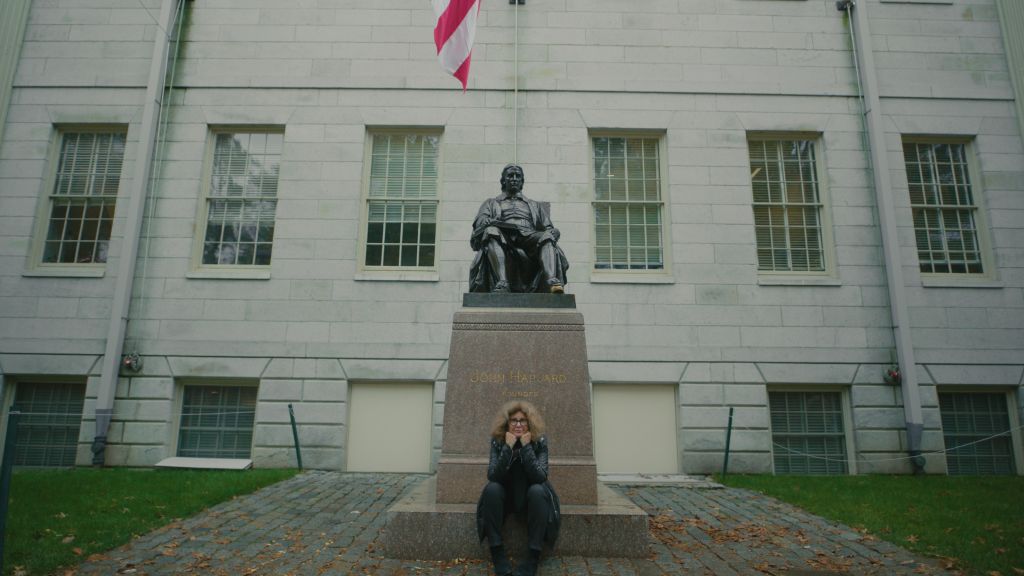
Indeed, the problem isn’t finding people who want to help. It’s finding a mechanism that lets them help. And that’s where some Canadian filmmakers are increasingly looking Stateside, to a system built to receive philanthropic dollars. That was the case for director Ric Esther Bienstock when finishing her most recent documentary, which is centred on the hot potato issue of free speech on college campuses.
Speechless was originally commissioned by the CBC and UK public broadcaster the BBC but did not get the support of Telefilm Canada or the CMF. When the broadcasters’ purses proved insufficient to complete the two-part doc, which premiered over two nights on CBC in April, Bienstock turned to the U.S. grants system to get over the finish line.
The film received financing from the Rogovy Foundation, which supports investigative journalism and defence of the Fourth Estate; and the Mike & Sofia Segal Foundation, a New York-based foundation that promotes “intellectual freedom” and has backed, among others, the Heterodox Academy, a think tank-style, non-partisan organization dedicated to promoting diversity of thought at universities. And with the aid of American exec producer Alex Gibney, Bienstock was able to find a U.S. 501(c)(3) fiscal sponsor to channel the funds.
“It’s been a tough film to fund because we’re living in very, very polarized times,” says Bienstock. “And one of the challenges in Canada, because of our system of tax credits, is that philanthropists can only give to a documentary if it’s a not-for-profit thing—and this has always been an issue here.”
To clarify, the friction for Canadian filmmakers isn’t that philanthropists can’t support documentaries; it’s that charitable donations come with constraints. A family foundation generally can’t just write a cheque to a production company as a simple charitable gift. Charities can now make structured grants to non-qualified donees, but only where the project advances their purpose and the spending is documented and overseen.
And that’s awkward in a system where most Canadian docs are produced through taxable corporations to access standard financing and key incentives like the Canadian Film or Video Production Tax Credit. Even when philanthropic support can be structured, it often counts as “assistance” that reduces the overall tax-credit base, making the economics far less straightforward than America’s standard fiscal-sponsorship route.
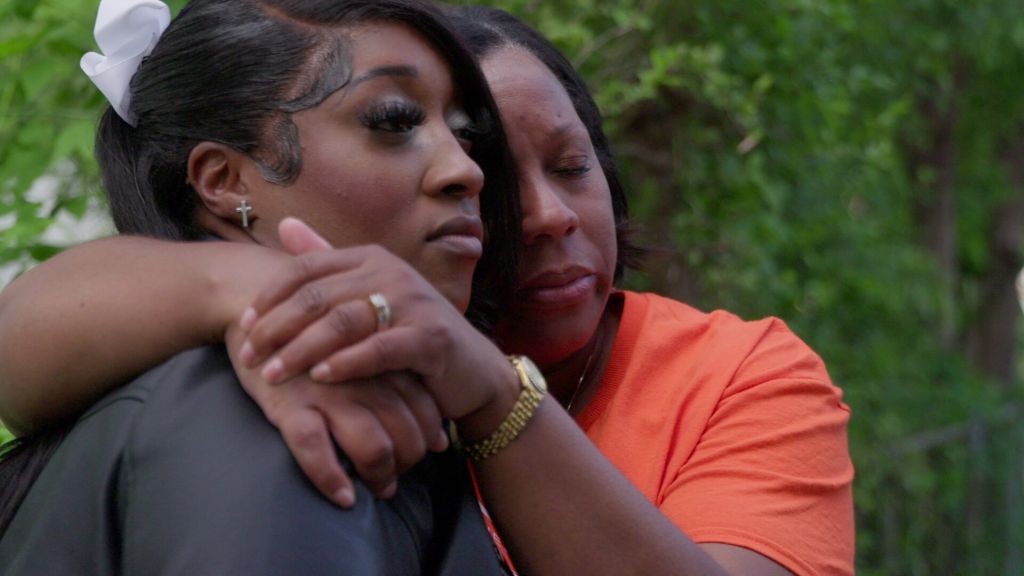
But to those looking to the U.S. free market as a modern panacea for the woes of our ailing system, some words of warning. Shin says that #WhileBlack is currently in debt after the Trump administration’s 2025 anti-DEI executive orders caused ITVS (Independent Television Service) funding to fall through.
“We had about 65% of our budget in and we were lined up for getting the next 30% from ITVS,” she recalls. “Then the executive orders came in and suddenly it was gone.” And while she hopes to make that loss back via international sales, “in the end, it might have been better if we had gone the Canadian route.”
Will the private equity world become a new patron support mechanism? “It seems to me,” Kastner reflects, “you’ll find funders who are issue-driven, but not necessarily interested in becoming a modern Medici family that supports you as an artist on an ongoing basis.
“If you’re doing something on an issue that they care about, then they’re interested in investing in that, sure. But that doesn’t seem to me to be a reliable replacement for what the broadcast world has provided, in Canada at least.”
This article is the first in a three-part series in issue #125 about the state of documentary filmmaking. To read the reports about production and financing in the USA and Europe, subscribe today!
Update (June 1, 2026): This post was updated to clarify the funding bodies for Speechless.