



Speechless
(Canada, 173 min.)
Dir. Ric Esther Bienstock
Prod. Ric Esther Bienstock, Garfield Miller
How did we get to this point? The contemporary culture wars offer an impossible tempest to soothe. Wrapping one’s head around fiercely opposed viewpoints and tiptoeing through the minefield of actually discussing them proves equally difficult. However, filmmaker Ric Esther Bienstock (Enslaved) fearlessly accepts the challenge that nobody wants to undertake these days: having a conversation.
Speechless examines the increasingly testy battleground of free speech on academic campuses. The potent documentary follows nearly a decade of increasingly polarised politics, volatile discourse, ensuing fallouts, and further discourse about said fallouts. As Bienstock readies her own kids for university, she wonders about the nature of these institutions for higher learning and what they symbolize for society more broadly. University campuses offer ideal microcosms for society, as people from different walks of life gather to exchange ideas in pursuit of shared knowledge.
However, being especially attune to the roles that campuses play, Bienstock detects a shift in the air. Campus protests these days hardly resemble rallying cries from student bodies during the civil rights movement or the Vietnam War. A clear example arises in 2017 when controversy erupts after a white professor at Evergreen State College cries racial discrimination. It’s a tricky charge, since the campus decides to flip the celebrations for its annual “Day of Absence” in which racialized students and faculty refrain from stepping foot on campus to raise awareness of the contributions of students and faculty members who are Black, Indigenous, or People of Colour.
The 2017 proceedings, however, ask white faculty members and students to stay home. Professor Bret Weinstein takes offense to that. He argues that it’s one thing for someone to voluntarily step back and another to remove someone from participation based on skin colour. That idea explodes like a bomb on campus. Students frame his argument to stay on campus as hate speech and the damage is done.
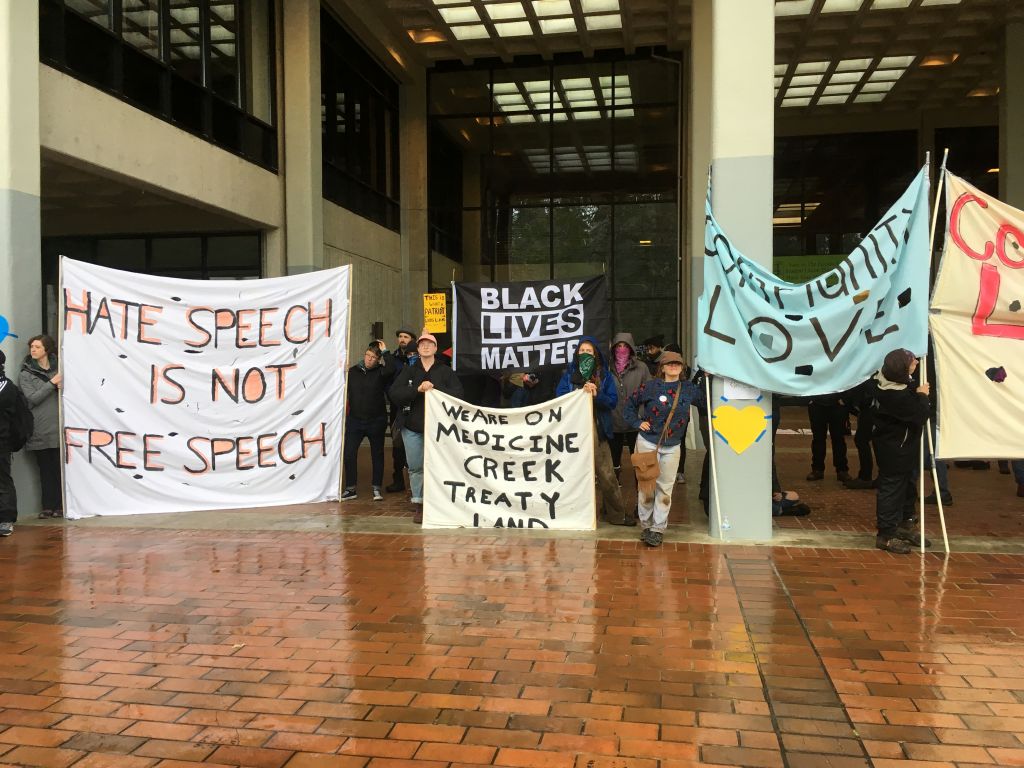
Speechless observe as the student body overwhelms the campus with signs and slogans. However, when Evergreen’s president tries to talk with them, he also faces charges of racism. Students cite micro-aggressions and hurl obscenities at him. When Bienstock asks basic questions to one of the students, she, too, gets slapped with the label of white supremacy. Conversation is not an option.
This alarming refusal to engage seems antithetical to the very institution the students claim to protect. Moreover, Speechless observes how this fragile mindset hardly proves unique to one liberal arts campus. Free speech for some and not for others, the film notes, shuts down the flow of information. Academia suffers when opposing viewpoints can’t interact.
The film captures the increasingly weaponized fight for free speech in America with campuses as the canaries in the coal mine for culture more broadly. Interviewees reflect some eye-opening and jaw-dropping case studies that illustrate how the Right took hold of the tailspin on freedom of speech on campuses and in turn seized an opportunity to dismantle systems of diversity, equity, and inclusion (DEI) as they were flying off the rails in the Ouroboros of campus politics.
Speechless refreshingly doesn’t limit the scope to generational finger-wagging. While students light the loudest sparks, mounting animosity to opposing viewpoints comes from faculty as well. The film asks how efforts to make campuses “safe” for students and faculty became a process of shielding them from diverse opinions.
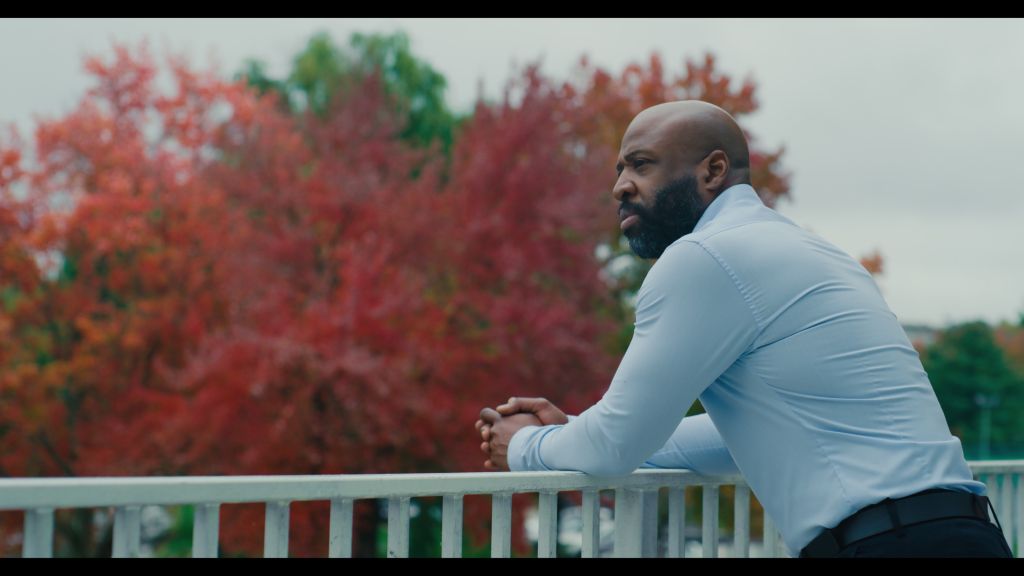
For example, Speechless features the pretty wild story of Erec Smith, a former professor of rhetoric at Pennsylvania’s York College. Smith, who’s Black, becomes a pariah when he challenges a colleague’s argument for the eradication of standardized English. That professor, Asao Inoue, charges that enforcing standardized and structured English inflicts a racist act upon speakers who didn’t choose to be governed by a colonial tongue. Meanwhile, Smith’s rebuttal takes pride in his Blackness and his command for language, but becomes controversial when he counters that it’s racist to assume that a Black man should say “ain’t” rather than “isn’t.” He, too, faces charges of white supremacy.
And then there’s the story of Zack De Piero, who basically lost his job for asking a colleague doing DEI training if she could elaborate on the ways in which he could enact and evaluate the practices she was encouraging. Admittedly, it probably didn’t help matters that he called her a cunt in a private message to a personal friend, which comes up during a deposition that sees him fighting for his career simply because he asked a question–in short, practising the very quest for knowledge that a university embodies.
Another doozy comes from Tirien Steinbach, Former Associate Dean for Diversity, Equity & Inclusion at Stanford Law School. She opens up about her choice to resign after she allowed a conservative judge to speak on campus, and then intervened amid explosive protests by the student body and asked him if “the juice was worth the squeeze” when his actions and words hurt the students–but nevertheless recognized his right to speak and eventually ceded the floor to him. When the school throws her under the bus for trying to add some order to the event and position the campus as a forum for the respectful exchange of opposing views, she steps down because Stanford’s mandate runs contrary to the philosophy of academia itself and her role to foster an inclusive environment.
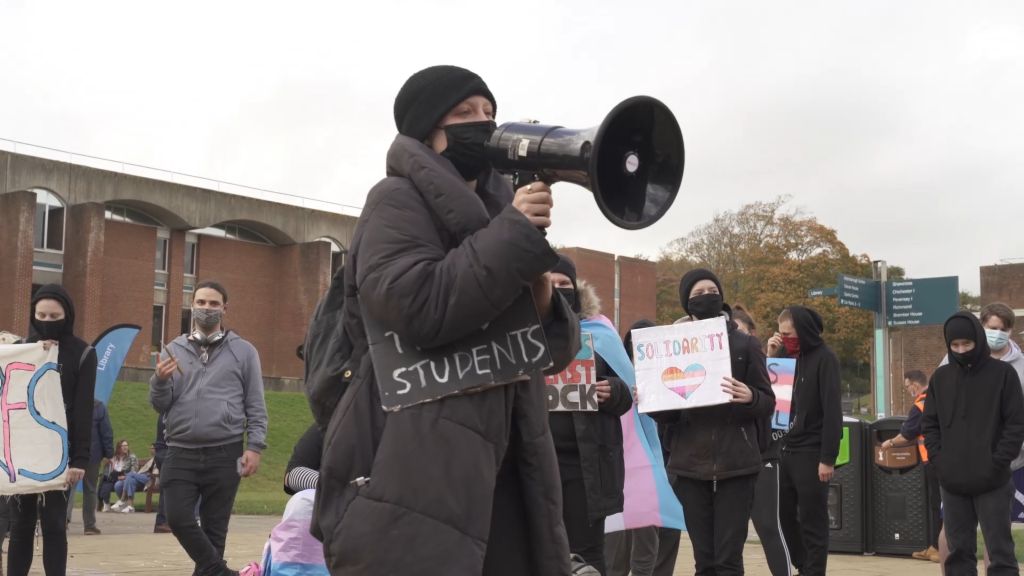
It’s one battle after another on America’s campuses. From one Trump election to another, from the murder of George Floyd to the COVID lockdowns, the production cycle of Speechless runs parallel to the escalating culture wars powder keg. The film situates the egg-on-your-face misfires of campus protests to the political manoeuvrings of the Trump administration and its allies to reverse course on America’s policy.
Speechless doesn’t seek to change viewers’ minds about DEI, nor does it question its legitimate role in society. The film harnesses this element of rocky campuses politics because the liberals in colleges across America are basically doing the work for Trump and company. Each mishandled student protest serves as a dog whistle for any conservative with an agenda.
While students might label Bienstock a white supremacist for asking basic questions, she wears her politics on her sleeve throughout the documentary. She describes herself as lefty – “maybe not a Birkenstock lefty, but definitely a suede Chelsea boot lefty” – and there’s a progressive bent to her questioning. See, for example, when conservative Christopher Rufo, board member at the New College of Florida, consistently misgenders a colleague during interviews. He refuses to use anything other than he/him/she/her pronouns, while Bienstock interrupts the conversation throughout with corrections of the colleague’s preferred gender-neutral “ze/zir.”
However, the showdowns merely offer training ground for what’s coming. Speechless observes as the Hamas attacks on Israel of October 7, 2023, and Israel’s violent retaliation on Palestine, take the free speech wars to another level. The familiar sights of student encampments and heated protests fuel the latter act of the film, but something shifts. Students find themselves overwhelmed with concerns about events half a world away. Protests mobilize before Israel returns fire. Language in the student rallies becomes increasingly violent and confrontational. Professors lead calls to globalize the Intifada without clearly educating the student body about what that cry means.
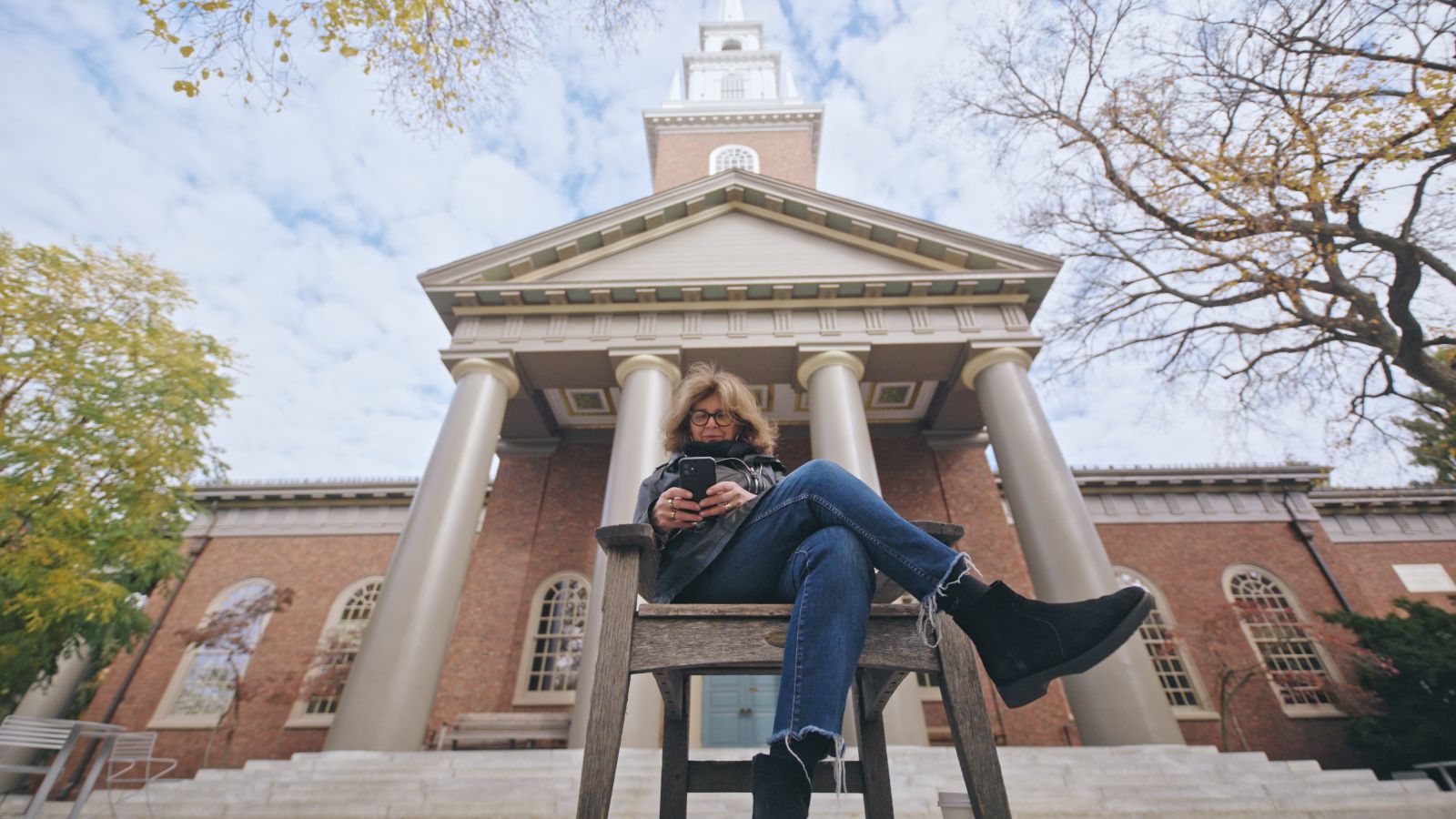
Bienstock observes as the situation spirals, both on the ground and on social media. She doomscrolls through her video feeds and watches clips that play differently out of context, yet effectively fuel one argument by silencing another. On the ground, she asks for context and clarity. Sometimes she finds it and sometimes she doesn’t, but few people seem willing to cross party lines to understand the story.
When students at Cornell University learn that Bienstock is Jewish, for example, they brand her a Zionist without engaging with her to learn her views. Many of them shy away from her altogether. Filming becomes next to impossible. The production itself experiences the ostracization and targeting that many Jewish students on campus live with daily. Bienstock doesn’t show this material to further any agenda or ideology, but rather to let audiences witness the sheer difficulty of engaging in civil discourse on campus if there’s the slightest possibility that said conversation won’t offer a comforting affirmation.
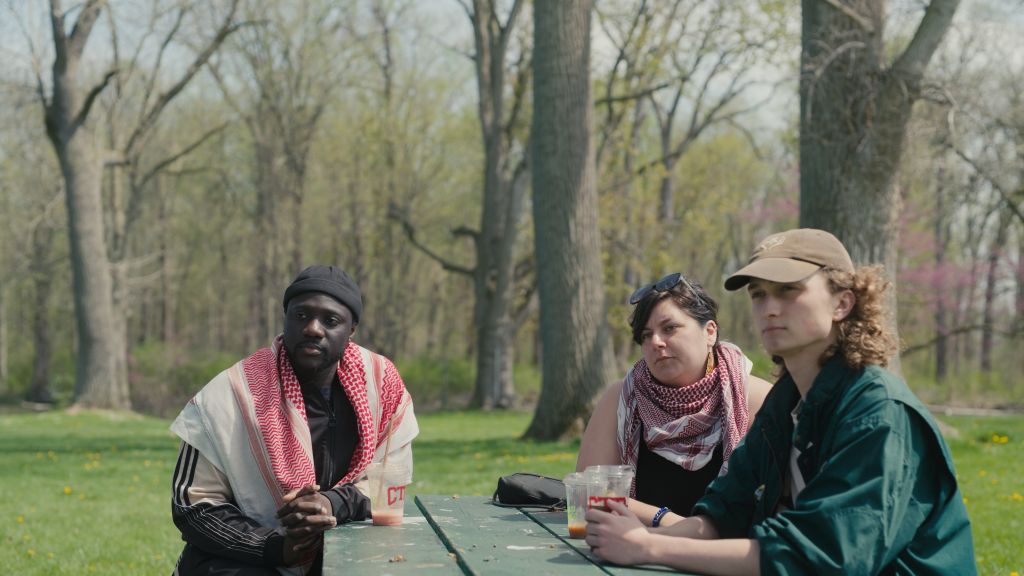
But some of the students whom Bienstock encounters, including those willing to engage with her, find themselves suspended for their actions. The colleges seem equally uninterested in discourse that disrupts the status quo. As campus leaders topple like dominoes, Speechless asks if things are going too far if we can’t have conversations in forums specifically designed for them.
Speechless situates past moments of discomfort that led to progress, like the civil rights movement, within the academic framework. Bienstock therefore approaches these stories from an intellectual perspective. There’s a Socratic method to the film’s madness as she seeks to understand present fragility through discourse. The film invites everyone to share his, her, their, or zir point of view be they a conservative pundit or the wokest tool the shed.
The interviews prove equally head-spinning and enlightening. Some participants articulate clear points of view that should have their place on campus, like a biology professor whose views on sex (not gender) force an early retirement, while other participants seemingly extinguish rationality, like justifying self-immolation to protest the violence in Palestine. Disagreements run rampant throughout Speechless, but the film laudably provides a forum for those differences to co-exist. Bienstock’s doc reminds audiences of the distinction between dialogue and bothsidesism or whataboutism, yet efforts to be objective often get miscategorized as such these days.
Many films have tried to tackle the culture wars, but Speechless sets the bar for including all parties in meaningful ways. The documentary smartly understands that a willingness to engage in these conversation offers the only escape plan from the escalating pressure cooker in which we all find ourselves. It’s an early contender for doc of the year–and one that demands discussion.