




Nathan Fielder has infiltrated America and he’s done so by mastering Canada’s two great arts, comedy and documentary. As a comedian, he is the latest in a proud lineage including Eugene Levy, Catherine O’Hara, Lorne Michaels, Martin Short, John Candy, Mary Walsh, Mike Myers, Jim Carrey, Seth Rogen. He is also a documentarian, with the series finale of Nathan for You, “Finding Frances,” and the two seasons of The Rehearsal sitting comfortably enough alongside heartfelt, high-concept documentaries like Sarah Polley’s Stories We Tell or Guy Maddin’s My Winnipeg.
Indulge me in a measure of armchair sociology: our comedy and documentary impulses arise from a Canadian sense of separateness. America’s the main act. It falls to Canadians to accommodate ourselves to that reality. Either we can localise ourselves by limiting our scope to Canada, or we can go to America, where our profound similarity with our southern neighbours means we can slip in unnoticed. But there’s always something off about us, a separateness that is almost impossible to define except as simply not-American. When we’re in America, we’re in it but not of it.
Fielder’s comic and documentary persona is emblematic of this separateness. It is the opposite of the quintessentially pleasant, good-natured, easy-going, self-effacing Canadian quietly existing in Hollywood. Fielder seems deliberately, almost abrasively, awkward. Most of his interactions are stuttery, stop-start messes. He speaks in a monotone, a wilful vacuum of anything that would usually be considered charisma. He overthinks everything.
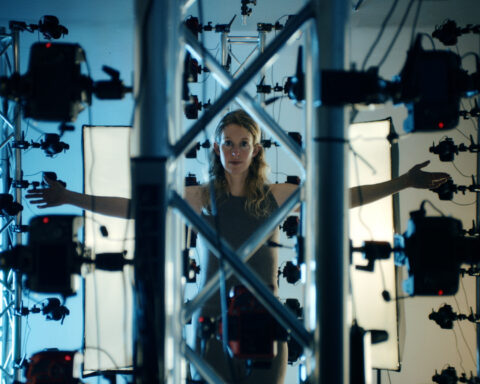
At the beginning of season one of The Rehearsal, Fielder is so stressed about how a new social interaction will play out that he rehearses for it dozens of times in an exact replica of the apartment in which the interaction will take place, having sent in a camera crew undercover to scope it out—setting the pattern for the series as a whole. He is, in short, the opposite of that most Canadian quality: chill. Watching Fielder’s oeuvre, one is, in the first instance, shocked that such a socially inept person puts himself in such social situations all the time, and, in the second instance, shocked that so many people are so willing to play along.
Late in season two of The Rehearsal, Fielder wonders if these anxious and overthinking tendencies qualify him as autistic. Maybe so, maybe not. If we Canadians are honest with ourselves, do we really find his flat affect and social awkwardness so alien? Having moved to the UK several years ago, I’m struck, whenever I’m back in Canada, by how bizarre that endemic Canadian deference now seems, how much it scans as almost pathological shyness and aloofness bespeaking a deep underlying anxiety and fear of other people, all masked by a learned don’t-rock-the-boat nonchalance. Maybe Fielder isn’t autistic, he’s just Canadian. Fielder speaks for all Canadians in his default response to his interlocutors: “Oh, okay.”
Fielder’s career began with a stint in the late 2000s on This Hour Has 22 Minutes presenting a segment called “Nathan On Your Side,” which purports to be a consumer guide but turns every interaction into an improvised comedy sketch. In one episode, Fielder lassos a salesman into acting out a scenario in which Fielder is interested in buying an mp3 player but then rebuffs every attempt the salesman makes at pitching options to him, saying that he’s “just looking” and gazing off anywhere but at the salesman. The message: buying an .mp3 player can be difficult when annoying salesmen keep bugging you.
Crucially, the salesman is laughing the entire time. He’s in on the joke. Whether or not that is the case with Fielder’s myriad interlocutors is probably the central question with much of his subsequent work.
That work begins with the show that shot Fielder to relative fame, the HBO series Nathan For You. Presenting himself in the opening credits, in typical deadpan voiceover, as a graduate of “one of Canada’s top business schools” (University of Victoria) where he got “really good grades”—as a transcript shows grades ranging from A- to C+—Fielder sets out to help struggling small businesses in his new hometown of Los Angeles.
To say his techniques are unorthodox is to understate the case. In the show’s first viral moment, Fielder rebranded a local café as “Dumb Starbucks,” purporting to take advantage of a loophole in intellectual property law that allows for fair use in the case of parody. Most of the time, Fielder’s experiments fail or are mild successes. Dumb Starbucks, by all accounts, genuinely worked. As The Guardian reported, “Hipsters arrived in droves to take selfies in front of the Dumb Starbucks logo. Tourists traveled from the West Side of Los Angeles to take pictures in front of the hipsters. Social media liked talking about how dumb those first two groups of people were.” It even got Fielder invited on to Jimmy Kimmel.
To what extent is Fielder making fun of his clients? It’s almost never entirely clear. Isn’t he, with his autistic affect and terrible ideas, just as much the butt of the joke as his “clients” are?
More to the point, by the end of the series, this question has been short-circuited. In the last episode, “Finding Frances,” a 78-year-old Bill Gates impersonator from earlier in the series makes an unexpected return. It seems he likes to hang out at Fielder’s office, for no particular reason. Eventually he tells Fielder he’s preoccupied by a woman he dated decades earlier, and Fielder decides to help him find her. Fielder hires an escort to help Bill rehearse for meeting Frances, but when Bill refuses to meet her, Fielder goes instead, and a friendship seems to develop. By the end of the episode, Bill has made peace with the fact he won’t reunite with Frances but has a new opportunity with another woman, while Fielder reunites with the escort—albeit surrounded by cameras.
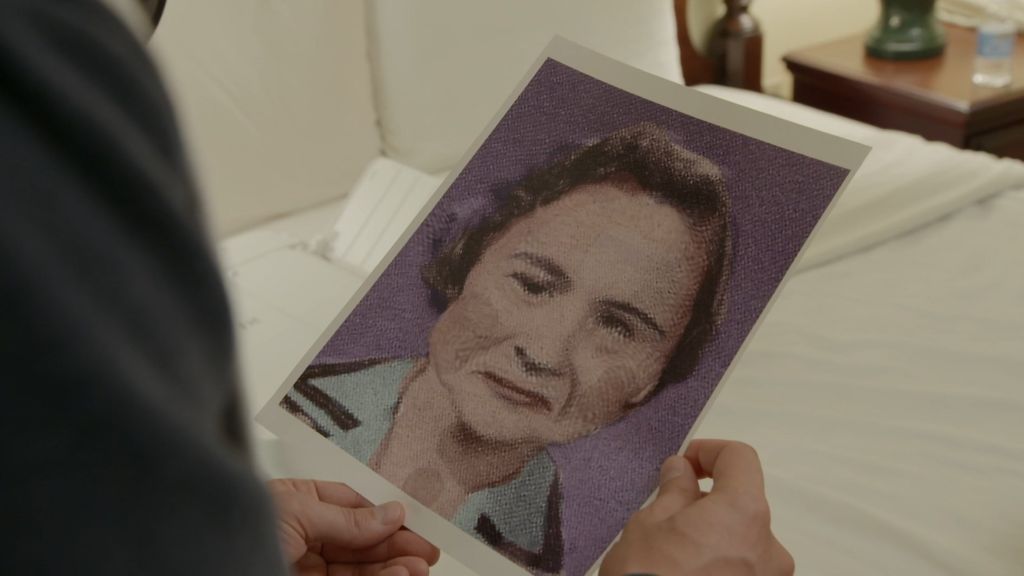
Did “Finding Frances” flip the whole Nathan For You formula, or refine it? Leaving the business advice angle aside, the show was mainly about Fielder’s bizarre encounters with strange people. What the finale did—what, maybe, all the episodes did, underneath the comedy—is stage genuine connections between Fielder and his “clients.” In other words, both things are true: Fielder is making fun of them while at the same time he does feel genuine sympathy. Finally, he actually identifies with them. He and they, in the final analysis, are just people trying to make something happen—business, art—and connect with others in a strange and difficult world that tends to drive people apart.
There is a wager implicit in this, that Fielder’s clients, absurd and pathetic and desperate as they sometimes seem, are actually completely normal, and Fielder, odd duck that he presents himself to be, is actually an everyman. I find this rather compelling. This ambivalent (but not contradictory) view of humanity as both ridiculous and sentimental is, I think, the source of Fielder’s comedy-drama-documentary balancing act.
In The Rehearsal, Fielder pushes that vision to new extremes. Redolent of Charlie Kaufman’s film Synecdoche, New York and Tom McCarthy’s novel Remainder, The Rehearsal plays on a surprisingly common motif of anxious art, the desire to retreat from the chaos and fluidity of the real world and, in its place, create and live in a completely quantified, controlled and scripted simulacrum.
This is art as analysis, research, experiment. In The Rehearsal, Synecdoche, New York and Remainder, a central character’s obsessive rehearsing, restaging and reenacting is directed toward discovery of some secret of life that remains out of our grasp. For Kaufman, Caden Cotard’s (Philip Seymour Hoffman) all-encompassing Gesamtkunstwerk is figured as the logical conclusion of art itself, a full and final and rigorous mimesis. But instead of redeeming its creator, it consumes and destroys him while remaining itself unrealisable, maybe by definition: a quixotic misunderstanding of what art can and should do. For McCarthy, whose unnamed narrator obsessively restages half-remembered events that took place prior to some unknown injury that left him amnesiac, the tendency is supposed to reconstruct his lost identity. For both, art is meant to help its creators divine some secret of life, but in the end, the simulacrum ends up standing in for reality, becoming a new reality itself.
The same spirit animates The Rehearsal. Fielder purports to believe that human interactions can be studied scientifically and, in so doing, perfected. All it requires is getting the inputs right.
This is where things get complicated. Who knows what will ultimately affect how someone acts in any given moment? Isn’t every single experience of one’s life a potential input to be controlled in the experiment? Isn’t every single detail of the experimental setting—every tear and stain on every piece of furniture, etc.—potentially significant? This is Fielder’s wager.
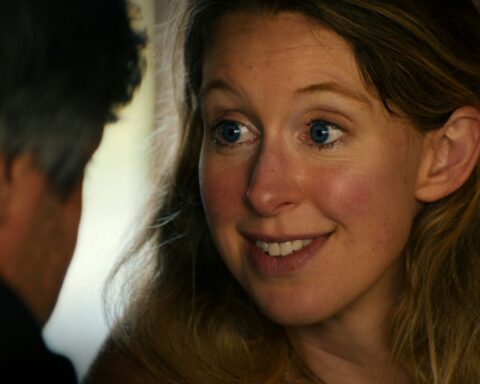
Most of season one comprises an extended rehearsal of the experience of motherhood for a participant, Angela, who is undecided about whether to have children of her own. In initial interviews with Fielder, Angela sketches out her fantasy—the house, the acreage, the husband, the kid—and Fielder sets it up as precisely as possible, using dozens of child actors and a large house in rural Oregon to stage some simulacrum of the experience of raising a child from birth up to age 18. By the end of episode two, Fielder signs himself up as co-parent, with results as awkward and wholesome as you might expect. As ever, the joke, if there is one, is on Fielder as much as anyone.
More to the point, it’s another indication that, for all of Fielder’s performance and insistence on distance and separation, the real pretext of all his work is actually that he wants to get involved and experience things but doesn’t quite know how, so he creates controlled settings in which to do so.

Which brings us to season two of The Rehearsal, the most sublimely ridiculous work of Fielder’s sublimely ridiculous oeuvre. In a startling shift of focus from season one’s look at the archetypal experience of motherhood, season two is about airplanes. Specifically, Fielder purports to have discovered, from black box transcripts, that communication breakdowns between pilots and co-pilots are at fault for plane crashes. Fielder, alongside John Goglia, a former head of the U.S. National Transportation Safety Board (NTSB), sets out to prove his case and develop better communication techniques over the course of six episodes in a mysteriously well-funded HBO series.
In the most ridiculous episode of the season, Fielder’s quest leads him to Chesley “Sully” Sullenberger, the pilot who emergency landed a plane in the Hudson River in 2009. To figure out how Sully managed this heroic feat, Fielder starts with proximate causes, studying the plane’s black box to get a sense of how Sullenger and his co-pilot communicated in the crucial moments. Dissatisfied with this, Fielder goes all the way back to the beginning. Using the acclaimed pilot’s autobiography as material, he recreates every moment he can from Sullenberger’s life, from the time he was born up until the emergency landing, with Fielder playing the central role.
Am I wrong to see a furtive Canadianness in this? Some of the funniest and most poignant moments in Fielder’s oeuvre have him badly mimicking Sullenberger’s Texan accent. Sullenberger, the quiet Texan former Air Force captain who saved hundreds of lives in a matter of fact, do-what-must-be-done, Gary Cooperesque feat of individual heroism, is just so quintessentially American. The strong, silent type. The contrast with Fielder, the neurotic Canadian Jew, is hilarious, and also unspoken and subtextual. Neither Fielder’s Canadianness nor Jewishness are mentioned at all.
I see a similar surreptitious subtext in Fielder’s sole foray into scripted television thus far, The Curse, in the dynamic between the passive schlemazel Asher (Fielder) and the bullying, swaggering Dougie (Benny Safdie). There’s nothing in the story to suggest that Asher is Canadian, but it really feels like he is. (Just as there’s no hint, most of the time, that the characters played by Eugene Levy or Seth Rogen or Jim Carrey are Canadian, but we all know they are.)
Let’s put it this way: it feels quintessentially Canadian to not quite get how things work and try to fit in by embodying the people who do instinctively understand how things work. But by failing in interesting ways, Canadians reveal and undermine the presumptions of the American society we only semi-successfully infiltrate. It also feels like the quintessential Canadian move to use a mix of humour and observation—comedy and documentary—to attempt that infiltration. That way, we get to preserve our distance and distinct identity: we remain aloof and outside the reality we’re actually in.
Seen in this light, Fielder’s focus on cockpit communication in season two of The Rehearsal begins to make sense. The whole premise of the show is that he wants to study communication in granular detail, to crack the code of human behaviour. S1E2 ends with Fielder making a series of phone calls guided by flowcharts; in S2E2, a bizarre digression from the airline safety plot into a singing competition judged by pilots and himself, Fielder elicits feedback from contestants about how likeable the testers were, takes issue with his own low scores, and sets out to improve his likeability by emulating the tester with the highest score.
Applying this approach to the all-American vocation of the airplane pilot, particularly in emergency situations, both continues Fielder’s interest in communication and raises its stakes. Quite drastically. In the last episode of season two, Fielder reveals that, all this time, he has been taking pilot lessons and has progressed from being the worst student the flight academy has ever encountered to, by the finale, becoming a competent pilot. In the finale, he flies, alongside a co-pilot, a plane full of passengers.
Yet it’s unclear, at the end, whether Fielder has really demonstrated that communication is the key to flight safety. (There seems to be disagreement among pilots about how much of an issue it really is.) His safe landing is, I suppose, meant to demonstrate the validity of Fielder’s thesis about communication. In fact, we’ve witnessed a fair bit of miscommunication in the cockpit; and anyway, there was no need for an emergency landing, rendering moot the need for communication in a crisis. Fielder just has to follow technical protocol, which he does.
Still, the reenactments have had unintended—or, maybe, intended, but ulterior—consequences. At the end of the episode, Fielder reveals that he now has the world’s most elaborate side hustle as a pilot flying empty planes to wherever they’re needed. The season ends with him flying between Brazil and Namibia, where he seems to be alone, more or less serene, above the clouds.
Maybe the joke was actually on us all along. Maybe the whole thing about improving communication was a red herring. Maybe Fielder has actually pulled off a stunt worthy of Buster Keaton, his forebear in deadpan comedy. Just as Keaton probably only made The General so he could play around on trains, Fielder may have only made The Rehearsal so he could play around on planes.