



Checkpoint Zoo
(USA, 107 min.)
Dir. Joshua Zeman
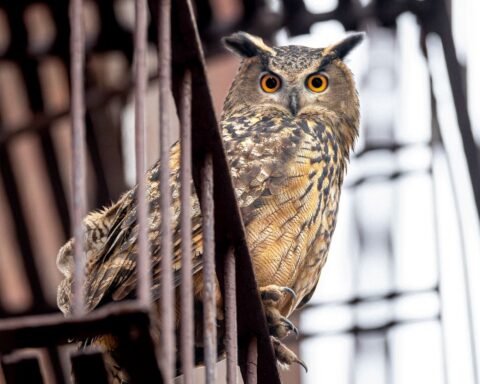
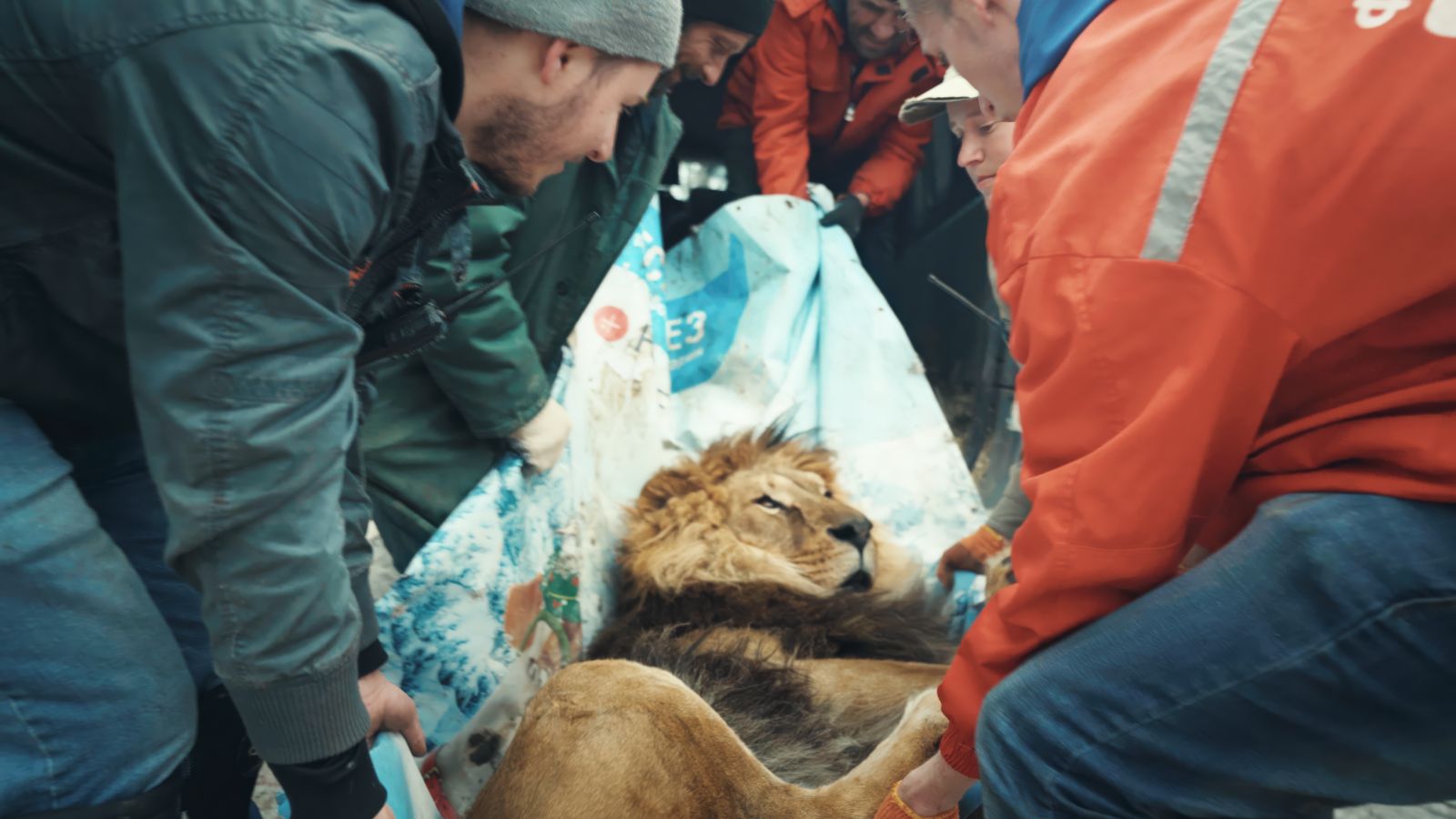
An understated and deeply unsettling consequence of war is the cognitive blindness that arises the longer a conflict persists. Human sympathy is viciously tied to shock-value, which means that desensitization becomes the ultimate destination for the distracted viewer. In these despicable times of constant detachment, the premise of Checkpoint Zoo presents the opportunity to reconnect global audiences to a still-relevant issue that they have learned to forget. Centered around the war-time conditions of over 5,000 animals housed inside Feldman Ecopark, a zoo near Kharkiv, Ukraine, the film chronicles the rescue efforts to save and relocate these animals after Russia’s invasion in February 2022. Filmed during the first 71 days of the annexation, the film directed by Joshua Zeman (The Loneliest Whale) captures three distinct rescue segments – the initial efforts by staff to feed the starving animals, relocation of the animals to the sprawling countryside estate of owner Oleksandr Feldman, and efforts to engage the broader Ukrainian community to find homes for the animals in zoos across the country.
Through the plight of the animals, Checkpoint Zoo attempts to reconstruct the viewers’ outlook towards war and its detrimental impacts, effectively relaying the idea of unequal and non-linear suffering during a conflict. In shifting the focus on animals instead of humans, the film recalls the effect of the recent Robbie Williams’ experimental biopic Better Man where the services of a CGI ape were employed to sensitize viewers to his sensational life story. However, there is a sinister ethical dilemma that underscores Checkpoint Zoo: the zoo animals—real, in this case—find themselves in a unique and utterly dangerous predicament isn’t their own doing. It is true that they need rescuing from the conflict, but one could argue that despite the efforts of the employees of Feldman Ecopark, the animals are never truly rescued. The animals’ captivity within the tangible and intangible infrastructures of the capitalistic zoo remain a threat to their lives, regardless of the conflict in which they are embroiled. It is this thought that prevents the efforts undertaken by Feldman Ecopark to be perceived as entirely authentic, for in a direct way, they are the ones to blame for the animals’ living conditions in the first place.
While the film’s intro lays out Feldman Ecopark as a place that extends beyond the common understanding of a zoo, offering rehabilitation zones for rare and domestic animals, charity programs for children with special needs, and programs for animal therapy, it still ultimately remains a place of imprisonment. It is not flora and fauna native to Ukraine that the workers are trying to rescue from the perils of war, but animals that had no reason to be caught in the crossfire of a violent Eastern-European conflict. This feeling is typified during the rescue workers’ initial visits to feed the animals when a veteran employee loses his life after being attacked by a lion he’d been feeding for years. An animal native to sub-Saharan Africa and India, the lion is resigned to starvation in a zoo in Ukraine while sounds of war ring out throughout his enclosure. As the film plays out, we realize that it is not one but two conflicts that the animals are facing, but the makers are only focused on one. Towards the end of the film, one of the subjects says, “Animal freedom, that is the topic we need to reassess,” referring to the lack of wartime protection measures for zoo animals, which ironically conveys the oblivious moral high ground from which this movie preaches.
Despite its murky politics, Checkpoint Zoo features a group of enthusiastic and dedicated individuals whose sole focus is to bring these animals to safety. One of them, Tymofii Kharchenko, a veterinarian and a Ph.D. student, collects several of his friends to form a ragtag crew called “The Boys” to ease the logistical pressures on the zoo employees. Through the efforts of The Boys and the zoo workers, the film plays out as an interesting vehicle of human strength, community, and compassion, as the team braves several Russian attacks and transportational crises, losing a few of their comrades along the way, in arduous efforts to save the animals. Additionally, the film features multiple moments of high-tension escapes and instances of violence which convey the seriousness of war quite effectively and consistently re-educate the viewer about the horror unravelling in Ukraine even today. Russian shelling destroying animal enclosures, Russian soldiers shooting and killing the zoo’s employees, and the death of an employee’s visiting teenage son are just a few moments in a film rife with regular warnings of the fatality of war.
However, as one would expect from an animal documentary (with access to over 5,000 in this case) the film is packed with tender and humorous moments of human-animal connection and animals being animals, which simultaneously alleviate tensions and prevent the film from charting into overtly serious waters. Ultimately, this works in favour of the film: despite its intensely political nature, it avoids making any overt political commentary that intricately unpacks the ecological impacts of warfare. Despite its argumentative flaws, the film indirectly depicts human wickedness as a spectrum, with the activities of the Russian soldiers and the Ukrainian zookeepers aligning themselves along different frequencies towards the same end, making Checkpoint Zoo more compelling as an insight into human morality and psychology rather than a doc exploring the pervasive effects of war on animals.