



The Secret Reading Club of Kabul
(Finland/Norway, 90 min.)
Dir. Shakiba Adil & Elina Hirvonen
Prod. Pauliina Piipponen & Johanna Raita
Programme: Persister (North American premiere)
We remember the heart-wrenching images that came out of Afghanistan after President Biden announced the U.S. would be withdrawing from the region in 2021. 20 years of control ended with U.S. Air Force jets preparing for take-off and countless Afghans climbing onto the wheels in desperate attempts to flee the country foreseeing the inevitable resurgence of the oppressive Taliban. The world thought then that these images would be seared in our collective consciousness for years to come. Six months later, Russia invaded Ukraine, and all was forgotten.
Shakiba Adil and Elina Hirvonen’s The Secret Reading Club of Kabul hinges upon a simple question that Adil has asked herself since she was a little girl: ‘Does the world know what is happening in Afghanistan?’ Constructed largely as an epistolary endeavour, the film follows the first-hand accounts of three girls, Rakshana, Dua, and Mahtab, as they narrate their experiences under the Taliban rule since the departure of the U.S.
https://youtu.be/w3TDAKxAaZQ?si=zoj9daiMuokF72CD
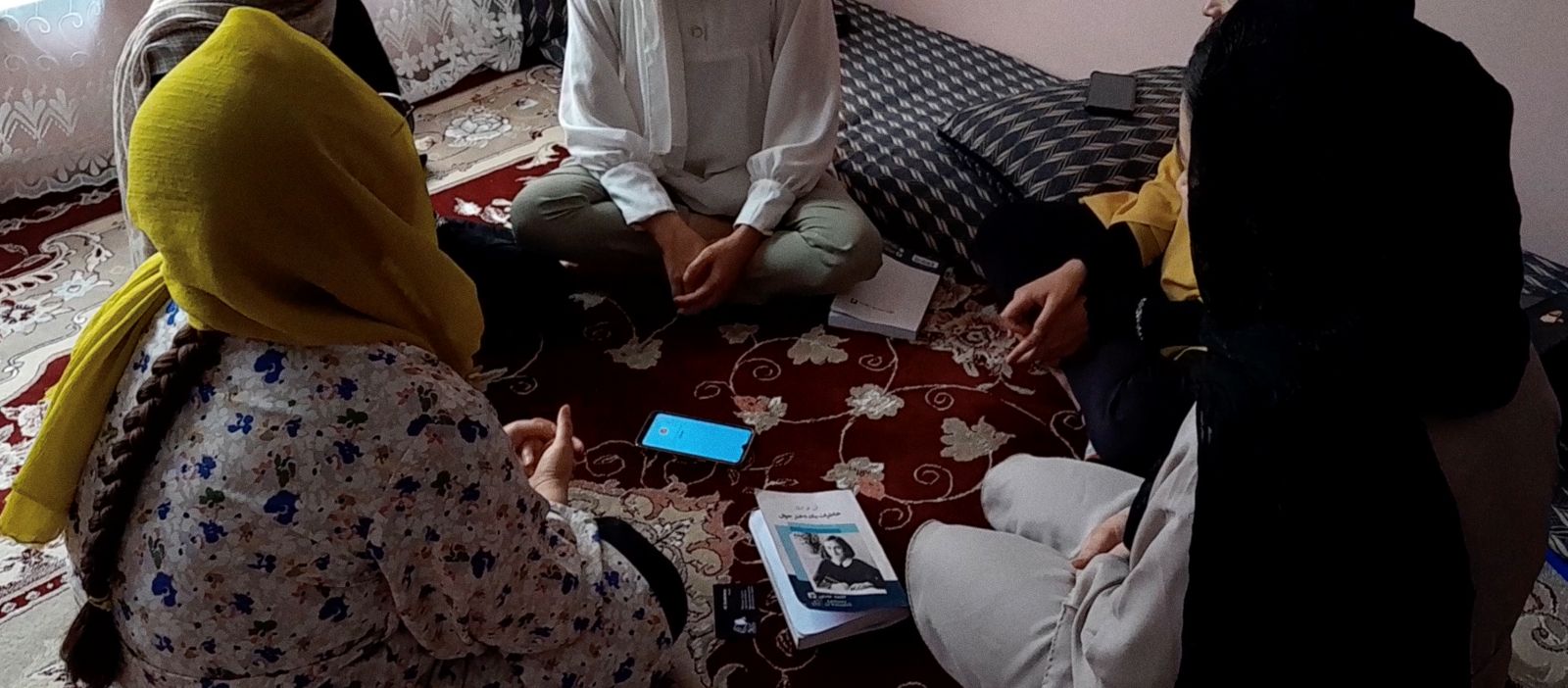
The idea for their independent diary entries is borne out of the eponymous reading club, organized by Rakshana, where the girls meet in secrecy to read The Diary of a Young Girl, by Anne Frank. As the girls meditate on Frank’s diary entries, the film draws a relational strand between the struggles endured by Frank while hiding from the Nazis with her family during the Holocaust and the suffocation of the film’s protagonists at the hands of the Taliban. Through this connection, the film emphasizes the divide that exists between victims of conflict hailing from developed countries as opposed to those suffering in developing countries. As the film unfolds and the girls begin thinking of leaving Afghanistan in pursuit of freedom, the question of patriotism in a country marred by ideological regression also looms large.
While discussing the collective strife that the girls face under the Taliban, the film’s commitment towards centering their aspirations and not the obstacles is commendable. Rakshana dreams of being the first woman president of Afghanistan, Dua hopes to write the most famous movie script in the world, and Mahtab wants to compete as a wrestler in the Olympics. The film consistently privileges the efforts the girls undertake towards these dreams within the restrictive environment that they find themselves in. Filmed over a period of three years, The Secret Reading Club, shows the worsening conditions for women under the Taliban and demonstrates the protagonists’ resolves to challenge the regime at every step.
While the audience is made aware of the specific laws that target women’s freedom in Afghanistan, the experience of living under oppression is relayed through the monologues of the protagonists, offering illuminating meditations on liberation, oppression, religion, and coming-of-age. At one point, Dua asks, “Why is our god not the same as the one of the other women in the world?” In these pointed questions that externalize the girls’ frustration, the audience is made aware of the blind eye that the world has turned towards Afghanistan.
The film features director Shakiba Adil herself among the participants, as she recounts her experience growing up in the pre-U.S. Taliban rule. Acting as a mentor to the girls, Shakiba advises them to read Frank’s book and to start a book club. She eventually helps two of them in their quest to flee Afghanistan. Through Shakiba, the film also effectively exposes the falsehood of the United States, depicting the country as one who only cared about the Taliban after 9/11 and despite combating the terrorist outfit for nearly two decades, did nothing to ensure that democratic rule was reinstated in the country before they departed. Shakiba’s thesis question, “Does the world know what the Taliban did to Afghanistan?” is therefore a poignant one considering that the United States did know of what happened, but cared too little to ensure that it didn’t.
In a climate of over-reports and under-sympathy, the film is mounted as an effort to re-educate the world on the strife of the Afghans and to question the responsibility of the rest of the world towards Afghanistan. That being said, the film is slightly misleading from its title, as the reading club is not necessarily portrayed as a transformative experience or an exceptional act of protest. It is true that the three girls form a sort of collective, but the unison of this group isn’t as visible as one would expect. We often see Shakiba acting as a sort of intermediary between these girls, which casts a shadow of doubt over the exact role that the reading club served for the girls. In fact, the first book that they pick, which is Anne Frank’s diary, is the one that they’re reading until the climax of the film, with at least two years having passed between the start of the book club and the end of the film. The reading club thus functions more as a narrative device to bring these girls together under an Anne Frank umbrella rather than having any sort of effect on their relationships, ideas towards freedom, or attitudes towards the Taliban. The intent here is admirable, although the circumstances are somewhat awkwardly forced.