




Black Zombie
(Canada, 90 min.)
Dir. Maya Annik Bedward
Prod. Maya Annik Bedward, Kate Frasser, Hannah Donegan
Programme: Special Presentations (Canadian premiere)
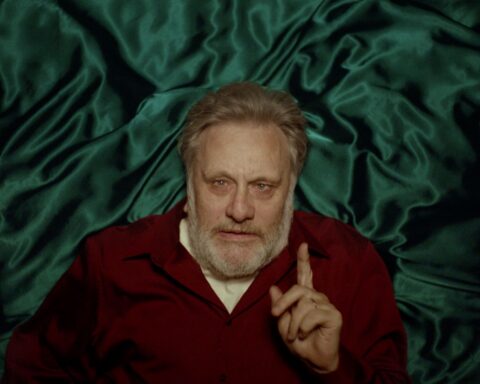
We’ve seen them, we’ve feared them, and for most of our lives we’ve believed them to only want one thing: braaaaaaaains. Despite being surrounded by representations and misrepresentations of zombies, their history isn’t as widely explored in popular media as, say, the vampire, the werewolf, or the culturally vibrant witches and wizards who populate our screens. Maya Annik Bedward’s Black Zombie explores the origins of this supernatural being to educate and re-educate audiences about the Black history of the zombie, and its exploitation by colonial forces. Featuring discussions with scholars, historians, Vodou priests, and the lead guitarist of Guns N’ Roses, the documentary excavates the little-known history of zombies being a Haitian Vodou metaphor for slavery. It investigates how American media appropriated this figure to mean something entirely different from what it originally represented.
Black Zombie features extensive discussions on the shared history of slavery and zombies, offering insight into the figure’s origins not as a flesh-eating monster but rather as an individual who had been stripped of their autonomy. “The zombie is a phenomenon of dispossession,” says professor of French and African Studies, Kaiama L. Glover, who relays the significance of the zombie figure in Vodou culture.
Nestled at the intersection of theoretical conversations with the likes of Glover, cultural historian John Cussans, and film historian Tananarive Due, religious discussions with Vodou priests and priestesses, conversations with creators of American zombie movies and zombie enthusiasts, the film comprehensively explores the conceptual divides that exist when thinking about zombies. Analyzing American media on zombies beginning with William Seabrook’s The Magic Island, the first popular English language text to explore the idea of the zombie, and extending to zombie films including White Zombie (1932), King of the Zombies (1941), and Night of the Living Dead (1968), Bedward’s doc meticulously explores how the idea of the zombie was adopted by American entertainment doused in themes of racist antagonism of Black people and culture, and was subsequently stripped of its Black history and converted into a symbol of flesh-eating terror constructed upon racial fears and concerns surrounding immigration.
The extensive discussion of the Night of the Living Dead, led primarily by the film’s screenwriter, John Russo, is particularly fascinating as it traces the film’s role in defining zombies as twisted, undead monsters in the form in which we understand them today (i.e: the brain-eating kind). It is also interesting here that the word ‘zombie’ does not feature in the Night of the Living Dead itself, which used “ghoul,” and was a term retroactively used by director George A. Romero when speaking of his film.
Black Zombie is well constructed with a plethora of archival footage from films of the past, which is ably supported by animated and recreated sequences to visualize periods of Haitian history that have largely remained absent from a discussion of zombies and Vodou culture. It is these staged recreations of pre-independence Haiti, shot in a grim black and white, following a plantation worker carrying out his tasks in a zombie-like trance, that effectively ground the film in a history that it is working to privilege. It is definitely a preoccupation of Bedward’s project to reframe Haiti as a land of resistance, and to show that Vodou culture as not something to be feared but rather something that carries within it the resistance and liberation that defines Haiti. This is best expressed by Erold Josué, an artist, performer, choreographer, philanthropist and Vodou priest, when he says, “Stop portraying Vodou as the world’s devil. Instead, show it as a religion of liberation, as a religion and a way of life that changed the world from the moment of our revolution.” In this regard, the film also deconstructs misconceptions surrounding the influence of Vodou towards Haiti’s struggle for independence through discussions of spirituality, circumstances of Haiti’s independence, and the colonial fears surrounding a liberated Haiti.
It is to Bedward’s credit that she is able to construct a well-informed, entertaining, and visually distinct document that explores with dedication a phenomenon that we see so much of but know quite little about. Just within the last few years, we’ve seen the 28 Years Later franchise, which rebooted the sped-up zombies of 28 Days Later (2002), the Zombieland franchise, #Alive (2020), and Train to Busan (2016) dominate popular discourse. Going further back, there have been countless films across genres, languages, countries, and platforms that have posited zombie stories without an interest in or discussion of the history of the term itself.
On the heels of Ryan Coogler’s Sinners, which reimagined vampires in a story rooted in Black music and culture of the American South, Black Zombie stands out as an excellent excavation of a specific element of the horror genre, one that privileges Black history and culture and works to re-educate people on a phenomenon that unites countless fans across the world.