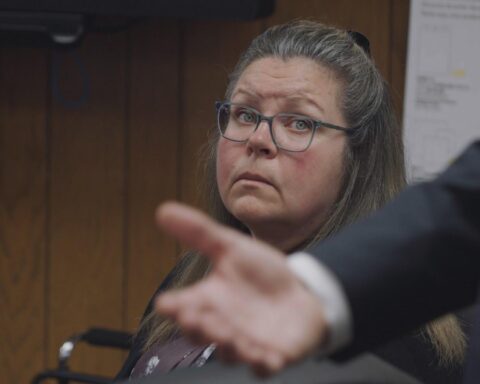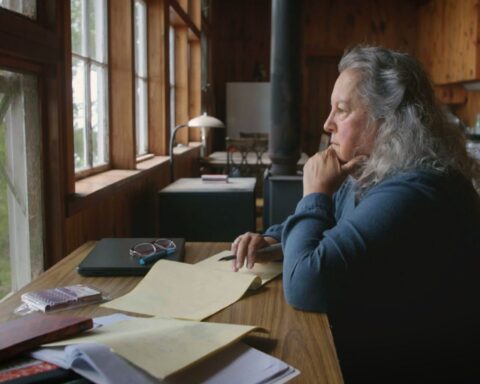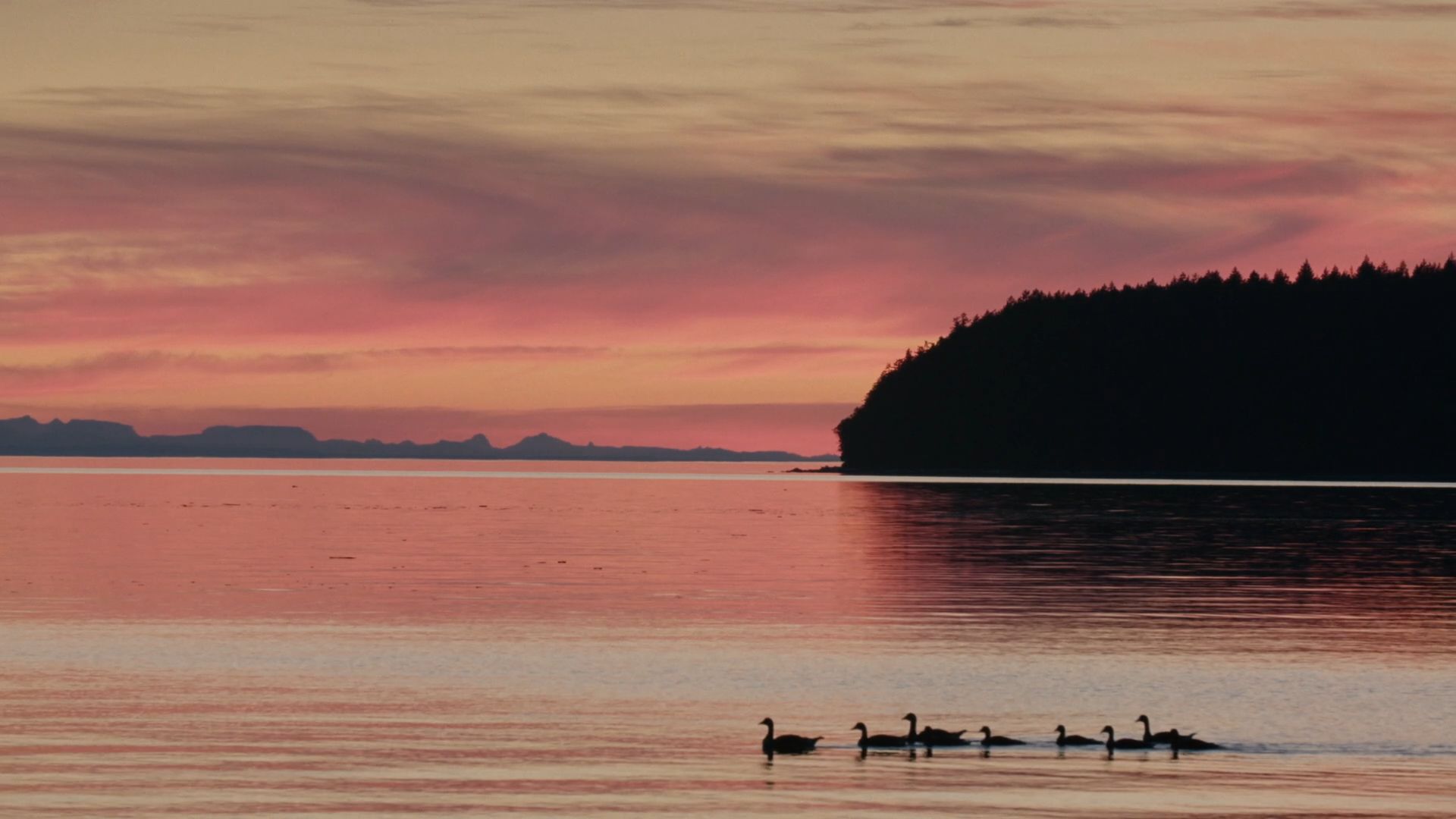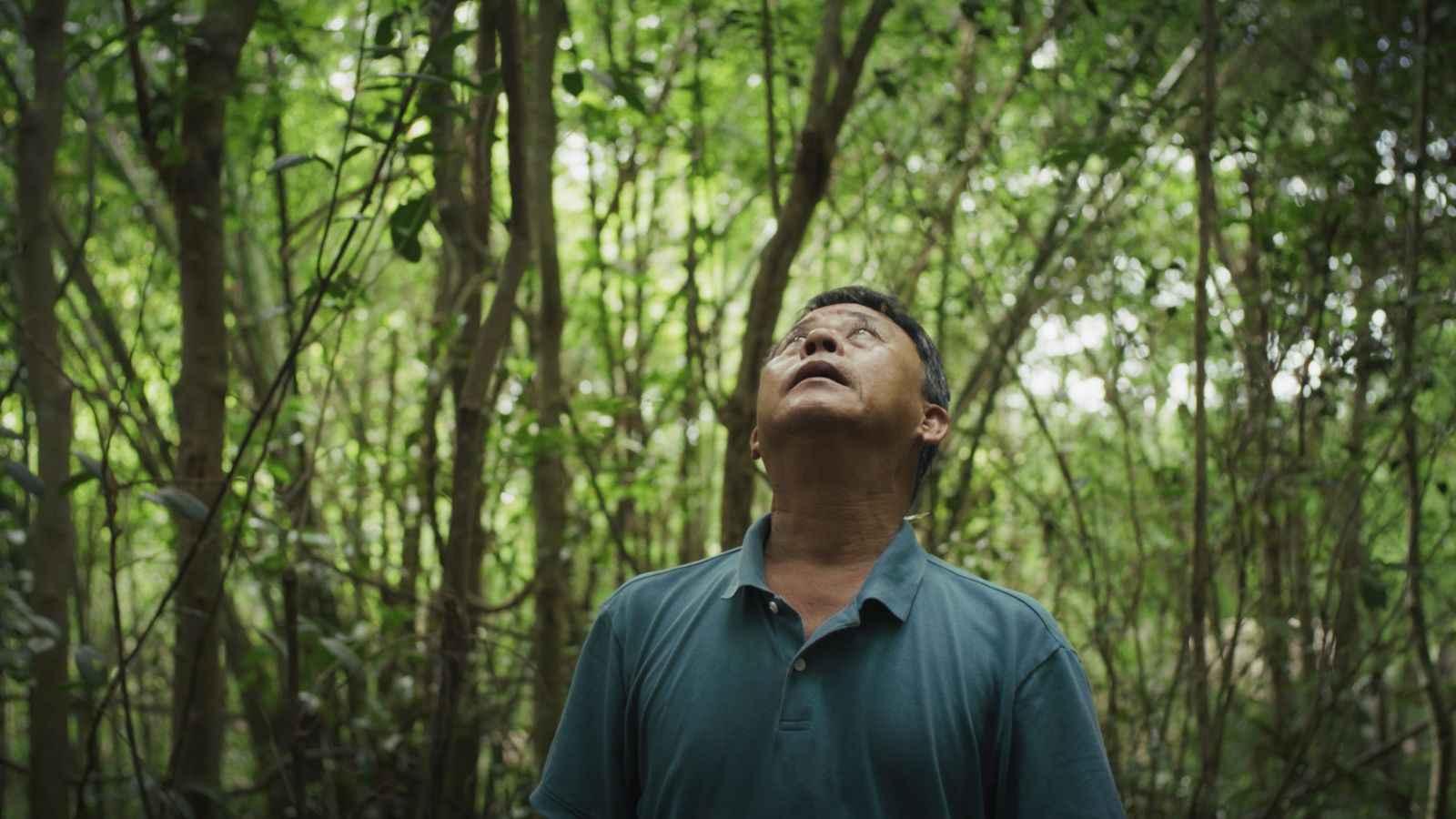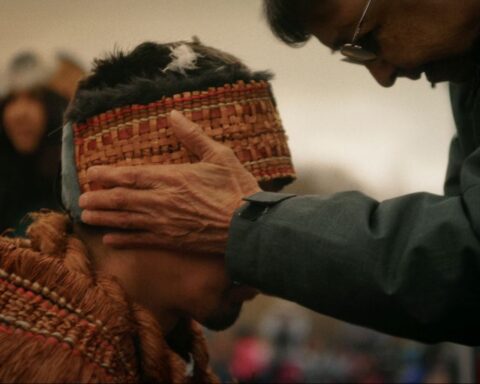



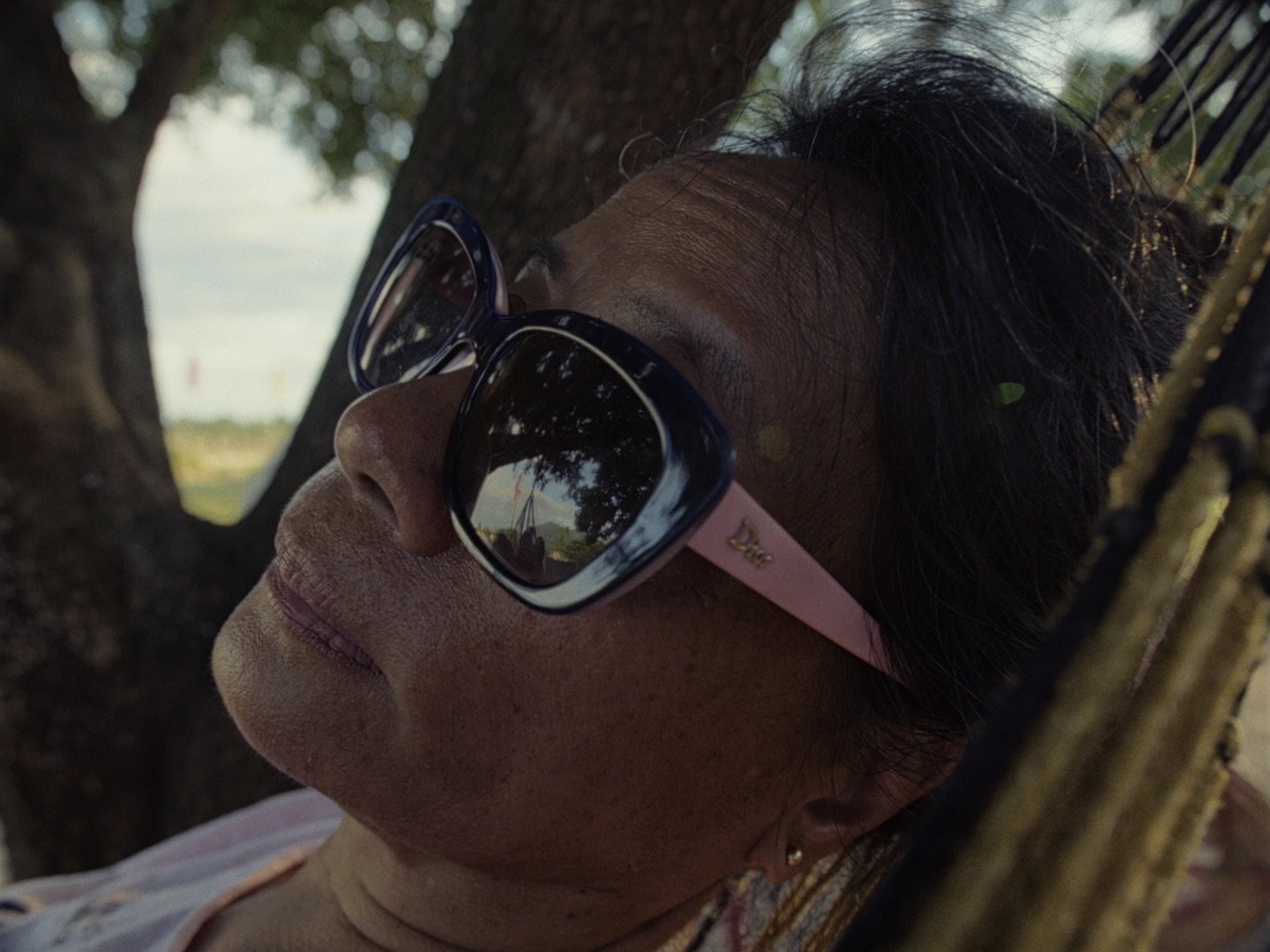

“Immigrants are beautiful people,” says Toronto-based filmmaker Serville “Serve” Poblete. His short documentary In the Morning Sun, which has its Canadian premiere at Toronto’s Hot Docs after winning the Grand Prize Award at SXSW, portrays the moving melancholy of migration. The tender doc follows Serve’s mother, Lydia, from her apartment in Toronto to her quaint hometown of Baliti in the Philippines, as she narrates the emotions that muddle an immigrant’s mind when making that infrequent but much-desired trek back home. Through spellbinding shot composition involving conversations with her Alexa, the film captures Lydia’s feelings of isolation in Toronto contrasted with the warmth she experiences amidst her family in the Philippines. The filmmaker’s consideration of size and scale, also visible in his previous documentary King’s Court (streaming on NFB.ca), is enhanced in this film where the infinite landscape of the small Filipino mountainside town is framed with tremendous heft.
Tucked away in the bosom of nature, in the presence of family and friends, Serve’s parents meditate on the meaning of migration, how one navigates the time spent away from home, and what it means to come back to a place that consistently redesigns itself and its inhabitants in one’s absence. The sensitive world-building invites the viewers into the feelings of not just Serve’s parents, but the rest of the family members as well, for whom the town has remained the only home that they know. Serve constructs his stories with great emotional depth and an acute eye for the beautiful in the mundane, which translates into a truly meditative experience for the viewer.
POV spoke with Poblete via Zoom ahead of the Hot Docs premiere of In the Morning Sun.
POV: Nidhil Vohra
SP: Serville Poblete
This interview has been edited for brevity and clarity.
POV: How did this film come to be?
SP: I am anxious about death and often think about how I would respond to my parents dying. But then I think, maybe they won’t be gone, because they make me feel something internally. Their presence and their love will remain, like the sun. It might be behind the clouds one day, but it’s going to return the following day. My parents make me feel like the morning sun. That’s how it came to be.
It was a film about death, and it slowly emerged into this beautiful film about immigration. My mother and my dad being immigrants, I realized even though I have all these anxieties and I get to talk to therapists and my friends, I don’t think people really ask them how they’re feeling. I don’t think I ever stopped to ask my mom, “What was it like growing up? You left your mom at a young age. She died and you didn’t get to see her.” It’s just this beautiful way to connect. You realize immigrants are [some] of the most beautiful people to exist on this on this planet. I wanted to make a film that obviously shared that warmth and love that you could have with anyone in your friends or family, but also to give love and flowers to immigrants.

POV: Awesome…Most people may not consider it awesome but I think often about death as well. [SP laughs.] Your films have an underlying commentary of the cyclical nature of life – a juxtaposition between how children and adults experience the same events. Is that related to your anxiety about the future?
SP: A lot of us want to grow up quick, and when we grow up we’re like, “Damn, I miss just being a kid.” It’s unfortunate because in our society, we are told to grow faster than we need to and be adults and figure life out. But interesting enough, for this doc in particular, the kids are so insightful. Kids listen. We have to listen to kids as well as much as we listen to adults. We can both learn from both groups because kids are always observing, listening.
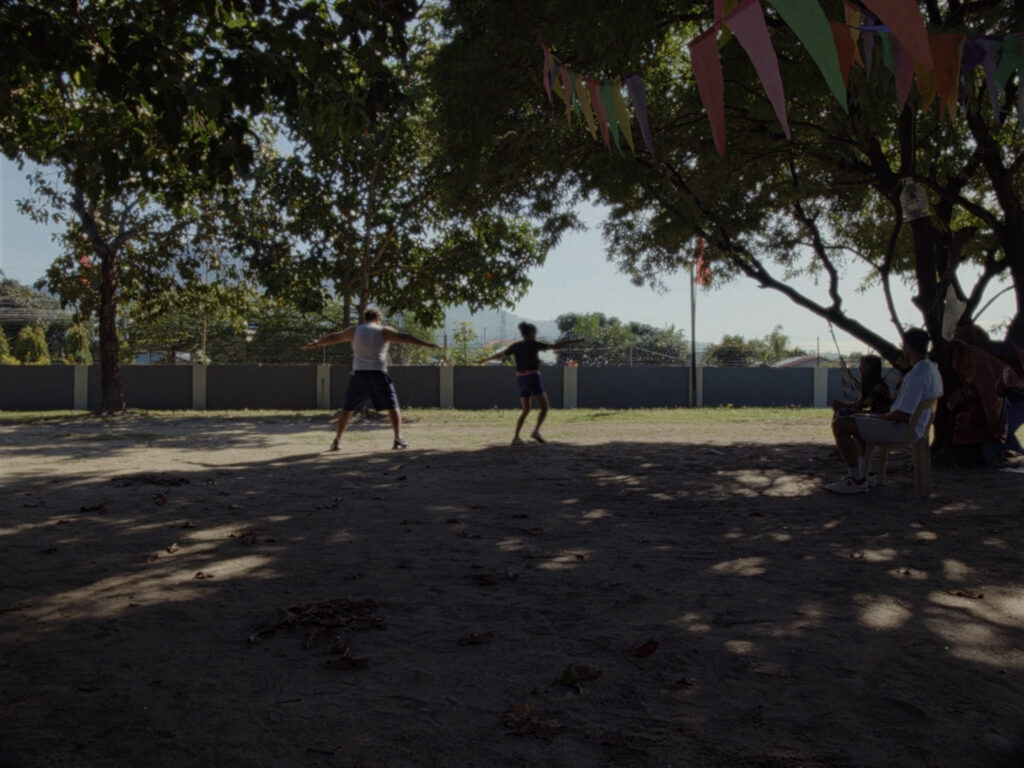
The main thing with the kids In the Morning Sun was that ending shot when they’re driving away and the kids are running behind the car, that was symbolism: of leaving family. You’re leaving your friends behind. But it’s also a reminder of immigrants leaving a part of themselves that they won’t be able to take with them. We lose a part of ourselves and we forget to remind [ourselves] of our innocence because we think kids don’t have insightful answers or anything. But I think kids are a big part of who we are and we can’t forget about that.
POV: Your films consist of tender moments of intimacy paralleled with a deliberate construction of the landscape surrounding them. How do you ensure your shots maintain this balance and dialogue with who/what they’re capturing?
SP: I’m lucky enough to know the places I’m shooting, you know? Like Kings Court, Bleecker [Street], I’ve been there my whole life. My mom’s province, every time I’m there, I’m there for a long time. I know pieces of it, from my own perspective. Obviously with, my mom’s province, I’m still a guest. It’s just another character for me. You don’t have In the Morning Sun and my parents without Baliti, her little town. You don’t have Marley and SK (from King’s Court) without, Bleecker Street, you know? It’s just another character for me, and I wanted to show very realistic moments in both places that I feel like aren’t usually portrayed when we think about immigrant stories.
Sometimes it’s always through a traumatic experience and somewhat sad most of the time, which is obviously a very important story to tell. But there’s the other side of it, with happiness and love that we shy away from as a culture. We’re afraid of love in many ways and we don’t want to show that. Because I grew up seeing so much hate and violence and a lot of negativity, I also know there’s a lot of love and good stuff happening too. Why not share that as well? Because you know, there’s something interesting there as well that we can dissect, that can also be entertaining, you know? It really just feels like you’re living in the space as opposed to trying to figure out how to make it: That’s kind of how I made In the Morning Sun and King’s Court.
POV: It’s amazing. There’s a shot in the film, where the children are talking about growing up and there’s a broken clock in the background. It’s quite evocative.
SP: That’s the thing: I didn’t even realize there’s a clock until we’re editing. I’m like, “Oh, my gosh: there’s a clock here.” But because you’re just in the space and you’re part of the space, it just happens in the back of your mind. For some reason it works until you’re in the editing room like, “Oh shit there’s a clock.” You can have a lot of meaning behind that but honestly I think sometimes a lot of filmmaking is just existential and feeling.
POV: How important is a film like In the Morning Sun, with the increasing antagonization of immigrants in the Western world?
SP: I think any immigrant is gonna relate to this [film] no matter what, because the feeling of leaving home, any immigrant can relate to that. You hear stories of them going on ships or boats or planes or swimming across a river, like it’s just all the same. Just different types of vehicles to get out of where they were originally from. This will relate to any immigrant because you have dysfunctional families everywhere. There’s always something to pull from movies that talk about immigration, but in the climate we’re in, and I’m not political, I’m not educated on this topic, but obviously my parents are immigrants and if you’re not an immigrant, you need to know who your neighbour is. If you’re only told immigrants are a certain way because of the news or Facebook, wherever you get your information from; you’re only going to assume what you see, right?
I think we need more films like In the Morning Sun. It’s about immigrants and you realize they’re just people like us. They’re just laughing with their family. I want this film to be a bridge to allow you to, instead of maybe arguing about your differences, maybe start talking to your neighbours or people who are different to you, and just get to know people as humans first. I want people to realize that immigrants are not bad people. They’re chilling. They’re just trying to hang out with their families, get some coffee in the morning, do karaoke, do whatever they do. I really do think immigrants are beautiful people, and I want to give them their flowers.
POV: How has the journey of being an independent filmmaker in Canada been so far?
SP: It’s hard. It’s hard to do independent films, but there’s something that I learned making it that way. The main thing that I realized in the early stages of my career [is that] it’s good to make mistakes and make things. I didn’t go that route, I don’t think I would have made King’s Court or In the Morning Sun. There’s something very interesting about having to learn and make things, from an artistic standpoint but also on the business side. I realized it’s good to own your IP, good to learn the business of financing, and make the mistakes early on. As my budgets are getting bigger, I feel more confident going into them and realizing, if I could make something for that amount, I think I can make something a little better with, $300K, $400K, $500K, and slowly going up. But there’s just something beautiful about independent filming. I really love it. I really love working in small groups with a small team. There’s just something more intimate about it. My stories at the moment are really human films. So, unless Marvel’s knocking one day, I’m really happy with the space I’m in.
POV: You’re in post-production for your first self-written and directed fiction feature, Sunburn. What do the documentary and fiction spaces mean to you? Do they intersect in your work?
SP: I realized how entertaining, beautiful stories are in everyday life. Like my dad whistling in “In the Morning Sun.” That moment just happened. When we were editing, I was showing my partner and my people. We’re like, “Holy, this is so poetic. It’s so beautiful right now.” I don’t think I would have been able to write that. And I took that scene, I put it in Sunburn, with the kids. It was one of my favourite scenes in the film because it’s such a beautiful way to integrate every character [so that] they’re all connected through whistling the wind. I realized, I’ve got to be more present. You can also make things up in your mind, but like life. There’s a lot of cool stuff in real life and in your family and in your everyday experience.