



Low Lies the Land
(Denmark/Italy, 90 min.)
Dir. Emanuele Gerosa
Prod. Sigrid Jonsson Dyekjær, Harry Vaugh, Fleur Engels
Programme: TIFF Docs (World premiere)
Wine documentaries generally come in three varieties. In one barrel, one finds a batch that really dives into the palette. These films savour the tasting notes of different wines and make amateur sommeliers of us all. Who didn’t uncork a bottle in search of “old lady purse” after enjoying Somm? In another barrel are stories about the hands that bring the grapes to the bottles as families pass down traditions. These are stories about the how terroir and heritage create the flavours that winos discern before spitting.
In barrel the third, one finds documentaries about the economics of wine. These are films like Mondovino and Sour Grapes that explore the larger dynamics about the commercial practices surrounding the heavenly bottles.
Low Lies the Land cultivates a fine blend of these three varieties. It swirls together a heavenly vintage that invites audiences to breathe deeply and savour the bouquet while appreciating the personal and collective histories that lend the wines their deep flavours. But it’s equally concerned with the economic and environmental circumstances that add texture to each glass and the idiosyncrasies of the families and lands that make each terroir unique.
Director Emanuele Gerosa captures the labour of love that goes into making wine as he observes families in Piemonte, Italy. The northern region, familiar to doc fans for the aromatic offerings in The Truffle Hunters, boasts a distinct climate and character. Piemonte delivers hearty reds—the guys of Somm might discern well-worn leather and first-edition books among their tasting notes—and these deep flavours reflect the complexity of the region. Cutting between the daily labours of the Chiappone, Adamo, Agatiello, and Bertolino families, Low Lies the Land observes tradition and resilience as the flavours of these grapes evolve. Each family in Low Lies the Land has a unique situation, although their circumstances echo with shared concerns as climate change makes the unpredictable trade especially precarious.
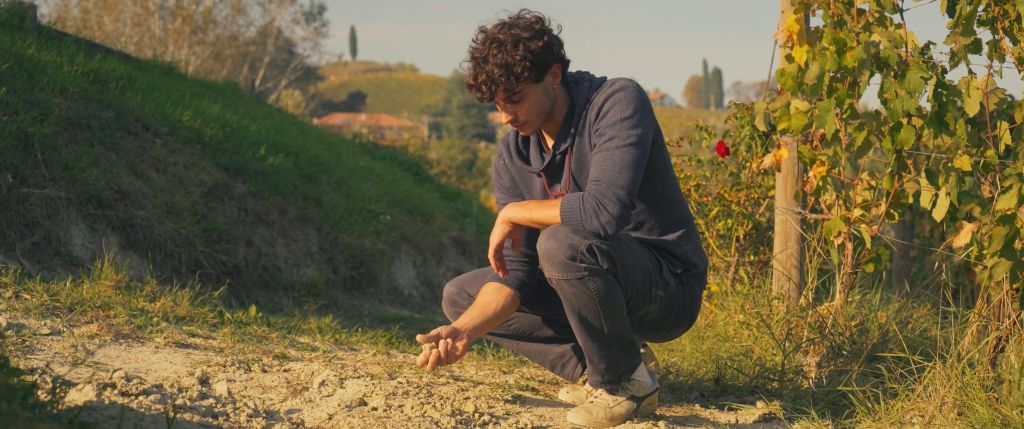
Two consecutive years of drought are especially hard on the region. The growers till their land and observe cakes of white earth crumble to dust. It’s not an especially hospitable year. The growers point out that parched vines will slake their thirst with the liquid from the grapes. The vines therefore yield dry fruits that aren’t even worth picking.
Add to the climate the winds of generational change, and some vintages could be the wineries’ last. The aging farmers observe that younger people don’t necessarily want to learn the art and craft of making wine. Meanwhile, changes to labour complicate the number of hands that can harvest grapes on the cheap. People really need to care about the family business if winemaking yields relatively little even though it’d harder work.
Gerosa finds a novel dramatic agent to navigate these thorny circumstances. Enter Roberto Garberoglio, a commercial real estate broker introduced simply as “The Broker.” He receives a visit from a lawyer who represents a client interested in buying vineyards. She won’t disclose the client’s identity, but the broker cautions her that the old stock types of Piemonte will resist trade with foreign investors. Tradition dominates the region, as is evident by the cobblestone streets and old houses that, like the vines, have weathered generations. Garberoglio nevertheless accepts the challenge. He stalks the land with binoculars in hand and assesses best bets based on his own knowledge of the region and its challenges. He makes house calls to the wineries. At each stop, he gives the same rehearsed pitch about delicate times of economic hardship and a generous offer unlikely to be repeated.
As Low Lies the Land observes each family either refuse the offer or weigh its value, the film captures what the prospect of selling means in a land with distinct character grown over time. Piemonte is the birthplace of slow food, after all, and Gerosa marinates in the handsome complexity of the land. These vintners understand the long game and they appreciate tradition. Moreover, there’s a great moral and philosophical dynamic to the offer. Selling to a foreign and anonymous investor essentially evokes a renunciation of the land and their heritage. The money might solve their immediate problems and alleviate some stress for future generations, but the bid undercuts the priceless elements of family history passed down with each vintage.
Gerosa uncorks something great by taking a cue from the hard-working ethic of these families. Low Lies the Land soaks up the complexity of the land as Gerosa and cinematographer Alvise Tedesco exquisitely capture the inclined hillsides that make the harvests arduous work, but rewarding ones. The camera weaves through the rows of vines, observing as thirsty grapes contrast with the sweaty foreheads of the busy hands that cut the grapes and ready them for pressing. Folksy music by Jonas Struck offers a leisurely whistles that evoke a relaxed process reared on patience.
As the film draws upon the culinary techniques of the region and leans into a good simmer, the story unfolds delicately as Piemonte finds itself amid cycles of renewal. Young men come home and return to the work cycle that has them waking with the crowing rooster. The film observes the families’ wise adage that everything has cycles and that hard years bring rewards, even if they’re not immediate ones.
It’s easy to see why one would onto their roots as hard as they can, and why newcomers might be eager to plant. Low Lies the Land inspires audiences to swirl the fruits of these farmers’ labour. Give it a good sniff and drink deep.
Low Lies the Land premieres at TIFF on Sept. 11.
Get all of POV’s coverage from the festival here.
Read more about the film in our interview with Emanuele Gerosa.