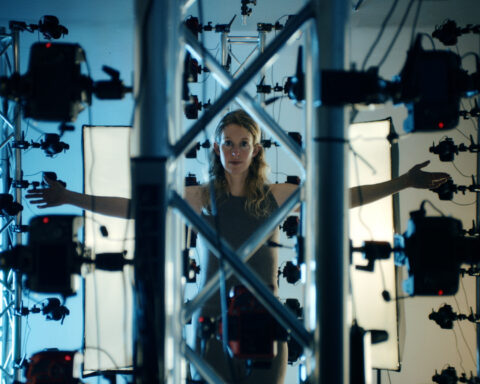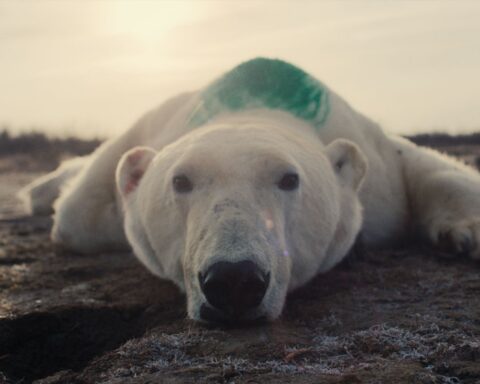




In the 1950s and ’60s, the world of non-fiction cinema was shaped by cinéma vérité a mode whereby filmmakers like D.A. Pennebaker, Haskell Wexler, Jean Rouch, and Michel Brault used new technology to place the camera, and thus the viewer, in the midst of the situation being captured. This approach freed documentary from traditional conventions and leaned into an observational mode of cinema to capture everyday life. The advent of smaller, handheld devices with synchronous sound made this new wave of filmmaking possible without the need for ungainly, bulbous celluloid equipment. Cameras like the Arriflex, the Atton, and the Éclair mounted with wide angle lenses brought viewers directly into the events being captured, while the Swiss-watch like mechanisms such as those from Nagra equally revolutionized what could be recorded, how, and by whom without being overly cumbersome or intrusive.
The portable film and sound systems of cinéma vérité find a new counterpart in digital devices that are even smaller, more portable, and omnipresent. Cinematic tools now exist beyond so-called professional equipment in mobile phones, small action cameras like GoPros, and even personal-use drones, providing hundreds of millions of individuals the ability to be their own vérité-style cameraperson.
While these new tools have flooded the internet with cat videos, tech reviews and conspiratorial rants, they have also empowered soldiers on the frontline and activists on the street to record their own experiences, taking the vérité movement’s dream to new levels. At the same time, there have been massive investments in civic surveillance technologies, where cameras are aimed in public spaces and private ones alike. Such footage provides perhaps the most austere and yet purely observational mode possible, as the unblinking eye of the lens waits for events to transpire in front of it.
It takes a certain kind of skillful filmmaker to wade into this ocean of visual and sound elements and make coherence out of the chaos. Separating wheat from chaff has always been a key skill of the non-fiction filmmaker, particularly for those schooled in these documentary production practices where miles upon miles of film were cut down to make a more salient argument and palpable experience out of the mass of footage.
If there’s a milestone moment in the popularization of the found footage phenomenon, it’s arguably 1999’s The Blair Witch Project. The drama by Daniel Myrick and Eduardo Sánchez overtly took up a documentary aesthetic to provide chilling verisimilitude to this tale where a group of young people capture their own demise on their personal video recorders. The conceit of the footage being “real” evidence of lost lives had audiences screaming. Its enormous box office success helped spawn dozens of imitators, with the same shakycam aesthetic and grittiness employed not only in low-budget fiction productions such as this, but also in documentary itself, a circular reference whereby the careful compositional choices of direct cinema pioneers were eschewed in favour of a heightened sense of immersion via errant, handheld framing.
Brett Morgen’s June 17, 1994, which played on ESPN in 2010 as part of its exceptional 30 for 30 series, provides an excellent example. It remains to this day an astonishing work of montage to form meaning within the context of non-fiction. Ostensibly the story of the infamous O.J. Simpson police chase, Morgen uses what amounts to cultural detritus, from commercials to sports broadcasts to helicopter footage, to give a uniquely powerful look at not only the events of the Bronco chase, but the wider media milieu in which one of the most iconic moments of the 1990s took place. It’s one of the most powerful “day in the life” films ever made, and its influence echoes in the works by a new generation of filmmakers drawing upon the many eyes afforded by new technologies.
Then there are shows like the long-running Cops (1989-2024) that fed audiences’ fascination with law enforcement, stripping the police procedural to its most vicarious and scopophilic core. Many shows such as 2018’s Body Cam followed its lead by creating narratives using footage strictly captured by devices worn by officers. Then there’s David Simon’s show The Wire (2002-2008), shot with echoes of the masters of 1960s’ direct cinema, stripping the very challenge of capturing investigative material within the context of numerous systems of control and compromise.
Many films have, in turn, examined this act of administrative voyeurism, and none are as forceful and poetic as Theo Anthony’s exceptional All Light Everywhere (2021). His film provides a truly profound look at the surveillance space, going into detail about Axon, the company that is ubiquitous in the body cam sphere. The film also invites discussions about surveillance technology previously employed by the military in places like Iraq to spy on American citizens under the aegis of suppressing crime. Axon’s cameras inadvertently provide witnesses for when things go awry with the company’s own technology.
Of all the heightened human experiences that “found footage” documentary can mine, it’s in the context of two modes of civil society at its most extreme that it is seemingly at its most effective: community violence and police intervention on a more localized level, and military activities on the other, more geopolitically significant space. These films take the direct cinema modality and strip it down further, crafting nonfiction narratives through montage. They contextualize video and sounds captured by the subject and the state alike in order to provide a coherent through line out of the cacophony and chaos from a mountain of disparate footage.
Mstyslav Chernov’s 20 Days in Mariupol (2023) is a magnificent documentary that captures the former war photographer’s travails covering Russia’s invasion of his home town in Ukraine, and his 2025 follow up, 2000 Meters to Andriivka, is both more harrowing and more formally challenging. 2000 Meters to Andriivka documents a pyrrhic campaign in the Eastern regions of Ukraine, as soldiers advance a few kilometres along a scarred sliver of land composed of shattered trees, artillery craters, and ersatz bunkers carved into the pockmarked land. On either side of this strip are masses of landmines, making this one corridor the only way to enter the small village of Andriivka.
The mission, such as it is, is to plant a flag and lay claim to this abandoned locale. A small section of the film sees Chernov hunkered down with the soldiers as they tell tales of their lives on the front, and this plays out in a slightly more straightforward documentary fashion. A larger portion of the film, however, is comprised of superbly assembled footage that has been captured not by the Oscar-winning documentarian himself, but by the soldiers on the campaign fighting and dying for this forsaken strip of land.
The opening sequence is as shocking and compelling as that from the opening of Steven Spielberg’s Saving Private Ryan (1998), and the fact that the images provide first-hand witness to the horrors of war makes the wide-angled view that much more gut wrenching. These are images captured not for surveillance or even propagandistic means, but more as a mode of remembrance. These moments of real terror and confusion can, either for the participant or for future witnesses such as ourselves, benefit from being placed there to see what it was like from this narrow yet effective point of view.
One soldier nicknamed “The Kid” is asked by a comrade why he bothers recording all these horrific moments. “What if I die tomorrow?” he replies, arguing persuasively that, thanks to these self-recorded videos, there will still be something left to provide witness if he were to perish.
On the one hand, each individual clip is like a grain of sand in a desert full of such videos, yet thanks to the careful curation by Chernov and his editorial team, these seemingly disparate elements manage to form a whole. Together, they provide a paradoxically intimate yet grand scope for the events that take place on the ravaged strip of land. Audiences can viscerally feel the individual circumstances of each soldier who captured the images, while those around speak almost directly to the lens, providing further impact that draws viewers into the circumstances in ways that border on virtual reality.
At the same time, a surreal by-product of these first-person point of view accounts is how much Andriivka echoes other vicarious thrills, namely video games that employ a similar perspective. The delineation between “first-person shooter” games like Call of Duty and the actual combat footage of Chernov’s film is not vast, making some of the more harrowing moments feel, preposterously, almost more contrived as they echo entertainment. The film toys with our shifting feelings with this footage. At times it locks into a distant perspective; at others, it thrusts us into the heart of these actions in engaging yet compromising ways.
Throughout the film, Chernov notes in sombre voiceover that many of the soldiers whose cameras captured the film’s material subsequently died in battle. Overall, as per the wish of “The Kid,” the footage is a method of remembering, of helping to define a culture, and a way to commemorate the people who are left to suffer during the conflict. The result is a film even more challenging than Chernov’s last one, yet no less compelling and vital.
Made prior to the latest Russian advancement into Ukrainian territory, Roman Liubyi’s War Note (2020) provides a different perspective of the lives of soldiers and civilians alike. Using footage culled from cellphone videos, camcorders, and consumer cameras, War Note presents the grisly moments of combat as well as the quotidian moments that pass between the flying bullets. Images of the trade of bodies after a brief ceasefire, or of a party before heading off to join the army, coalesce into another fascinating look at the simmering conflict that defined the region well before the 2022 escalation.
While Chernov’s film is more specific and accomplished, Liubyi’s own exercise in montage demonstrates brilliantly the notion of how these constituent elements can transcend the time of their capture. The editing grants viewers a truly deep look into these seemingly simple moments.
Switching focus from military combat to urban conflict, two recent films do a remarkable job of employing similar “found footage” elements in deeply urgent ways. Bill Morrison, whose celebrated Dawson City: Frozen Time (2016) consists of repurposed footage that was literally unearthed, having spent decades buried below a swimming pool, makes another significant archival doc with his Oscar-nominated short Incident. (Watch the film here.)
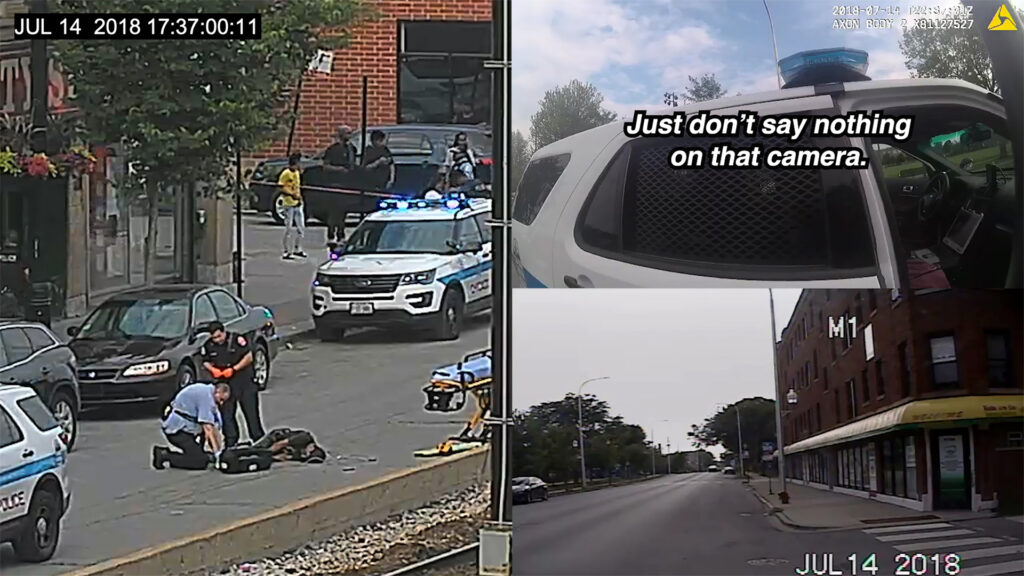
Incident provides a Rashômon-like look at the killing of a man by a Chicago police officer. Using surveillance and bodycam footage, the film depicts the final moments of Harith “Snoop” Augustus from a variety of perspectives. The result is a taut yet almost icily banal film, echoing the kind of officious detachment connoted by the film’s title that sublimates the human cost of the loss of life in favour of cold jargon.
We witness high-strung trainee officers who are so clearly and breathlessly out of their element, a community’s collective rage, and the aching wait for paramedics. There are many excruciating elements to witness. However, the impetus for the shooting itself, despite being seen from multiple perspectives and speeds, remains elusive.
While the behaviour of the trainee officer following the discharge of his weapon is obviously worthy of reproach, and the speed in which the story about what happened morphs in real time as stress and adrenaline causes memories to shift, the film shows frame-by-frame just how challenging it is to parse intentions in such a chaotic situation.
In a world where Super Bowl instant replays are replete with subjective interpretation from high-calibre cameras in one of the most-watched events on the planet, these grainy, shaky systems that capture the moments of Incident fascinate in terms of how, on the one had, they provide unequivocal proof of certain elements, while, on the other hand, their narrow perspective and focus individually results in, at best, confusion and, at worst, a sense of deep empirical uncertainty.
Finally, there’s Geeta Gandbhir’s Sundance winner The Perfect Neighbor (2025). That the film is another masterclass in montage is no surprise given Gandbhir’s Emmy-winning work as an editor on Spike Lee’s 2007 film When the Levees Broke, yet it’s nonetheless a thrilling experience that results in easily one of the best films of the year.
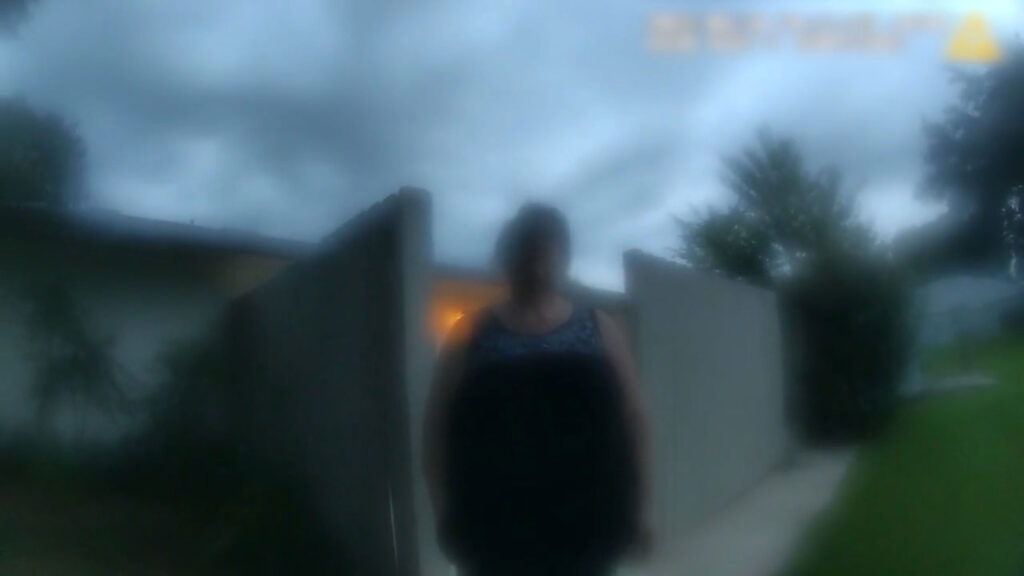
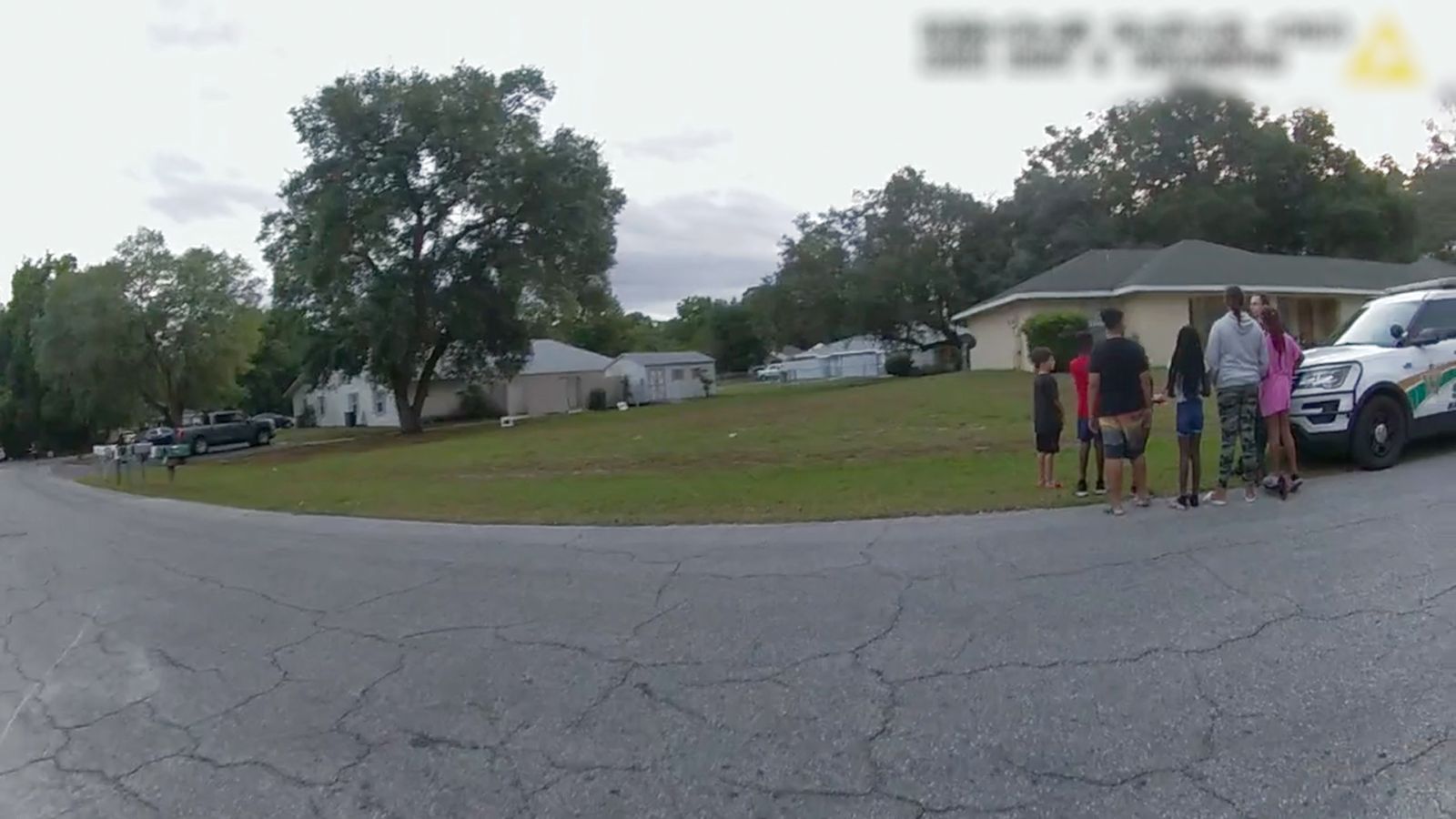
Sourced exclusively through police bodycam footage and other institutional material, the film reconstructs the events preceding the murder of Ajike Owens by Susan Lorincz, a neighbour from across the street. We learn of Lorincz’s habit of calling the cops and complaining about kids playing in front of her rental apartment. We see how things escalate in interaction after interaction to the point of tragic violence. Of all these films, Gandbhir’s is the most deliberate, letting the space between the heightened moments breathe in order to plunge viewers into the circumstances of this otherwise quiet street in Ocala, Florida.
Grander political questions, from stand-your-ground laws to the interaction of law enforcement with those suffering from clear mental health issues, are all quietly yet brilliantly evoked by the footage that Gandbhir presents. Her careful construction of the disparate interactions build upon one another to provide a powerful look at what otherwise would be shirked off as yet another killing in a violent country.
By limiting the audience’s perspective strictly to the responders’ own bodycams, the film thrusts viewers into the facts of what transpires, but also lets one see how the other members of the community interact with the police. By explicitly demonstrating how the observational camera is never neutral, and how we as audience members are put in the position of both official and citizen, The Perfect Neighbor demonstrates the unique power and possibilities of such “found footage” montage to narrativize the documentary ephemera of our surveillance-filled society.
While Chernov’s film uses bodycams to show the impacts of combat, it’s nearly impossible to see the events detailed here as anything but another kind of warfare as old as any: the disparate perspectives and behaviours of irate neighbours holding onto territory either rationally or irrationally, seeing events through seemingly incommensurate gazes, and leading to inexorable violence as irreconcilable differences turn to something far more sinister. One film focusses on a tiny event within a war of global interest; the other the death of a woman who may otherwise would be erased as another statistical murder in a state where such actions are endemic.
From the frontlines of battle to the streets of Chicago and the grassy lawns of a Florida suburb, each of these films stretches documentary form using materials that were never recorded for such presentation. Whether this methodology deepens cinéma vérité’s quest for truth or finds new ways to obscure the truth can be debated. However, the movement’s desire to thrust audiences into a situation as it unfolds finds no equal quite as urgent as the found footage film.